Green peas is easier to cook with than it looks. Here's how to choose, use, and store them, what to substitute, and 651 recipes to get you started.
Key Points
Cook peas only 2 to 3 minutes; past 5 minutes they turn gray and mushy.
Frozen peas are blanched before freezing, so simmer just 60 to 90 seconds or add off the heat.
Add peas at the very end of a dish, never simmering them alongside everything else.
They pair naturally with butter, cream, bacon, ham, mint, and lemon.
Frozen often beats fresh out of season; canned peas are soft and best mashed or stewed.
What are green peas?
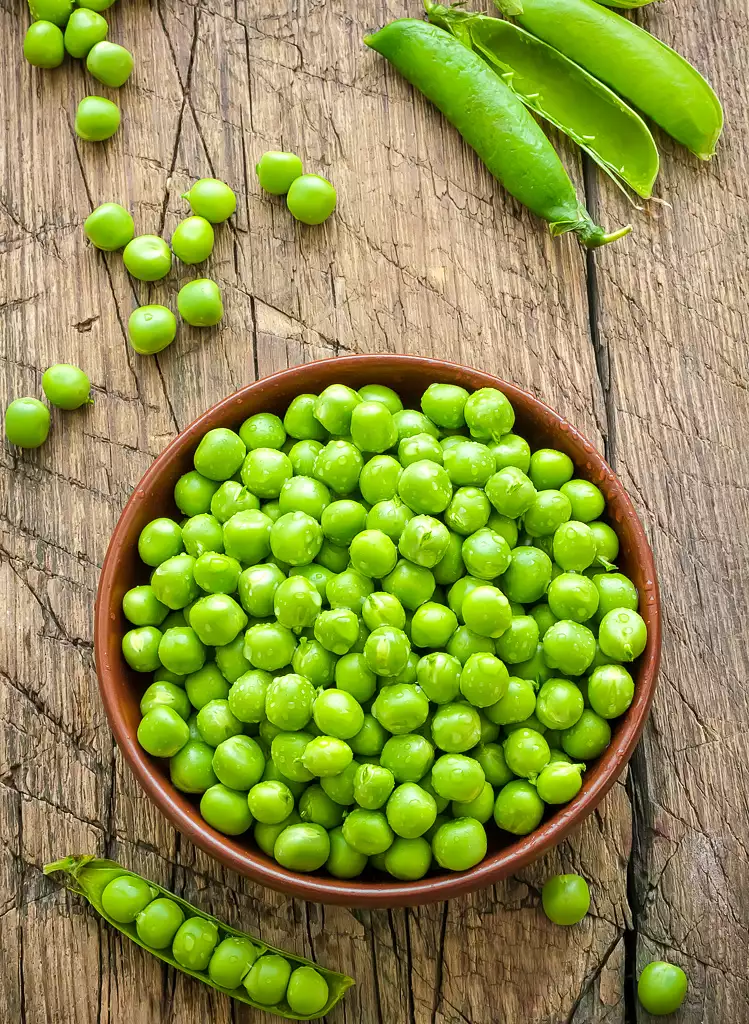
Green peas are the small round seeds of Pisum sativum, picked while young so the sugars inside haven't yet turned to starch. They taste sweet and grassy, and they belong to the legume family alongside lentils and beans.
This page covers the everyday green pea, the kind you spoon out of a pod or pour from a freezer bag. When a recipe just says "peas," this is what it means.
The wider family branches off from here into split peas, sugar snap peas, snow peas, and black-eyed peas, each with its own page.
One thing worth knowing up front: most peas cooked at home were frozen within hours of picking, which is why frozen often tastes fresher than the so-called fresh ones trucked in days ago.
How to Use Green Peas
The cardinal rule with peas is speed. They are at their best after about 2 to 3 minutes of cooking, when they pop between your teeth and stay vivid green.
Boil them past 5 minutes and it falls apart: the sugars break down, the color dulls to army gray, and the texture turns to mush.
Frozen peas are essentially pre-cooked by the blanching they get before freezing, so they need almost nothing. Drop them into a finished dish off the heat, or simmer for 60 to 90 seconds, and they are done.
Fresh shelling peas take a little longer. Run a thumbnail down the seam to split the pod, sweep the peas into a bowl, and drop them into salted boiling water for 2 to 4 minutes depending on size.
A pound of pods yields only about a cup of shelled peas, so plan generously.
Peas have a natural affinity for fat and salt, which is why they land so often beside butter, cream, bacon, and ham. The sweetness plays against smoke and salt, and a little fat carries their flavor.
Mint is the classic herb partner, but peas also take well to dill, tarragon, parsley, and the sharpness of lemon. For aromatics, reach for shallot or leek rather than heavy raw garlic.
The most common mistake is overcooking. The second is salting the water too late.
Peas cooked in unsalted water taste flat no matter what you do afterward, because the salt needs to season them from the start rather than sit on the surface.
A third trap is treating canned peas like frozen ones. Canned peas are already soft and a touch metallic, so they suit mashing into a pea purée or stirring into a long-cooked stew, not a quick sauté where texture matters.
Substitutes
If you are out of green peas, the closest swap is edamame, the young soybean, which brings the same pop and a similar sweetness. Use them one for one.
Fava beans work in spring dishes, though they are starchier and usually need peeling. Diced sugar snap peas or chopped snow peas stand in when you want that green, crisp note, though both are crunchier and less sweet.
For color and a hint of sweetness in a stew or pot pie, finely diced carrot or corn kernels fill the gap, even if neither tastes like a pea.
And outside of pea season, frozen peas substitute for fresh at one to one in any cooked dish.
Buying and Storage
For fresh pods, look for ones that are firm and plump, with a bright green color and no yellowing, and that squeak a little when you press them. The peas inside should be small to medium, since oversized peas have already gone starchy.
Buy fresh peas in late spring and early summer, their short natural season.
Fresh shelling peas are perishable in a way most vegetables are not, because their sugar starts converting to starch the moment they are picked. Use them within 2 to 3 days, stored in the pod in the fridge, and cook them the day you shell them.
Frozen peas are the practical default the rest of the year. Keep a bag for up to about a year, scoop out what you need, and reseal it fast so the rest don't get freezer burn. There is no need to thaw; they go in frozen.
Canned peas keep for years unopened and are the softest of the three. Drain and rinse them to wash off some of the canning liquid, and treat them as a convenient option rather than a stand-in for the snap of fresh or frozen.
Types of green peas
Specific kinds of green peas and the recipes that use them.
Snow pea pods are flat, bright-green pea pods eaten whole, shell and all, while the peas inside are still tiny and undeveloped. They're crisp and sweet with a tender bite.
In French they're the mange-tout, literally "eat it all."
The flatness is the tell. A snow pea is harvested young and stays nearly two-dimensional, so the pod is thin and snappy rather than plump. That young pod is the whole vegetable, which is why it needs almost no cooking.
Black-eyed peas are small, cream-colored beans with a dark spot where they attached to the pod, the "eye" that gives them their name. Despite the name, they are not actually a pea.
Across the American South, black-eyed peas and other field beans simply get called "peas." They cook up earthy and a little starchy, holding their shape better than many beans, which is why they turn up in everything from brothy soups to cold salads.
The classic is Hopping John, the rice-and-peas dish eaten on New Year's Day for luck.
Frozen peas are green garden peas, also called English peas, that are shelled and blanched, then flash-frozen within hours of harvest at the exact point when their sugars are highest. That speed is the whole story.
A fresh pea starts converting its sugar to starch the moment it leaves the vine. By the time most "fresh" peas reach a supermarket they are already past their sweet peak.
A bag of frozen peas, locked at the field, is often sweeter and more tender than the fresh peas next to it. They are one of the few frozen vegetables that genuinely beat the fresh version for most cooks.
Split peas are dried field peas with the skin removed, split in half along their natural seam. That splitting is why they cook faster than most dried legumes and break down into a thick, creamy puree as they simmer.
They come in two colors. Green split peas are sweeter and a little grassy; yellow split peas are milder and earthier. They are interchangeable in most recipes, though each leans toward different cuisines.
Unlike dried beans, split peas need no soaking. Rinse them and drop them straight into the pot.
They turn tender in about 45 minutes to an hour, dissolving into a soft, almost porridge-like body.
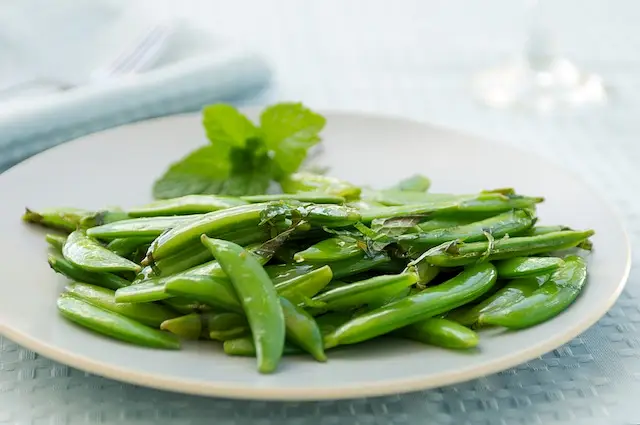
Sugar snap peas are a cross between the snow pea and the garden pea, bred so you eat the whole thing: plump pod and the small sweet peas inside. The pod is rounded and full, not flat like a snow pea, and it stays crisp and juicy when fresh.
They're best known for crunch and sweetness. Raw, they snap like a fresh green bean and taste almost candy-sweet, which is where the name comes from. That sugar starts converting to starch the moment they're picked, so the fresher they are, the better they taste.
Yellow split peas are field peas that have been dried and hulled, then halved along their natural seam. They are a different crop from the green peas you eat fresh, grown specifically to dry.
The splitting exposes the starchy interior, so they cook faster than whole dried peas and break down readily into a thick puree. Their flavor is mild and faintly sweet, a touch softer and less grassy than green split peas.
That gentleness makes them a blank canvas for spices and a bright squeeze of lemon. They anchor pea soups across Northern Europe and Canada, and across India they stand in for the split pulses used in dal.
Split green peas are mature field peas that have been dried and skinned, then split along their natural seam into two halves.
The green ones come from a green-seeded pea variety, and they carry a sweeter, grassier, more vegetal flavor than the earthier yellow split peas grown from a different cultivar.
They are a pantry legume built for soup. Because they are split and skinless, they cook without soaking and break down into a thick, creamy puree on their own, which is exactly what you want in a classic split pea soup.
Canned peas are green peas that have already been cooked inside the can, then packed in salted liquid and sealed. They sit on the shelf for years and need nothing more than a quick warm-through, which is the whole reason to keep a can around.
Because they are fully cooked, they come out softer and more uniform than fresh or frozen peas, and a touch less sweet.
They even map to their own USDA entry, because the canning process and the packing liquid change the texture and push up the sodium compared to the fresh and frozen forms.
Dried peas are whole field peas that have been dried with their skin left on and, crucially, not split. They are the same mature pea behind split peas, just kept intact rather than skinned and halved, which changes how they cook and what they are good for.
That skin and round shape are the whole story. Whole dried peas hold together instead of collapsing into puree, so they suit dishes where you want peas you can actually see.
They come in green and yellow. The green ones taste a little sweeter and grassier; the yellow ones are earthier and milder.
Pea shoots are the tender young leaves and stems of the pea plant, picked along with their curling tendrils while everything is still soft enough to eat. They taste like a mild, fresh pea: sweet and grassy, with a snappy crispness in the stems.
You will see them two ways. As delicate microgreens just a few inches tall, and as longer, leafier shoots with visible tendrils, the kind piled high at farmers markets and Asian groceries.
Either way they are eaten as a green, raw or barely cooked. They are a staple of Chinese cooking, where they are known as dou miao.
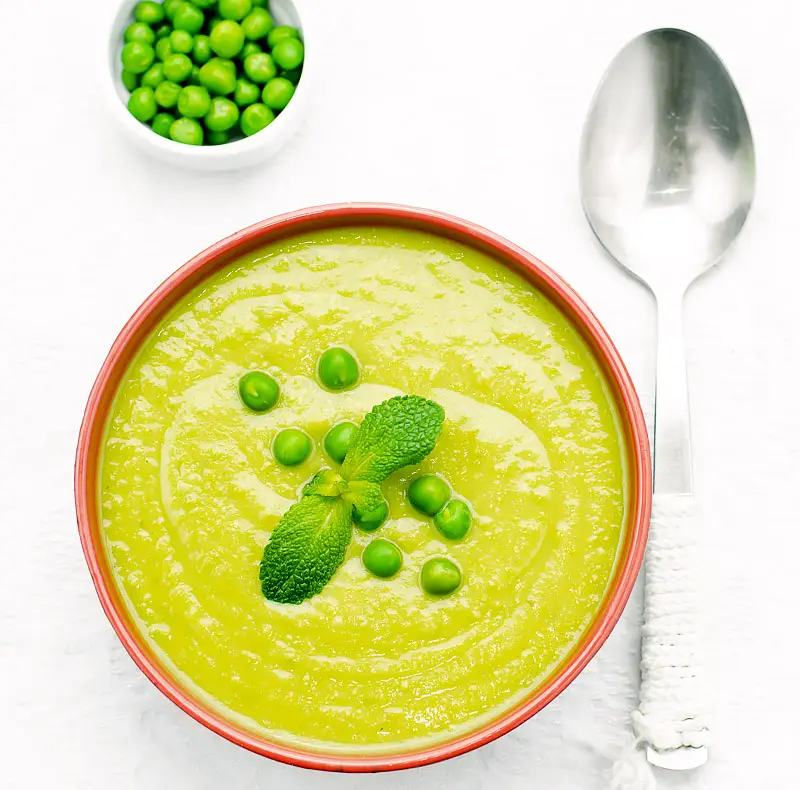
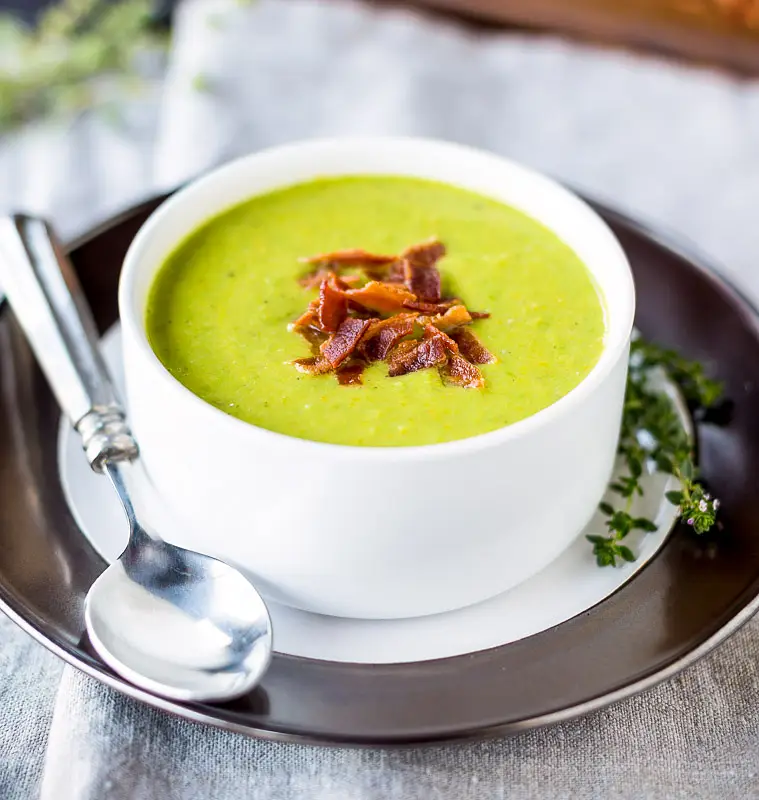
Chilled green pea soup blends sweet frozen peas with thyme, onion, and minute tapioca for a velvety low-fat, low-calorie soup that works hot or cold. The tapioca thickens without flour or cream. Five minutes of standing time, twenty minutes total cook.
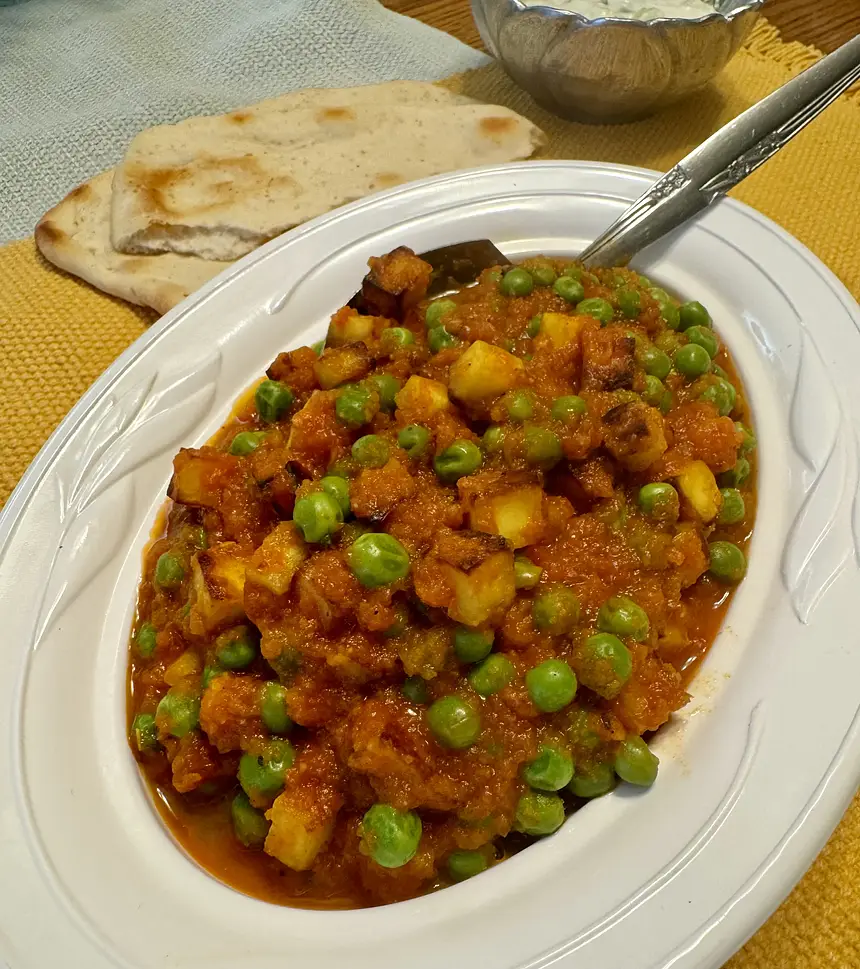
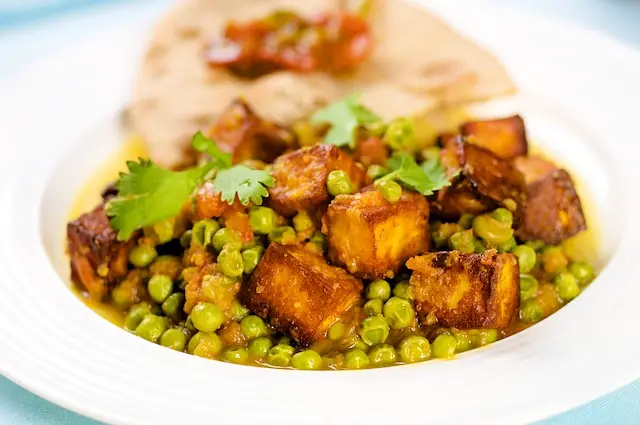
Matar paneer is a popular Indian dish consisting of paneer (a type of fresh cheese) and peas (matar) cooked in a spiced tomato-based gravy. It combines the soft, creamy texture of paneer with the sweet pop of green peas, all enveloped in a rich, aromatic sauce.
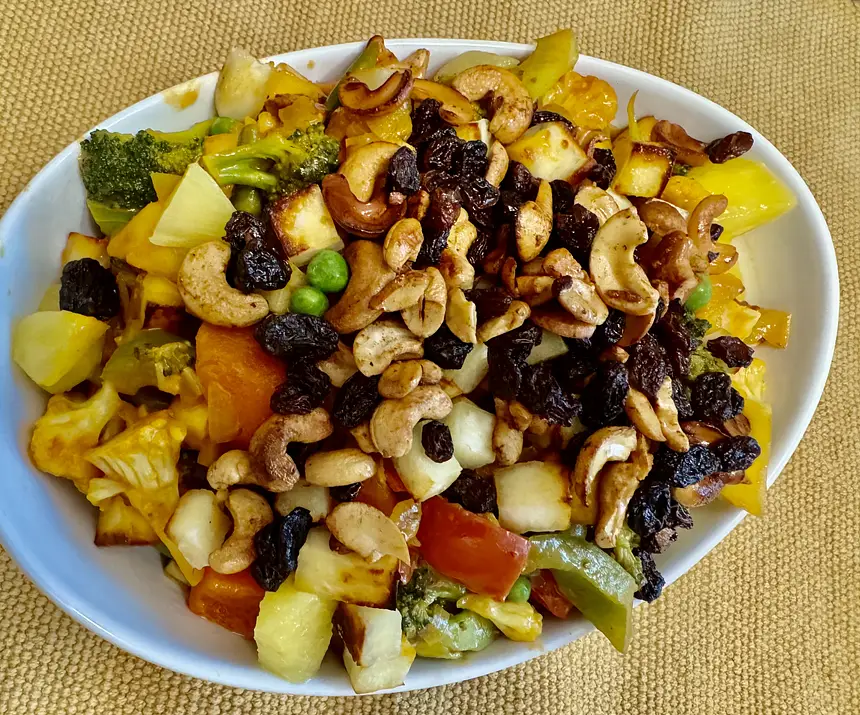
Mughlai-style mixed vegetable curry with paneer, cream, pineapple, and golden raisins. A rich, mildly spiced North Indian dish that finishes with a sprinkle of fried nuts for royal-court flair.
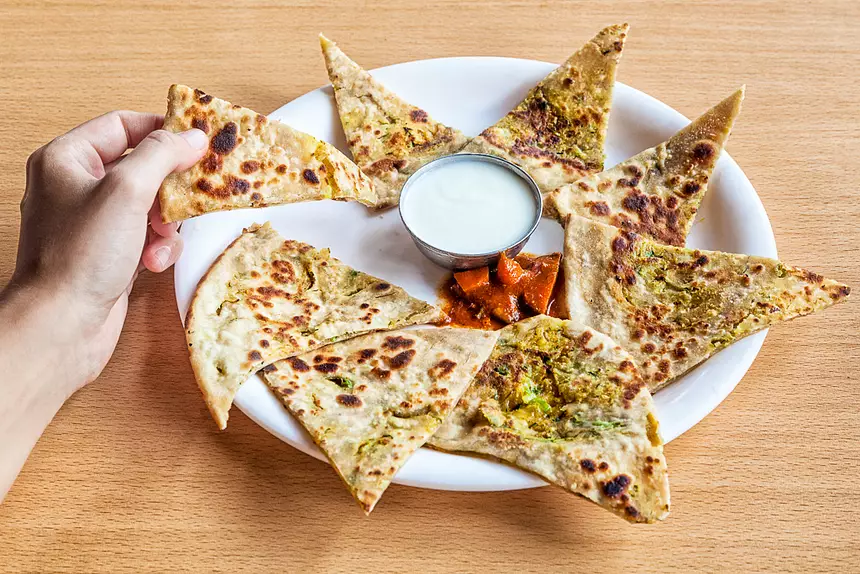
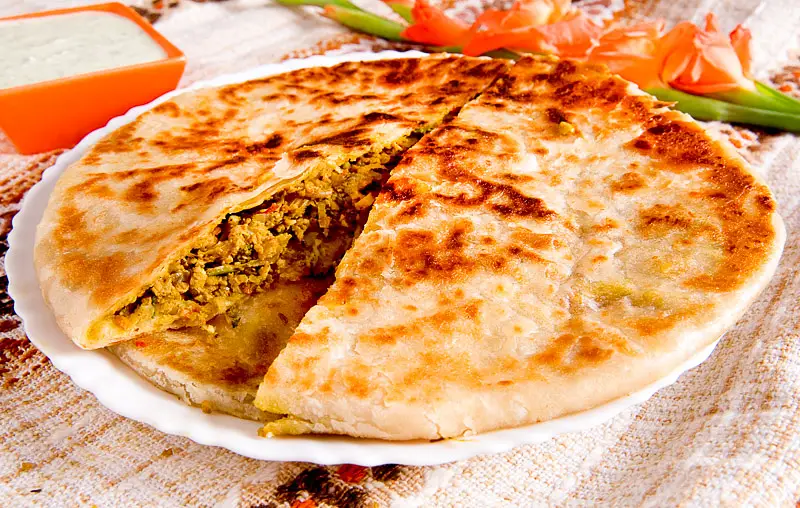
The quintessential Indian-Singaporean meal accompaniment. Unfortunately, all too often it is made using highly processed white flour and margarine. Here, the parathas are made with whole-wheat flour (you could also try using spelt flour) and stuffed with peas and potatoes, for a lighter but more wholesome take on the original. Serve hot with yoghurt and herbs.
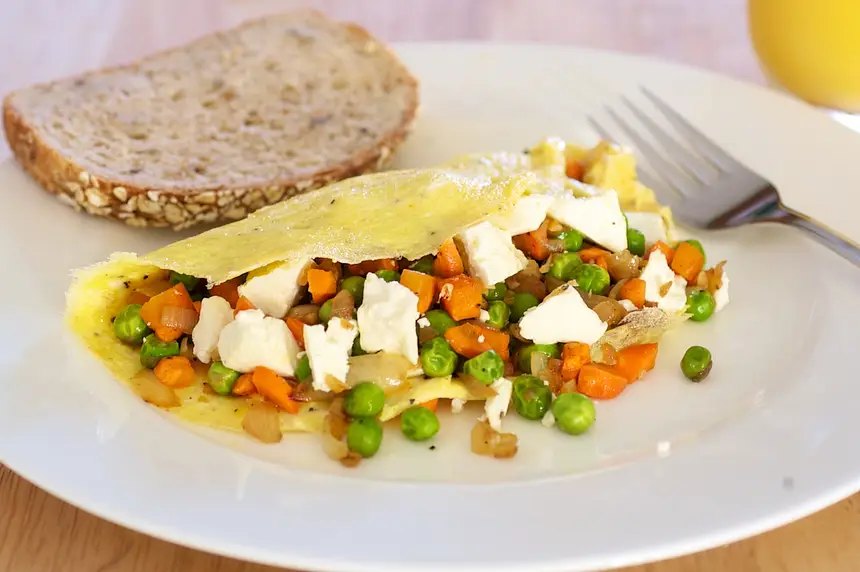
A fluffy Greek-style vegetable omelet loaded with sauteed peas, diced carrots, and tangy crumbled feta cheese. This easy breakfast egg dish comes together in under 40 minutes and makes a satisfying vegetarian meal any time of day.
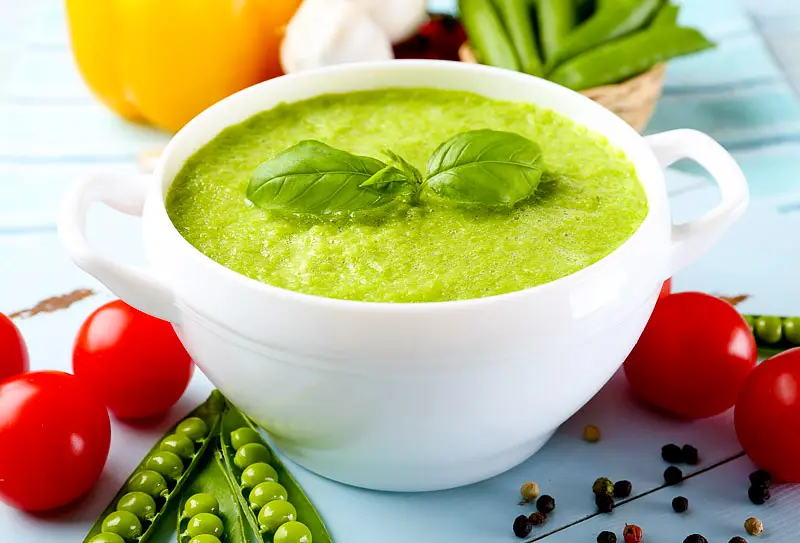
Chilled minted pea soup with Boston lettuce and fresh mint, pureed silky and served cold. A vegetarian summer starter that takes 15 minutes on the stove.
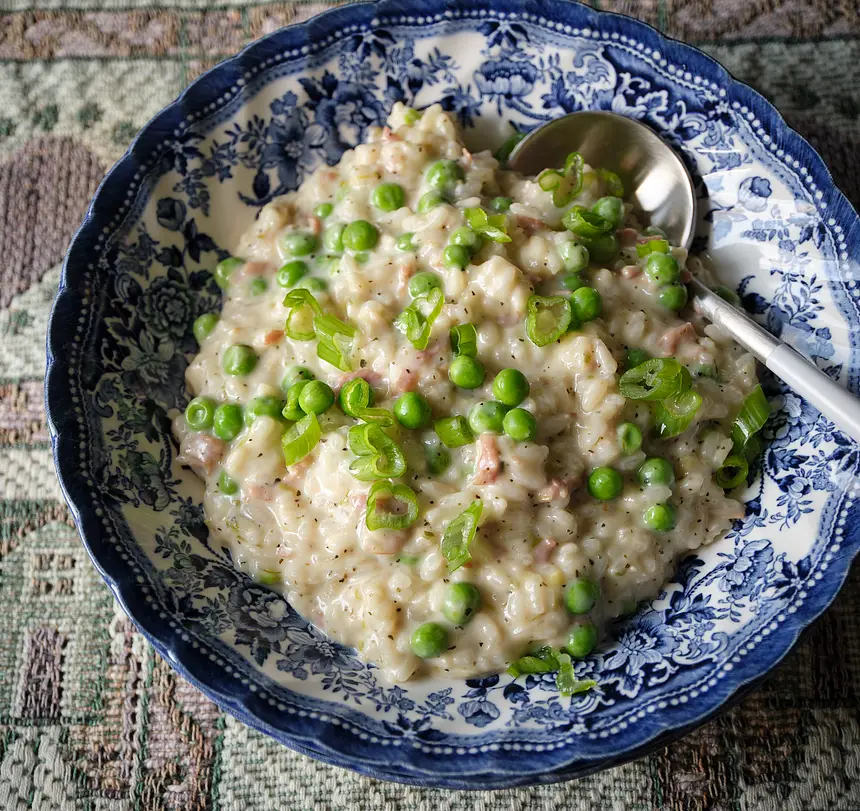
Creamy prosciutto and green pea risotto finished with Parmesan, fresh basil, and a splash of cream. Salty cured ham and sweet peas make this Italian rice dish rich and satisfying.
Indian-style lemon rice and pea chapati wraps with brown rice, mustard seeds, cumin, turmeric, and a bright lemon-tamari finish. Vegan, ready in 25 minutes when rice is pre-cooked.
Minted split and green pea soup blends earthy split peas with sweet green peas and fresh mint. A bright, low-fat soup that works hot in winter or chilled in summer.
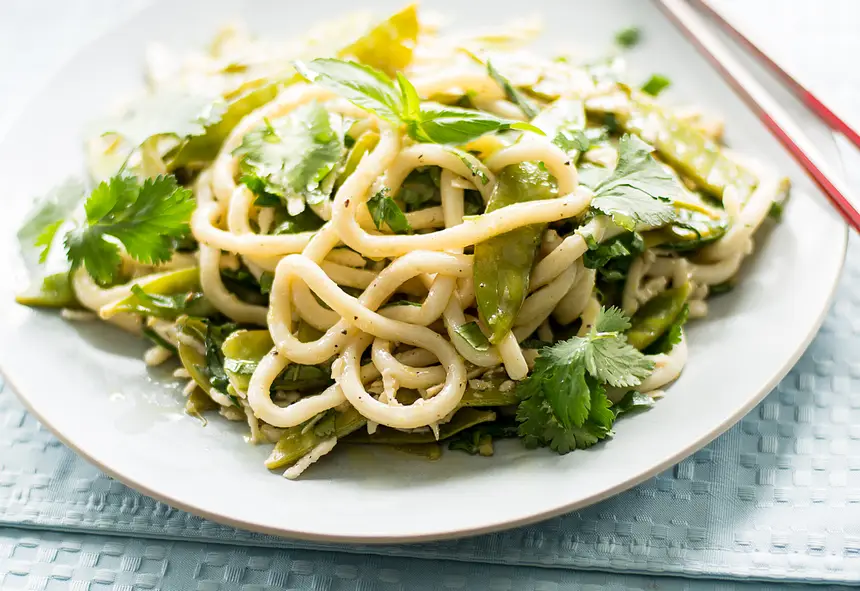
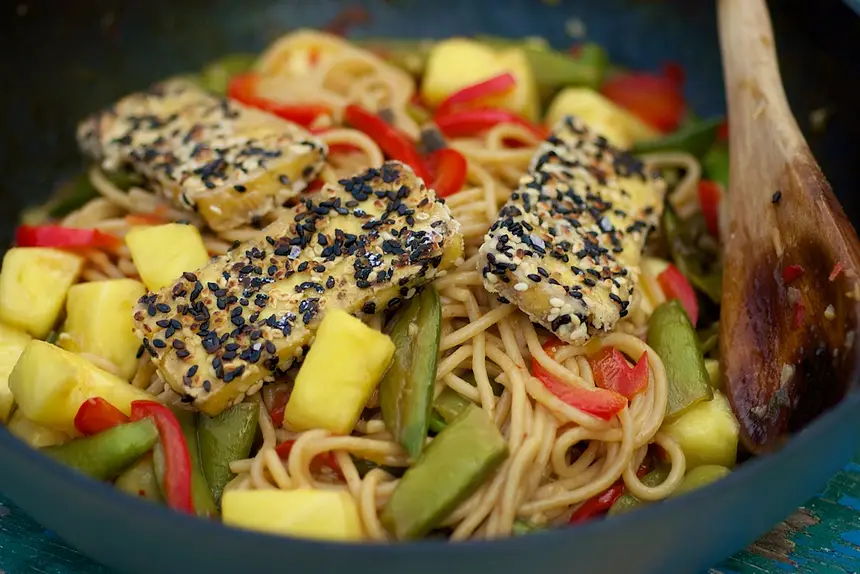
A modern Asian twist brings this pasta salad to new heights. Udon noodles with crunchy snow peas glazed with a lemon-pepper coconut dressing and bursting with fresh basil and cilantro.
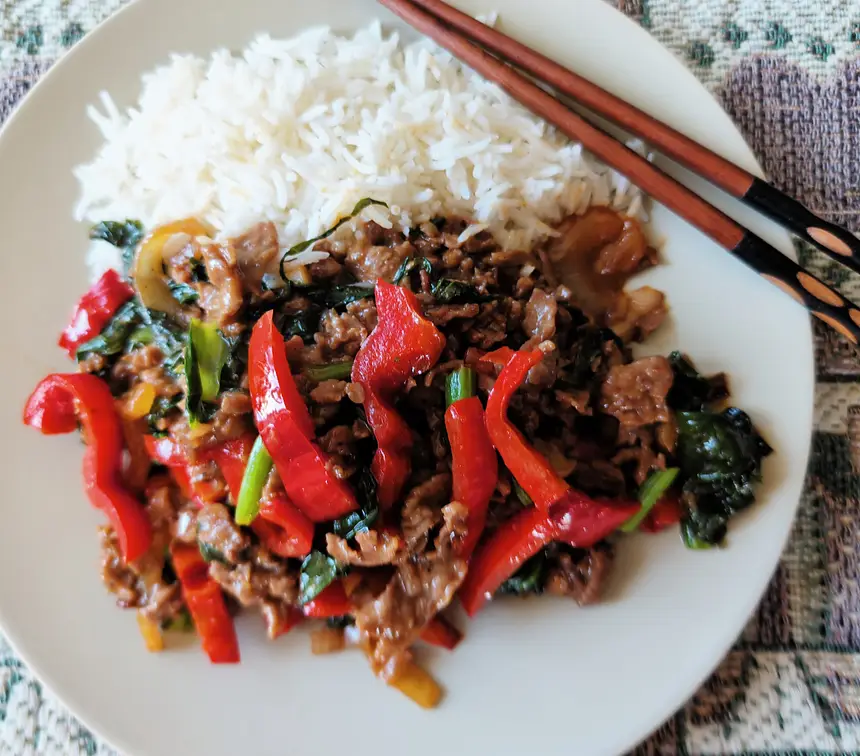
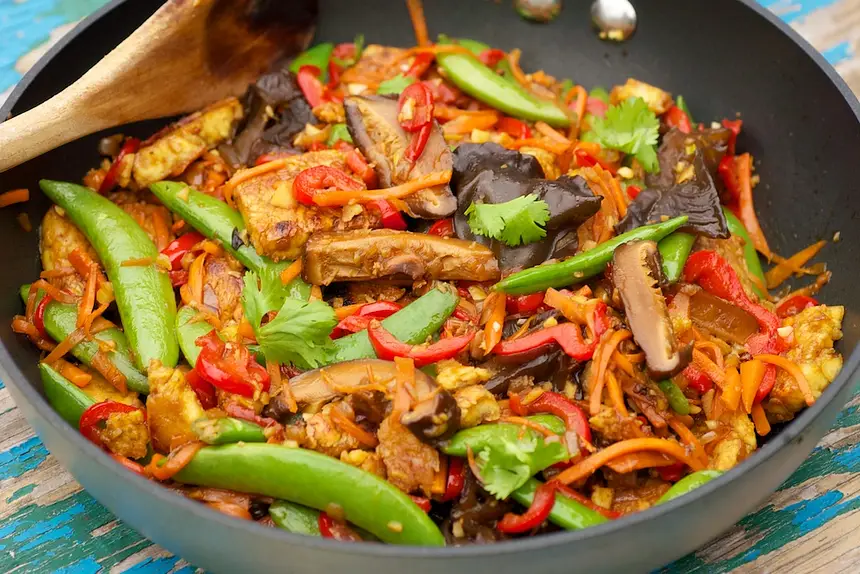
Japanese-style beef stir-fry with thinly sliced flank steak, snow peas, red pepper, escarole, and fresh ginger in a soy-brown sugar glaze. A fast, colorful skillet dinner.
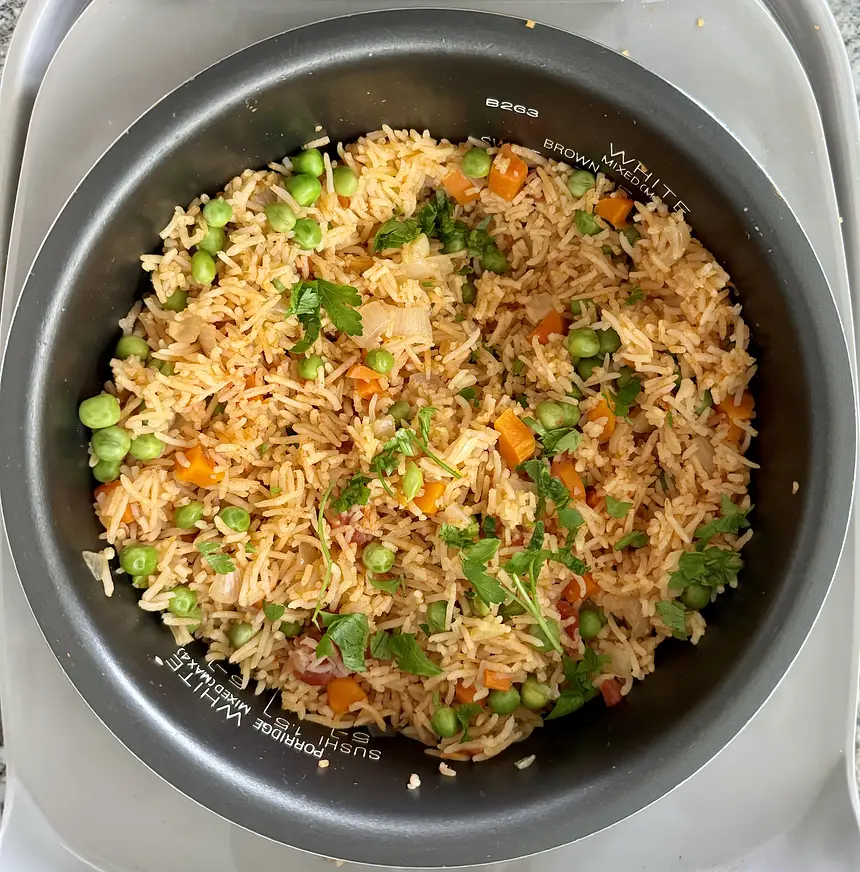
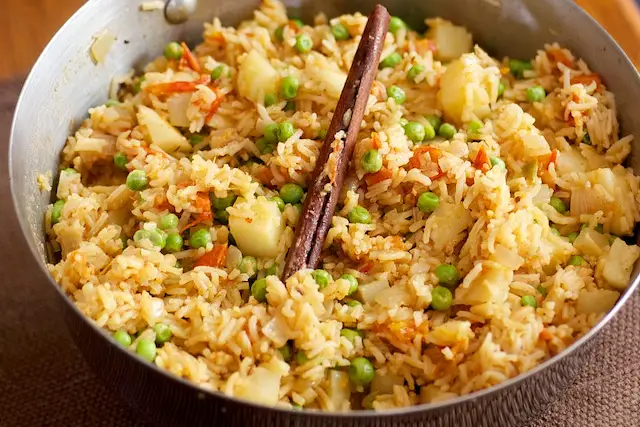
Easy Mexican rice with carrots, peas, picante sauce and canned tomatoes with green chilies. A one-pot vegetarian side dish that's ready in under an hour.
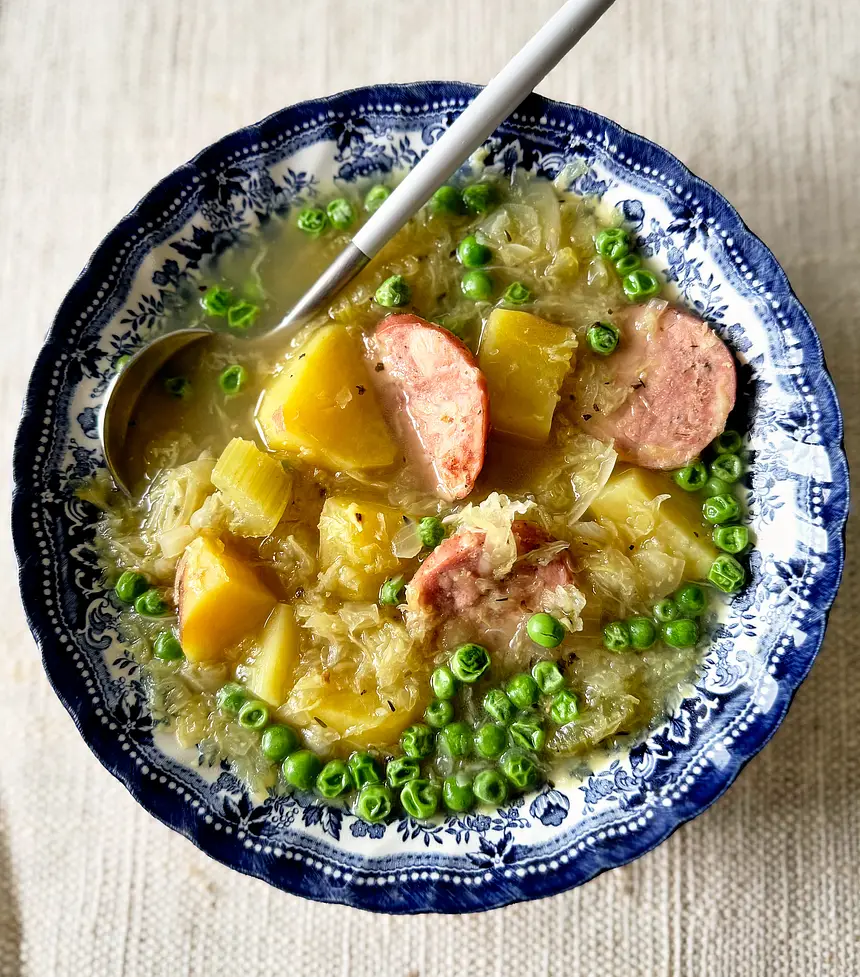
This hearty soup recipe combines the flavors of onions, celery, potatoes, kielbasa sausage, cabbage, green peas, thyme, and marjoram in a comforting stew. The ingredients are sautéed, simmered, and seasoned to perfection, creating a satisfying meal that's perfect for any day of the week.
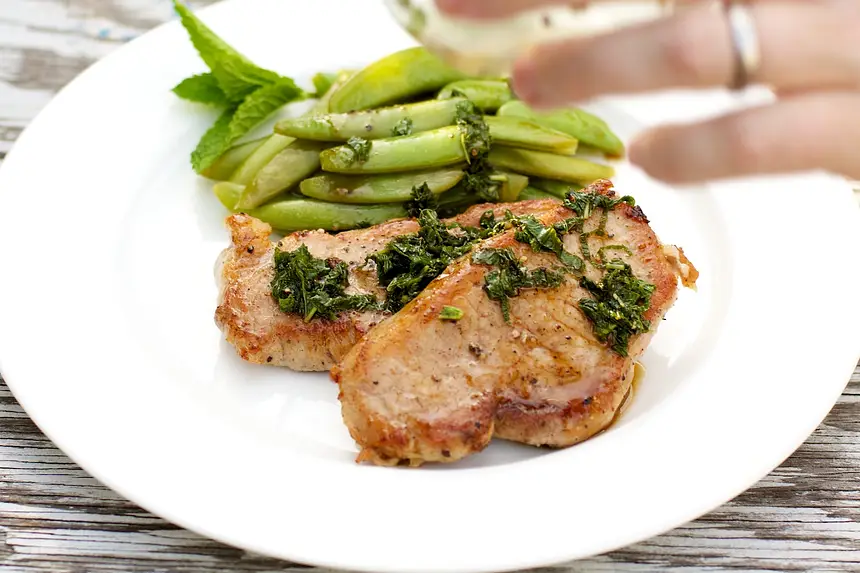
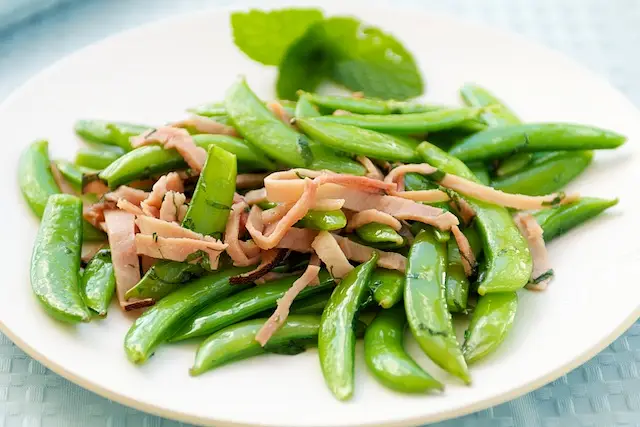
Delicious pork chops are seared in a hot skillet, sugar snap peas are cooked in a flavorful broth, which makes this one-skillet meal that's quick, easy to prepare and perfect for a week day dinner.
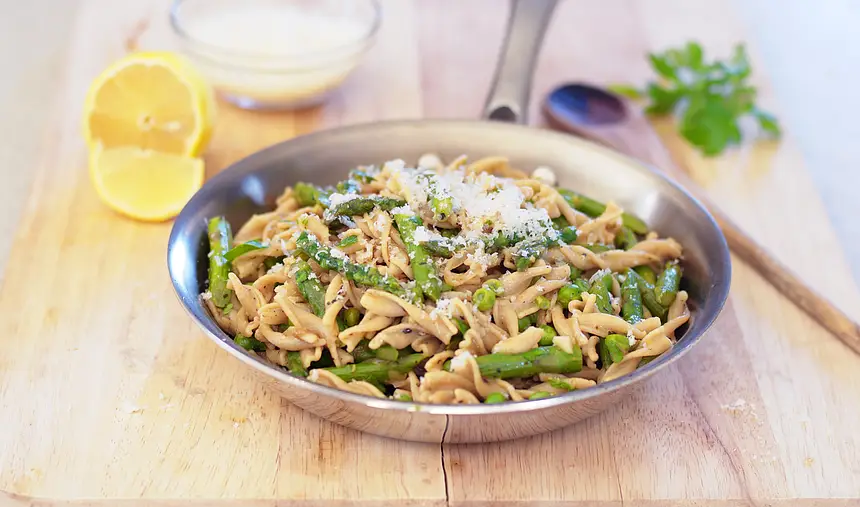
Pasta with spring asparagus and peas tossed with butter-softened onion, fresh thyme, basil, a squeeze of lemon, and grated Parmesan. A quick green spring pasta on the table in 30 minutes.
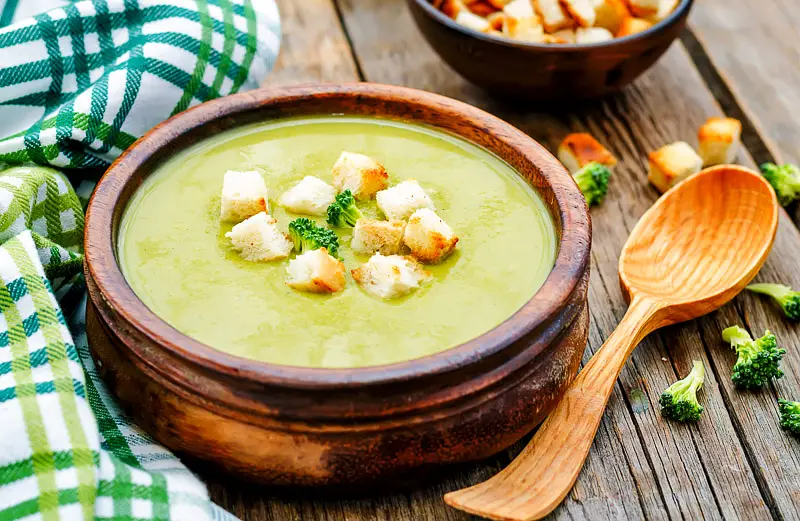
Cream of broccoli and pea soup with puréed fresh broccoli, sweet peas, and silky half-and-half. A classic homemade soup smoother than canned and far brighter in color.
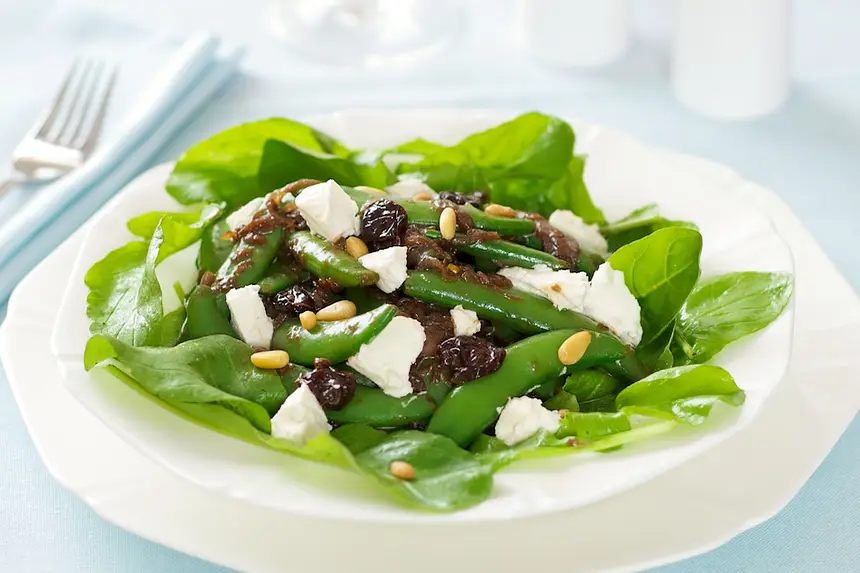
This tasty spring salad has seasonal sugar snap peas and arugula that are tossed with a light olive oil-balsamic vinaigrette, caramelized shallots and topped with some fresh goat cheese.
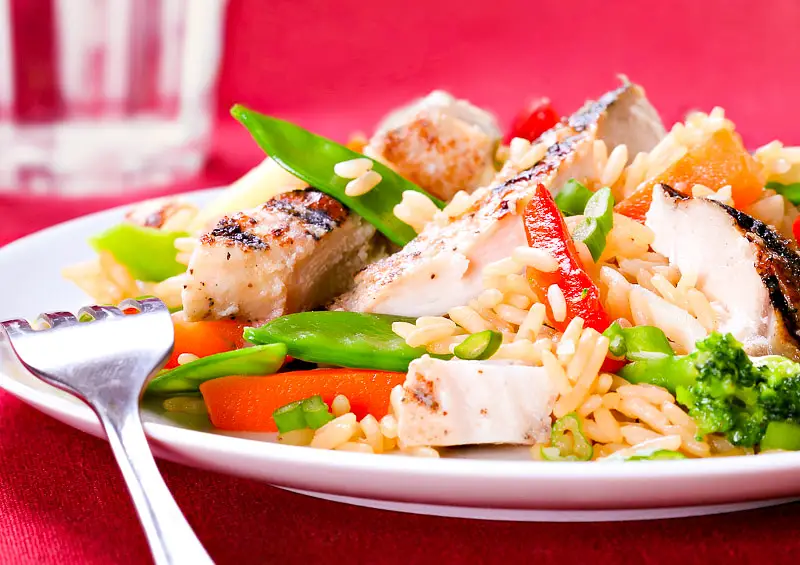
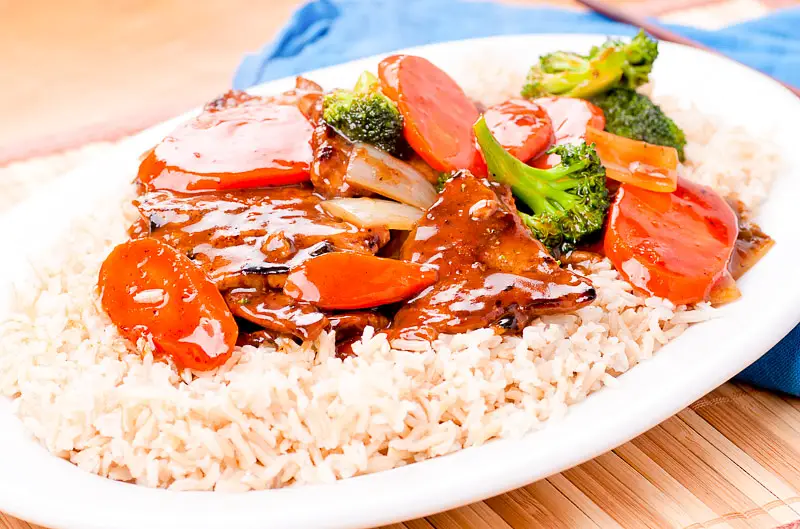
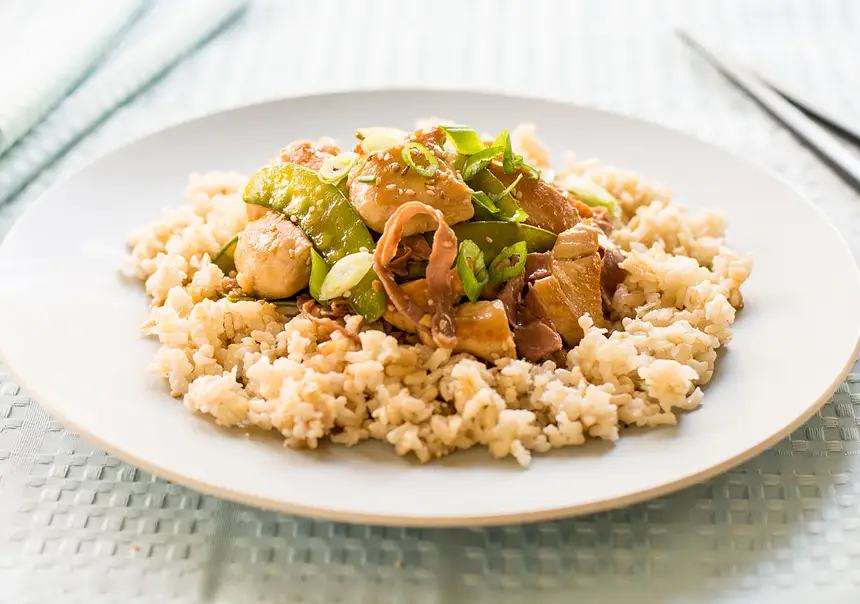
A colorful and nutritious dish that combines tender chicken pieces with crisp vegetables in a savory sauce. The combination of flavors and textures in this stir-fry creates a delicious and visually appealing dish that is sure to please everyone at the dinner table.
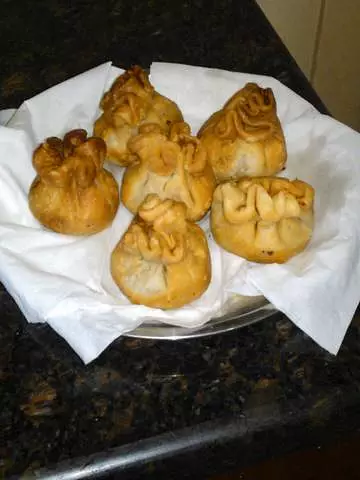
This is simply the 'BEST' and most 'UNIQUE SHAPED' samosa I have seen in all my life!These little potli samosas will sure make your guests ooh and aah o'er them. I promise you will love them. This is another one of the Diwali special dishes lined up on my list of things to make this year for Diwali:) This is also something I'd love everyone to try for this coming Cookathon as the theme is appetisers, and this sure is one!
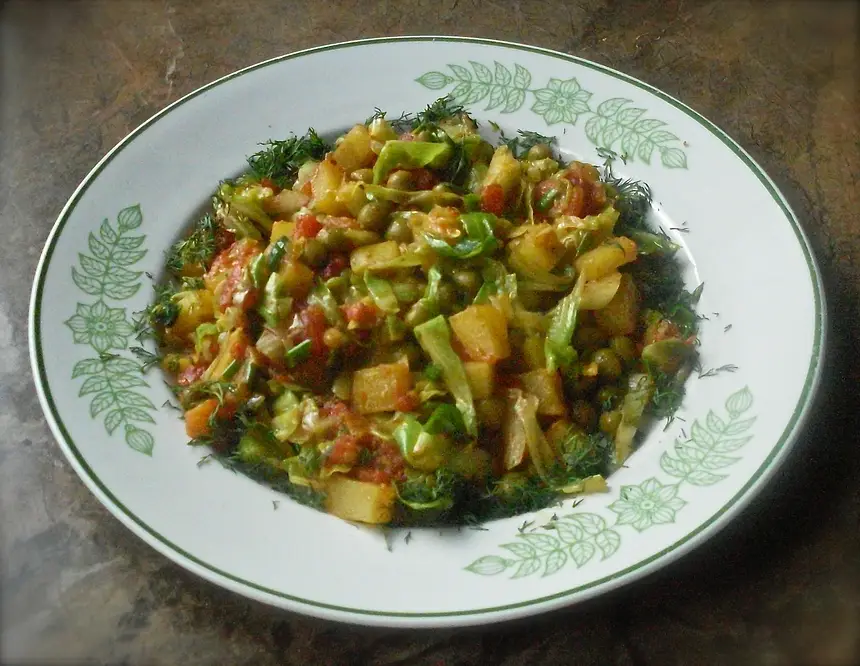
In Bangladesh, cabbage is usually available in the market during the
winter season, as are tomatoes, peas and carrots. So this dish appears
quite frequently at Bengali dinner tables during the winter. In the markets
where such vegetables are available year round, banda is a popular
standard.
This Punjabi dish, with some variation in spices, is eaten over all of
northern India. Paneer is a fresh milk cheese with an interesting, slightly chewy consistency. It's easy to make, but requires planning ahead. You can substitute a diced 6- or 8-ounce cake of pressed tofu for it in this recipe.
The best thing of this recipe is that you don't have to wait the dough to rise, you can make these rotis happen within about half an hour. And they taste delicious!
Flavorful and colorful. A classic Indian dish, the combination of yogurt, tomatoes, potatoes, rice and spices is super tasty and fills you up. Serve it as a side dish with a tangy stew or a main dish with some refreshing chutney.
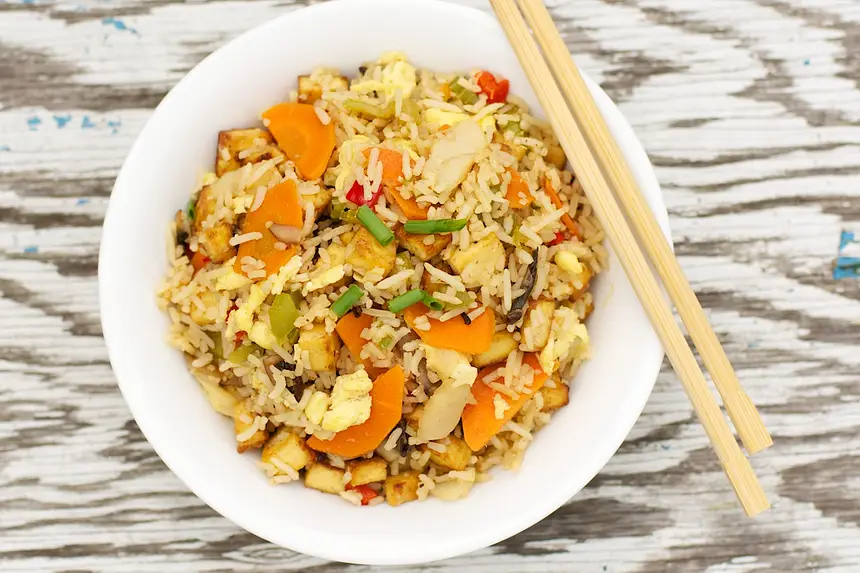
This easy fried rice is also very versatile to make. You can use any other vegetables that you have on hand. Feel free to add some scrambled eggs if you want extra protein boost. The leftover can be kept in the fridge for at least two days.
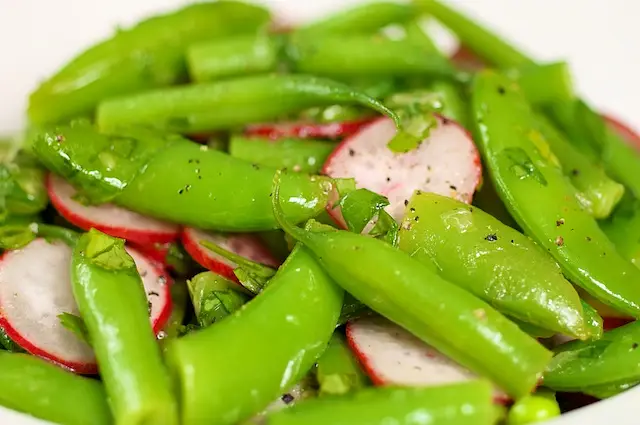
Sugar snap peas are sweet with a lovely crispiness. We think they are probably the best vegetable now commonly available. In this recipe they are combined with wax beans and radishes along with a light lime dressing that highlights the clean crisp and sweet flavors. A perfect side dish to boost the veggie intake in any meal.
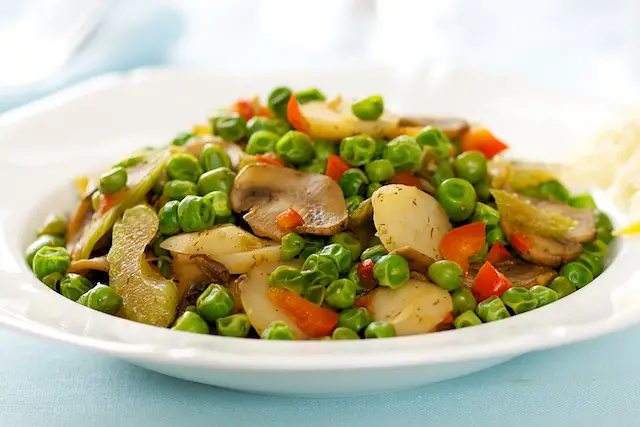
Nice way to dress up peas. The mushrooms, water chestnuts and celery add some needed texture. Just a hint of curry adds some nice warmth but is not in any way overpowering and the chicken bouillon powder infuses the flavor.
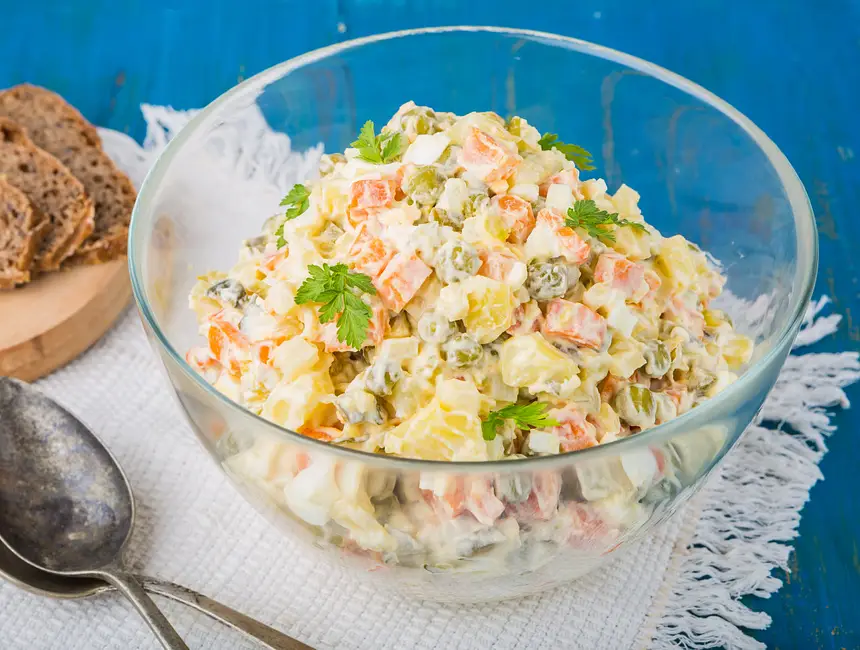
Classic Russian Olivier salad with boiled potatoes, carrots, peas, chicken, apples, and orange in a creamy egg yolk, mayonnaise, and sour cream dressing. Chilled overnight for deep, layered flavor.
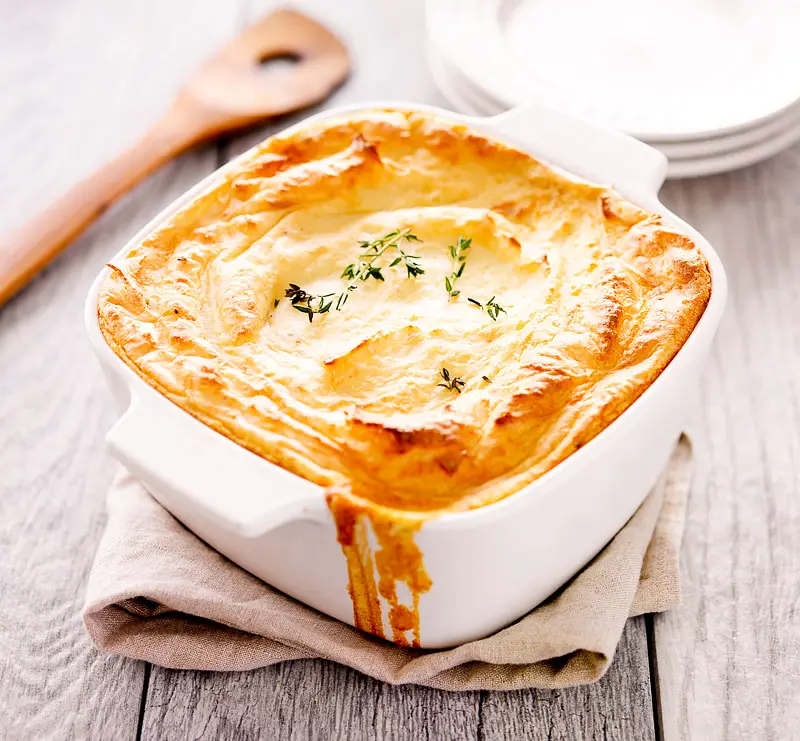
A traditional British dish, Cottage pie may be made by the same method substituting lamb and lamb stock with beef and beef stock,it may also be topped with grated cheese and tomato before browning.
Very easy to make, and packed with deliciousness. I ate it directly without anything else aside, like a whole meal for me. You can stir in one or two scrambled eggs at the end of the cooking to boost the protein.
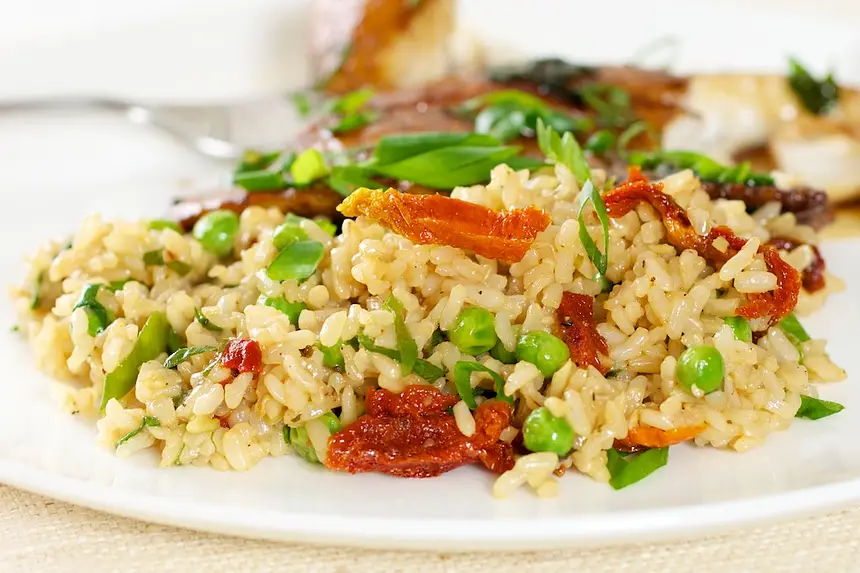
This made for a very tasty side to some salmon filets. I skipped the 2 hour soak time. Didn't need it, since my rice cooks in about 20 minutes anyway. I used shiitakes for the mushrooms.
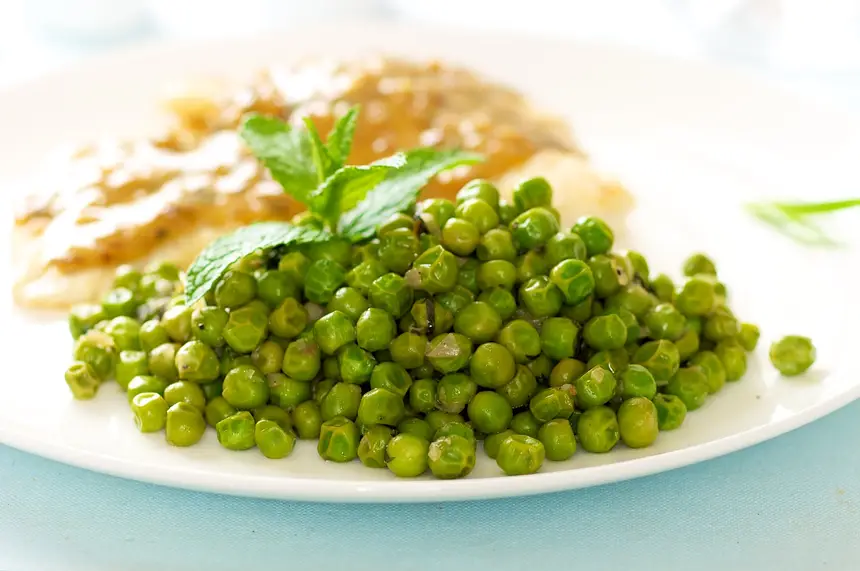
A very refreshing and tasty sauce! We had lots of frozen peas and lots of fresh mint growing at our backyard, this recipe was perfect for us to use up some of the peas and mint.