Search
by Ingredient

What Are Herbs and How Can I Use Them?

If herbs have turned up in a recipe or caught your eye at the store, here's what you need to use them with confidence and how to choose them, cook them, store them, what to substitute, and 139 recipes to try them in.

What are herbs?

Herbs have a variety of uses including culinary, medicinal, or in some cases even spiritual usage. General usage differs between culinary herbs and medicinal herbs.

In medicinal or spiritual use any of the parts of the plant might be considered "herbs", including leaves, roots, flowers, seeds, resin, root bark, inner bark (cambium), berries and sometimes the pericarpor other portions of the plant.

Types of herbs

Specific kinds of herbs and the recipes that use them.

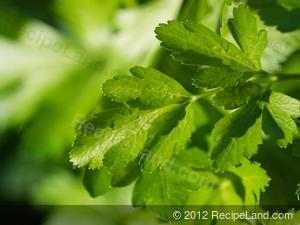
parsley leaves

Parsley leaves

Parsley is a bright green biennial herb, often used as spice. It is common in Middle Eastern, European, and American cooking. In modern cooking, parsley is used for its leaf in much the same way as coriander (which is also known as Chinese parsley or cilantro), although parsley is perceived to have a milder flavor.

In Central and Eastern Europe and in West Asia, many dishes are served with fresh green chopped parsley sprinkled on top. Green parsley is often used as a garnish.

The fresh flavor of the green parsley goes extremely well with potato dishes (french fries, boiled buttered potatoes or mashed potato), with rice dishes (risotto or pilaf), with fish, fried chicken, lamb or goose, steaks, meat or vegetable stews.

cilantro

Cilantro

The leaves are variously referred to as coriander leaves , Chinese parsley , cilantro (in America, from the Spanish for the plant).

The leaves have a different taste from the seeds, with citrus overtones. Some perceive an unpleasant "soapy" taste or a rank smell and avoid the leaves. The flavours have also been compared to those of the stink bug, and similar chemical groups are involved (aldehydes).

The fresh leaves are an ingredient in many South Asian foods (particularly chutneys), in Chinese dishes and in Mexican dishes, particularly in salsa and guacamole and as a garnish.

Chopped coriander leaves are a garnish on cooked dishes such as dal and curries. As heat diminishes their flavor quickly, coriander leaves are often used raw or added to the dish immediately before serving.

cilantro

basil

Basil

Basil is one of the most versatile fresh herbs in any kitchen. Sweet basil has a bright green leaf with a mild clove-anise aroma. It mellows under heat but stays brilliant when used raw.

The species name is Ocimum basilicum and it belongs to the mint family. You will find it in the produce section at most grocery stores.

Most shops sell it in plastic clamshells with moist paper towels inside. Pick packages where the leaves look perky and uniformly green. Yellow edges or limp stems mean the bunch has been sitting too long.

The stems should snap cleanly when bent. Fresh basil leaves have a delicate structure. They break down fast when exposed to high heat.

Most recipes add it at the very end. Torn or chopped by hand is better than sliced with a blade. A dull knife bruises the edges and turns them black.

Roll the leaves into a tight cylinder and slice thin for a chiffonade cut.

Stacked basil leaves illustration Chiffonade basil rolled leaves step 2 Chiffonade basil leaves step 3

Dried Basil

Dried basil exists. Nobody who knows better actually uses it. The essential oils that give fresh basil its aroma evaporate during drying. What is left tastes like crushed hay with a faint herbal ghost behind it.

If your recipe allows it, skip the jar and use fresh leaves. A small handful of fresh is always better than a big spoonful of dried.

Dried basil works in a pinch for long-simmered sauces where it will cook for hours. It has no place in a fresh caprese salad or a quick pasta topping.

oregano

Oregano

Laurie's Words on Herbs - All about Oregano

Oregano is a common herb used in Greek and Italian cooking among other regions.

oregano

Oregano is high in antioxidant activity, due to a high content of phenolic acids and flavonoids. Additionally, oregano has demonstrated antimicrobial activity against food-borne pathogens such as Listeria monocytogenes. Both of these characteristics may be useful in both health and food preservation.

The dish most commonly associated with oregano is pizza.

oregano

Variations have probably been eaten in Southern Italy for centuries.

In the US returning World War II soliders brought back a taste for what they called "the pizza herb".

thyme

Thyme

Thyme is a good source of iron and is widely used in cooking.

Thyme is often used to flavour meats, soups and stews. It has a particular affinity to and is often used as a primary flavour with lamb, tomatoes and eggs.

Thyme, while flavourful, does not overpower and blends well with other herbs and spices.

fresh thyme close-up

Thyme is sold both fresh and dried. The fresh form is more flavourful but also less convenient; storage life is rarely more than a week. While summer-seasonal, fresh thyme is often available year-round.

Thyme

Fresh thyme is commonly sold in bunches of sprigs. A sprig is a single stem snipped from the plant. It is composed of a woody stem with paired leaf or flower clusters ("leaves") spaced ½ to 1" apart. A recipe may measure thyme by the bunch (or fraction thereof), or by the sprig, or by the tablespoon or teaspoon. If the recipe does not specify fresh or dried, assume that it means fresh.

Thyme

Depending on how it is used in a dish, the whole sprig may be used , or the leaves removed and the stems discarded. Usually when a recipe specifies 'bunch' or 'sprig' it means the whole form; when it specifies spoons it means the leaves. It is perfectly acceptable to substitute dried for whole thyme.

Fresh thyme

Leaves may be removed from stems either by scraping with the back of a knife, or by pulling through the fingers or tines of a fork. Leaves are often chopped.

Thyme retains its flavour on drying better than many other herbs. As usual with dried herbs less of it is required when substituted in a recipe.

dill weed

Dill weed

Dill weed is the soft, feathery green frond of the dill plant, the herb that defines pickles, gravlax, and a cool cucumber salad. The name "dill weed" simply separates the leaf from dill seed, the flatter spice harvested from the same plant.

The leaf tastes fresh and grassy with a clean, slightly anise-like lift. It pairs almost reflexively with fish, cucumber, potato, and anything sour and creamy, which is why it anchors so much Northern and Eastern European cooking.

Bunch of fresh dill weed

rosemary leaves

Rosemary leaves

Rosemary is a woody Mediterranean herb with stiff, needle-like leaves and a strong piney, almost resinous aroma. It is one of the sturdiest herbs in the kitchen, which means it can take real heat and long cooking without fading.

The flavor is bold and slightly bitter, with notes of pine, pepper, and lemon. A small amount carries a whole roast, so rosemary is a back-off-a-little herb, not a pile-it-on one.

That toughness is why it works the way it does. Unlike soft herbs that wilt the moment they hit heat, rosemary holds its flavor through a long roast or bake, so it goes in early rather than at the end.

mint leaves

Mint leaves

The leaf, fresh or dried, is the culinary source of mint. Fresh mint is usually preferred over dried mint when storage of the mint is not a problem. The leaves have a pleasant warm, fresh, aromatic, sweet flavor with a cool aftertaste.

mint leaves

Mint leaves are used in teas, beverages, jellies, syrups, candies, and ice creams. In Middle Eastern cuisine, mint is used on lamb dishes, while in British cuisine and American cuisine, mint sauce andmint jelly are used, respectively.

Mint is a necessary ingredient in ** Touareg tea**, a popular tea in northern African and Arab countries.

Alcoholic drinks sometimes feature mint for flavor or garnish, such as the Mint Julep and the Mojito. Crème de menthe is a mint-flavorer liqueur used in drinks such as the grasshopper.

**Mint essential oil and menthol are extensively used as flavorings in breath fresheners, drinks, antiseptic mouth rinses, toothpaste, chewing gum, desserts, and candies.

sage

Sage

Sage is a pungent, earthy herb with a warm, faintly piney flavor and soft gray-green leaves. It is one of the strongest of the soft herbs, so a little goes a long way.

This is the herb of cool-weather cooking, the one behind Thanksgiving stuffing and pork roasts. Its big resinous flavor stands up to rich, fatty food the way most leafy herbs cannot.

sage

marjoram

Marjoram

Marjoram is a somewhat cold-sensitive perennial herb or undershrub with sweet pine and citrus flavours. In some middle-eastern countries, Marjoram is synonymous with Oregano, and there the names Sweet Marjoram and Knotted Marjoram are used to distinguish it from other plants of the genus Origanum.

The name marjoram does not directly derive from the Latin word maior (major). Marjoram is indigenous to the Mediterranean area and was known to the Greeks and Romans as a symbol of happiness.

Marjoram is cultivated for its aromatic leaves , either green or dry, for culinary purposes; the tops are cut as the plants begin to flower and are dried slowly in the shade. It is often used in herb combinations such as Herbes de Provence and Za'atar.

The flowering leaves and tops of Marjoram are steam distilled to produce an essential oil that is yellowish in color (darkening to brown as it ages). It has many chemical components, some of which are borneol, camphor and pinene.

Although considered cold-sensitive, marjoram can sometimes prove hardy even in zone 5.

tarragon leaves

Tarragon leaves

Tarragon is a slender green herb with a distinct anise or licorice perfume, the defining flavor of French cooking's bearnaise sauce and a classic match for chicken. The leaves are narrow and pointed, and a little goes a long way.

There are two main types, and the difference matters. French tarragon has the rich, sweet anise flavor cooks want. Russian tarragon is hardier but coarse and nearly flavorless.

So buy a French tarragon plant, not seed, because true French tarragon does not grow true from seed.

It is one of the four French fines herbes, and it leans more aromatic and assertive than the chervil, parsley, and chives it sits beside.

savory

Savory

Savory is an aromatic herb in the mint family with a peppery, thyme-like flavor and a hint of marjoram. If you have never cooked with it on its own, picture thyme with more bite and a faint resinous edge.

There are two kinds you will run into. Summer savory is the milder, sweeter annual, while winter savory is a hardier perennial with a sharper, more pungent, almost pine-like punch. Summer savory is the one most recipes mean and the one most cooks prefer.

Its nickname, the bean herb, says a lot. Across Europe savory is the traditional partner for beans and lentils, and it is a core herb in herbes de Provence.

Mixed herbs

Mixed herbs is the everyday jar of dried savory herbs that lives in nearly every kitchen. It is the workhorse you shake over a roast or stir into a sauce without thinking too hard about it. One jar, a dozen uses.

The classic blend leans on Mediterranean leaves: oregano, basil, thyme, marjoram, parsley, and sometimes rosemary or sage. The exact mix depends on the brand and the style.

An Italian-style blend pushes oregano and basil, while an herbes de Provence style brings in lavender and fennel for a more floral, southern-French character.

It is a savory blend, not a sweet one, so it belongs in dinner, not dessert.

chervil

Chervil

Chervil is a delicate, lacy green herb that tastes like parsley crossed with a whisper of anise. It belongs to the carrot family and grows feathery fronds that look a lot like flat-leaf parsley shrunk down and softened.

In the kitchen its big claim to fame is being one of the classic fines herbes of French cooking. That quartet of parsley, chives, tarragon, and chervil lives on eggs and cream sauces, and chervil is the quiet anise note tying it together.

The catch is that chervil is fragile. Its flavor is faint and it fades fast with heat, so almost everything about cooking with it comes down to timing.

fenugreek

Fenugreek

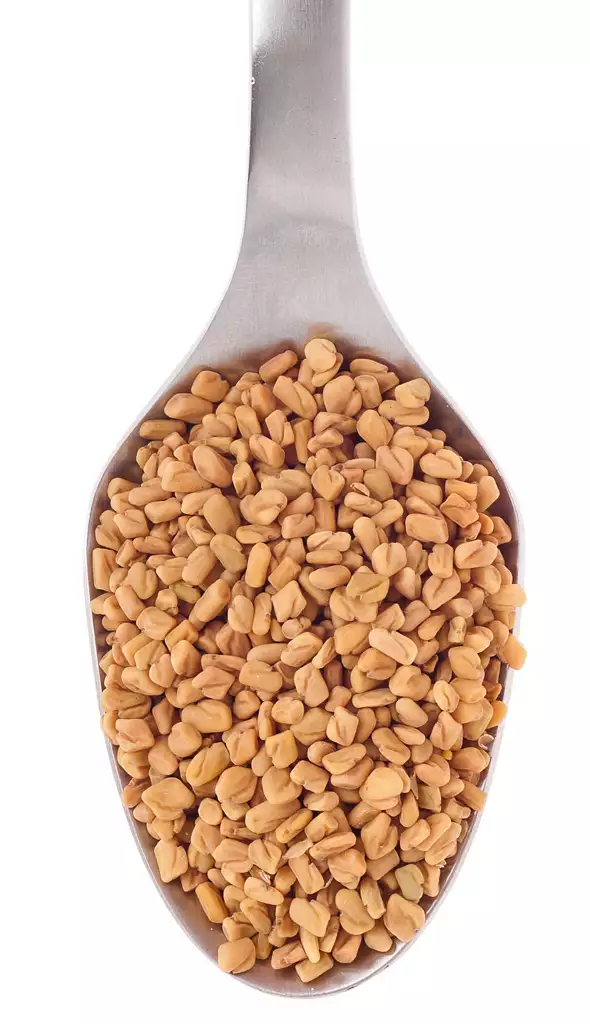
Fenugreek is a Mediterranean and West Asian plant in the pea family, grown for both its seeds and its leaves. The seeds are the part most cooks mean by fenugreek: small, hard, amber-brown, and squared off at the ends like tiny pebbles.

Those seeds have a curious double character. Raw, they are bitter. Toasted, they turn warm and nutty with an unmistakable scent of maple syrup and burnt sugar.

That maple note is no accident. Fenugreek and artificial maple flavoring share the same aroma compound, sotolon.

Fenugreek is the quiet backbone of much Indian, Sri Lankan, and North African cooking. It hides inside curry powders and spice blends, lending the deep, savory undertone you cannot quite name.

Fenugreek seeds on a spoon

fenugreek seeds

Fenugreek seeds

Fenugreek is an aromatic Mediterranean plant coming from the Middle-East.

It belongs to the pea family and produces slender, long, curved pods that contain flattened brownish coloured seeds.

Fenugreek seeds have a slightly bitter taste that are roasted and ground and used for flavouring curries. The distinct flavour of Fenugreek is readily recognized in many curry powders and pastes.

The seeds are stone-like and very hard and requires use of a special grinder or heavy pestle and mortar.

Fenugreek leaves have a very strong aroma and in India, Turkey and various Arab countries are used either fresh or dried as a culinary vegetable or herb.

Italian herbs

Italian herbs, sold as Italian seasoning, is a dried blend built around oregano, basil, thyme, rosemary, and marjoram. Some jars add sage or savory, but those five carry the flavor: the warm, slightly peppery, faintly piney note you taste in pizza sauce and red-sauce pasta.

It is a shortcut, and a good one. Instead of measuring five jars, you reach for one spoonful that already balances them. That convenience is why it shows up across pasta, pizza, soups, marinades, and herby breads.

The catch is that it is dried, so it behaves differently from a handful of fresh basil. Used right, it carries a whole pot of sauce.

Sorrel leaves

Sorrel is a leafy green herb with a sharp, lemony, almost sour tang that sets it apart from every other green on the produce shelf. The arrow-shaped leaves look a lot like young spinach, but one bite tells you they're something else entirely.

That tartness comes from oxalic acid, the same compound in rhubarb, and it's the whole reason cooks reach for the plant. Sorrel brings built-in acidity, so it can do the job lemon usually does, but as a leaf rather than a squeeze of juice.

Two kinds turn up in kitchens. Common garden or broadleaf sorrel has large, mild leaves, while French sorrel is smaller, more shield-shaped, and the finer-flavored of the two. This is the cooking green and has nothing to do with the red hibiscus drink also called sorrel in the Caribbean.

Lovage

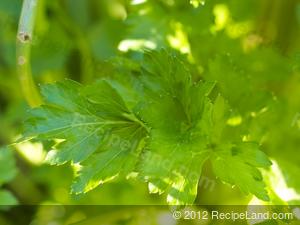
Lovage is a tall leafy herb that tastes like celery turned up loud, with a savory, almost yeasty depth behind it. The leaves look a bit like flat-leaf parsley, but one bite makes the celery character obvious right away.

It is an old European garden herb that has fallen out of fashion. That is a shame, because a single handful can carry the whole celery note in a pot of soup, and both the leaves and the hollow stems are edible.

Think of lovage as a concentrate. Where a recipe calls for a stalk or two of celery, a few lovage leaves do the same job and then some.

Fine herbs

Fine herbs, from the French fines herbes, is the classic delicate herb blend of French cooking: parsley, chives, chervil, and tarragon in roughly equal parts. The point is subtlety, a fresh green lift rather than a bold, dominant flavor.

It is a workhorse of egg and fish cookery, the seasoning behind a proper French omelet and a hundred light cream sauces. Tarragon gives a faint anise note, chervil a soft parsley-like sweetness, chives a whisper of onion, and parsley ties it together.

Traditionally fines herbes are fresh and finely chopped. Dried blends sold under the name are common and convenient too.

The rule is the same either way: go gently and add them late.

Epazote

Epazote is a pungent Mexican herb with a flavor that takes some getting used to. People describe it as a mix of oregano, mint, citrus, and something resinous, almost like petroleum or creosote, and it smells far stronger than it tastes once cooked.

It grows wild across Mexico and is a backbone of the country's home cooking, most famously in a pot of black beans. The jagged, pointed leaves are used both fresh and dried.

This is a love-it-or-hate-it herb raw. But cooking tames it into a savory, herby depth that is hard to name and easy to miss once you know it.

Lemon thyme

Lemon thyme is a thyme variety that carries a genuine lemon scent alongside the usual earthy, woody thyme flavor. The citrus comes from natural oils in the leaf, not from anything added, so it tastes like thyme and lemon at once rather than one flavor pretending to be the other.

That double note makes it a favorite for fish and chicken, where regular thyme can feel a little heavy and a hit of lemon would help. It works anywhere you want thyme plus a clean citrus lift without reaching for a lemon.

For general thyme handling, see thyme. This page is about the lemon difference.

Sorrel

Sorrel is a leafy green herb known for one thing: a sharp, lemony tartness that comes from the oxalic acid in its leaves. The arrow-shaped leaves look like young spinach but taste bright and sour, almost like green apple peel.

You use it as both a herb and a vegetable. A few raw leaves wake up a salad, while a big handful cooks down into a tart green puree that becomes a sauce in its own right.

That sourness is the whole appeal. Sorrel brings the lemon to a dish without the watery dilution of actual lemon juice.

Herbes de provence

Herbes de Provence is a dried herb blend named for the south of France, built around the herbs that grow wild on its hillsides. A typical mix leans on thyme, rosemary, savory, marjoram, and oregano, with some blends adding a little lavender or fennel.

The flavor is woodsy and savory with a slight floral edge from the lavender, if your blend includes it. North American versions almost always do, while many traditional French ones leave it out.

It is a workhorse for roasted meats and vegetables, and for anything off the grill.

Spearmint leaves

Spearmint is the everyday cooking mint, the soft, sweet, grassy one most people picture when they hear the word mint. It has very little menthol compared to peppermint, so instead of a cold blast you get a gentle, herbal freshness that plays well with food.

That mildness is why spearmint is the leaf in your mojito and your tabbouleh. It folds into savory dishes without taking over, and it stays bright and green when chopped fresh.

For general mint prep and storage, see mint leaves. Here the focus is on what makes spearmint the workhorse.

Tarragon sprigs

A tarragon sprig is a whole stem of fresh tarragon (Artemisia dracunculus), the slender herb with smooth, pointed dark-green leaves and a flavor of anise crossed with a faint pepper.

When a recipe calls for sprigs rather than chopped leaves, it usually wants the whole stem to infuse a dish and then come out.

French cooks treat tarragon as one of the four classic fines herbes, alongside parsley, chervil, and chives, and it is the defining note in bearnaise. Its licorice-like aroma is strong and a little goes a long way.

Buy French tarragon for cooking. The Russian type is hardier in the garden but almost flavorless, so a sprig of it adds nothing.

Fenugreek leaves

Fenugreek leaves are the tender green leaves of the fenugreek plant, the same plant that gives the well-known seeds. In Indian cooking they go by methi, and they are treated as both a vegetable and a herb depending on how they are cut and cooked.

The leaves taste like the seeds' gentler cousin. There is a faint bitterness, but it is softer and more grassy, somewhere between celery, spinach, and watercress, with none of the maple-toast intensity of the toasted seed.

For everything about the seeds, including toasting and grinding, see fenugreek. This page is about the greens.

Peppermint

Peppermint is the sharp, cold-finishing mint, the one that tastes like a candy cane rather than a garden herb. It carries a high dose of menthol, which is what makes it read as cooling on the tongue and gives it that clean, almost icy bite.

That intensity is the whole point. Peppermint runs stronger and more aggressive than everyday mint, so it does its best work in candy, chocolate, after-dinner tea, and extract, where the flavor has to cut through sugar and cream.

For general mint handling and milder savory uses, see mint leaves. This page is about where peppermint earns its place.

Lemon basil

Lemon basil is sweet basil crossed with a bright citrus note, a variety whose leaves carry the lemony compound citral on top of the usual basil perfume. The result smells like basil that walked past a lemon grove.

It is a staple in Southeast Asian cooking, especially Thai and Lao dishes, where its lemon edge stands up to fish sauce and coconut milk. Western cooks reach for it with fish, chicken, and summer desserts.

For general basil handling, see basil. This page covers what the lemon version does differently.

Quick facts

Where to find herbs: Herbs are usually found in the produce section or aisle of the grocery store or supermarket.

In Chinese
草药
British (UK) term
Herbs
en français
herbes
en español
hierbas

Recipes using herbs

There are 139 recipes that contain this ingredient.

Gazpacho (Salad Soup)

Gazpacho (Salad Soup)

StarStarStarStarEmpty star

Classic gazpacho, the chilled Spanish salad soup, with fresh tomatoes, cucumber, green pepper, olive oil and white wine vinegar. No cooking required, just blend and chill.

Winter Squash Soup with Cinnamon & Cloves

Winter Squash Soup with Cinnamon & Cloves

StarStarStarHalf starEmpty star

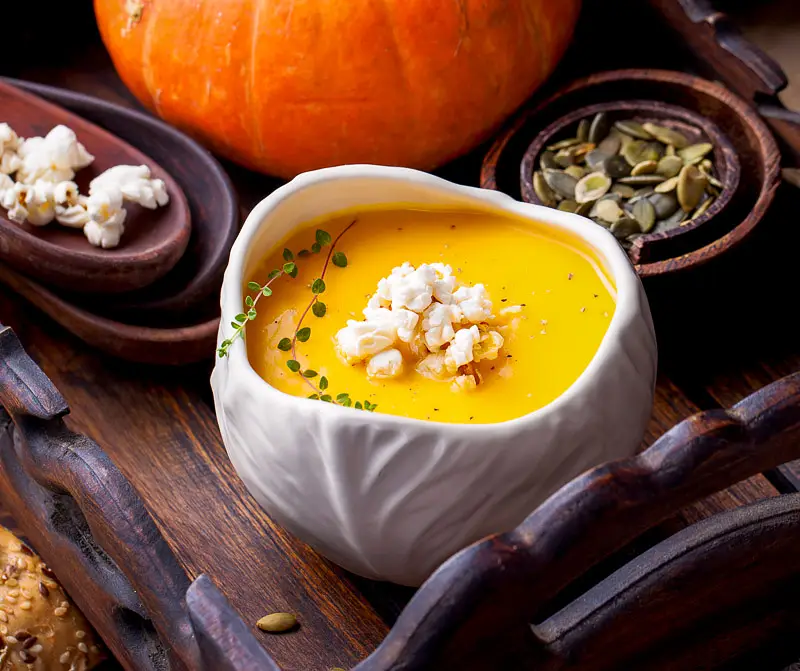
Winter Squash Soup with Cinnamon and Cloves recipe

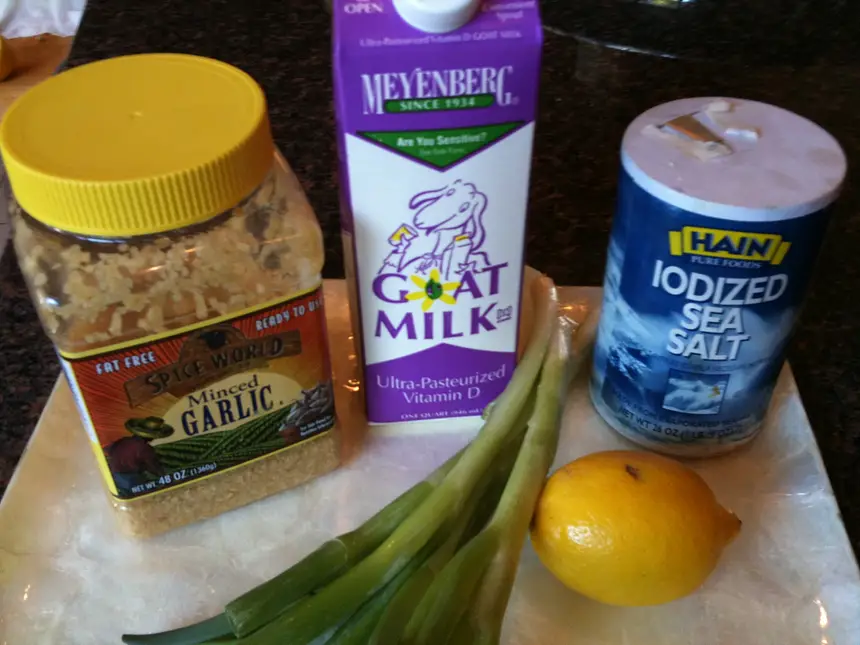
Homemade Goat Cheese Goodness

Homemade Goat Cheese Goodness

Empty starEmpty starEmpty starEmpty starEmpty star

This is so easy to make you won’t believe it. This is coming from me who could ruin the easiest of recipes.

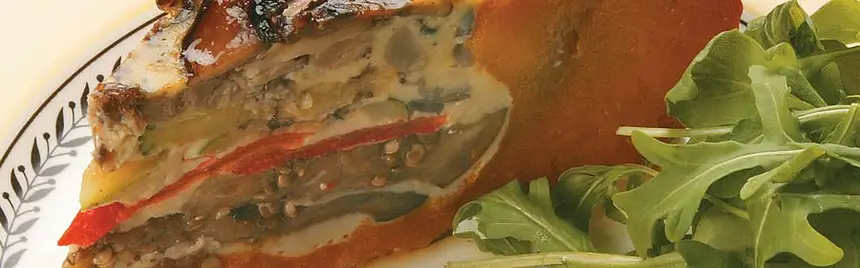
Japanese Pumpkin Frittata Served with Bush Tomato Chutney

Japanese Pumpkin Frittata Served with Bush Tomato Chutney

StarStarStarStarHalf star

Japanese-style Frittata seasoned with Australian native spices and served with Australian Bush Tomato Chutney.

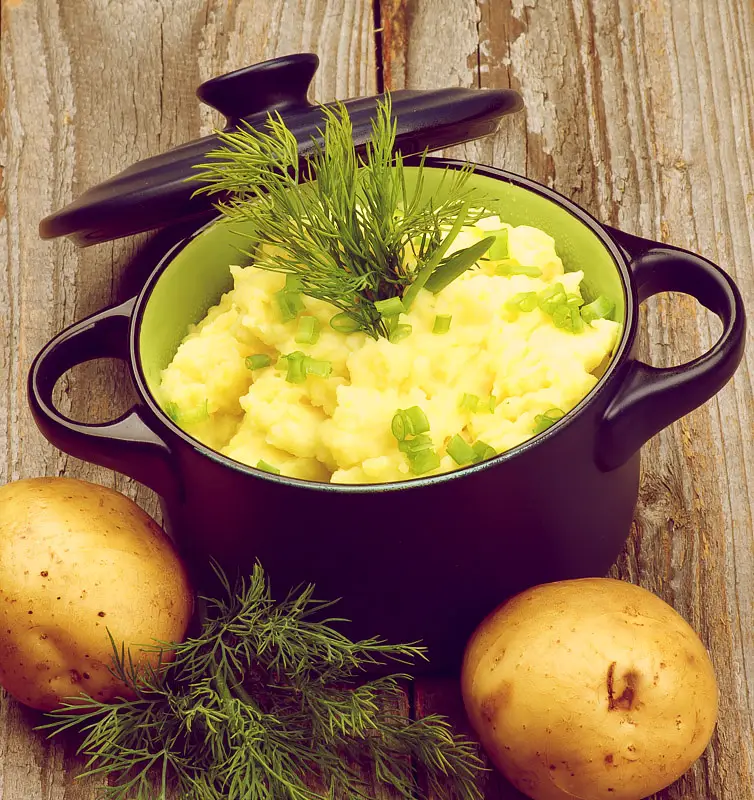
Herbed Mashed Potatoes

Herbed Mashed Potatoes

StarStarStarStarEmpty star

Our family all love mashed potatoes, we try different kinds of mashed potatoes, this herbed ones are very nice too.

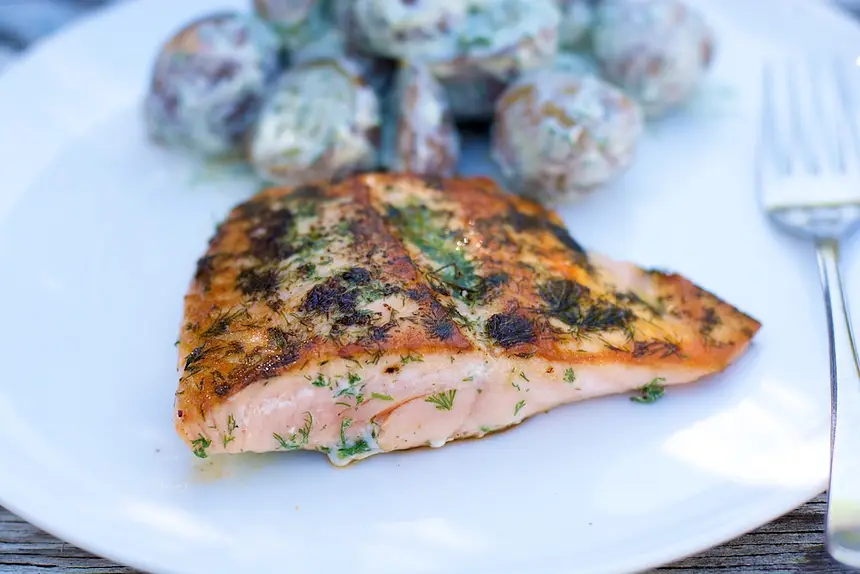
Salmon Fillet with Dilled Potatoes

Salmon Fillet with Dilled Potatoes

StarStarStarHalf starEmpty star

Quick, easy and delicious. The creamy potato salad was a great side dish to serve with dilly salmon, and we had all the goodness our bodies needed as well. A perfect dinner on a busy weekday.

Master Frittata-Frittata DIY

Master Frittata-Frittata DIY

StarStarStarStarHalf star

An easy and tasty frittata. It's also a great way to use up your leftover vegetables from the day before to make a delicious breakfast. It's very versatile, you can pretty much add any veggies or cooked chicken, or seafood, etc...

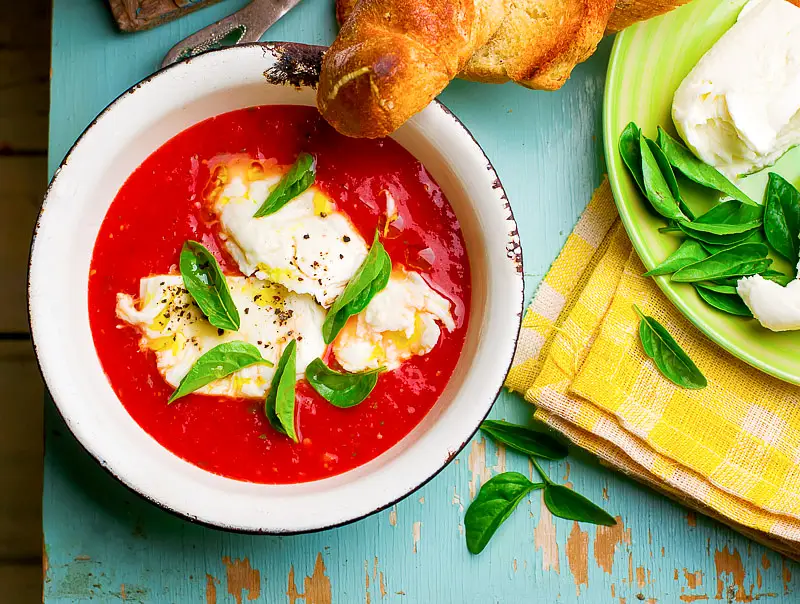
Puree of Tomato Soup

Puree of Tomato Soup

StarStarStarStarEmpty star

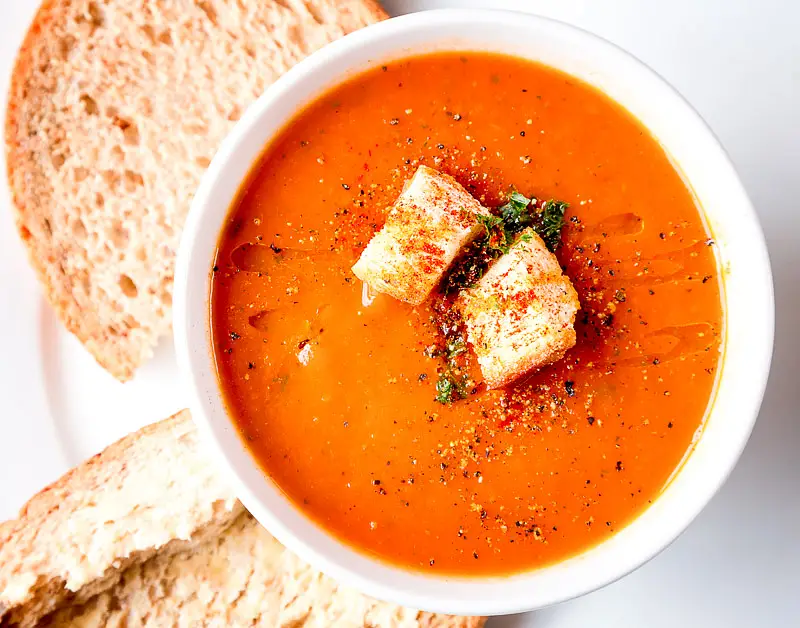
Silky pureed tomato soup made from fresh over-ripe tomatoes, slow-sweated onions, garlic, white wine and fresh herbs. Strained twice for a smooth, skin-and-seed-free bowl. Naturally vegan, no cream, with optional fresh mozzarella.

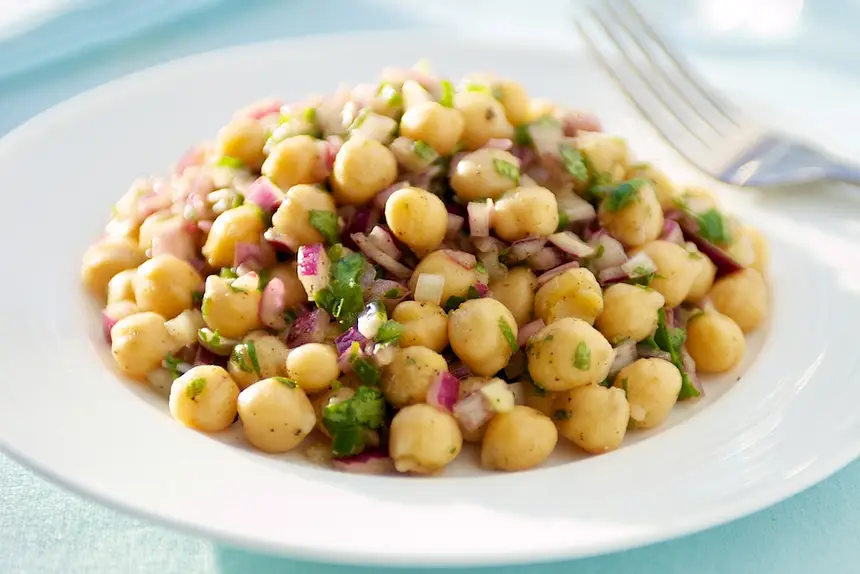
Chick Pea Salad with Garlic-Cumin Vinaigrette

Chick Pea Salad with Garlic-Cumin Vinaigrette

StarStarStarStarHalf star

A scrumptious salad made with chickpeas and jalapeno peppers that's served with a delicious vinaigrette.

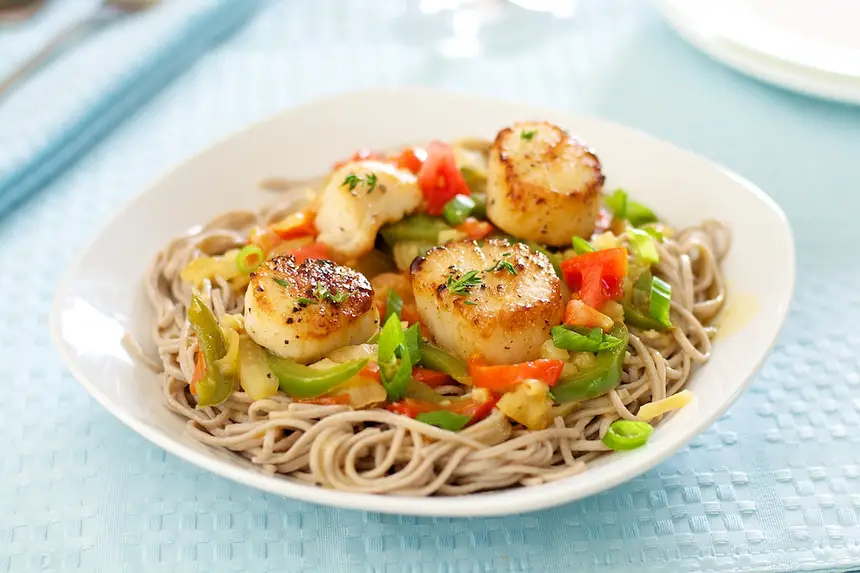
Pan Seared Scallops & Fennel Over Soba Noodles

Pan Seared Scallops & Fennel Over Soba Noodles

StarStarStarStarHalf star

Pan-seared scallops with fennel over soba noodles plates golden-crusted scallops on Japanese buckwheat noodles in a Pernod and orange pan sauce. East-meets-West restaurant plating at home.

Wood-Grilled Trout with Mission Fig Compound Butter

Wood-Grilled Trout with Mission Fig Compound Butter

StarStarStarStarHalf star

Beer pairing suggestion: American India pale ale or amber ale. The Stone World Bistro & Gardens, in Escondido, California, serves wood-grilled trout with black mission fig butter to make it taste even milder and sweeter. Mission figs are available in the dried fruit section of most large supermarkets. Untreated wood planks for grilling are available in grilling and barbecue sections of hardware store s as well as some supermarkets.

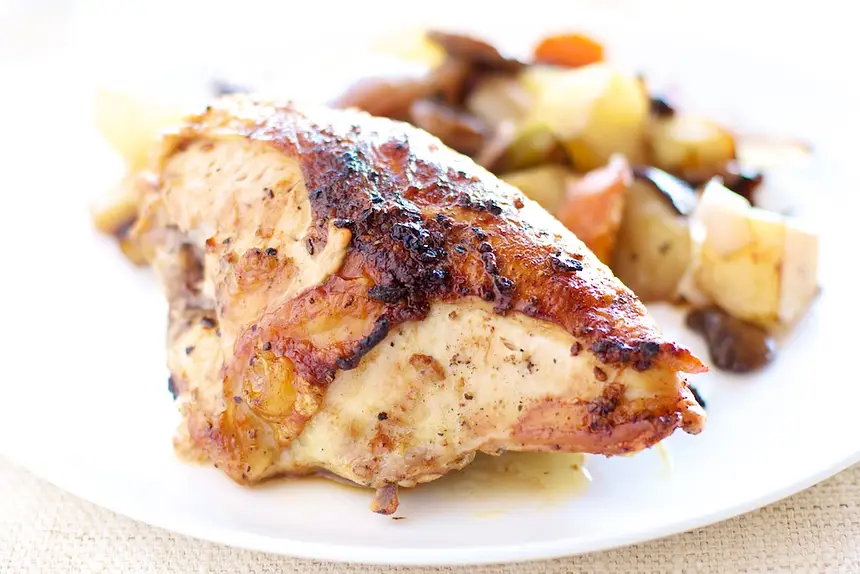
Oven Roasted Chicken With New Potatoes

Oven Roasted Chicken With New Potatoes

StarStarStarHalf starEmpty star

Easy to prepare, and the chicken comes out succulent. A delicious weekend meal.

Focaccia with Tomato & Cheese

Focaccia with Tomato & Cheese

StarStarStarStarEmpty star

Bread machine focaccia topped with tomato, mozzarella, and prosciutto, finished with fresh basil and Parmesan. Italian appetizer bread, sliceable for sandwiches.

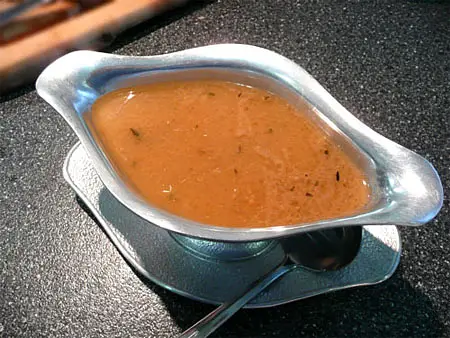
Herbed Pan Gravy

Herbed Pan Gravy

StarStarStarStarHalf star

An incredibly tasty gravy, you can use the giblets or just some chicken stock if your prefer. My mother likes to use both beef and chicken stock to improve the color of the gravy.

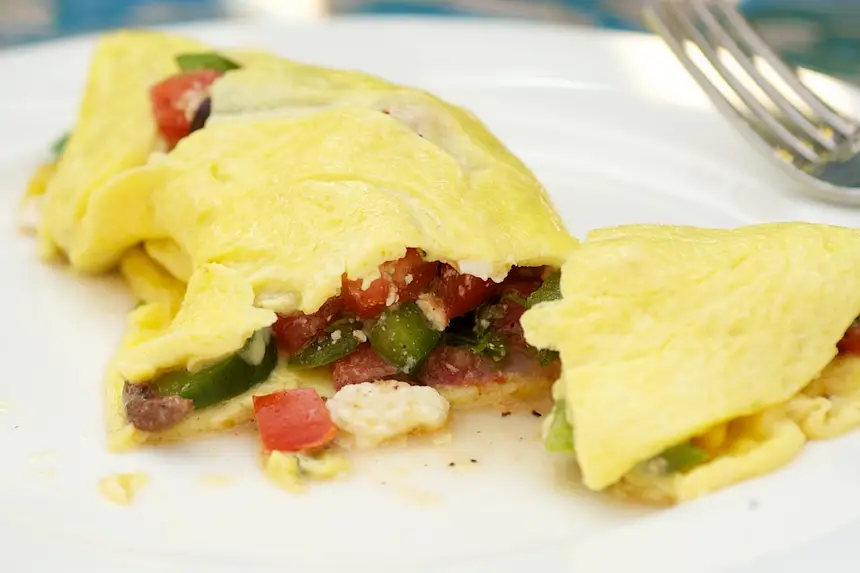
Mediterranean Omelette

Mediterranean Omelette

StarStarStarStarEmpty star

An amazing omelette with a bruschetta-like stuffing. Pleasing to the eye and incredibly satisfying to the belly. Makes for an impressive Sunday brunch sure to please.

Piroshki

Piroshki

StarStarStarStarHalf star

Piroshki: golden Russian stuffed buns of soft yeast dough wrapped around savory beef, mushroom, or buckwheat fillings, then baked or fried. The portable hand pie of Russian home cooking.

Piroshki

Piroshki

StarStarStarStarHalf star

Piroshki: golden Russian stuffed buns of soft yeast dough wrapped around savory beef, mushroom, or buckwheat fillings, then baked or fried. The portable hand pie of Russian home cooking.

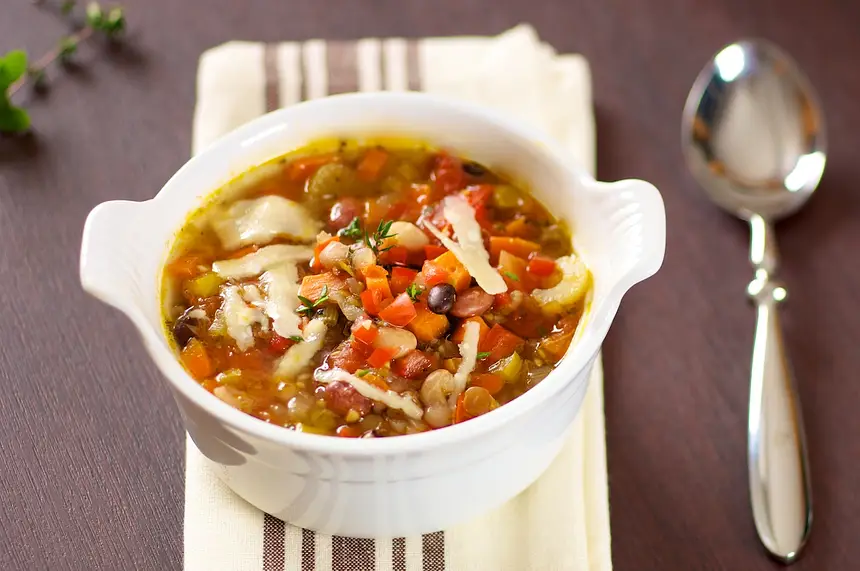
6 Bean Soup

6 Bean Soup

StarStarStarHalf starEmpty star

The soup was delicious and easy to make. Ideal for cold winter days.

placeholder

Menai Pride Mussels

StarStarStarStarStar

Menai Pride mussels pate baked in a bain-marie with herring roe, brandy, double cream, and egg yolks. A traditional Welsh seafood starter served with toast fingers.

placeholder

Tofu Provencal Club Sandwich

StarStarStarStarStar

Marinated tofu club sandwich on whole wheat French bread with bell peppers, red onion, arugula, and homemade basil mayo. Herb-infused, no cooking required, and packed with Provencal flavor.

placeholder

Lamb Shoulder in Pastry

StarStarStarStarStar

Lamb shoulder in pastry, a British-style boneless lamb roast wrapped in flaky pastry and baked golden. A traditional Sunday-dinner centerpiece with countryside roots.

placeholder

Georgia's Onion Soup

StarStarStarStarStar

Southern onion soup ladles a wine-laced caramelized onion broth over crumbled cornbread and cheese, swapping the French baguette croutons for proper Southern cornbread. A Georgia twist on a classic.

placeholder

"Gotta Go!" Soup

StarStarStarStarEmpty star

Leftover vegetable soup pureed smooth with chicken broth and seasoned with Tabasco, herbs, and a touch of cream. The thrifty cleanout-the-fridge soup that turns leftovers into something genuinely good.

placeholder

Lobster Dome

StarStarStarStarEmpty star

Lobster dome with lobster meat, new potatoes, haricots verts, and Roma tomatoes in lobster American sauce, sealed under golden puff pastry and finished with truffle oil.

placeholder

Mixed Bean Salad with Tofu.

StarStarStarStarHalf star

Light mixed bean salad with green beans, broad beans, kidney beans, and firm tofu tossed in lemon juice and served with a fresh herb fromage frais dressing. A low-fat vegetarian side dish ready in 15 minutes.

placeholder

Mixed Bean Salad with Tofu.

StarStarStarStarHalf star

Light mixed bean salad with green beans, broad beans, kidney beans, and firm tofu tossed in lemon juice and served with a fresh herb fromage frais dressing. A low-fat vegetarian side dish ready in 15 minutes.

placeholder

Flavorings for Main Course Crepes

StarStarStarStarEmpty star

Savory crepe flavorings with brandy, fresh herbs, and lemon zest stirred into melted butter. A simple mix-in guide that turns basic crepe batter into restaurant-worthy main course wraps.

placeholder

Flavorings for Main Course Crepes

StarStarStarStarEmpty star

Savory crepe flavorings with brandy, fresh herbs, and lemon zest stirred into melted butter. A simple mix-in guide that turns basic crepe batter into restaurant-worthy main course wraps.

placeholder

Barralax on Rainforest Herb Linguini

StarStarStarStarEmpty star

Dry cured Barralax or Salmon, served with rainforest herb linguini, red capsicums and English Spinach.

placeholder

Spiced Lamb Cutlets (Australia)

StarStarStarStarHalf star

Tender Australian lamb cutlets glazed with a sticky honey-soy and plum jam sauce, finished with toasted sesame seeds. Ready in under 20 minutes for a quick, flavor-packed weeknight dinner.

placeholder

Herb Soap Balls

StarStarStarEmpty starEmpty star

Handmade herb soap balls infused with chamomile, lavender, peppermint, or rosemary essential oils. A simple DIY craft using grated soap, dried herbs, and boiling water.

placeholder

Plum Tomatoes with Olive Oil & Herbs

StarEmpty starEmpty starEmpty starEmpty star

Sliced ripe Roma tomatoes drizzled with olive oil, fresh minced herbs, and cracked black pepper. A 5-minute Italian appetizer or side with only 4 ingredients. Vegetarian and naturally low calorie.

placeholder

Nutty Veggi Couscous

Empty starEmpty starEmpty starEmpty starEmpty star

This is a great accompaniment or serve as a main course with some grilled halloumi cheese.

placeholder

Brown Rice Casserole

Empty starEmpty starEmpty starEmpty starEmpty star

Brown rice casserole with tofu, mushrooms, zucchini, carrots, and cheese seasoned with cumin and nutritional yeast. A hearty vegetarian baked main dish loaded with vegetables.

placeholder

Veggie Quiche

Empty starEmpty starEmpty starEmpty starEmpty star

Light veggie quiche with whipped egg whites folded into a yogurt-Swiss cheese base with sauteed broccoli, cauliflower, and mushrooms. Airy, souffle-like, and satisfying.

placeholder

Veggie Broth (Stock)

Empty starEmpty starEmpty starEmpty starEmpty star

Roasted vegetable broth made with caramelized onions, carrots, celery, mushrooms, apple, ginger, and herbs. A rich, golden stock built from whatever vegetables you have on hand.

placeholder

Butter Dip

Empty starEmpty starEmpty starEmpty starEmpty star

A quick warm herb butter dip: melted butter stirred with fresh herbs for dunking seafood, bread or steamed vegetables. Five minutes to a simple, savory dipping butter.

placeholder

Four Alarm Game Hens

Empty starEmpty starEmpty starEmpty starEmpty star

Grilled Cornish game hens glazed with a fiery red pepper sauce made from roasted peppers, Dijon mustard, and three kinds of hot pepper. Four-alarm heat with a sweet roasted pepper backbone.

placeholder

Beef Steak Tomatoes with Garden Herbs

Empty starEmpty starEmpty starEmpty starEmpty star

Sliced beefsteak tomatoes topped with a creamy herb dressing made from yogurt, olive oil, lemon juice, and fresh garden herbs. A no-cook summer side that chills before serving.

placeholder

Lobster in Wild Watercress Dressing

Empty starEmpty starEmpty starEmpty starEmpty star

Lobster steamed over fresh herbs and white vermouth, served with an emulsified watercress dressing and julienned peppers and tomato. An elegant, garden-fresh seafood platter.

placeholder

Trout Baked in Wine

Empty starEmpty starEmpty starEmpty starEmpty star

Simple baked trout in white wine with herbs and garlic. Minimal prep, maximum flavor. Whole trout bakes in 30 minutes for an elegant, light dinner for four.

placeholder

Pasta with Garden Vegetables

Empty starEmpty starEmpty starEmpty starEmpty star

Quick pasta with fresh garden vegetables, herbs and shaved cheese. Simple 15-minute Italian-style penne dinner showcasing summer produce.

placeholder

Vegetable Salad with Herbal Vinaigrette

Empty starEmpty starEmpty starEmpty starEmpty star

Vegetable salad with herbal vinaigrette: blanched asparagus, carrots, and sugar snap peas tossed with plum tomatoes and a mustardy lemon-garlic dressing. A bright, crisp springtime side.

placeholder

Easy & Yummy Focaccia

Empty starEmpty starEmpty starEmpty starEmpty star

Easy focaccia using store-bought pizza dough kneaded with chopped onion, diced tomato, and herbs, then brushed with butter near the end of baking. Bakery-style flatbread on the table in about 30 minutes.

placeholder

Favourite Fried Herbed Stuffed Eggs

Empty starEmpty starEmpty starEmpty starEmpty star

Fried herbed stuffed eggs: deviled-style hard-cooked eggs filled with butter and fresh herbs, breaded with Parmesan crumbs, then deep-fried golden. A crispy outside, soft creamy inside spin on classic deviled eggs.

placeholder

Herbal Baths

Empty starEmpty starEmpty starEmpty starEmpty star

Herbal oatmeal bath bags: a DIY skin-softening bath soak made with oatmeal, dried herbs, and a drop of essential oil. Non-food body-care recipe.

placeholder

Twice Cooked Herbed Ducks

Empty starEmpty starEmpty starEmpty starEmpty star

Twice cooked herbed duck quarters slow-roasted to render the fat, then grilled over charcoal for crisp, smoky skin. Herb-rubbed, crackling, and impossibly juicy.
placeholder

Herbed Oatmeal Bread

Empty starEmpty starEmpty starEmpty starEmpty star

Quick herbed oatmeal bread, a no-yeast savory loaf with whole wheat, oats, buttermilk, caraway, and dried herbs. From bowl to oven in 10 minutes, no rising required.

placeholder

Favourite Chicken with Peppers

Empty starEmpty starEmpty starEmpty starEmpty star

Italian-style chicken with peppers braised in white wine with garlic, charred red and yellow bell peppers, fresh herbs and a hit of chili. One-pan rustic dinner with deeply caramelized chicken skin.

placeholder

Fresh Herb Buttermilk Biscuits

Empty starEmpty starEmpty starEmpty starEmpty star

Flaky buttermilk biscuits with fresh parsley, chives, and oregano. Cold butter cut into flour creates tall, layered biscuits with an herb-flecked crumb.

All 139 recipes

More herb recipes

List of all ingredients