What Is Goose and How Can I Use It?
Wondering what to do with goose? This guide covers how to pick it, cook it, store it, and swap it, plus 22 recipes to put it to work.
Key Points
- A rich, dark-meated holiday roast with a thick fat layer that defines how you cook it.
- Prick the skin and roast at moderate heat, pouring off rendered fat as it collects.
- Cook the thigh to about 165 to 170°F (74 to 77°C); save the strained fat for potatoes.
- Balance the richness with apples, prunes, or orange; duck is the closest substitute.
What is goose?
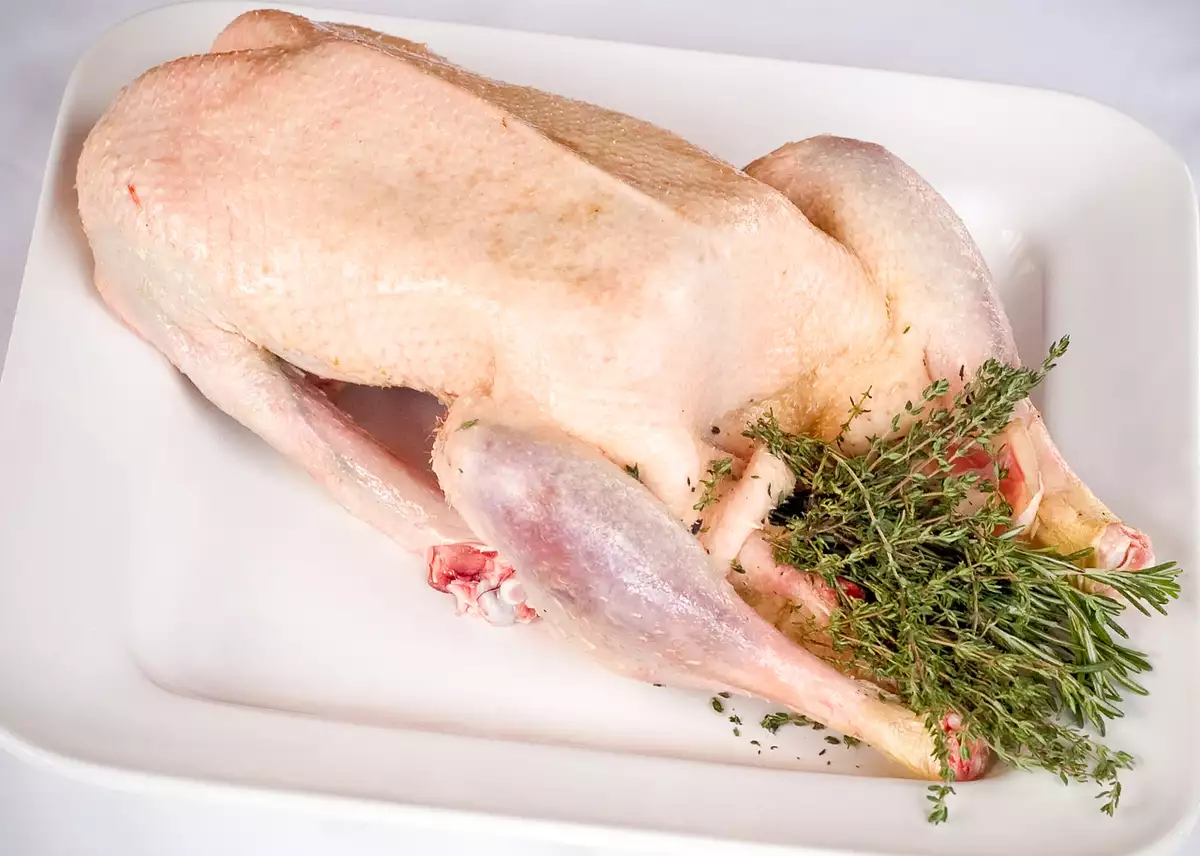
Goose is a large, dark-meated bird that turns up mostly as a holiday roast, the centerpiece of a Christmas dinner long before turkey claimed the spot. The meat is richer and beefier than turkey or chicken, closer in flavor to duck.
The fat is the difference. A thick layer sits under the skin, and that fat is the whole story of cooking a goose.
A single bird can render off a cup or two of liquid fat during roasting. Manage it well and you get crisp skin plus the best roasting fat in any kitchen.
Most geese run 8 to 12 pounds (3.6 to 5.4 kg) and feed six to eight, since a goose is mostly frame and fat with less breast meat than its size suggests.
How to Cook a Goose
The technique that matters most is rendering the fat. Prick the skin all over with a skewer, angled shallow so you pierce the fat layer but not the meat underneath.
That gives the fat an escape route. Pour a kettle of boiling water over the skin first if you want it extra taut, then dry it well.
Roast at a moderate 325 to 350°F (160 to 175°C) on a rack set over a deep pan. Pour off the rendered fat every 30 to 40 minutes so the bird isn't sitting in a fryer. A 10-pound (4.5 kg) goose takes roughly 2½ to 3 hours.
Doneness is the part cooks get wrong. Goose is dark meat throughout, so it stays moist and tastes best cooked through to about 165 to 170°F (74 to 77°C) in the thigh, hotter than you'd take a turkey breast. Quebec-Style Roast Goose leans on this slow, fat-draining approach.
Wild goose is a different animal: far leaner and prone to drying out. That's why recipes like Savory Wild Goose Stew braise it low and slow instead of roasting it dry.
Flavors That Cut the Richness
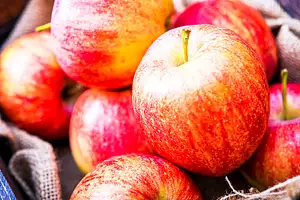
Goose is fatty enough that it needs an acidic or fruity partner to balance every bite. Apples, prunes, oranges, and tart cherries are the classics.
They show up again and again. Goose with Apples and Wild Goose a L'Orange both pair the rich meat with bright fruit, and the Danish roast adds prunes to the same idea.
Stuffings lean savory and absorbent to soak up the drippings, which is why wild rice is such a natural match in Roast Goose with Wild Rice Stuffing. Caraway, sage, and onion are the traditional German aromatics behind a Christmas Weihnachtsgans.
A honey or molasses glaze gives the skin a lacquered finish, as in Chinese Honey Goose.
The most common mistake is stuffing the cavity tight and roasting at high heat. Packed stuffing slows the heat reaching the center, and high heat scorches the skin before the fat renders.
Keep the heat moderate and the stuffing loose. And never throw away the fat. Strain and refrigerate it; goose fat keeps for months and makes the crispest roast potatoes you'll ever eat.
Substitutes
Duck is the closest stand-in, since it shares the dark meat and heavy fat layer and rewards the same prick-and-render treatment. Two ducks roughly replace one small goose and cook faster.
Turkey is the easy holiday swap if you want a milder, leaner bird, but expect a different result: white meat that dries out without basting, and none of the rendered fat. Treat it as its own dish.
For braises and stews where goose adds depth, dark-meat chicken thighs or duck legs carry similar flavor at a fraction of the cost. Neither matches the bird's character in a centerpiece roast.
Buying and Storing Goose
Most geese sell frozen, since fresh ones are seasonal and tied to the late-fall and Christmas market. Look for creamy, unblemished skin and a plump breast.
Smaller geese around 8 to 10 pounds (3.6 to 4.5 kg) have a better meat-to-fat ratio than the largest birds.
A frozen goose needs a long, slow thaw in the refrigerator, about 24 hours for every 4 to 5 pounds, so a 10-pound bird wants two full days. Never thaw it on the counter.
Keep a thawed raw goose in the coldest part of the fridge and roast it within a day or two. Cooked goose holds three to four days refrigerated and freezes well for a couple of months, though the skin loses its crisp.
Save every drop of rendered fat. Strained into a clean jar and refrigerated, goose fat keeps for several months and freezes almost indefinitely, ready for roast potatoes or frying eggs.
Nutrition
Nutrition Facts
Serving Size 1 unit (yield from 1 lb ready-to-cook goose) (185g)Quick facts
Where to find goose: Goose is usually found in the poultry section or aisle of the grocery store or supermarket.
Food group: Goose is a member of the Poultry Products US Department of Agriculture nutritional food group.
- In Chinese
- 鹅
- British (UK) term
- Goose
- en français
- oie
- en español
- ganso
How much does goose weigh?
| Amount | Weight |
|---|---|
| 1 unit (yield from 1 lb ready-to-cook goose) | 185 grams |
| ½ goose | 766 grams |
Related
Poultry Products
Recipes using goose
There are 22 recipes that contain this ingredient.
An Absolutely Perfect Roast Goose!+


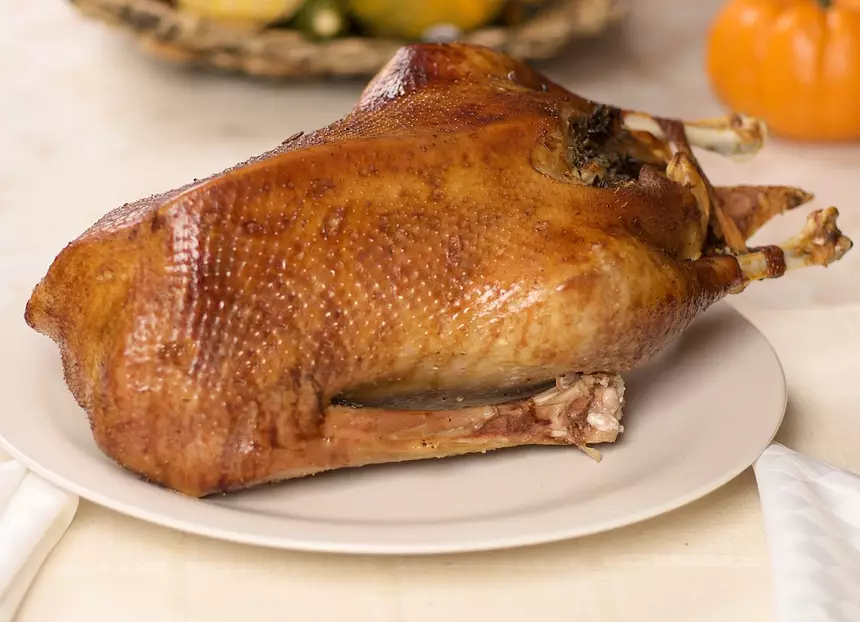
I have made a Thanksgiving goose every year for at least 15 years. I have steadily gained on making the perfect bird but I finally found the greatest recipe ever in Cook's Magazine. The divine part of this approach to cooking the goose is that it employs some of the eastern method of drying the skin which is used in Peking Duck. The skin simply drops all its fat and leaves a crispy, dry, delectable skin that folks fight over! No more rubbery, yucky goose skin full of fat!
Best Tyrone Roast Goose
Traditional Tyrone roast goose stuffed with sage, bacon, shallot and breadcrumb dressing. Pricked skin renders to crackling fat over a long, slow roast. An Irish Christmas centerpiece.
Gaastesteg Med Aebler Og Svedsker (Goose with Apples & Prunes)
Try something new for dinner with this succulent dish that is cooked to perfection.

Flash Un Kas

Flash un Kas are flaky Pennsylvania Dutch appetizer turnovers: a tender three-ingredient cream cheese pastry folded over savory fillings like liver paste, ham, anchovy or caviar, then baked golden. Great party bites.
Stuffed Goose
When hunting season arrives, try this dish that contains rice, apples and a variety of spices.

Goose with Apples
Goose with apples is the classic Danish Christmas roast, stuffed with apples, prunes, and onion to perfume the meat as it slowly renders. A 3-hour holiday centerpiece for 15.
Wile Goose a L'Orange
Wild goose roasted at 325F and basted with a glossy orange-currant glaze made with fresh OJ, port wine, and orange sections. Slow-cooked for 3.5 hours until the drumstick meat is fall-apart tender.

Windsor Canadian Goose
Buttermilk-soaked Canadian goose stuffed with prunes and apples, wrapped in bacon, and slow-roasted until tender. Served with a rich sour cream and currant jelly sauce. A showpiece roast for eight.

Wild Goose
Roasted wild goose stuffed with apples and onions, browned under bacon, then braised in red wine and beef consomme with herbs. A classic hunter's recipe with rich pan gravy served over wild rice.

Roast Goose with Wild Rice Stuffing
Roast goose with a festive wild rice stuffing of mandarin oranges, chestnuts, and pine nuts. The skin is pricked to render the goose's rich fat and crisp golden, making a classic Christmas centerpiece.
Roast Goose with Potato Pierogies
Roast goose rubbed with thyme and served with potato pierogies and a pan dripping gravy made from the neck and liver. A showstopping Eastern European holiday centerpiece.

Goose with Sauce Madame
Medieval-inspired roast goose stuffed with pears, grapes, and fresh herbs, served with a spiced wine and vinegar sauce. A stunning, historically rooted holiday centerpiece.
Wild Goose a L'Orange
Whole wild goose roasted low and slow, basted with an orange-tarragon glaze made with currant jelly and port wine. Carved tableside with a glossy citrus sauce.

Weihnachtsgans
Traditional German Christmas roast goose stuffed with tart apples, thyme, and onions, roasted until the skin is shatteringly crisp. Served with rich giblet gravy, red cabbage, and mashed potatoes.
Chinese Honey Goose
Crispy-skinned roast goose glazed with honey, soy, and lemon. This Chinese banquet centerpiece requires patience for air-drying but rewards with lacquered, golden skin and succulent meat.
Roast Goose with Stuffing
Roast goose stuffed with cornbread, Granny Smith apples, dried figs, and savory, then slow-roasted three hours with the fat poured off as it renders. The traditional centerpiece for an old-fashioned Christmas dinner.
Roast Goose with Wild Rice, Hazelnuts & Apple
Instead of stuffing a turkey or a chicken, why not try this succulent dish that will have your family sending compliments to the chef.

Roast Goose with Molasses Glaze & Apricot Stuffing
Roast Goose with Molasses Glaze & Apricot Stuffing recipe
Quebec-Style Roast Goose
Classic Quebec-style roast goose stuffed with bread, currants, and apples, slow-roasted with aromatic vegetables and finished with a white wine pan gravy. A showpiece holiday roast.
Gaastesteg Med Aebler Og Svedsker (Roast Goose with Apples & Prunes)
Traditionally, poached apples stuffed with prunes (see recipe) are served with the Christmas goose. Red cabbage and carmelized potatoes (see recipes) complete the Christmas menu in Denmark.
Savory Wild Goose Stew
This recipe worked very well with wild canadian goose. The stew was full of flavor and the meat was very tender. I will definatly use it again!