Duck rewards a little know-how: how to choose it, cook it, store it, and substitute in a pinch. Browse 60 recipes to cook with it.
Key Points
Rich, all-dark fatty poultry; rendering the thick skin fat is the key to crisp results.
Score and render the skin slowly; cook the breast to a rosy medium near 135°F.
Treat breast and legs differently: sear the breast, braise or confit the tough legs.
Pair with orange, cherry, plum, cranberry, or pomegranate to cut the richness.
Cook fresh duck within 1-2 days; freeze whole up to 6 months, parts 3-4 months.
What is duck?
Duck is rich, dark, fatty poultry with a deep, almost beefy flavor that sets it apart from chicken. It is all dark meat, and the thick layer of fat under the skin is the whole point: render it right and the skin turns to crackling glass.
Most ducks at market are Pekin (often called Long Island duck), mild and meaty. Moulard and Muscovy are larger and leaner, the ducks butchers reach for when they want big breasts and the legs that become confit.
A whole Pekin runs 4 to 6 pounds (1.8 to 2.7 kg) but feeds only three or four. There is less meat on the frame than the size suggests, since so much of the weight is fat and bone.
Cooking Duck
The skin is where duck succeeds or fails. Score it in a crosshatch through the fat but not into the meat, salt it, and start it in a cold or barely warm pan so the fat melts out slowly before the skin crisps.
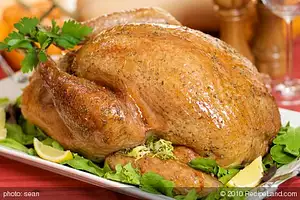
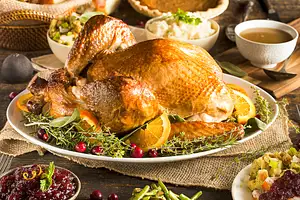
A whole roast duck wants that same logic. Prick the skin, roast it on a rack so the fat drains, and pour off the pool a few times. Roast Duck with Cranberry Sauce and Duck a L'Orange both depend on dry, crisp skin over tender meat.
Breast and legs are two different jobs. Cook the breast like a steak, to a rosy medium around 135°F (57°C), then rest and slice it thin.
Legs are tough and need time. Braise them or cure and cook them slowly in their own fat as confit until the meat falls apart. The Chinese classics A Simplified Peking Duck and Sichuan Crispy Skin Duck take the long road to that lacquered, shatter-crisp skin.
Pairings and Common Mistakes
Duck loves a sweet-tart counterpoint to cut its richness. Orange is the textbook match, but cherry, plum, cranberry, pomegranate, and fig all do the same work, as does Duck with Plum Sauce.
The biggest mistake is cooking the breast like chicken. Take it to well done and it turns dry and gray, losing the very tenderness that makes it special. A meat thermometer settles it.
The second mistake is not rendering the fat. Rush a whole duck and you get flabby, pale skin sitting on a greasy layer that never crisped. Low and patient wins.
Save the rendered fat. It roasts potatoes better than anything, and the carcass makes a deep stock.
Substitutes
Goose is the closest stand-in: even richer and fattier, it cooks on the same render-the-skin principle, just larger and longer. Use it where you want duck dialed up.
For the breast alone, a leaner game bird like squab or pheasant gives a similar dark-meat character, though without the fat cap, so they dry out faster and need a gentler hand.
Chicken thighs can fill in when you only need dark poultry in a braise or curry. You will lose the signature fat and depth, so lean on the sauce to carry the dish.
Buying and Storage
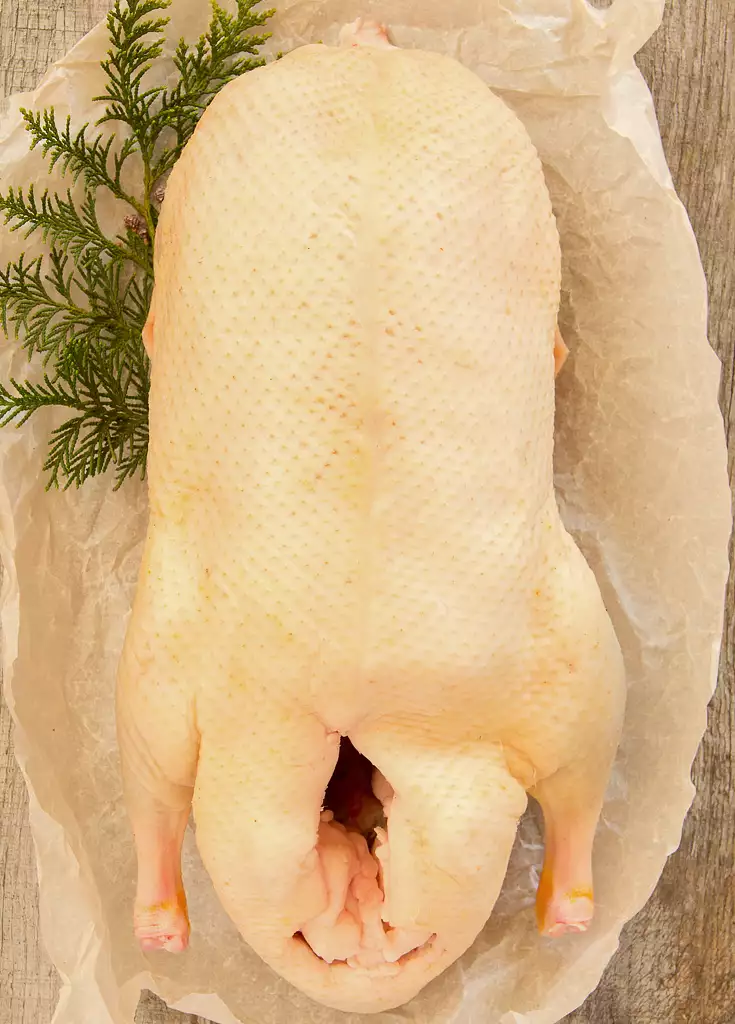
Buy duck whole, or as breasts and legs, fresh or frozen. Look for plump flesh, creamy skin with no tears, and a clean smell. Frozen whole ducks are common and thaw well, so do not skip them.
Keep raw duck in the coldest part of the fridge and cook whole birds or parts within 1 to 2 days, the same window as other fresh poultry.
Frozen duck keeps up to 6 months whole, or 3 to 4 months for parts, tightly wrapped against freezer burn. Thaw a whole bird in the fridge over a full day, never on the counter.
Cooked duck keeps 3 to 4 days refrigerated. Rendered duck fat is the exception: covered in the fridge it lasts months, and it only makes your next batch of potatoes better.
Types of duck
Specific kinds of duck and the recipes that use them.
A duckling is a young domestic duck, usually a Pekin, slaughtered under about eight weeks old. The name signals tenderness more than size: the meat is finer and milder than that of an older bird, which is why most ducks sold for roasting are labeled duckling.
Duck is all dark meat, even the breast, with a deeper flavor than chicken and a thick layer of fat under the skin.
That fat is not a flaw to trim away. Rendered slowly, it is one of the best cooking fats in any kitchen.
A duck breast is the boneless fillet from the bird's chest, sold skin-on with a thick cap of fat under that skin. The French call the large breast from a fattened Moulard duck a magret, with deep red, almost beefy meat.
Unlike chicken breast, duck is a red meat. You cook it to medium-rare, not well-done, and it stays juicy and rosy in the center.
The whole technique comes down to one idea. Render the fat slowly so the skin turns crisp and golden, then cook the meat only briefly so it stays pink.
Duck eggs are larger than chicken eggs, with a thicker shell, a bigger yolk relative to the white, and a richer, more pronounced flavor. A duck egg runs about 30% heavier than a large chicken egg, and that extra mass is mostly yolk.
That yolk-heavy ratio is the whole appeal. More yolk means more fat and more emulsifying power, which is why bakers prize duck eggs for tender cakes and rich custards, and why a fried duck egg tastes fuller than a chicken one.
For general egg basics, see the eggs hub. This page focuses on what cooks differently.
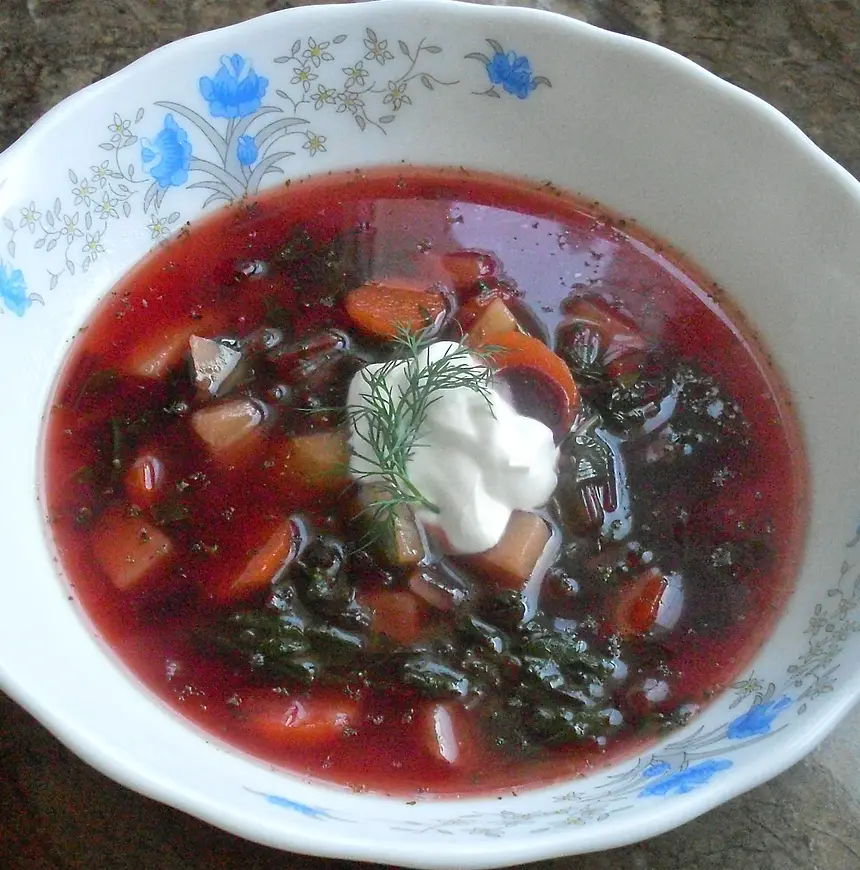
There are hundreds versions of this very Polish soup. Here you have an original proposition of mine. I used to cook it on the base of my favorite duck and chicken stock. The cream is a must to create wonderful pink color. Optionally you may add a quarter or a half of hard boiled egg to your bowl. By the way, I change my recipe sometimes, for instance by adding dried California prunes instead of sugar, or by adding some white vinegar instead of lemon juice.
Grilled game sausage patties of ground duck, pork shoulder, and pancetta with cinnamon and cumin, wrapped in caul fat. Served on garlicky wilted kale with balsamic reduction.
Chicken breasts braised in a peach and orange sauce with sauteed mushrooms, duck livers, and a hollandaise finish. Browned under the broiler for a golden glaze, this is dinner party elegance in one pot.
Grilled duck and pork sausage crepinettes spiced with cinnamon and cumin, wrapped in caul fat, and served over garlicky wilted kale. A rustic French charcuterie technique with bold, warming flavors.
Braised duck with chestnuts in a syrupy orange and red currant sauce, built on homemade duck stock and fresh thyme. A rustic European classic that's pure cold-weather comfort.
Kamo Sakamushi is sake-steamed duck breast salted for three hours, steamed with sake, and finished under the grill. A minimalist Japanese appetizer with just two ingredients and clean, elegant flavor.
Thai duck curry simmered in coconut milk with a handmade paste of chilies, coriander, lemongrass, shrimp paste, and lime. Rich, fiery, and aromatic with fresh basil stirred in at the finish. Serve over jasmine rice.
Raspberries, a member of the rose family, impart a delicious aroma and spark of flavor to this creative sauce.
It is especially good with roast duckling.
French stuffed duck legs and sliced breast with blueberry gastrique sauce. Duck thighs filled with a veal, pork, and giblet forcemeat, served with seared aiguillettes.
South Goan duck vindaloo with dried red chiles, garlic, ginger, cumin, and coriander in a vinegar-based curry sauce. A fiery, tangy braised duck curry marinated in spice paste.
Duck pot pie with the flavors of duck a l'orange baked right in: a giblet stock sauce brightened with orange peel and Triple Sec, loaded with broccoli, leeks, and ginger. The crispy duck skin gets rolled into the top crust.
Tender duck breast meets creamy avocado and bright orange segments in this elegant no-cook salad. Topped with toasted pecans and citrus mayo, it's a showstopper appetizer.
Roasted Long Island duck with a gastrique sauce made from caramelized sugar, red wine vinegar, and duck stock, garnished with fresh grapefruit sections. A refined, restaurant-level dish.
Roasted duck with a green peppercorn and star anise sauce made from homemade duck giblet broth. The duck is salt-poached first, then roasted until crispy. A refined French-inspired main course.
Duck gumbo simmers deboned duck in a dark butter roux with okra, tomatoes, and the Cajun holy trinity for a rich bayou stew. Ladle over rice for a Louisiana cold-weather classic.
Slow-roasted wild duck basted in flambed dry sherry with onion juice, white pepper, and red pepper flakes. Braised breast-side down for tender, flavorful meat.
Steamed ancient egg diamonds set fresh eggs, century (preserved) egg, and salted duck egg into one silky steamed custard, then cut into diamonds. A classic Chinese three-egg dish with a striking marbled look.
Louisiana-style roasted duck rubbed with a vinegar-salt-pepper paste, stuffed with aromatics, and slow-roasted until tender. A Cajun family recipe with old-school technique and deep flavor.
French-style braised duck with olives, bacon, red wine, and Dijon mustard. A rustic country braise where the duck simmers low and slow until fork-tender, served over wild rice.
Roast Long Island duck stuffed with tart apples, raisins, and orange zest. Crispy-skinned, classic Sunday-supper duck served with Burgundy wine jelly on the side.
Twice cooked herbed duck quarters slow-roasted to render the fat, then grilled over charcoal for crisp, smoky skin. Herb-rubbed, crackling, and impossibly juicy.
Traditional Chinese braised duck webs simmered for 3 hours with star anise, ginger, and rice wine, then glazed in glossy oyster sauce. Served over stir-fried broccoli and dried mushrooms.
A fiery Chinese hot pot of pork intestine, duck blood curd, and sour cabbage simmered in a chili-ginger broth with Sichuan peppercorns. Served bubbling over a tabletop burner.
Rich wild duck gumbo built on a dark roux with smoked sausage, the holy trinity, stewed tomatoes, and cayenne heat. Ladle it over rice for a true Louisiana supper.
Wild duck soaked in lemon water, stuffed with celery, onion, orange, and apple, then slow-roasted under salt pork until tender. A hunter's classic done right.
Master method for cooking duck: first steam to render fat and tenderize, then roast at moderate heat for crisp skin. The two-stage technique pros use for perfectly rendered, crackling-skinned duck.
Roast duckling glazed with apricot basting sauce, served with wild rice studded with toasted pine nuts, chopped pears, and currants. An elegant holiday centerpiece.
Auntie Yuan duck salad slivers honey-roasted duck and crispy skin over puffed mai fun noodles, shredded lettuce, scallions, and cilantro. Drizzled with garlic-soy-rice vinegar dressing for a Chinese-American restaurant classic.
Tandoori duck marinated in spiced yogurt with cumin, cardamom, and cayenne, then grilled and served over red lentils. Skinned for less fat, the yogurt marinade keeps the meat juicy and tender.
Thai duck curry (kaeng pet) simmered in coconut milk with a handmade curry paste of dried chilies, lemongrass, shrimp paste, and coriander seeds. Rich, aromatic, and deeply spiced.
Duck pilaf that makes the most of leftover roast duckling: rice toasted golden, simmered in stock with celery, then baked with diced duck and sweet dried apricots. A smart, savory-sweet second act for last night's roast.
Tuscan-style duck ragu for pappardelle with boneless duck, pancetta, chicken livers, porcini mushrooms, rosemary, and white wine. A rich, slow-simmered Italian meat sauce.
An air-dried roast duck glazed with Scotch, soy, honey, ginger, and brown sugar marinade until the skin turns deep mahogany. A Peking-duck-inspired showstopper for a special-occasion dinner.
Roast duckling glazed with orange marmalade and concentrated OJ, finished with a luscious cherry-red wine sauce. A sweet-savory showpiece that's surprisingly easy to pull off.
Whole roast duck stuffed with a sweet apple, raisin, and cashew dressing, topped with bacon strips for extra richness. Serve alongside wild rice for a cozy fall dinner.
Bone-in duck seared in rendered fat, then braised in red curry paste, coconut milk, fish sauce, and lime juice over jasmine rice. Rich Thai-inspired comfort with a mussels variation included.
Roasted wild duck stuffed with onion, apple, celery and garlic, braised breast-down in red wine and consomme. The Southern hunter's recipe for taming gamey ducks into a tender feast.
Peking duck made the traditional way, air-dried and glazed with maltose for lacquer-crisp skin, then roasted and carved thin to wrap in steamed pancakes with hoisin, scallions and cucumber.
Kang ped bhet yang, Thai roast duck red curry with homemade curry paste, coconut cream, Thai basil, and Kaffir lime. A Bangkok restaurant classic with layered heat and sweet-savory complexity.
Fried wild game ravioli stuffed with duck, pheasant, leeks, praline, sour cherries, and demi-glace, finished with a Frangelico hazelnut butter. A restaurant-caliber game dish.
Kowloon duckling: a whole duck stuffed with scallion and garlic, slow-smoked over hickory and basted with a soy, honey, and lemon glaze until lacquered. Served with plum sauce. A smoky, Chinese-style barbecued duck.
Tender roast duckling with Marsala wine-grape sauce combines microwave speed and conventional oven crispness for special occasion duck dinners without the wait.
Curry-glazed duck legs roast under a paste of jalapeno, ginger, garlic, and curry powder, then braise in orange-lime juice with chicken stock. The skin re-crisps for shatteringly crackly results.