What Are Duck breasts and How Can I Use Them?
Here's everything worth knowing about duck breasts and how to pick them, what they are, how to store them, and what to use instead, plus 10 recipes to cook tonight.
Key Points
- Boneless skin-on chest fillet; the large fattened-duck version is the French magret
- Duck is red meat, so cook the breast to a rosy medium-rare, never well-done
- Score the skin and render fat in a cold pan, then crisp before flipping
- Pull at 130 to 135°F, rest, and slice thin against the grain
- Pair with sweet-sharp fruit like cherry, orange, or raspberry to cut the richness
What are duck breasts?
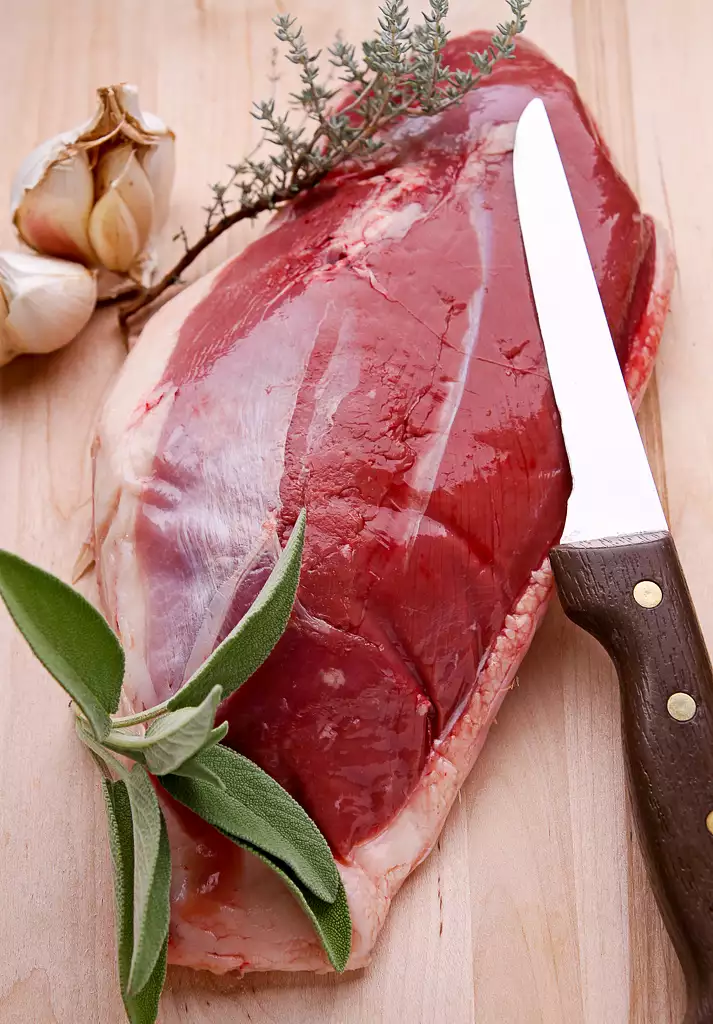
A duck breast is the boneless fillet from the bird's chest, sold skin-on with a thick cap of fat under that skin. The French call the large breast from a fattened Moulard duck a magret, with deep red, almost beefy meat.
Unlike chicken breast, duck is a red meat. You cook it to medium-rare, not well-done, and it stays juicy and rosy in the center.
The whole technique comes down to one idea. Render the fat slowly so the skin turns crisp and golden, then cook the meat only briefly so it stays pink.
How to Cook Duck Breast
Score the skin first. Cut a shallow crosshatch through the fat with a sharp knife, going almost but not quite to the meat. The cuts open up as the fat renders and let it escape, which is what gives you crackling skin instead of a flabby layer.
Lay the breast skin-side down in a cold, dry pan, then turn the heat to medium-low. Starting cold is the trick: the fat renders out gradually instead of seizing, and you pour off a little golden duck fat as it pools (save it for roast potatoes).
Give it 6 to 8 minutes skin-side down until the skin is deep brown and crisp. Then flip and cook the meat side just 2 to 4 minutes, depending on thickness.
Pull it at 130 to 135°F (54 to 57°C) in the thickest part for medium-rare. Then rest the breast 5 to 10 minutes before slicing it thin on the bias, against the grain. Roast Duck Breast with Sage & Onion Puree follows this render-and-rest method closely.
Pairing and Common Mistakes
Duck's richness begs for something sweet and sharp to cut it, which is why fruit is the eternal partner. Think cherries, orange, plum, or apricot, as in Apricot Grilled Duck Breasts, or the classic berry treatment of Duck with Raspberry Sauce and Pan-fried Smoked Duck Breast with Raspberry Vinaigrette.
Beyond fruit, duck loves earthy and warm notes: mushrooms, star anise, five-spice, a splash of red wine or port in the pan sauce. It also takes beautifully to smoke.
The biggest mistake is a hot pan from the start. High heat sears the skin before the fat underneath can render, so you get burnt skin over a chewy, greasy fat layer instead of crisp crackling.
The second mistake is overcooking. Push duck breast past medium and the lean meat turns gray and livery; it has none of chicken's forgiveness, so use a thermometer and pull it early.
Substitutes
Nothing fully matches that crisp-skin, rosy-meat result, but a few cuts come close. Boneless skin-on chicken thighs give you the dark-meat richness and a skin you can crisp, though without the gamey depth.
Squab or guinea fowl breast is the closest in flavor and is cooked the same rosy way. Goose breast works too and is even richer, just larger and fattier.
For a leaner sub, turkey breast or a venison medallion can carry a fruit-forward duck sauce, but you lose the signature fat cap entirely.
Buying and Storing Duck Breast
Most stores sell duck breast in two forms: the smaller Pekin (Long Island) breast around 6 to 8 ounces, and the larger Moulard magret at 12 to 16 ounces that serves two. Look for a thick, pale, unblemished fat layer and dry skin, since dry skin crisps better.
Fresh duck breast keeps 1 to 2 days in the coldest part of the fridge. Pat it dry and leave it uncovered on a rack in the fridge for a few hours before cooking if you can; the drier the skin, the crisper the result.
Raw duck breast freezes well for up to 3 months, wrapped tight to keep out air. Thaw it fully in the fridge, never on the counter.
Do not waste the fat. Rendered duck fat from the pan keeps for months in a sealed jar, ideal for roasting potatoes or making confit.
Quick facts
Where to find duck breasts: Duck breasts are usually found in the poultry section or aisle of the grocery store or supermarket.
- In Chinese
- 鸭胸
- British (UK) term
- Duck breasts
- en français
- Magret de canard
- en español
- pechugas de pato
Recipes using duck breasts
There are 10 recipes that contain this ingredient.
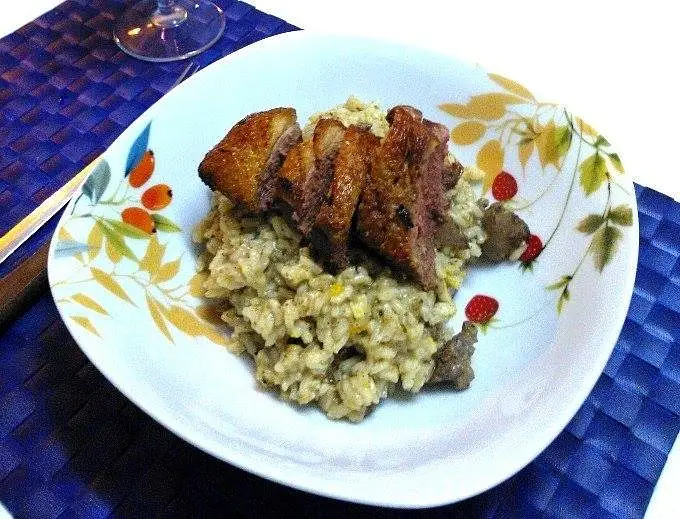
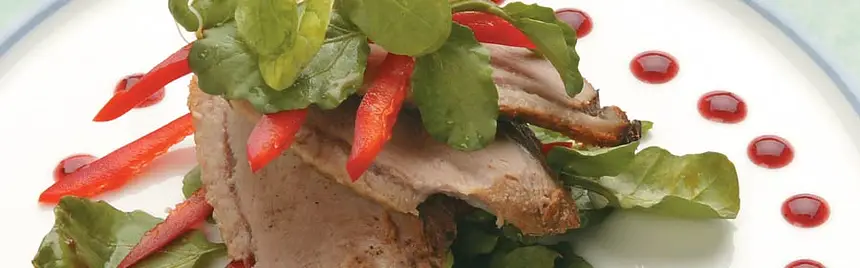
Paperbark Smoked Duck with Lllawarra Plum Sauce


Paperbark smoked duck, garnished with mushrooms and finished with Illawarra Plum Sauce.
Duck Miramonte
An elegant sophisticated Masterchef dinner. Duck with wine sauce, bone marrow and sautéed spinach.

Roast Duck Breast with Sage & Onion Puree
Pan-seared and oven-roasted duck breasts served over a silky sage-and-onion potato puree. An English-bistro style dinner for two with crisp skin and herbaceous mash.

Pan-fried Smoked Duck Breast with Raspberry Vinaigrette
Smoked duck breasts crisp skin-side down in a hot skillet, then get glazed with raspberry vinaigrette spiked with hot sauce, honey, and fresh raspberries for an elegant 15-minute dinner.
Duck with Raspberry Sauce
Broiled duck breasts marinated in black raspberry preserves, mustard, lime, soy sauce, and caraway seeds. Sliced thin and drizzled with a fruity, tangy sauce that screams date night.

Apricot Grilled Duck Breasts
The duck breasts are marinated in a mixture of apricot preserve, sherry vinegar, cumin and cayenne pepper to boost the flavor. Grilling gives the breasts extra deliciousness. Easy yet tasty.

Duck Breast Louisiana Style
Louisiana-style duck breast strips dredged in sage-seasoned flour, browned in butter, then simmered with mushrooms, celery, onion, bacon, and thyme. Serve over rice or noodles for a hearty Cajun-country supper.
Duck Liver Terrine
A rich French duck liver terrine blended with speck, armagnac, cream, and quatre-epices, studded with diced roasted duck breast. Served chilled with hot toast and warm flambeed grapes.
French Pate
Classic French country pate with veal, pork, chicken livers, and duck breast marinated in white wine and baked in a terrine. A two-day charcuterie project worth the wait.