What Is Herbes de provence and How Can I Use It?
If herbes de provence has turned up in a recipe or caught your eye at the store, here's what you need to use it with confidence and how to choose it, cook it, store it, what to substitute, and 9 recipes to try it in.
Key Points
- Herbes de Provence is a dried French blend of thyme, rosemary, savory, marjoram, and oregano.
- Many versions add lavender; too much turns a savory dish soapy, so taste as you go.
- These hardy herbs suit roasting and grilling; add early and crush them to release the oils.
- Italian seasoning is the closest jarred swap; or mix your own from thyme and rosemary.
- Store airtight away from heat and light, and use within about a year for best flavor.
What is herbes de provence?
Herbes de Provence is a dried herb blend named for the south of France, built around the herbs that grow wild on its hillsides. A typical mix leans on thyme, rosemary, savory, marjoram, and oregano, with some blends adding a little lavender or fennel.
The flavor is woodsy and savory with a slight floral edge from the lavender, if your blend includes it. North American versions almost always do, while many traditional French ones leave it out.
It is a workhorse for roasted meats and vegetables, and for anything off the grill.
Cooking With Herbes de Provence
Because these are sturdy, resinous herbs, the blend holds up to long, dry heat. That makes it a natural rub for roasting and grilling, where it has time to bloom rather than scorch.
Rub it onto chicken, pork, lamb, or fish before they go in the oven, the way Roasted Garlic-Stuffed Chicken Breasts uses it.
It is just as good on vegetables. Toss it with olive oil over potatoes, zucchini, eggplant, or tomatoes before roasting, then let the high heat crisp the edges.
The blend also seasons more than roasts. It rounds out a tomato sauce, flavors a loaf like Italian Herbed Bread, and ties together a pasta salad such as Summer Tortellini Salad or the Roasted Asparagus, Cherry Tomatoes with Arugula, Penne & Goat Cheese Salad.
For the deepest flavor, crush the herbs between your fingers as you add them. That cracks the leaves and releases their oils.
Pairing and What to Avoid
Herbes de Provence belongs with olive oil, garlic, lemon, tomato, and roasted vegetables, the building blocks of Mediterranean cooking. It loves fatty meats like lamb and pork, which stand up to its piney intensity.
The mistake to watch for is the lavender. A blend heavy on it can turn a savory dish soapy and perfumed, so taste before you commit and start with less than a recipe suggests. If you want a cleaner savory profile, pick a blend without lavender.
Add the herbs early in cooking, not at the end. Unlike tender herbs, these dried, woody leaves need heat and time to soften and give up their flavor.
Substitutes
Out of the blend? Italian seasoning is the closest jarred swap, since it shares thyme, rosemary, marjoram, and oregano, though it skips the lavender and fennel. Use it one for one.
To build your own, combine equal parts dried thyme, rosemary, marjoram, and savory or oregano. Add a small pinch of dried lavender only if you want the Provençal floral note.
In a pinch, a mix of just dried thyme and rosemary covers most of what the blend brings to a roast.
Buying and Storing Herbes de Provence
Blends vary a lot, so check the label. A traditional French mix skips lavender, while many supermarket versions add it, and that one ingredient changes the character of the whole jar.
Like all dried herbs, the blend fades with time. Buy it in small amounts, store it in an airtight jar away from heat and light, and expect the best flavor within about a year. After that it loses its punch rather than spoiling.
A quick freshness test: rub a pinch between your fingers and smell. If it barely registers, it is past its prime and you will need to use more to get the same effect.
Quick facts
- In Chinese
- 埃尔韦斯普罗旺斯
- British (UK) term
- Herbes de provence
- en français
- herbes de provence
- en español
- hierbas provenzales
Recipes using herbes de provence
There are 9 recipes that contain this ingredient.
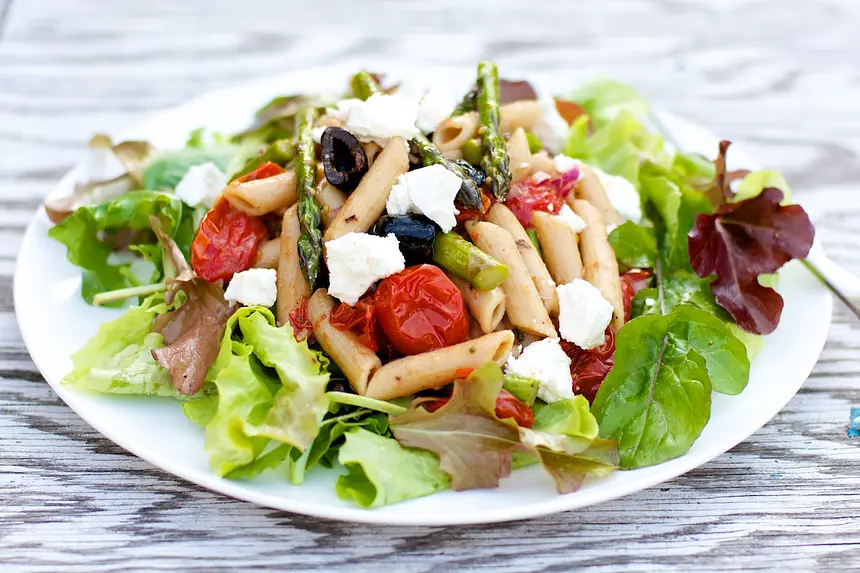
Roasted Asparagus, Cherry Tomatoes with Arugula, Penne & Goat Cheese Salad


Asparagus is one of our favorite spring vegetables. In this recipe, roasting develops tons of deliciousness from both asparagus and cherry tomatoes, then tossed with penne, peppery arugula and creamy goat cheese with a light vinaigrette. Yum!

Italian Herbed Bread
Italian herbed bread crisps brushed with olive oil and sprinkled with herbes de Provence, baked until golden. A 3-ingredient side that's ready in 15 minutes.

Peanut Burgers
Peanut burgers: pan-fried vegetarian nut burgers with roasted peanuts, cashews, herbes de Provence, and yeast extract for deep savory flavor. A meat-free burger with genuine character.

Summer Tortellini Salad
Summer tortellini salad tosses cheese tortellini with shredded chicken, green and black olives, red bell pepper, sweet Vidalia onion, and a herbes de Provence vinaigrette. A picnic-ready pasta salad for four.

Sun-Dried Tomato Tapenade
Sun-dried tomato tapenade with capers, garlic, lemon, and herbes de Provence. Rehydrated, oil-cured for a week, then pulsed into a coarse Provencal spread.

Eggplant Stuffed with Oysters
Creole eggplant stuffed with oysters scoops tender baked eggplant into a stuffing of chopped oysters, breadcrumbs, onion, and herbs, then bakes in the shells with parmesan until golden.

Roasted Garlic-Stuffed Chicken Breasts
Roasted garlic stuffed chicken breasts: pockets filled with 20-clove confit garlic paste, pan-seared, then finished in a Provencal tomato-caper-wine sauce. Elegant dinner-party chicken.