Here's everything worth knowing about veal and how to pick it, what it is, how to store it, and what to use instead, plus 130 recipes to cook tonight.
Key Points
Pale, fine-grained meat from young calves: milder and more tender than beef, milky and delicate.
Lean tender cuts (loin, leg) sear fast; tough shank and shoulder need long braising.
Very lean, so overcooking dries cutlets quickly; pull whole cuts around 145°F (63°C).
Swap scaloppine for pounded chicken, turkey or pork loin; use beef shank for osso buco.
Highly perishable: refrigerate cold and use within one to two days, or freeze.
What is veal?
Veal is meat from young calves, usually slaughtered before they reach a few months old. Because the animal is young, the meat is pale pink to nearly white, fine-grained and noticeably more tender than mature beef.
The flavor is mild and delicate, almost milky, with very little of the iron-rich punch you get from a steer. That mildness is the whole point. Veal takes on sauces, butter, wine and herbs without fighting them, which is why it anchors so much Italian, French and Austrian cooking.
Not all veal is the same, though.
Most veal sold today is one of two types. Milk-fed (or formula-fed) veal is the palest and most tender. Grain-fed or pasture-raised veal runs a deeper pink with slightly more chew and a fuller taste.
Cooking With Veal
Veal splits into two camps, and the cut tells you which. Lean, tender cuts from the leg and loin want fast, hot cooking. Tough, collagen-rich cuts from the shank and shoulder want long, slow moisture.
Thin cutlets pounded flat are scaloppine, the base for piccata, marsala and veal parmesan. Dredge in flour, sear in butter and oil for barely a minute a side, then build a quick pan sauce. The pan should be hot before the meat goes in, because these cook in a flash.
The classic braise is osso buco, made from cross-cut shank. The marrow and connective tissue need two hours or more of gentle simmering to turn silky. Crock Pot Veal & Peppers works the same way, letting the shoulder go tender over hours.
Ground veal is valued for its tenderness and clean taste. It carries Tortellini Meat Filling, the meatballs in Italian Wedding Soup, and Swedish Meet Balls (Kottbullar), often blended with pork and beef so each meat covers the others' weak spots.
Pairing and Common Mistakes
Veal loves bright, acidic partners. Lemon and capers in piccata, dry white wine and mushrooms in marsala, tomato and sage in saltimbocca. A little butter, cream or parmesan rounds it out without burying the delicate flavor.
The number one mistake is overcooking. Veal is lean, so a cutlet that sits too long in the pan goes from tender to dry and stringy fast. Pull cutlets the moment they lose their pink center, around 145°F (63°C) for whole cuts.
The opposite mistake matters too. Rush a shank or shoulder and it stays rubbery, because the collagen never gets the slow heat it needs to melt. Lean cuts hate long cooking; tough cuts demand it.
Substitutes
For scaloppine, pounded boneless chicken breast or turkey cutlets are the closest swap, mild and lean with a similar quick-cook habit. They brown a touch differently but carry the same lemon-and-butter sauces well.
Pork loin, sliced thin and pounded, stands in for veal in many schnitzel and parmesan dishes and brings more flavor of its own. For ground veal in meatballs, a mix of ground pork and ground turkey gets you close to the same tenderness.
For osso buco, beef shank is the standard fallback. It needs a bit longer to break down and tastes beefier, but the marrow-rich result is excellent.
Buying and Storage
Look for veal that is pale pink and moist, not gray or dried at the edges. Cutlets should be cut evenly so they cook at the same rate. Shank for braising should have a thick marrow bone in the center.
Veal is more perishable than beef because it is so lean. Keep it cold, in the coldest part of the fridge, and use cuts within one to two days. Ground veal should be cooked the same day or the next.
It freezes well for up to four months wrapped tightly against air. Thaw in the fridge overnight rather than on the counter.
One note on buying. Veal welfare has improved a lot, and much of the crate-raised system that gave it a bad name has been phased out in many regions. If it matters to you, look for pasture-raised or group-housed labels, which are now widely available.
Types of veal
Specific kinds of veal and the recipes that use them.
Veal cutlets are thin, pale, boneless slices cut from the leg or loin of veal. They are the quick-cooking cut, valued for tenderness and a mild, delicate flavor that takes a sauce beautifully. For everything else about the meat itself, see veal.
A true cutlet (or scallop) is sliced thin against the grain, often from the top round. Pounded thinner still, the same slice becomes the scaloppine of Italian kitchens and the schnitzel of German and Austrian ones.
Because the meat comes from a young animal, it carries very little fat or connective tissue. That is why it cooks in minutes and why it punishes a heavy hand.
Ground veal is veal, the meat of a young calf, run through the grinder. It's paler and finer than ground beef, with a mild, almost milky flavor and little of the strong mineral taste beef carries. Cooked, it stays tender and light.
Cooks reach for it mostly as one third of a blend. The classic Italian American meatball is equal parts veal, pork, and beef: the veal brings tenderness, the pork brings fat and sweetness, the beef brings backbone.
On its own veal is lean and gentle, which is exactly why it rarely works solo.
Veal bones are the raw material behind the great kitchen stocks. They come from a young calf, so they carry far more collagen and far less assertive flavor than mature beef bones.
That combination is exactly what a stock-maker wants. You get a base with a clean, neutral taste and enough natural gelatin to give real body.
Knuckle and shin bones are the cuts cooks reach for, with neck bones close behind, because they hold so much cartilage and connective tissue. As they simmer for hours, that collagen breaks down into gelatin, the substance that lets a finished stock cool into a wobbly, set jelly.
Veal scaloppine are thin, boneless slices of veal, pounded until they are about ¼ inch (6 mm) thick so they cook in a minute or two. The name is Italian (scaloppine means little escalopes), and the cut is the backbone of restaurant veal dishes from Marsala to piccata to saltimbocca.
The best scaloppine come from the leg, especially the top round, cut across the grain and flattened. Veal's pale, fine-grained, mild meat takes a light dredge and a quick sear, then leans almost entirely on its pan sauce for flavor.
Veal shanks are the cross-cut lower leg of the calf, sawed through the bone into thick rounds about 1½ inches (4 cm) deep. Each round shows a ring of meat wrapped around a center of bone, and in that bone sits the marrow that defines the cut.
This is the meat for osso buco, the Milanese braise whose name literally means "bone with a hole." The shank is full of connective tissue and collagen, which makes it tough when cooked fast and silky when cooked slow.
Buy one round per person. They look small on the plate, but a single shank carries enough rich meat, plus the marrow, to satisfy.
Veal shoulder is the cut taken from the front leg and upper foreleg of a young calf. It is one of the hardest-working muscle groups on the animal.
That work makes it a tougher, more sinewy cut than the loin or leg.
That working muscle is exactly why cooks reach for it. Shoulder is shot through with connective tissue and a little fat, so given gentle, moist heat it turns meltingly tender while staying juicy, where leaner veal cuts would dry out.
The flavor is classic veal: mild, delicate, and faintly sweet, with none of the mineral punch of beef. It takes on the flavors around it, which is why it anchors so many cream and wine braises.
Veal breast is the cut from the lower chest of a calf, the veal answer to beef brisket. It is a fatty, collagen-rich cut laced with connective tissue and a layer of cartilage.
That structure makes it inexpensive and full of flavor, but it demands slow, moist cooking to turn tender.
Its signature feature is the pocket. Butchers can cut a natural cavity between the ribs and the meat, and that pocket is what makes veal breast a classic candidate for stuffing.
Veal steak is a thin, boneless slice of veal, the meat of a young calf, cut from the leg or loin and sold ready for a quick sear or a breading. It is paler and finer-grained than beef, with a mild flavor and almost no marbling.
That lack of marbling is the whole story: it cooks fast and dries out faster. Because the muscle has done little work, the meat is tender to start with. The trade-off is fat. There is very little of it, so the cook has to add richness and watch the heat.
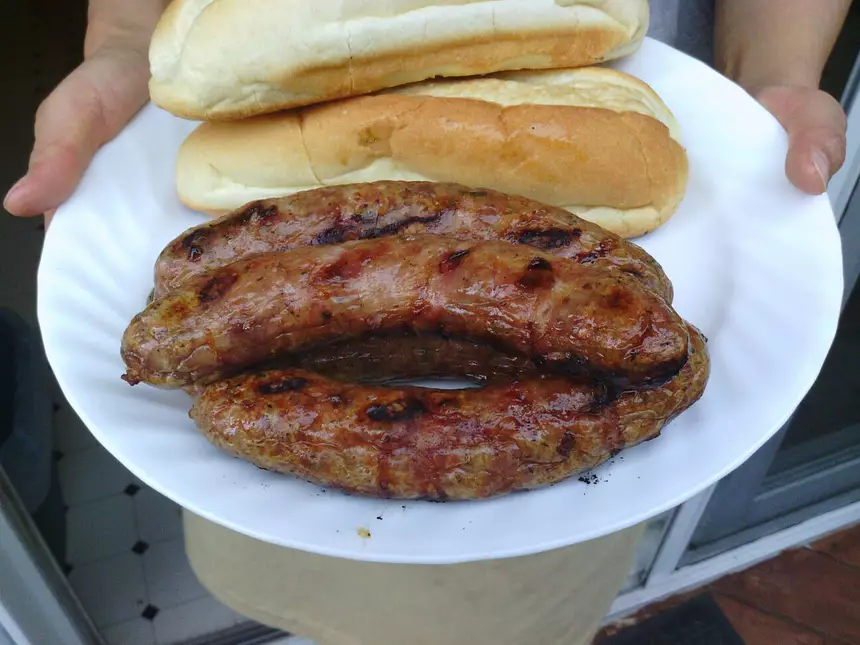
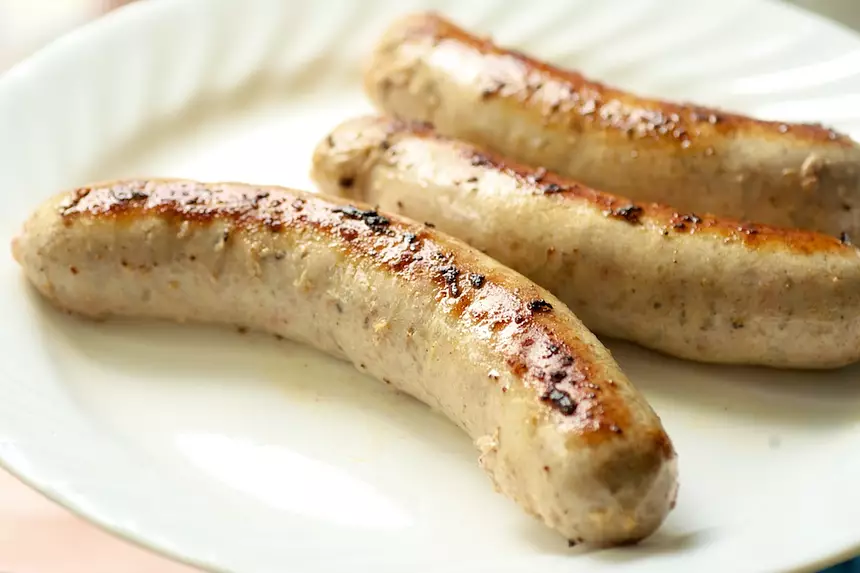
Hanz's Swiss-German bratwurst: a homemade pork and veal sausage seasoned with white wine and freshly ground spices, double-ground for a fine texture and stuffed into hog casings. An old family recipe.
An easy meatball recipe with ground veal and pork, enriched with barbecue sauce. The tender texture of the meatballs, thanks to the combination of veal and pork, is enhanced by the rich and tangy barbecue sauce, while the beef consomme and onion soup mix add a depth of savory goodness.
Old-fashioned veal stew is the French classic blanquette de veau: blanched veal gently simmered with pearl onions, mushrooms, and chicken stock, finished with a velvety egg-yolk and cream velouté sauce.
Browned veal cutlets simmered in a curried tomato-cream sauce brightened with fresh lemon and a splash of cognac. A 30-minute fusion dinner that blends European elegance with warm Indian spice.
The classic Italian cold veal dish reimagined over pasta. Tender braised veal sliced thin over noodles tossed in a silky tuna-anchovy sauce with capers and parsley.
Grilled pork tenderloin medallions with blue cheese bacon whipped potatoes and a dried cherry port wine demi-glace. A steakhouse-quality dinner with three stunning components.
Hungarian paprika schnitzel: veal cutlets dredged in seasoned flour, seared with paprika-laced onions, and braised gently in sour cream. A classic Central European supper dish.
Paper-thin veal scaloppine seared with crispy prosciutto strips in a garlicky white wine reduction, showered with freshly grated Parmesan. A light, elegant Italian dinner for two in 30 minutes.
Creamy veal steaks with yogurt sears thinly sliced veal, layers it with sliced apples, and bakes under a tangy yogurt and evaporated milk sauce. A Scandinavian-style braise with sweet-savory balance.
Microwave ham loaf cooks in 25 minutes flat, no oven needed. Ground ham, veal, and pork bound with milk-soaked bread crumbs, glazed with brown-sugar mustard and basted in pineapple juice for sweet-savory snap.
Classic veal fricassee with tender poached cubes in a buttery roux sauce, sautéed mushrooms, and white asparagus. A refined European comfort dish served over rice that's worth the slow simmer.
Classic white veal stock simmered for 4 hours with veal bones, leeks, carrots, and peppercorns. A foundational French kitchen staple that sets into a rich, gelatinous stock for sauces, soups, and braises.
Lencseleves fogoyhussal, a traditional Hungarian lentil soup with partridge, smoked bacon, and a mustard cream finish. A hearty game-day soup rooted in Hungarian hunting tradition.
A show-stopping French technique: whole chickens deboned, stuffed with mushrooms and ground veal, marinated in cognac, and served in a pink and green peppercorn cream sauce with demi-glace. Part 1 of 2.
Saltimbocca al Parmigiano-Reggiano: thin Italian veal cutlets sauteed and topped with prosciutto, sage, and butter, then served over parboiled lettuce with flaked Parmigiano-Reggiano and a white wine pan sauce. A Roman classic with a cheesy twist.
Traditional Italian mixed-meat broth (brodo di carne mista) made with chicken, beef short ribs, and veal bones. A slow-simmered foundation for tortellini in brodo, minestrone, risotto, and countless Italian soups and sauces.
Italian saltimbocca: thin veal scallops layered with sage and prosciutto, rolled, browned in butter, and braised in a quick Marsala pan sauce. The name means jumps in the mouth, and it earns it.
Kalbsschnitzel in Currysosse is German veal cutlets in a creamy curry-lemon sauce with tomato paste, onions, and a splash of cognac. A sophisticated 40-minute dinner.
French stuffed duck legs and sliced breast with blueberry gastrique sauce. Duck thighs filled with a veal, pork, and giblet forcemeat, served with seared aiguillettes.
Kalbsschnitzel in Currysosse: German veal cutlets browned and served in a creamy curry sauce with lemon juice, tomato paste, evaporated milk, and a splash of cognac.
Tourtiere, the French-Canadian meat pie served every Christmas in Quebec: spiced ground veal and pork simmered with potato, onion and thyme, tucked into a double crust and baked golden. A cozy, savory holiday tradition.
Medaillons de veau en croute: veal loin medallions seared, topped with mushroom duxelles, and baked in puff pastry. Classic French haute cuisine served with a white wine pan sauce.
Scandinavian-style meatball cakes made from ground veal and pork with cream and eggs, served alongside beer rice cooked in French onion soup. A hearty, pub-inspired dinner.
Kreatopita Therini is a Greek summer meat pie with veal, zucchini, eggplant, and tomato baked between buttered phyllo layers. Fresh, herby, and golden-crisp on top.
Veal cutlets pan-fried until golden, then simmered in a tangy apple-lemon pan sauce with mushrooms and a velvety apple puree. A French-Norman style weeknight veal dinner.
Rolled veal scallops with prosciutto: pounded veal cutlets spread with sage-garlic butter, layered with prosciutto and fontina, rolled, skewered, and broiled. Italian saltimbocca on a stick.
Stuffed veal breast with an herb filling of bacon, mushrooms, ground beef, dill, and tarragon, roasted in a Dutch oven with a sour cream pan gravy. A classic German Sunday roast.
Poached filet mignon in demi-glace broth with a Dijon mustard and horseradish sauce, served sliced over quinoa. An elegant, lighter way to cook premium steak without searing.
Classic veal stock: deeply roasted bones, mirepoix, and caramelized tomato paste simmered for 12 to 16 hours. The professional-kitchen base for sauces and braises.
Southern-style veal rolls stuffed with ham and cheese, breaded with a horseradish egg wash, and baked in a mushroom soup and white wine sauce until golden.
Cotoletta alla Milanese: veal cutlets pounded thin, dipped in egg, coated in bread crumbs, and fried golden in butter and oil. Classic Milanese technique that creates a shatteringly crisp crust in about one minute per side.
Veal stew Normandy style with sauteed Granny Smith apples, reduced apple cider, cream, and steamed Kirby cucumbers. A French-inspired way to transform leftover veal stew.
Veal scallopine piccata-style with a quick lemon, caper, and butter pan sauce. Flour-dusted veal browns fast in olive oil and butter, then gets draped in a bright, tangy sauce. Ready in 30 minutes.
Elegant pan-fried veal steaks on butter-fried bread with ham, topped with a Madeira and Armagnac mushroom cream sauce. French bistro dining at home in 45 minutes.
Tender veal cubes browned in bacon fat and simmered in tomato gravy with carrots and onions. A hearty Pennsylvania Dutch one-pot meal ready in under an hour.
White veal stock, the classic clear, pale fond blanc made by blanching veal and chicken bones, then simmering low with aromatics for hours. A neutral, gelatin-rich base for fine sauces and soups.
Veal stew with oranges, carrots, and mushrooms: tender braised veal in a bright orange-infused broth with baby carrots and browned mushrooms. A rustic French country stew.
Veal stew Marengo style, a classic French rework of leftover veal stew with mushrooms, tomatoes, white wine, orange zest, and green olives. A bright, fast second-day dinner.
Osso buco braises veal shanks in onion butter, white wine, and tomato until fall-apart tender, then finishes with gremolata of garlic, parsley, and lemon zest. A Milanese classic for special dinners.
German veal schnitzel topped with stewed tomatoes, white asparagus, and fresh mushrooms, pan-seared in butter with paprika. Serve with pureed potatoes for a classic Bavarian dinner.
Veal Marsala with provolone, pounded thin and pan-seared, topped with melted cheese, and finished with a butter-mounted Marsala mushroom sauce. Italian elegance in 35 minutes.