Seaweed is easier to cook with than it looks. Here's how to choose, use, and store it, what to substitute, and 15 recipes to get you started.
Key Points
Seaweed is a family of edible marine algae: nori for sushi, wakame for soup, kombu for stock.
Natural glutamate gives savory umami, rounding out broths and salads with no added meat.
Nori sheets stay dry; wakame soaks 5 to 10 minutes; kelps simmer into liquid.
Over-soaking turns salad seaweed slippery and dull, so drain it the moment it is tender.
Store dried and sealed away from moisture, where it stays crisp for a year or more.
What is seaweed?
Seaweed is the catch-all name for edible marine algae: the dried sheets and flakes that show up across Japanese and Korean cooking and other coastal kitchens. It is not one plant but a whole family, and the family is big.
Nori is the paper-thin sheet that wraps sushi. Wakame is the silky green ribbon in miso soup. Dulse is a chewy red snack from the North Atlantic, and kelps like kombu go into stock rather than onto the plate.
What ties them together is glutamate, the compound behind savory umami taste. That is why a scrap of seaweed in a broth or salad makes the whole dish taste rounder without any added meat.
Most of it reaches your kitchen dried. It keeps for months and rehydrates in minutes.
Cooking With Seaweed
The form decides the method. Nori sheets stay dry: you wrap rice and fish for sushi, or crumble toasted ones over rice, as in Nori Rice Balls where the sheet works as both wrapper and seasoning.
Dried wakame and other salad seaweeds need a soak. Cover them in cool water for 5 to 10 minutes and they swell to several times their dry size, turning tender and bright green. Drain well, then dress them.
Kelps are a different job. They are simmered, not soaked-and-eaten, releasing flavor into liquid as the basis of Japanese stock. For that specific use, see the kombu page; this page stays on the broader family.
Pairing and Common Mistakes
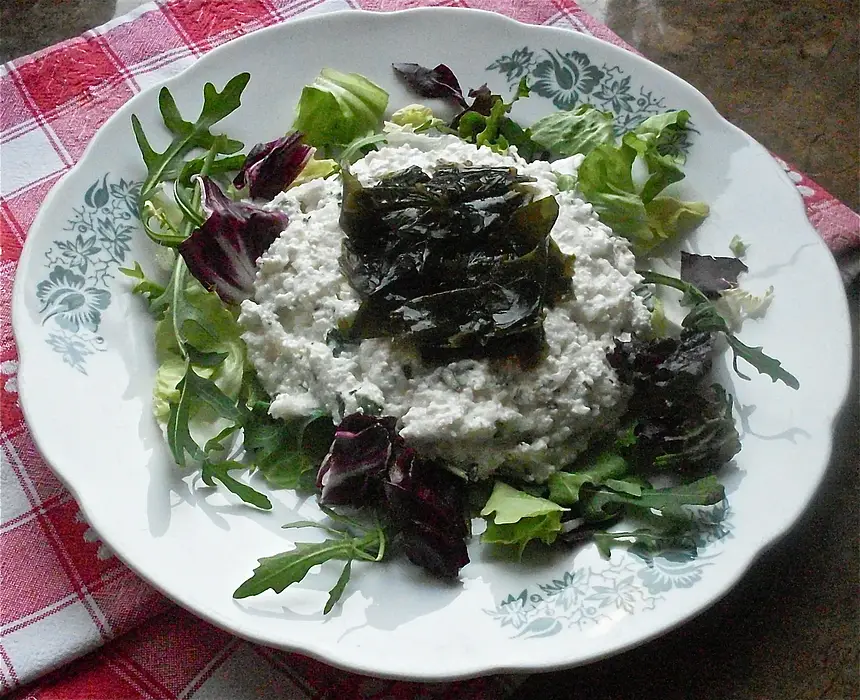
Seaweed loves rice and sesame, soy sauce and rice vinegar, plus ginger and oily fish. The brine and umami also play against richness, which is why a spoonful turns up in something as unexpected as Cottage Cheese with Seaweed, the salt cutting the dairy.
Toasted sesame oil and a pinch of sugar balance its mineral edge in dressings.
The most common mistake is over-soaking. Wakame that sits in water for half an hour goes slippery and loses its color and bite, so set a timer and drain it the moment it is supple.
The second mistake is treating all seaweed as interchangeable. Nori turns bitter and falls apart if you boil it, while kombu is too tough to eat straight from a salad bowl. Match the type to the technique and each one behaves.
Substitutes
Within the family, swaps are easy. For a salad, dried wakame and dried sea lettuce trade places one for one after soaking. For wrapping, soy wrappers or thin omelet sheets stand in for nori, though you lose the sea flavor.
For broth, kombu is the standout. A strip of dried dulse, or even a splash of fish sauce, delivers some of the same savory depth when you have no kelp.
Want the umami without the texture? A small amount of dashi powder or a few drops of fish sauce gives you the marine savoriness in liquid form. None of these matches the chew and minerality of real seaweed, but each gets you close enough for everyday cooking.
Buying and Storing Seaweed
Buy seaweed dried. It comes as sealed sheets for wrapping, bags of strips for salads, or jars of flakes for seasoning.
For nori, look for sheets that are deep green-black, crisp, and glossy; dull brown or limp sheets have absorbed moisture and lost their snap.
Store all dried seaweed sealed and away from humidity. A zip-top bag with the air pressed out keeps it crisp for a year or more. Toss in the silica packet if one came with it.
The enemy is moisture. Nori that has gone soft and chewy can often be revived with a quick pass over a low flame or a few seconds in a dry pan, which crisps it and wakes up the aroma.
Rehydrated seaweed, once soaked, should be treated like a fresh vegetable and used within a day or two.
Types of seaweed
Specific kinds of seaweed and the recipes that use them.
Kombu is dried kelp, sold as thick, leathery dark strips that look almost black and carry a faint white dust on the surface. It is the backbone of Japanese cooking, the single ingredient that gives dashi its deep, savory base.
That savoriness is not an accident. Kombu is one of the richest natural sources of glutamate, the compound that the Japanese chemist Kikunae Ikeda isolated from it in 1908 and named umami. A scrap of kombu in a pot of water turns plain liquid into broth.
It is a specific kelp within the wider seaweed family. Where nori wraps sushi and wakame floats in soup, kombu is almost always used to flavor liquid, then lifted out.
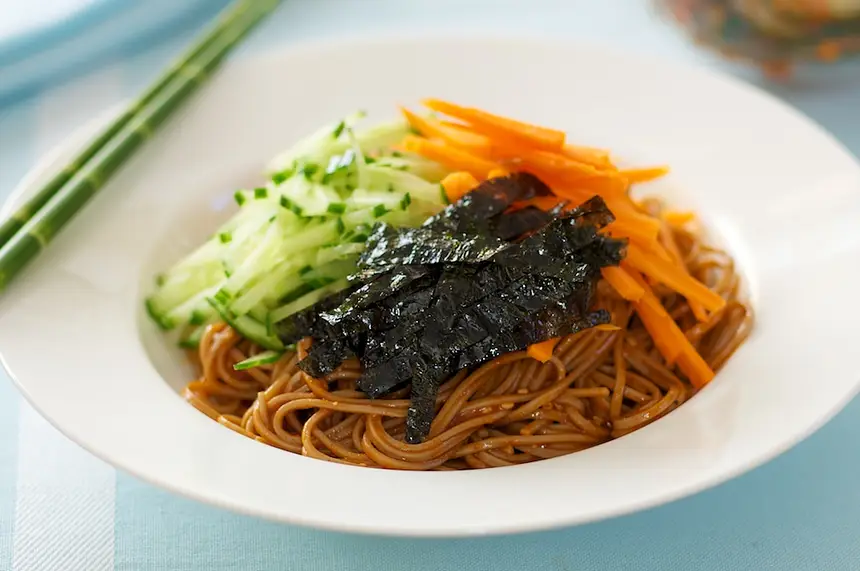
Nori is the thin, paper-like sheets of dried, roasted seaweed that wrap sushi rolls and rice balls. It is made from red algae in the genus Pyropia, traditionally called laver, which is shredded, pressed into sheets like handmade paper, dried and toasted.
The flavor is deeply savory and oceanic, a clean wave of umami with a faint sweetness and a whiff of the sea. Toasting darkens the sheet to glossy near-black and brings out a nutty edge.
Crisp from the package, nori turns chewy and soft the moment it meets moisture, which is the whole logic of how you handle it.
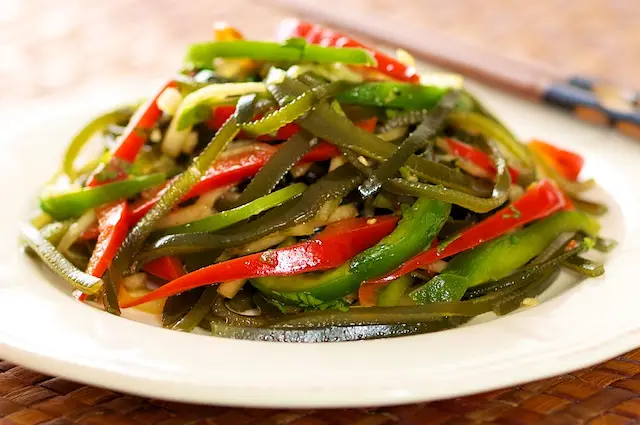
Sea kelp is a large brown seaweed, harvested from cold coastal waters and sold dried, either as flat strips or ground into flakes and powder. It is the same family as Japanese kombu, and it brings a deep, savory, mineral-salty taste of the ocean.
What kelp really delivers is umami. It is naturally high in glutamates, the compounds behind savory depth, which is why a strip of dried kelp turns plain water into a clean, brothy stock without any meat at all.
In Western kitchens kelp shows up most as a seasoning. Ground into flakes or powder, it salts and deepens vegetarian dishes, lending a faintly briny background that stands in for the richness meat would otherwise bring.
Another dish from my childhood memories, and it's my all-time favorite dish that my mom used to make very often. All the ingredients are inexpensive, but the salad tastes so refreshing and flavorful.
Completely different recipe than Jamaican or Spanish ones. I used few known methods to make beans easier to digest. They all work very well not to make music.
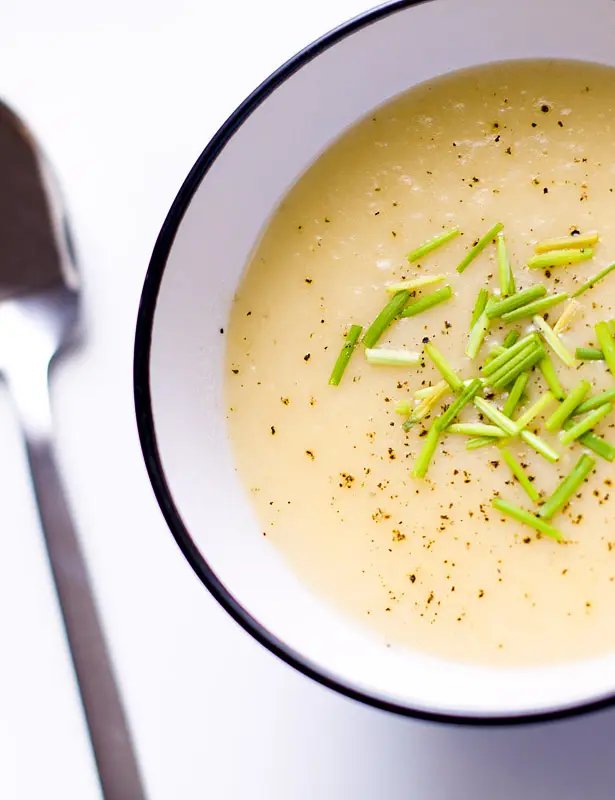
Curried leek and potato soup, vegan and gluten-free, with sweet sauteed leeks, mild curry, fresh rosemary, and a touch of arame seaweed for umami depth. A silky, blended weeknight soup with a twist.
Sea vegetables ran be added to soups or salads, cooked alone or with other vegetables, and even brewed into teas. Their versatility in the kitchen is as wide as the ocean. When dried, the succulence and qualify of sea vegetables is not as apparent as when fresh, so it is important to choose a brand you can trust.
Traditional New England clam bake with lobsters, clams, corn, potatoes, and shrimp steamed over hot rocks under fresh seaweed. The classic beach-fire feast for a crowd of 24.
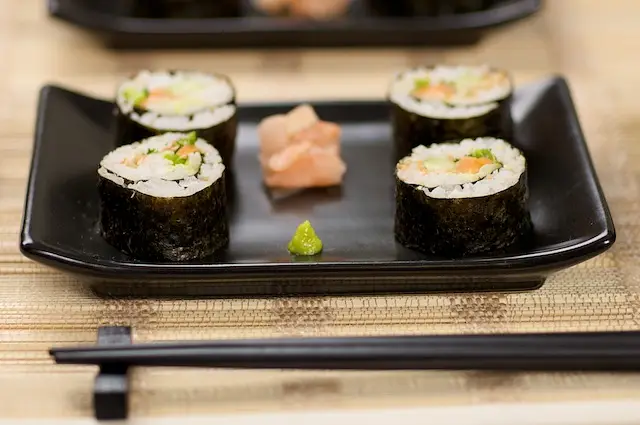
Fresh ahi tuna maki rolls wrapped in nori with seasoned sushi rice and wasabi, served with pickled ginger, julienned daikon, and carrots. Make sushi-bar quality rolls at home in 25 minutes.
Koimo Nori-Ae: Japanese taro potatoes simmered in dashi broth and rolled in flame-toasted crumbled nori seaweed. A traditional side dish served at room temperature.
Nori lamb surprise butterflies lamb loin around scallops, mango, mushrooms, and pickled ginger, wraps it in seaweed, and pairs it with a chili-lemongrass syrup and a roasted pepper relish.
Nutty brown rice tossed with mineral-rich arame seaweed, bright peas, crunchy daikon, and a toasted sesame-rice vinegar dressing. A wholesome chilled salad that's naturally vegan and packed with plant-based goodness.
Kinome-ae is a classic Japanese dish pairing dashi-simmered bamboo shoots with a vivid green miso dressing colored with spinach paste. Finished with fragrant sansho pepper powder.
White beans and hijiki seaweed tossed with rice and braised red cabbage in balsamic vinegar, finished with tamari for a hearty vegan bowl packed with plant protein.
Vegetarian stuffed grape leaves (dolma) filled with brown rice, dill, cinnamon, allspice, and a hint of peppermint. Meatless dolma simmered in lemon broth, served hot or cold as a make-ahead appetizer.
Vegetarian nori rolls (murreita) wrap brown rice, mung sprouts, carrot, cucumber, daikon, and umeboshi plum in toasted nori. A macrobiotic-style sushi roll with no fish required.
Blended lentil and tomato soup with rosemary, cumin, miso, and arame seaweed for umami depth. A vegan, high-fiber soup that simmers in just 20 minutes.
Isobe zukuri sashimi rolls with fresh fish wrapped in toasted nori seaweed, sliced into bite-sized pieces. A simple Japanese appetizer with dipping sauce.
Vegetable miso soup brightened with sweet green peas, scallion, jalapeño, garlic, and dulse seaweed. A fresh, 30-minute twist on the classic Japanese starter.
In Japan, miso soup is a traditional breakfast food–sipped hot, directly from the bowl. It is incredibly simple to prepare and can be put together in roughly the same amount of time it takes to brew a cup of tea. You can transfer the soup to a wide-neck thermos and take it to work for a nourishing mid-morning break as well. Miso has numerous health benefits, but is especially renowned for its probiotics properties, which help balance intestinal flora. It also contains good amounts of vitamin B12.
Achara Zuke: Japanese pickled turnips with kombu seaweed, dried chili, and rice vinegar. A crisp, tangy tsukemono made by slow-curing accordion-cut turnips. Side dish or banchan.
Crispy fried oyster mushrooms coated in a triple-dredge of dulse seaweed, garlic, and fresh breadcrumbs. Golden in 90 seconds flat, with a briny, umami crunch in every bite.
Hearty yeast-raised dog treats packed with 5 whole grains, kelp powder, and beef broth bake into nutritious biscuits. A labor of love for pampered pups.
Homemade seitan from scratch using bread flour, kneaded and washed to extract pure wheat gluten, then simmered in a savory tamari, ginger, and kombu broth. The ultimate plant-based protein.
Thick seitan steaks baked until firm, then simmered in a savory tamari broth with kombu and fresh ginger for deep umami flavor. Brushed with sauce and broiled until lightly charred, these vegan steaks have real chew and satisfying meatiness.
Crumbled silken tofu scrambled with mushrooms, red pepper, green olives, scallions, and a hit of turmeric for color. Vegan, protein-packed, and ready in 40 minutes.
Smoked salmon sushi rolls layer seasoned sushi rice, creamy avocado, crisp cucumber, and silky smoked salmon in nori. Beginner-friendly homemade maki, no raw fish or special skills required.
Homemade dog biscuits packed with wholesome whole wheat, rye, and cracked wheat, baked until golden and crunchy. Made with real beef or chicken broth, these bone-shaped treats store for months and make tail-wagging gifts.
Italian-style tomato sauce simmered with kelp seaweed (alaria or laminaria), garlic, oregano, and Worcestershire. A mineral-rich, umami-packed sauce for spaghetti, meatballs, or browned meat.
Vegetarian mushroom gravy built on browned flour, miso, soy sauce, and sea kelp for deep umami without meat. Pour over veggie burgers, mashed potatoes, or whole grains.
Lentil and tomato soup with rosemary, miso, and a pinch of arame seaweed blended smooth. A vegan soup with hidden umami depth from miso and seaweed that keeps you guessing.
DASHI STOCK is Japanese clear soup stock. There are four types made from kelp, dried bonito, shitake mushroom, or dried fish. Dashi stock is the secret of Japanese cooking. To keep this strictly vegetarian, I omit the dried bonito flakes and substitute with soy bean sprouts and or mushrooms.
Homemade vegan sausage (soysage) made from soybeans, kombu, oats, gluten flour, and classic sausage spices like sage, fennel, and cayenne. Steamed until firm and sliceable.
Toriwasa is a Japanese izakaya classic: sake-poached chicken shredded thin and tossed with blanched parsley in a sharp wasabi-soy dressing, finished with shredded nori. Light, clean, and full of bite.
Japanese nori rice balls (onigiri) with brown rice, steamed carrot sticks, and tangy umeboshi paste, served with a ginger-soy dipping sauce. A simple vegan snack or lunch.
Traditional homemade seitan from whole wheat flour, washed to develop pure gluten and simmered in tamari, ginger and kombu stock. Classic plant-based meat substitute from scratch.
Moroccan style quinoa with chickpeas, turnips, carrots, Brussels sprouts, and cumin served couscous-style with vegetables mounded over toasted quinoa and hot broth ladled over the top.
Traditional Japanese sweet azuki bean paste (anko) made with adzuki beans, kombu, raisins, and barley malt. Naturally sweetened, vegan, and endlessly versatile for Japanese desserts.
A vegetarian take on sushi – a one bowl meal, which can be made in advance, keeps well in the fridge and makes for a great lunchbox. If you are going to make it ahead, store the dressing separately until you are ready to serve.
Homemade sushi rolls stuffed with cream cheese, imitation crab, and crisp cucumber wrapped in seasoned rice and nori. A beginner-friendly roll you can nail on the first try.