What Is Nori and How Can I Use It?
If nori has turned up in a recipe or caught your eye at the store, here's what you need to use it with confidence and how to choose it, cook it, store it, what to substitute, and 12 recipes to try it in.
Key Points
- Nori is dried, roasted seaweed (laver) pressed into thin sheets, with a savory, oceanic umami.
- Roll it shiny-side-down on a bamboo mat with cooled sushi rice and fillings.
- It also crumbles over rice bowls, soups and vegetables as a salty finishing garnish.
- Moisture is the enemy: too much wet rice or slow rolling makes the sheet split.
- Store sealed with silica; re-crisp limp sheets with a few seconds of dry heat.
What is nori?
Nori is the thin, paper-like sheets of dried, roasted seaweed that wrap sushi rolls and rice balls. It is made from red algae in the genus Pyropia, traditionally called laver, which is shredded, pressed into sheets like handmade paper, dried and toasted.
The flavor is deeply savory and oceanic, a clean wave of umami with a faint sweetness and a whiff of the sea. Toasting darkens the sheet to glossy near-black and brings out a nutty edge.
Crisp from the package, nori turns chewy and soft the moment it meets moisture, which is the whole logic of how you handle it.
How to Use Nori
The headline job is wrapping. Lay a sheet shiny-side-down on a bamboo mat, spread cooled sushi rice over it, then add fillings and roll it up tightly.
You see this in Vegetarian Sushi Rolls, Tuna Maki and Cream Cheese & Crab Sushi Rolls, and in the sashimi-wrapping technique of Isobe Zukuri.
Nori is just as good torn or snipped over food as a finishing garnish. Crumble it onto rice bowls and noodle soups, or over vegetables as in Roasted Brussel Sprouts with Nori, where it adds a hit of savory depth at the end.
Toasted and salted into thin snacking strips, it is eaten straight from the pack.
A quick pass over a flame or a dry pan re-crisps any sheet that has gone limp.
Pairing and Common Mistakes
Nori belongs with the Japanese pantry: short-grain rice, rice vinegar, soy sauce, wasabi, sesame, fresh fish, cucumber and avocado. Its salinity also lifts unexpected partners, from scrambled tofu to roasted vegetables.
The most common mistake is letting nori sit out and go soft before you need it. Once it absorbs humidity it loses its crackle and tears, so keep sheets sealed until the moment you roll.
The second is putting too much wet rice on the sheet, or rolling too slowly. Excess moisture softens the nori to the point it splits, so spread a thin, even rice layer and work quickly while the sheet is still crisp.
What to Use Instead
There is no exact substitute for a nori sheet, because nothing else wraps the way it does.
For sushi specifically, a thin omelet or a sheet of soy paper can stand in as a wrapper, and a large blanched cabbage or chard leaf works in a pinch, though all change the flavor.
For the umami garnish rather than the wrap, other dried seaweeds carry the same oceanic punch. Dulse flakes or wakame both work, as does a sprinkle of furikake seasoning. None of them roll a maki, but they deliver that sea-salt depth onto a finished dish.
Buying and Storing Nori
Nori comes in full sheets for rolling, smaller half sheets, and pre-cut snacking strips, sold in the Asian aisle or at any Japanese grocer. Look for sheets that are dark, glossy and uniform; greenish, dull or pin-holed sheets are lower grade and tear more easily.
Moisture is the enemy. Keep nori in an airtight bag or tin along with the silica packet it came with, stored somewhere cool and dark, where it stays crisp for months.
If sheets have turned soft, a few seconds over low heat dries them out and brings back the snap. Once nori smells stale and fishy or refuses to re-crisp, its day is done.
Quick facts
- In Chinese
- 海苔
- British (UK) term
- Nori
- en français
- nori
- en español
- nori
Recipes using nori
There are 12 recipes that contain this ingredient.
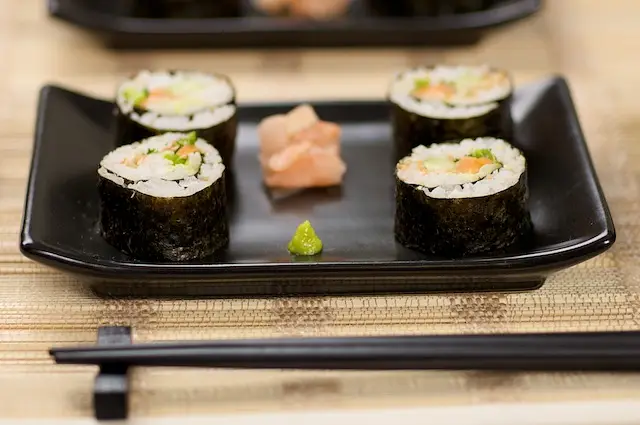
Vegetarian Sushi Rolls


It's not that hard to make your own sushi, California roll style at home. Cook some rice, season and wrap up your favorite mix of textures.

Tuna Maki
Fresh ahi tuna maki rolls wrapped in nori with seasoned sushi rice and wasabi, served with pickled ginger, julienned daikon, and carrots. Make sushi-bar quality rolls at home in 25 minutes.
Koimo Nori-Ae (Taro Potatoes Rolled in Crumbled Seaweed)
Koimo Nori-Ae: Japanese taro potatoes simmered in dashi broth and rolled in flame-toasted crumbled nori seaweed. A traditional side dish served at room temperature.

Nori Lamb Surprise
Nori lamb surprise butterflies lamb loin around scallops, mango, mushrooms, and pickled ginger, wraps it in seaweed, and pairs it with a chili-lemongrass syrup and a roasted pepper relish.

Nori Rolls (Murreita)
Vegetarian nori rolls (murreita) wrap brown rice, mung sprouts, carrot, cucumber, daikon, and umeboshi plum in toasted nori. A macrobiotic-style sushi roll with no fish required.

Isobe Zukuri (Sashimi Wrapped in Laver)
Isobe zukuri sashimi rolls with fresh fish wrapped in toasted nori seaweed, sliced into bite-sized pieces. A simple Japanese appetizer with dipping sauce.

Nori Rolls
Vegetarian nori rolls with brown rice, cucumber, carrots, daikon, bean sprouts, and umeboshi plum. No-cook, low calorie, and packed with crunch.

Scrambled Tofu
Crumbled silken tofu scrambled with mushrooms, red pepper, green olives, scallions, and a hit of turmeric for color. Vegan, protein-packed, and ready in 40 minutes.

Smoked Salmon Sushi Roll
Smoked salmon sushi rolls layer seasoned sushi rice, creamy avocado, crisp cucumber, and silky smoked salmon in nori. Beginner-friendly homemade maki, no raw fish or special skills required.

Roasted Brussel Sprouts with Nori
Vegetable medley featuring brussel sprouts and strips of Nori (seaweed) (same stuff that's used to wrap sushi rolls.
Deconstructed Sushi Bowl with Black Sesame Dressing
A vegetarian take on sushi – a one bowl meal, which can be made in advance, keeps well in the fridge and makes for a great lunchbox. If you are going to make it ahead, store the dressing separately until you are ready to serve.

Cream Cheese & Crab Sushi Rolls
Homemade sushi rolls stuffed with cream cheese, imitation crab, and crisp cucumber wrapped in seasoned rice and nori. A beginner-friendly roll you can nail on the first try.