Wondering what to do with bouillon? This guide covers how to pick it, cook it, store it, and swap it, plus 25 recipes to put it to work.
Key Points
Bouillon is shelf-stable stock concentrate in cube, granule, powder, or paste form for instant broth.
Paste tastes closest to real stock and keeps for months refrigerated; it is worth seeking out.
Reconstitute about one cube or one rounded teaspoon of granules per cup of hot water.
It is very salty, so dial back added salt and season only at the end.
It brings flavor but no gelatin, so clear soups taste a little flat and thin.
What is bouillon?
Bouillon is the commercial concentrate family: cubes, granules, powders, and pastes that dissolve in hot water to make an instant stock or broth. It is what most home cooks actually reach for on a weeknight, and there is no shame in that.
A jar of paste in the fridge means you are never more than a kettle away from a savory base for soup, rice, gravy, or a quick pan sauce.
For the full picture of what real stock is and how it differs from broth, see the parent page. This page covers the shelf-stable shortcut version and how to use it well.
Cubes, Granules, Powder, and Paste
They are the same idea in different forms. Cubes are dried, compressed stock pressed into a foil-wrapped block, usually one cube per cup of water. Granules and powder are the loose version, which lets you measure by the teaspoon and dial the strength up or down.
Paste, sometimes sold as a concentrated base, is the one worth seeking out. It tends to taste the most like real stock because it is closer to a reduced one, and it keeps for months in the fridge.
Across all forms the common flavors are beef and chicken, with vegetable the go-to for meatless cooking.
Watch the Salt
The one thing every form shares is a heavy dose of salt, often most of a teaspoon's worth packed into a single cube. That salt is doing much of the flavoring, which is why bouillon tastes punchy straight from the pot.
So the rule is simple. Dial back any salt the recipe calls for and add more only at the end, after tasting.
This matters most when you reduce the liquid, because boiling it down concentrates the salt right along with the flavor and you can shoot past edible fast. A Beef Gravy built on bouillon often needs no extra salt at all.
How to Reconstitute
The standard ratio is one cube or one rounded teaspoon of granules per cup of hot water. Treat that as a starting point and adjust to taste. Stir it into water that is hot but not violently boiling so it dissolves cleanly without clumping.
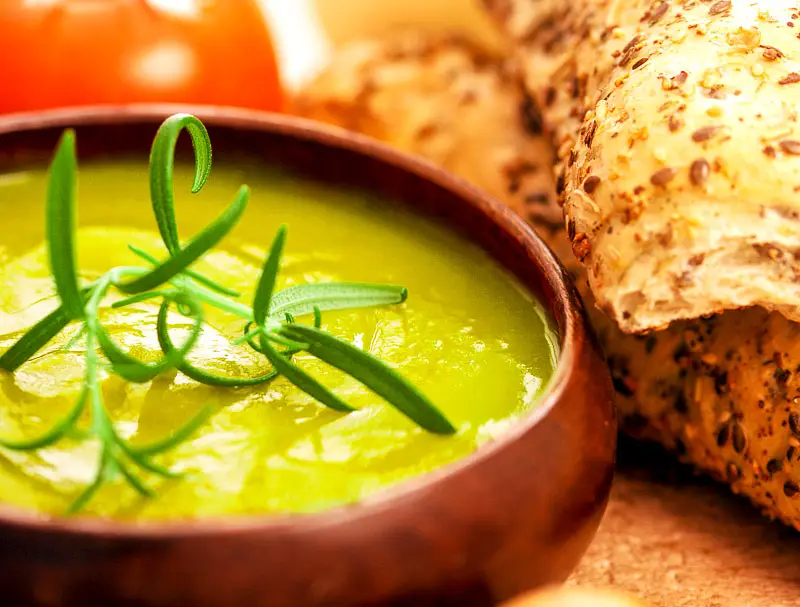
You do not always have to dissolve it first. Crumble a cube or sprinkle granules straight into a simmering soup or a pot of rice and let the liquid already there carry it. A Smooth Broccoli-Cauliflower Soup leans on a couple of cubes stirred right into the pot.
When It Is the Right Call
Bouillon is the honest weeknight choice when you have no homemade stock on hand and no time to make any. For a dish where the stock is a background note, like cooking grains or thinning a sauce, most people could not tell you skipped the real thing.
Where it falls short is body. Bouillon brings flavor and salt but none of the gelatin that gives homemade stock its silky cling. So a clear soup meant to carry a meal on its own will taste a little flat and thin.
For those dishes, reach for a real stock. For everyday cooking, bouillon earns its spot in the pantry.
Buying and Storing
Cubes, granules, and powder stay shelf-stable for a year or more in a cool, dry cupboard, which is much of their appeal. Keep them sealed, since the powder readily draws moisture from the air and clumps.
Paste and any opened tub belong in the fridge, where they keep for months. Check the label for the use-by date and sniff an old paste before you trust it; the salt preserves it well, but the flavor does dull over time.
Types of bouillon
Specific kinds of bouillon and the recipes that use them.
Chicken bouillon is the plain unclarified broth that results from boiling a chicken carcass and vegetables sometimes with various seasonings.
The food industry has developed methods for solidifying the extracts which are then compressed into chicken bouillon cubes (or simply chicken stock cubes) that are mixed with water to obtain an instant chickenstock.
Powdered chicken bouillon/stock is dehydrated broth (bouillon in French) or stock formed into a powder.
It is made by dehydrating vegetables, meat stock, a small portion of solid fat (such as hydrogenated oil), salt (usually well over 50%) and seasonings (usually including monosodium glutamate).
Broth made from chickenbouillon powder is different in taste from fresh broth because of its higher salt content and flavours changed by the boiling process.
It is widely used in English cooking to add flavour, particularly in soups, stews and casseroles.
Beef bouillon granules are concentrated beef flavor dried into a loose, sandy powder. Stir a spoonful into hot water and you have instant beef stock, no simmering and no bones.
The granules are the same idea as a beef bouillon cube, just in a pourable form. That difference is the whole reason to keep a jar around.
Because they pour, you measure them by the teaspoon and dial the strength exactly, instead of being locked into one cube at a time. They dissolve faster than a cube too, and they melt straight into a dry rub or a dish without a puddle of water.
The catch is the same as for any bouillon: they are very salty.
Vegetable stock cubes are dried vegetable concentrate pressed into a small block, usually held together with salt and a little oil and dried seasoning. Drop one into hot water and you have instant vegetable stock in under a minute.
They sit in the bouillon family, the shelf-stable shortcuts that stand in for a simmered pot.
The trade is honest. You give up the body and fresh flavor of homemade vegetable stock, and you get something that keeps for a year in the cupboard and is ready the second you need it.
One cube is built to flavor roughly 2 cups (500 ml) of water, though brands vary, so check the wrapper.
A bouillon cube is dried, concentrated stock pressed into a small block, ready to dissolve into instant broth. Drop one in hot water and a pot of plain liquid turns savory in about a minute.
It is the original kitchen shortcut, sitting at the center of the bouillon family. The cube packs the salt, dried extract, fat, and seasoning of a simmered stock into a shelf-stable square that keeps for a year.
Cubes come in every flavor: chicken, beef, vegetable, fish, and more.
This page is about the cube itself. For the quirks of a particular flavor, follow the link to that one.
Smooth broccoli cauliflower soup blends two cruciferous veggies into a silky, low-fat puree thickened with skim milk and finished with Swiss cheese. Light, creamy, and ready in 30 minutes.
Poached fish gently cooks salmon, bass, or snapper fillets in seasoned court bouillon for moist, tender results in under 15 minutes. A French classic technique for delicate fish.
Jellied venison salad sets tender game meat in a savory bouillon gelatin with vinegar tang, served chilled on lettuce with mayonnaise. A retro cold salad worth reviving.
Creamy blended lentil soup with bacon, leeks, and a splash of vinegar, topped with sliced sauteed frankfurters. A German-inspired comfort soup that's thick, smoky, and surprisingly hearty.
Kalbi Kui is a classic Korean grilled short rib recipe marinated overnight in sesame oil, olive oil, bouillon, and scallions. Simple ingredients, bold umami flavor, and just 10 minutes on the broiler.
Japanese-style skewered lamb marinated in soy, honey, sherry, garlic, and ginger, then broiled in just minutes for tender, savory-sweet bites. A lamb take on yakitori, easily gluten-free with tamari.
Fast Food 4 cooks instant rice with crushed tomatoes, thawed frozen spinach, and Italian seasoning in one pot. Budget pantry dinner ready in 30 minutes, vegan-friendly.
Rock lobster lasagna: decadent lobster tail meat layered between lasagna noodles, tomato sauce, mozzarella, and parmesan. A special-occasion Italian-American upgrade on classic lasagna.
Creamy garden vegetable soup made entirely in the microwave with cabbage, carrots, zucchini, corn, green beans, and fresh basil in a milk-based broth. Ready in 30 minutes, no stovetop needed.
Mission-style chicken breasts smothered in a smoky chipotle sour cream sauce with melted cheese. Made with a from-scratch chipotle paste using dried chiles, garlic, and slow-fried aromatics.
Slow cooker chicken breasts stuffed with a peanut butter, honey, cumin, and mint filling. Rolled into packets and braised in peanut-bouillon broth for tender, savory results.
Smoked bluefish chowder: flaky smoked bluefish stirred into a corn, potato, and smoked bacon base built on fish bouillon. A coastal New England chowder with bold, smoky character.
Vietnamese-style marinade with nuoc mam (fish sauce), shallots, garlic, peanut oil, and sugar. A tangy, umami-rich five-minute marinade for grilled meats and seafood.
Fresh mushroom soup with butter-seared mushrooms, sweet onion, and skim milk thickened with arrowroot. A lighter, creamier take on the canned standby in under 30 minutes.
Chicken country soup with browned chicken breast, broccoli, carrots, and red bell pepper simmered in a simple bouillon broth. A clean, no-fuss vegetable chicken soup in one hour.
Browned chicken pieces simmer atop rice, mushrooms, and carrots in one skillet for a complete dinner with zero side dishes needed. Ready in an hour with minimal cleanup.
Melton Mowbray-style pork pie with cubed pork, veal, and ham, hard-boiled eggs running through the center, and savory aspic poured in after baking. A classic British raised pie.
Seasoned ground beef filling with garlic, cumin, oregano, and chili powder, ready for enchiladas, tacos, burritos, or chimichangas. One versatile Mexican meat recipe, four dinners.
Easy beef gravy made from scratch with butter, flour, and bouillon, no pan drippings required. A quick roux-based brown gravy ready in minutes for mashed potatoes, roasts, or stir-fry sauces.
A traditional Swiss-Italian tripe soup from Ticino with borlotti beans, carrots, leeks, celery, and Parmesan, served alongside broiled Gruyere garlic bread. Hearty, rustic, and warming.
Wine-marinated rabbit saddle roasted with vegetables and served over julienned leeks with rosemary-tomato butter sauce. This San Francisco masterchef recipe transforms wild game into restaurant-worthy sophistication.
Beef miroton is a classic French method for transforming leftover roast beef into a new meal. Sliced beef simmered in a tangy onion-vinegar sauce, topped with bread crumbs, and baked until crisp.