What Is Coriander root and How Can I Use It?
If coriander root has turned up in a recipe or caught your eye at the store, here's what you need to use it with confidence and how to choose it, cook it, store it, what to substitute, and 43 recipes to try it in.
Key Points
- The root of the cilantro plant, deeper and earthier than the leaf, central to Thai cooking.
- Pound it with garlic and white peppercorns into a paste, the base of curry pastes and marinades.
- A foundation flavor, not a garnish: add it at the start, pounded or simmered, never at the end.
- No exact substitute; use cilantro lower stems at about double the volume, plus ground coriander seed.
- Save and freeze roots from cilantro bunches; they hold their flavor for months.
What is coriander root?
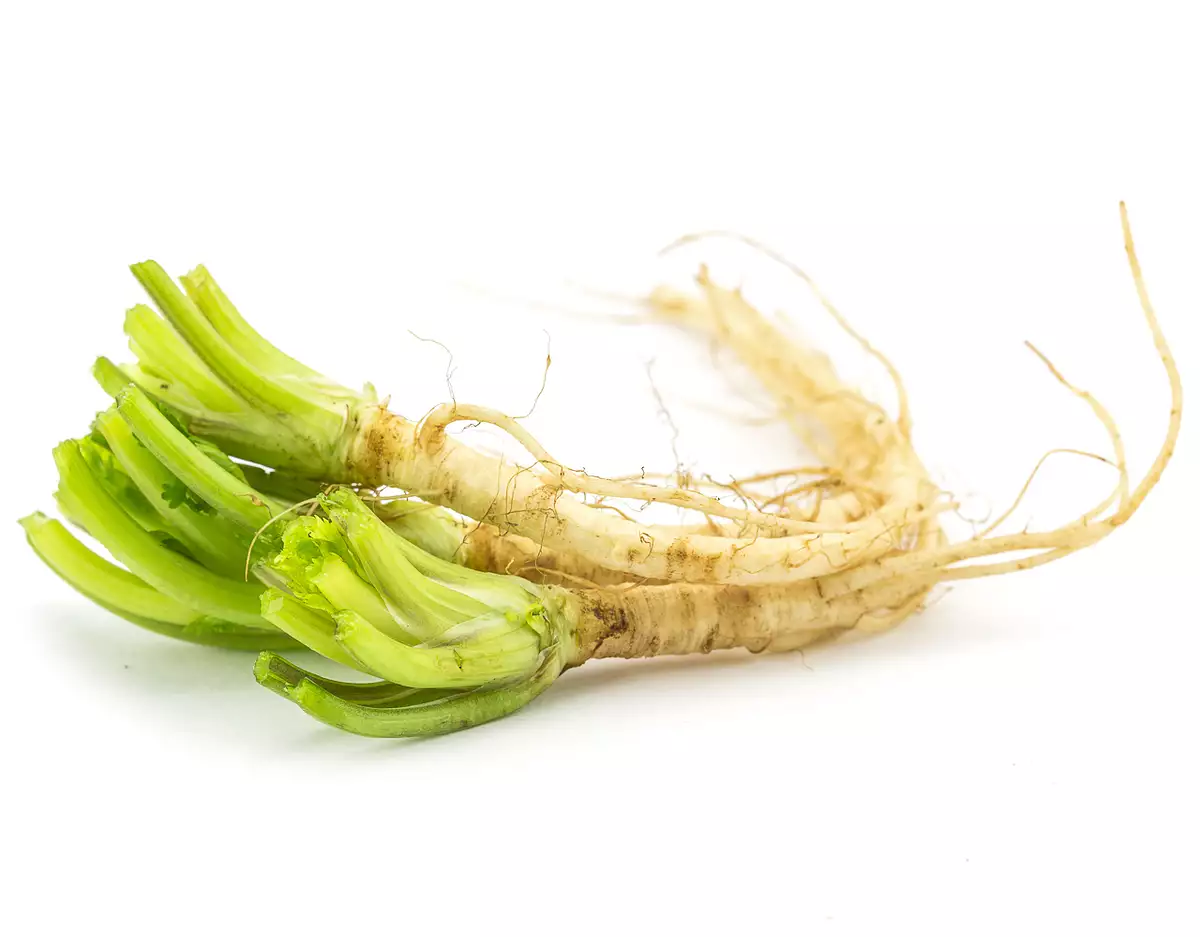
Coriander root is the pale, thread-like root of the same plant that gives us cilantro leaves and coriander seeds. In Thai cooking it is the most valued part, with a deeper, warmer, earthier flavor than the leaf and none of the soapy edge some people taste in cilantro.
Crush a clean root and you get a concentrated coriander aroma backed by something close to white pepper and celery. That intensity is why it anchors the flavor base of Thai curry pastes and marinades rather than being scattered on top at the end.
It is a foundation ingredient, not a garnish. Where cilantro leaves go in last for freshness, the root goes in first, pounded into a paste to build the savory backbone of a dish.
How to Use Coriander Root
The classic Thai move is to pound coriander root with garlic and white peppercorns into a rough paste, the holy trinity that starts countless savory dishes. That paste seasons marinades for grilled meat and forms the base of curry pastes like Amazing Green Curry Paste and Masaman Curry Paste.
It also flavors broths and soups from the inside. Bruise a whole root and simmer it in the stock for Dom Yam Gung or Gai Thom Kha, then fish it out before serving, the way you would a bay leaf.
Always scrape and wash the roots well first. They grow in sandy soil and trap grit in the fine side rootlets, so a quick rinse is never enough; scrub them under running water and trim any blackened tips.
Pound rather than chop when you can. A mortar and pestle bruises the fibers and releases far more aroma than a knife, which is why traditional pastes start in the stone bowl rather than a food processor.
Pairing and Common Mistakes
Coriander root lives in the company of garlic, white pepper, lemongrass, galangal, fish sauce, and chilies.
It underpins seafood and chicken especially well, the savory ground note in Red Thai Fish Cakes and a Thai Roast Duck Red Curry, where it balances the sweetness of coconut and the heat of chili.
The most common mistake is treating it like cilantro leaf and adding it at the end. The root is tough and its flavor needs heat and time to open up, so it belongs at the start of cooking, pounded or simmered, not sprinkled on at the finish.
The second is tossing the roots when you buy cilantro with them attached. Those roots are the part you actually want for cooking, so cut them off and set them aside rather than dropping them in the bin with the trimmings.
Substitutes
There is no exact swap, but you can get close.
The most common fix is to use the lower stems of a bunch of cilantro, the thicker, paler part near the root, finely chopped or pounded. They carry much of the same earthy flavor, so use about double the volume to make up for the milder punch.
Cilantro stems plus a pinch of ground coriander seed gets you nearer still, adding back some of the warm, citrusy depth the root brings. It is a workable stand-in for a curry paste or marinade.
In a real pinch, a small amount of ground coriander seed alone gives the warm aromatic note, though you lose the fresh, green character entirely. Reach for it only when no fresh cilantro is on hand.
Buying and Storing
Coriander root is sold mainly at Asian and Southeast Asian grocers, often as whole bunches of cilantro with the roots still attached and the soil clinging on. Look for firm, cream-colored roots; limp or slimy or yellowing ones are past their best.
Fresh roots are perishable. Wrapped in a damp paper towel inside a bag, they keep about a week in the fridge, but the leaves attached to them wilt much faster, so use or remove the tops early.
For longer storage, freezing is the cook's secret. Scrub the roots and pat them dry, then freeze them whole or as a pounded paste in a small container; they hold their flavor for months and go straight from freezer to pot.
This is the reason to save the roots whenever a recipe calls only for cilantro leaves.
If you can only find dried or jarred coriander root, treat it as a weaker, last-resort option, since drying strips most of the fresh aroma that makes the root worth seeking out.
Quick facts
Where to find coriander root: Coriander root is usually found in the produce section or aisle of the grocery store or supermarket.
- In Chinese
- 香菜根
- British (UK) term
- Coriander root
- en français
- racine de coriandre
- en español
- raíz de cilantro
Recipes using coriander root
There are 43 recipes that contain this ingredient.
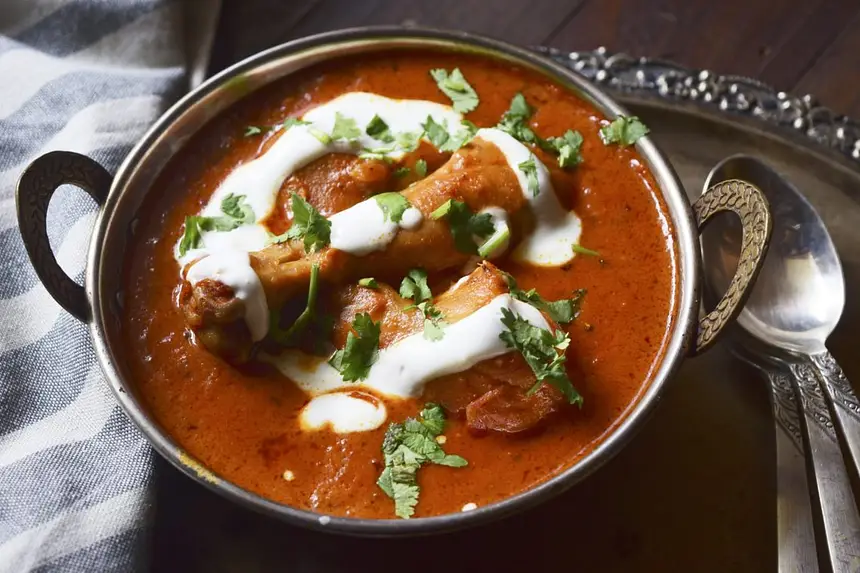
Authentic Butter Chicken


This authentic Indian butter chicken recipe saves time using cooked chicken enveloped in an incredibly creamy authentic homemade curry sauce.
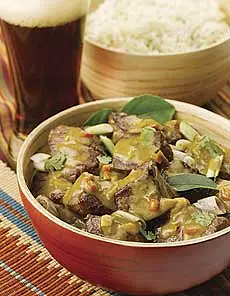
Vegetable Sausage Appetizer
More like a spring roll, this vegetarian appetizer wraps veggies in beancurd sheets ending up crispy on the outside and loaded on the inside.
Deep-Fried Tofu with Peanut Sauce (Blacker)
This is one of my favorites. Deep fried tofu with a peanut sauce for dipping. This one calls for pressing the tofu first. It makes it denser.

Shrimp Savoy(Makua Tait Savoy)

Thai-style stuffed tomatoes filled with seasoned ground pork, shrimp, peas, and corn, flavored with pounded garlic, peppercorns, coriander root, and fish sauce. Gently steamed until tender and fragrant.

Panang Beef
Panang beef curry with homemade spice paste, coconut cream cracked to release its oil, roasted peanuts, and fresh basil. Authentic Thai technique, medium heat, ready in 40 minutes.
Bagira Baigan
Bagara baingan, a South Indian brinjal curry of whole baby eggplants simmered in a rich, nutty gravy of ground peanuts, poppy seeds, and red chilies with warm spices. A deeply flavorful vegan curry.

Kaeng Khua Curry Paste
Authentic Thai kaeng khua curry paste with dried chilies, lemongrass, galangal, kaffir lime, and shrimp paste. Stores in the fridge for months and makes about 3/4 cup.
Tom Yum Goong (Hot & Sour Soup)
Authentic Thai Tom Yum Goong: a fragrant hot-and-sour shrimp soup with lemongrass, galangal, kaffir lime leaves, fresh chilies, fish sauce, and straw mushrooms. The classic Bangkok street-food soup made at home.
Phanang Curry Paste
Phanang curry paste pounded from dried red chiles, shallots, garlic, lemongrass, galangal, coriander root, cumin, and shrimp paste. An authentic Thai curry paste made from scratch.
Red Curry Paste
Authentic Thai red curry paste from scratch: dried chilies, galangal, lemongrass, kaffir lime rind, shrimp paste, and toasted coriander and cumin seeds blended into a fiery aromatic base.
Pudhina (Mint ) Rice
Pudina rice, a fragrant Indian one-pot mint pulao, with a fresh mint, coconut, ginger, and garlic paste, whole spices, and tomato simmered into the rice. A vibrant, herby vegetarian dish.

Nam Phrik Kaeng Khua (Kaeng Khua Curry Paste)
Thai Kaeng Khua curry paste made with dried chilies, garlic, lemongrass, coriander root, and shrimp paste. A fragrant homemade paste that keeps 3-4 months refrigerated.

Dom Yam Gung (Thai Shrimp Soup)
A classic Thai hot and sour shrimp soup (Tom Yum Goong) with lemongrass, galangal, coriander root, lime juice, fish sauce, and red chilies. Fragrant, spicy, and ready in 30 minutes.
Thai Mini Spring Rolls
Crispy deep-fried Thai spring rolls stuffed with seasoned pork, shrimp, bean thread noodles, and crunchy veggies, served with a tangy peanut-chile dipping sauce. The ultimate party appetizer.

Green Pepper Curry
South Indian green pepper curry with ground coconut, poppy seeds, turmeric, and coriander. A simple vegetarian curry with a fragrant masala paste and fresh cilantro.

Nam Phrik Kaeng Khiao Wan (Green Curry Paste)
Homemade Thai green curry paste with dry-roasted coriander and cumin, fresh green chilies, lemongrass, and shrimp paste. Stores in the fridge for months and beats store-bought every time.
Darley Street Thai Chuu-Chii (Red Curry) of Coffin Bay Scall
Thai red curry scallops (Chuu-Chii) with homemade curry paste, coconut cream, kaffir lime leaves, and fish sauce. Includes a from-scratch paste recipe using galangal, lemongrass, and shrimp paste.
Mushroom Satay (Satay Het Hom)
Thai mushroom satay with Chinese mushrooms spiral-cut onto skewers, marinated in lemongrass and galangal, grilled and served with a rich coconut peanut sauce.
Baked Prawns & Mungbean Noodles - Kung Op Wun Sen
Thai glass noodles baked with prawns, coriander root, ginger, peppercorns, and oyster sauce in individual pots. Kung Op Wun Sen ready in 30 minutes.
Nam Phrik Kaeng Daeng (Red Curry Paste)
Homemade Thai red curry paste with dried chilies, garlic, lemongrass, coriander root, cumin, and shrimp paste. Stores for months and beats anything from a jar.
Satay-Satay Hurricane Soup
Thai-style seafood soup with shrimp, crab claws, mussels, and fish in a galangal-lemongrass-lime leaf broth built on a slow-cooked garlic-chili paste. Bold, sour, and aromatic.
Amazing Green Curry Paste
Toast cumin and coriander seeds until fragrant, then pound with fresh green chilies, lemongrass, galangal, and shrimp paste into an authentic Thai green curry paste bursting with heat and herbal brightness.
Thai-Style Seafood Casserole with Basil
Crab, shrimp, fish, and squid braised in a clay pot with ginger, coriander root, mung bean noodles, and fresh basil in a soy-oyster sauce. A spectacular Thai seafood feast for four.
Nam Prik Curry Noodles (Kanom Jin Nam Prik)
Thai kanom jin nam prik curry noodles built on a fragrant coconut-moong bean sauce with red curry paste, tamarind, and crispy fried shallots and garlic. Rich, tangy, and earthy, served over soft rice noodles with long beans and sprouts.
Spicy lamb & paw-paw
Spicy lamb braised in a fresh paste of chilli, lemongrass, galangal, and turmeric with coconut milk, the meat first tenderized with papaya skin. Served with a sharp green papaya salad dressed in lime and fish sauce.

Kang-Ped Bhet-Yang - Thai Roast Duck Red Curry.
Kang ped bhet yang, Thai roast duck red curry with homemade curry paste, coconut cream, Thai basil, and Kaffir lime. A Bangkok restaurant classic with layered heat and sweet-savory complexity.
Gai Dom Kha (Thai Chicken Soup)
Gai Dom Kha is Thailand's coconut chicken soup, built on lemongrass, galangal-style ginger, and lime, finished with fish sauce and chiles. Creamy, hot, and deeply aromatic.
Neua Daet Diao (Fried Sun-Dried Beef)
Neua daet diao, Thai sun-dried fried beef marinated in fish sauce, oyster sauce, garlic, coriander root, and a splash of whiskey. Crisp jerky-like edges with chewy centers, served with sweet chili sauce.
Red Thai Fish Cakes
Thai red fish cakes (tod mun pla) with red curry paste, lemongrass, lime zest, and crunchy green beans. Bouncy texture, fragrant heat, perfect with sweet chili sauce.
Gai Thom Kha
Gai Thom Kha, Thai coconut chicken soup with lemongrass, galangal, fish sauce, and fresh chilies. Rich, aromatic, and sour-spicy. An authentic Thai soup made from scratch.

Masaman Curry Paste (Nam Prik Kaeng Masaman)
Authentic Thai massaman curry paste pounded from scratch with dry-fried spices, dried chilies, lemongrass, galangal, grilled shrimp paste, and tamarind. Deep, complex, and aromatic.

Kung Yang Sot Makham Piak-Broiled Lobster in Tamarind Sauce
Thai broiled lobster in tamarind sauce with palm sugar, fish sauce, fried garlic, and crispy shallots. Sweet, sour, salty, and spicy in one stunning seafood dish.

Thai Spicy Sausage
Ground pork seasoned with red curry paste, lemongrass, coriander seeds, and fish sauce, stuffed into casings and grilled until charred and juicy. Serve with sticky rice for a true Thai feast.

Thai Spicy Sausage (Sai Grog)
Sai Grog: ground pork mixed with red curry paste, lemongrass, kaffir lime leaves, coriander root, and fish sauce, grilled in natural casings. Authentic Thai spicy sausage in 40 minutes.

Grilled Fish in Banana Leaf
Grilled whole fish wrapped in banana leaf with a garlic, ginger, coriander root, and peppercorn paste. Served with a fresh chile lime sauce for a traditional Asian grilled seafood dish.
Malai Chicken
Malai chicken is a creamy North Indian curry: chicken simmered with whole spices, ginger garlic paste, tomato, and finished with heavy whipping cream. Mild, rich, and perfect with naan or basmati rice.