What Is Rack of lamb and How Can I Use It?
Wondering what to do with rack of lamb? This guide covers how to pick it, cook it, store it, and swap it, plus 20 recipes to put it to work.

Key Points
- The lamb's tender rib roast, a row of eight ribs and the most elegant cut on the animal.
- Sear hard, then roast at 400°F (200°C); pull at 125°F (52°C) for a medium-rare finish.
- Rest 8 to 10 minutes, then carve straight down between the bones into individual chops.
- Overcooking from carryover heat is the main risk; lamb rib chops are the closest substitute.
What is rack of lamb?
Rack of lamb is the rib roast of the lamb, a row of eight ribs cut from the rib section with the tender eye of meat running along the bones. It is the most elegant cut in the whole animal and the one restaurants charge the most for.
Yet it is genuinely easy to cook at home.
The meat is fine-grained and mild for lamb, with a clean richness rather than the strong gaminess of shoulder or leg. Bought trimmed and frenched, it looks like a crown of bare white bones above a neat strip of rosy meat.
A single rack feeds two to three people as a main, which is why it shows up so often as a dinner-for-two or small-celebration centerpiece.
How to Cook a Rack of Lamb
The method that delivers every time is sear, then roast. Get a hot pan smoking, brown the fat cap and all sides hard for a deep crust, then finish the rack in a hot oven around 400°F (200°C) until it reaches your target temperature.
A frenched rack means the meat and fat have been scraped off the ends of the rib bones, leaving them clean. You can buy it this way or do it yourself with a small knife.
The frenching is cosmetic, but it gives that signature handle-bone look and keeps the bare tips from charring.
Temperature is everything with lamb, and it is best at medium-rare. Pull the rack at 125°F (52°C) for a final 130 to 135°F (54 to 57°C) after resting, measured in the thick center of the eye away from bone. Push past 145°F (63°C) and the lean eye dries out fast.
Resting is not optional. Tent the rack loosely and let it sit 8 to 10 minutes so the juices redistribute; carve too soon and they run out onto the board. Basic Rack of Lamb and Roasted Rack of Lamb both follow this sear-roast-rest path.
Crusts and Carving
The classic finish is a herb and mustard crust. Brush the seared rack with Dijon, press on a mix of breadcrumbs, garlic, parsley, rosemary, and thyme, then roast so the coating sets into a savory shell.
Herb Crusted Rack of Lamb with Roasted and Rack of Lamb with Herbed Mustard both build on this idea, and Roast Rack of Lamb with Parsleyed Crumbs leans on the breadcrumb version.
Lamb loves bright, sharp company to cut its richness. Mint and balsamic are the usual partners, with red wine and roasted root vegetables rounding out the plate, as in Roasted Rack Of Lamb With Fresh Mint Balsamic vinaigrette. Lentils and a port sauce give it a heartier, earthier frame.
To carve, stand the rested rack up and slice straight down between each rib bone into individual chops. A sharp knife and the frenched bones make this clean and quick.
The most common mistake is overcooking from carryover heat. The eye is lean and small, so it climbs several degrees off the heat; pulling it at the oven temperature you actually want leaves it grey by the time it rests. Pull early and trust the rest.
The second mistake is skipping the sear. Straight roasting leaves the fat cap pale and flabby instead of crisp and browned, and you lose the crackling edge that makes the cut.
Substitutes
Lamb rib chops are the closest swap, because they are literally the rack cut into single bones; sear them in a pan and treat them like a rack you do not have to carve. They cook faster, so watch the temperature.
Loin chops, from the next section back, work the same way with a slightly meatier eye.
A rack of pork, or pork rib chops, gives you the same roast-and-carve presentation with a milder flavor and a lower price, though pork needs to reach 145°F (63°C) rather than medium-rare. For the elegance without the lamb flavor, a beef tenderloin roast plays a similar centerpiece role.
If you have a whole rack but want chops, cut between the bones before cooking and pan-sear them.
Buying and Storing Rack of Lamb
Look for racks with firm, pink-red meat and creamy white fat; yellowing fat and a strong smell mean older meat. American and Australian or New Zealand lamb differ: American racks are larger and milder, while the grass-fed Australian and New Zealand racks are smaller and more pronounced in flavor.
Buy it frenched to save work, or ask the butcher to french and trim the fat cap to about a quarter inch. One rack of eight ribs serves two to three.
Keep raw lamb in the coldest part of the fridge and cook it within three to five days of purchase. For longer storage, wrap it well and freeze for up to six to nine months, then thaw overnight in the refrigerator before cooking.
Bring the rack to room temperature for 30 to 45 minutes before it goes in the pan. A fridge-cold rack sears unevenly and overcooks at the edges before the center comes up to temperature.
Quick facts
- In Chinese
- 烤羊排
- British (UK) term
- Rack of lamb
- en français
- carré d'agneau
- en español
- costillas de cordero
Recipes using rack of lamb
There are 20 recipes that contain this ingredient.
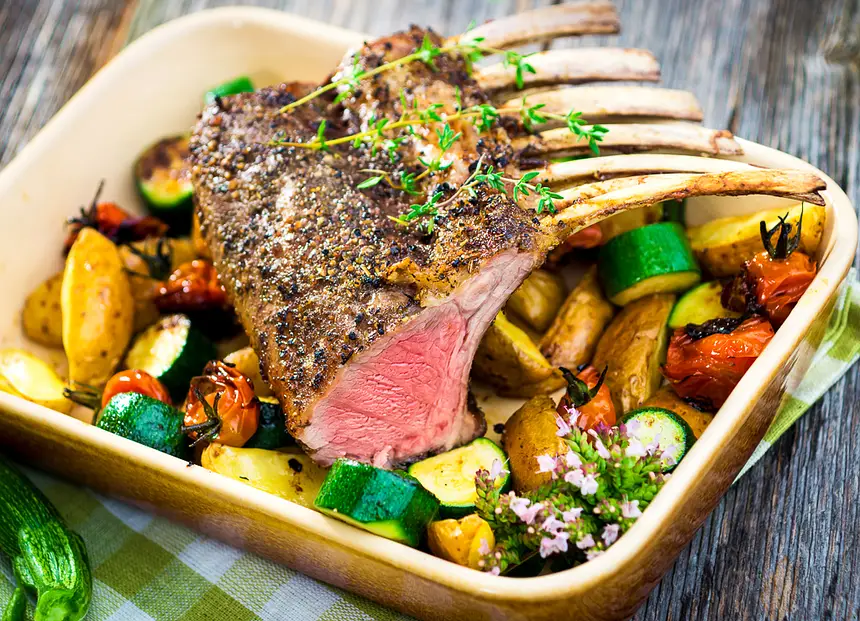
Roasted Rack of Lamb


Herb-roasted rack of lamb crusted with rosemary, thyme, and garlic, then carved into chops and served with a glossy red wine pan sauce. An elegant Easter and holiday roast that's far simpler than it looks.
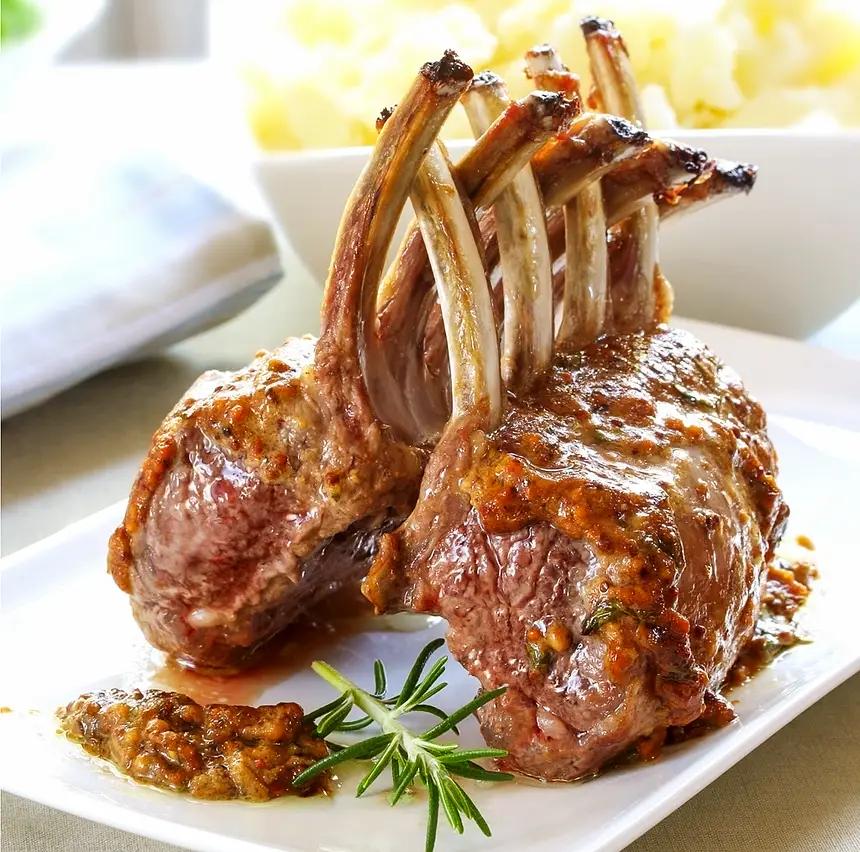
Herbed Rack of Lamb
Rack of lamb painted with Dijon mustard, soy sauce, garlic, and rosemary, then roasted to rosy medium-rare. A 25-minute, hands-off centerpiece for special-occasion dinners.
Herb Crusted Rack of Lamb with Roasted
Herb-crusted rack of lamb seared and finished with compound herb butter, served over mesquite-grilled pepper ragout with socca and olive tapenade. Restaurant-level Provencal cooking.
Nori Lamb Surprise

Nori lamb surprise butterflies lamb loin around scallops, mango, mushrooms, and pickled ginger, wraps it in seaweed, and pairs it with a chili-lemongrass syrup and a roasted pepper relish.
Noisettes D'Agneau
Noisettes d'agneau with marinated rack of lamb medallions cooked in a reduced wine-rosemary sauce, topped with blanched and butter-sauteed garlic cloves. A New Orleans masterchef-level dish.

Rack of Lamb Primeurs
Rack of lamb primeurs roasted over its own bones with thyme, then sauced with a deglazed pan jus and plated with spring baby vegetables. Classic French bistro dinner-party centerpiece.
Basic Rack of Lamb
Basic rack of lamb: a French-trimmed rack marinated, then roasted hot to a rosy medium-rare and carved into elegant double-bone chops. The foundation technique for an impressive special-occasion main.
Lamb Persillade
Rack of lamb with a crispy persillade crust of parsley, garlic, Dijon mustard, and bread crumbs. A classic French technique that's elegant and ready in 35 minutes.

Rack of Lamb with Herbed Mustard
Rack of lamb coated in a creamy herbed mustard sauce blended from prepared mustard, soy sauce, rosemary, ginger, garlic, egg, and olive oil, then slow-roasted until tender.

Roast Rack of Lamb
Roast rack of lamb with garlic-parsley persillade crust and pan jus. A restaurant-quality technique with high-heat roasting, deglazing, and a crispy herb breadcrumb finish.
Rack of Lamb with Herb Sauce
Rack of lamb marinated 48 hours in fresh herbs, roasted to perfection, served with complex red wine demi-glace sauce studded with ham and pickles.
Rack of Lamb with Bacon Vinaigrette
Rack of lamb marinated in red wine vinegar and coriander, roasted at high heat, then finished with a warm bacon and Dijon mustard vinaigrette built from the pan drippings.
Roasted Rack Of Lamb With Fresh Mint Balsamic vinaigrette
Roasted rack of lamb seared then oven-finished to a rosy medium-rare, served over greens with a fresh mint and balsamic vinaigrette. An elegant, restaurant-worthy main built on a simple pan sauce.

Roast Rack of Lamb with Parsleyed Crumbs
Roast rack of lamb under a crisp mustard-and-herb breadcrumb crust of parsley, rosemary and garlic. An elegant medium-rare centerpiece that looks impressive but comes together simply.
Lamb Stock
Rich roasted lamb stock made from rack bones and trimmings with tomatoes, mirepoix, garlic, and thyme. A deep, savory base for soups, sauces, and braises.
Rack of Lamb with Chanterelle Mushrooms, Lentils in a Port Wine Sauce
Roasted lamb with earthy mushrooms and a rich port wine sauce.

Le Carre D'Agneau Roti a la Fleur De Thym
Roasted rack of lamb with fresh thyme and rosemary, seared then oven-roasted to medium rare with a white wine and lamb stock pan sauce. A classic French masterchef recipe.
Glazed Rack of Lamb for Two
Glazed rack of lamb for two basted with a honey-soy-sherry sauce spiked with ginger, garlic, and mustard. A romantic dinner centerpiece with an Asian-inspired sticky glaze.
Deviled Rack of Lamb
Rack of lamb coated in coarse-grain mustard and rosemary, crusted with cracker crumbs, and roasted hot and fast. Looks like a showstopper, takes 30 minutes flat.