What Is Bratwurst and How Can I Use It?
If bratwurst has turned up in a recipe or caught your eye at the store, here's what you need to use it with confidence and how to choose it, cook it, store it, what to substitute, and 15 recipes to try it in.
Key Points
- Fresh, raw German pork (or pork-veal) sausage, finely ground and gently spiced
- Braise gently in beer with onions, then sear to brown and crisp the casing
- Cook all the way to an internal 160°F (71°C); it goes in raw
- Keep the heat moderate and never prick the casings, or the juices run out
- Fresh Italian sausage is the closest swap; smoked sausage is already cooked
What is bratwurst?
Bratwurst is a fresh German sausage, traditionally made from pork or a blend of pork and veal. It's seasoned gently, usually with salt and white pepper, often warmed by a little nutmeg or caraway.
The meat is finely ground, which gives a cooked brat its smooth, tender bite rather than the coarse chew of a country-style link.
The word covers a wide family. Some regions favor an all-pork link, others a milder pork-and-veal mix, and the seasoning shifts from town to town.
What they share is that the sausage is raw and uncured. Unlike a hot dog or a smoked kielbasa, it has to be cooked all the way through.
How to Cook Bratwurst
The classic move is to braise, then sear. Simmer the links gently in beer with sliced onions for about 15 to 20 minutes, kept just below a boil so the casings don't split. Then finish them on a hot grill or in a skillet to brown and crisp the skin.
The beer step cooks the inside evenly and keeps the sausage juicy, and the sear gives it color and snap.
You can also grill them start to finish over medium heat, turning often, for about 18 to 20 minutes. Keep the heat moderate; high flames char the casing before the center is done and can burst it, spilling the juices you want to keep inside.
However you cook them, take them to an internal 160°F (71°C). That's the number that matters, because a brat is raw going in. Octoberfest Bratwurst & Sauerkraut Skillet Dinner simmers the links right in the kraut, while Bratwurst Stew drops them into a one-pot braise with vegetables.
Serving and Common Mistakes
Bratwurst belongs with tangy, sharp partners that cut its richness. Sauerkraut, braised onions, and a slick of mustard on a soft roll make the street-food classic.
Beyond the bun, brats love a sweet-savory contrast. Apples and tart red cabbage are naturals, and Bratwurst with Caramelized Shallots & Apples leans right into it.
The biggest mistake is cooking over heat that's too high. A blistering grill chars the outside while the middle stays pink, and the sudden heat splits the casing so the fat and juices run out onto the coals. Medium heat and patience win every time.
The second mistake is pricking the casings to let steam out. Don't. Every hole you poke drains the juices that keep the sausage moist, and it isn't needed if your heat is gentle.
Substitutes
The closest swap is a fresh Italian sausage, which shares the raw pork base and cooks identically, though its fennel-and-garlic seasoning pushes the flavor in an Italian direction. Fresh breakfast sausage or a plain fresh pork sausage will also stand in for the meat and texture.
For a smokier, ready-cooked option, kielbasa or smoked sausage work in stews and skillets. Just remember they're already cooked, so you're only heating them through rather than cooking from raw.
Buying and Storing Bratwurst
Fresh bratwurst lives in the refrigerated case, not the shelf-stable aisle. Look for plump, firm links with intact casings and a pink, fresh-looking interior. Raw brats keep in the fridge for only a day or two, so cook them soon after buying or freeze them.
They freeze well for up to 2 months, wrapped tightly to keep out air. Thaw in the fridge overnight before cooking, never on the counter, since raw pork sausage spoils quickly at room temperature.
One label is worth a second look. If a package reads "fully cooked" or "smoked bratwurst," it's a different product that only needs reheating. The fresh, raw kind is the one this page is about, and it's the one that has to reach 160°F (71°C) before it's safe to eat.
Quick facts
- In Chinese
- 香肠
- British (UK) term
- Bratwurst
- en français
- bratwurst
- en español
- bratwurst
Recipes using bratwurst
There are 15 recipes that contain this ingredient.
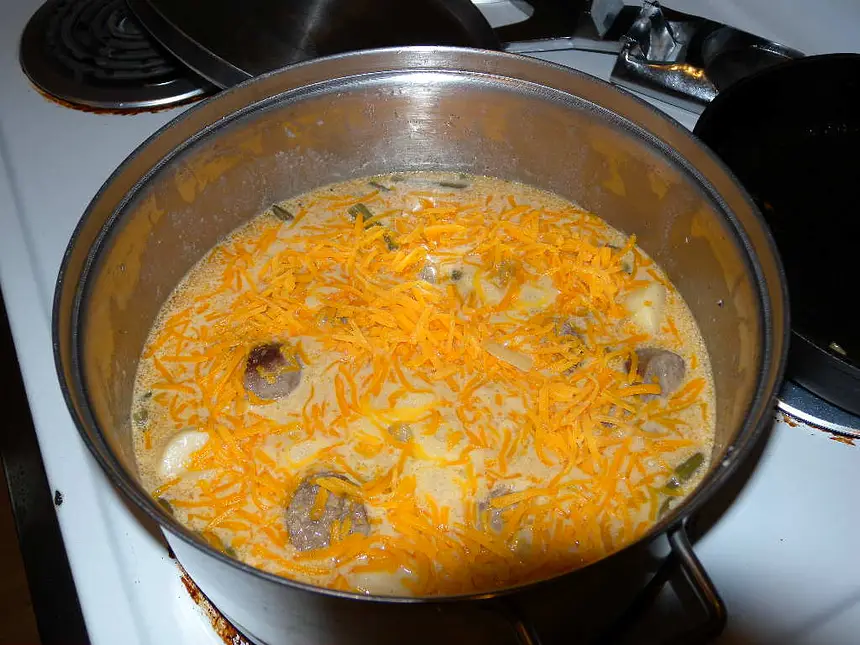
Bratwurst Stew


Hearty bratwurst stew with potatoes, green beans, and a creamy cream-of-mushroom base finished with melted cheddar. A quick one-pot supper for cool fall evenings.
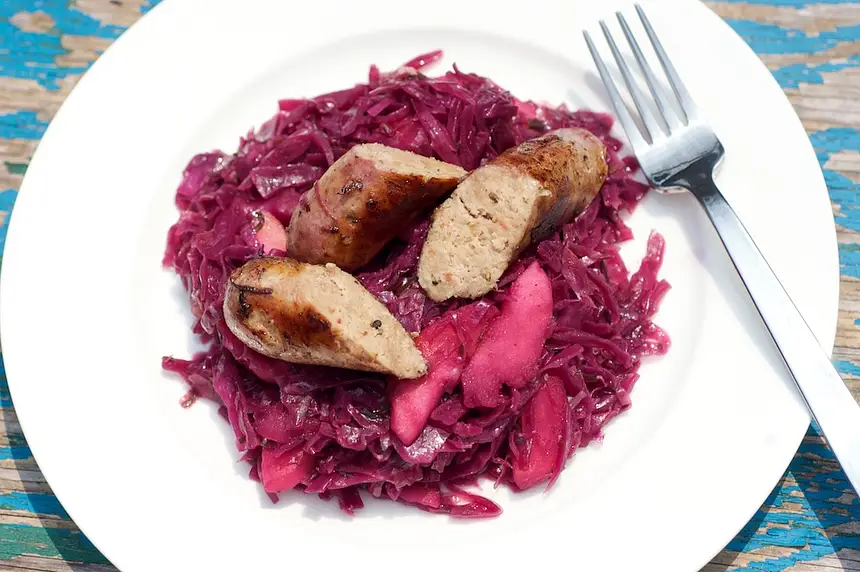
Octoberfest Braised Red Cabbage with Bratwurst
German braised red cabbage with bratwurst, simmered low and slow with Granny Smith apples, caraway, and a sweet-tart hit of vinegar and currant jelly. A classic Oktoberfest plate of silky ruby cabbage and juicy sausage.
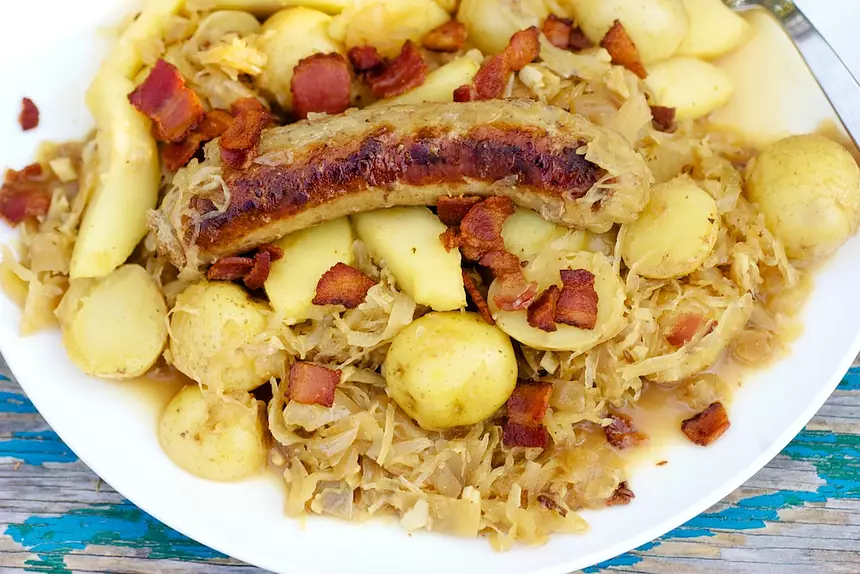
Octoberfest Bratwurst & Sauerkraut Skillet Dinner

Quick and easy, belly warming perfect with a pint of German beer.

Bbq Sausage Kabobs
Grilled sausage kabobs with bratwurst, Italian sausage, kielbasa, and new potatoes basted in a bacon-beer BBQ sauce. Three sausage varieties on one skewer for the ultimate cookout.
Bratwurst with Caramelized Shallots & Apples
Bratwurst simmered with caramelized shallots, tart apples, napa cabbage, and caraway seeds in a rich broth. A cozy German-inspired dinner for two, ready in under an hour.
Potato Salad with Bratwursts
Warm German-style potato salad with browned bratwurst, tossed in a tangy beer and cider vinegar dressing with Dijon and tarragon. No mayo, just hearty skillet flavor served warm.

Northern White Beans
Northern white beans slow-simmered with pancetta, bratwurst, and chicken in chicken stock with thyme and bay leaves. A hearty one-pot bean stew with real depth.

Black Beancassoulet Soup
Massive pot of black bean cassoulet soup with garlic sausage, Italian sausage, bratwurst, and a meaty ham bone. Simmered for 5 hours with sherry, brown sugar, and lemon. Feeds 16.
Black Bean Cassoulet Soup
Hearty black bean cassoulet soup loaded with three kinds of sausage, a meaty ham bone, cumin, oregano, and a splash of dry sherry. Feeds a crowd of 16 with a sour cream finish.
Octoberfest Pizza
Octoberfest pizza brings Bavarian flavors to pizza night: smoked bratwurst, sauerkraut, Swiss, Muenster, and cheddar cheeses piled on a pre-made crust. German festival food meets Friday pizza.

Gegrillte Bratwurst (Grilled Bratwurst)
A scrumptious dish made with succulent sausages, beer and dinner rolls that has a slight European touch to it.

German Fest Pizza
German fest pizza layers crumbled bratwurst, sauerkraut, swiss and mozzarella on a prepared crust, then tops with mushrooms, peppers, and olives. Oktoberfest meets Friday pizza night.

German French Toast
German French Toast baked crispy in breadcrumbs, topped with smoked bratwurst, caramelized onions, tart apple slices, and cinnamon-sugar. A hearty sweet-savory breakfast ready in under an hour.
Bratwurst with Apple Kraut
Slow cooker bratwurst with apple kraut, brown sugar, and caraway seeds. A German-style crockpot meal with just 6 ingredients and 10 minutes of prep.