What Is Tamarind juice and How Can I Use It?
Tamarind juice is easier to cook with than it looks. Here's how to choose, use, and store it, what to substitute, and 21 recipes to get you started.
Key Points
- Tart, fruity brown liquid pressed from tamarind pod pulp; the souring agent in many Asian dishes.
- The defining tang in pad thai, satay peanut sauce, curries, and tamarind fish braises.
- Make it by soaking a block in hot water and straining; jarred concentrate is far stronger.
- Balance its sharp sourness with sugar and salt; do not dose it like plain lemon juice.
- Pliable pulp blocks keep for months refrigerated; freeze homemade juice in cube portions.
What is tamarind juice?
Tamarind juice is the tart, brown liquid pressed from the sticky pulp inside a tamarind pod. It is the souring agent behind much of Southeast Asian and Indian cooking, where it does the job lemon or vinegar does elsewhere, but with a fruitier, almost date-like depth underneath the sourness.
Cooks use the words loosely. Tamarind juice, tamarind water, and tamarind concentrate all describe pulp loosened with water, with concentrate the thickest, most reduced version.
What matters is that it brings a clean sour note plus a faint sweetness that rounds out a sauce.
How to Use It
Reach for it whenever a dish needs sourness with body. A spoonful stirred into a curry or stir-fry sauce balances chili heat and salt the way a squeeze of lime would, but it clings to the food and tastes deeper.
It is the defining tang in pad thai. Jing's Favourite Pad Thai leans on tamarind to push back against the sweet palm sugar and salty fish sauce, the three-way balance that makes the dish work.
It earns its keep in fish and seafood too. Salmon with Tamarind Sauce uses its acidity to cut richness, and Indonesian and Thai kitchens build whole braises and sambals around it. Saus Kacang, the peanut sauce for satay, gets its lively edge from tamarind alongside the chili and sugar.
Add it gradually. Tamarind is potent and can take over, so stir in a little, taste, then add more. Because it is acidic, add it toward the end of a long braise so it does not stall the softening of beans or tough meat.
Making It and Balancing It
Most home cooks start from a block of seedless tamarind pulp or a jar of concentrate. For pulp, break off a walnut-size lump and cover it with hot water.
Mash it with your fingers after a few minutes until the water turns thick and brown, then strain out the fibers and any seeds. What runs through is tamarind juice.
Jarred concentrate is the shortcut. It is much stronger than home-soaked juice, so start with half a teaspoon where a recipe made from a block would use a tablespoon, then adjust.
The flavor lives in a sweet-sour balance. On its own the juice is aggressively tart, so most dishes pair it with sugar or palm sugar, plus salt from fish sauce or soy.
Taste as you build the sauce until the sourness and sweetness sit in tune against the salt. Tamarind is the sour leg of that tripod.
A common mistake is treating it like straight lemon juice. Tamarind is thicker and less sharp and carries sweetness of its own, so a dish can end up cloying if you match a lemon quantity spoon for spoon without cutting back the sugar.
Substitutes
No single swap nails it, but you can get close. For each tablespoon of tamarind juice, a mix of equal parts lime juice and a touch of brown sugar mimics the sour-sweet profile better than lime alone.
Rice vinegar or fresh lime juice with a pinch of sugar works in a pinch for stir-fries and dressings.
For depth in a dark braise, a little Worcestershire sauce echoes tamarind, since tamarind is one of its core ingredients. Pomegranate molasses brings a similar fruity tartness to Middle Eastern and South Asian dishes.
Whatever you use, add it slowly and taste, because none of these carry tamarind's exact mellow, fruity backbone.
Buying and Storing
You will find tamarind in three forms at South Asian and Latin markets. Compressed blocks of seeded or seedless pulp are the most economical and flavorful. Jars of ready-made concentrate are the most convenient, and whole pods turn up in produce, mostly for snacking.
Buy seedless pulp blocks if you can, since they save the fuss of straining. A good block is pliable and dark, not rock-hard and dried out.
Store an unopened block or jar in the pantry. Once opened, keep the block tightly wrapped in the fridge, where it lasts many months because of its acidity, and refrigerate opened concentrate to use within a few months.
Homemade tamarind juice is best fresh, but it keeps about a week in the fridge or freezes well in an ice cube tray for single-spoon portions.
Quick facts
- In Chinese
- 罗望子汁
- British (UK) term
- Tamarind juice
- en français
- jus de tamarin
- en español
- jugo de tamarindo
Recipes using tamarind juice
There are 21 recipes that contain this ingredient.
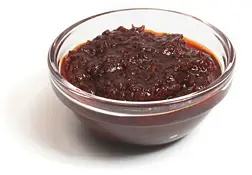
Thai Roasted Chile Paste


Cooks in Southeast Asia make use of pastes that combine roasted fresh or dried chillies with a variety of other seasonings. Various commercial chilli pastes are sold, but a good chile paste is also easy to make at home.

Kwitiaow Phad Thai (Thai-Fried Noodles & Sauce)

Authentic Pad Thai with rice noodles, prawns, tofu, eggs, tamarind-palm sugar sauce, bean sprouts, and peanuts. Served with traditional condiment saucers.

Rendang
Rendang is the legendary Indonesian beef curry: chunks of beef slow-simmered in spiced coconut milk and tamarind until the sauce reduces almost dry and the meat turns fork-tender. Deeply fragrant and richly spiced.
Nam Prik Curry Noodles (Kanom Jin Nam Prik)
Thai kanom jin nam prik curry noodles built on a fragrant coconut-moong bean sauce with red curry paste, tamarind, and crispy fried shallots and garlic. Rich, tangy, and earthy, served over soft rice noodles with long beans and sprouts.

Salat Khaek (Southern Thai Salad)
Salat khaek: Southern Thai salad sauce of pounded chili, shallot, and peanut stirred into coconut milk with fish sauce, tamarind, and sugar. Served over potato salad.

Jing's Favourite Pad Thai
Authentic pad thai with rice noodles, dried shrimp, fried tofu, tamarind sauce and crushed peanuts. Real Thai street food, not the gloppy Westernized version.
Lone Dao Jiow (Dao Jiow Coconut Sauce with Fr
Lone dao jiow, a Thai coconut dipping sauce with bean sauce, shallots, palm sugar, and tamarind served with fresh cucumbers, cabbage, and green beans. Salty, sour, and sweet.

Masaman Curry Paste (Nam Prik Kaeng Masaman)
Authentic Thai massaman curry paste pounded from scratch with dry-fried spices, dried chilies, lemongrass, galangal, grilled shrimp paste, and tamarind. Deep, complex, and aromatic.

Lone Dao Jiow (Dao Jiow Coconut Sauce with Fresh Vegetabl
Lone dao jiow is a Thai coconut-fermented soybean dipping sauce served warm with fresh cucumber, cabbage, and green beans. Salty, sour, sweet in every bite.

Satay Sauce
Thai satay sauce from scratch: a dry-toasted aromatic paste of chiles, shallots, garlic, and galangal cooked into coconut milk with peanuts, sesame, tamarind, and fish soy.
Noodles with Vegetable & Curry Sauce (Gueyteow Pak)
Gueyteow Pak, Thai noodles with blanched vegetables and a coconut red curry sauce with tamarind and crushed peanuts. A vegetarian Thai dish garnished with crispy fried potato rounds.

Kung Yang Sot Makham Piak-Broiled Lobster in Tamarind Sauce
Thai broiled lobster in tamarind sauce with palm sugar, fish sauce, fried garlic, and crispy shallots. Sweet, sour, salty, and spicy in one stunning seafood dish.

Crispy Fried Noodles
Crispy fried rice vermicelli (mee krob) tossed with tangy tamarind syrup, bean sprouts, cilantro, and green onions. Classic Thai sweet, sour, salty noodle dish with shattering crunch.

Saus Kacang
Saus kacang is an Indonesian peanut sauce made with ground chili, garlic, shrimp paste, peanut butter, tamarind, and coconut milk. The classic satay dipping sauce.

Special Thai Chicken with Chillies (Mild)
A quick Thai wok-fried chicken with crispy garlic, red chillies, oyster sauce, fish sauce, tamarind, bamboo shoots, and fresh coriander. Bold flavor in 30 minutes.

Spicy Peanut Sauce for Satay
Thai-style spicy peanut sauce for satay: red curry paste cooked in coconut cream until oily, finished with thin coconut milk, fish sauce, palm sugar, tamarind, and ground peanuts.

Chile-Fried Squid (Sambal Cumi-Cumi)
Squid is cooked in a base of delicious seasonings made with onion, garlic, hot chili peppers and paprika, which gives the squid lots of yumminess and great texture.
Kare Ikan (Fish Curry)
Kare Ikan, an Indonesian fish curry simmered in coconut milk, tamarind and a fragrant spice paste of lemongrass, turmeric, ginger and chili. Finished with cool cucumber and fresh mint.

Satay Goreng
Simplified version of a Malaysian favourite dish. I've cooked this dish for the Malaysia Day celebration at 'Les Roches,' Bluche, Switzerland as a student. It was for the summer batch 1st year to 3rd year students, teachers and admin staff - totalling a little less than a thousand pax perhaps.
Salmon with Tamarind Sauce
Grilled salmon fillets rubbed with turmeric and black pepper, then topped with a tangy-sweet tamarind sauce loaded with garlic, serrano chiles, and green onions. Bold Southeast Asian flavors in 30 minutes.