What Are Rice sticks and How Can I Use Them?
If rice sticks have turned up in a recipe or caught your eye at the store, here's what you need to use them with confidence and how to choose them, cook them, store them, what to substitute, and 14 recipes to try them in.
Key Points
- Dried rice-flour noodles, from thread-thin vermicelli to wide ribbons, gluten-free and neutral.
- Soak in hot tap water 8 to 15 minutes for stir-fries; boil briefly for soups.
- They keep cooking after draining, so pull them while still firm.
- No gluten means they go from firm to mushy fast; taste early.
- Dried packs keep a year or more; cooked noodles are best eaten right away.
What are rice sticks?
Rice sticks are dried noodles made from rice flour and water, with nothing else in them. They range from hair-thin vermicelli to flat ribbons the width of fettuccine, and they are the backbone of stir-fries, soups, salads, and spring rolls across Southeast Asia and southern China.
Dry, they are brittle and chalky white. Once soaked or boiled they turn slippery and translucent, and they carry sauce well without ever becoming gluey the way wheat noodles can.
You will see them labeled many ways: rice vermicelli, bun, bee hoon, banh pho, or plain rice noodles. The thin round threads and the flat wide ribbons cook a little differently, but both start from the same rice-flour dough.
Cooking With Rice Sticks
How you hydrate them depends on the dish. For stir-fries and salads, soak the dry noodles in hot (not boiling) tap water for 8 to 15 minutes until they are pliable but still slightly firm, then drain.
For soups, a 1 to 2 minute dip in boiling water is usually enough.
Remember that the noodles keep cooking after you drain them, and they cook again in the wok or the hot broth. So pull them while they still have some bite; fully soft noodles before the second step turn to mush on the plate.
This soak-then-stir-fry rhythm is exactly how pad thai works. My Pad Thai and Egg & Pork Pad Thai with Rice Sticks soften the noodles first, then finish them in the pan with sauce, where they absorb flavor and firm up again.
Flat wide rice sticks are the noodle for soups like Hanoi Beef & Rice-Noodle Soup (Pho Bac), where they go into the bowl barely cooked and the boiling broth poured over them does the rest.
Thin vermicelli suits Pancit and lighter stir-fries, and softened then tossed cold it makes the base of a noodle salad.
Pairing and Common Mistakes
Rice sticks are a blank canvas, so they take big, bold sauces. Fish sauce, lime, garlic, chili, soy, and peanuts all read clearly against the neutral noodle, which is why Thai Noodles with Vegetable & Curry Sauce and Cantonese Chicken Salad with Cashews lean on them.
The most common mistake is overcooking. Rice has no gluten, so the noodles go from firm to falling-apart fast, with no chewy buffer in between.
Soak in water that is hot but off the boil, then taste early and stop while there is still resistance.
The second mistake is letting drained noodles clump. They stick into a solid mass as they sit, so toss them with a little oil if they are waiting, or rinse stir-fry noodles briefly under cool water to loosen them.
For a crisp dish like Mee Krob (Crisp-Fried Noodles), do the opposite of soaking: drop the dry sticks straight into hot oil and they puff into a crunchy nest in seconds.
Substitutes
Cellophane noodles (also called bean thread or glass noodles) are the closest-looking swap, but they are made from mung bean starch, not rice. They turn fully clear and springy rather than tender, so they behave differently in a stir-fry, though they work fine in soups and spring rolls.
Fresh rice noodles, sold refrigerated, slot in for the dried kind with almost no soaking; just rinse and separate them. For a flat-noodle dish, wide dried rice sticks and fresh ho fun are interchangeable.
In a pinch, thin wheat noodles or even angel hair pasta can stand in for vermicelli in a stir-fry, but they bring gluten and a different chew, and they will not give the light, slippery result that defines a rice noodle dish.
Buying and Storing
Rice sticks come in cellophane packs sorted by width, from thread-thin vermicelli up to broad ribbons. Buy the width the recipe calls for, since thin and wide are not interchangeable in cooking time.
Look for noodles that are evenly pale and not cracked into dust in the bag.
Dried rice sticks keep almost indefinitely. Stored in a sealed bag somewhere cool and dry, they hold their quality for a year or more, which makes them one of the most useful dry goods to keep on hand.
Once cooked, rice noodles are best eaten right away. They firm up and clump in the fridge, so if you must keep leftovers, store them up to 2 days and revive them with a quick dip in hot water or a splash of liquid in a hot pan.
Quick facts
- In Chinese
- 大米棒
- British (UK) term
- Rice sticks
- en français
- vermicelles
- en español
- palitos de arroz
Recipes using rice sticks
There are 14 recipes that contain this ingredient.
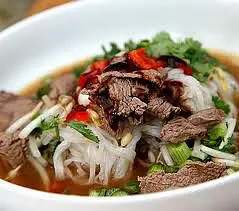
Hanoi Beef & Rice-Noodle Soup (Pho Bac)


Authentic Hanoi-style pho bo with slow-simmered oxtail and beef bone broth, star anise, charred ginger, rice noodles, and paper-thin sirloin. This traditional Vietnamese beef noodle soup recipe takes 5 hours but rewards you with deeply aromatic, soul-warming bowls.
Chinese Spaghetti (Frud Bee Hoon)
Stir-fried rice noodles with marinated pork, crunchy vegetables, and scrambled eggs in savory oyster sauce. This Singapore-style bee hoon is ready in about an hour.
Cantonese Chicken Salad with Cashews
Cantonese-style chicken salad with hand-shredded roast chicken, crispy fried rice noodles, roasted cashews, cilantro, and a hot mustard-sesame dressing. Crunchy, savory, and full of Cantonese flavor.
Sour Soup with Rice Noodles
Chinese sour soup with shredded pork, dried mushrooms, bamboo shoots, and rice stick noodles in a clear chicken broth. Finished with white vinegar and sesame oil for a bright, fragrant bowl.

Prawn Laksa
Laksa gets a bad rap in Singapore because of the addition of coconut cream. However, coconut oil is actually a superfood, containing important compounds that enhance immunity and protect against digestive system disorders. In particular, coconuts are rich in lauric acid, which is known for being antiviral, antibacterial and antifungal, and boosts the immune system. Choose virgin coconut oil and coconut products that have no questionable ingredients added to them.
My Pad Thai
Homemade Pad Thai with chicken or pork, shrimp, rice noodles, and a tangy fish sauce with tomato paste and dried shrimp. Topped with crispy fried basil, peanuts, and bean sprouts.
Egg & Pork Pad Thai with Rice Sticks
Egg and pork pad thai: soaked rice sticks stir-fried with garlic, pork, and crispy egg in a sweet-salty-sour fish sauce, finished with bean sprouts, cilantro, and lime. Homemade Thai takeout in 30 minutes.
Melrose Avenue Spring Rolls
Crispy spring rolls filled with chorizo, Chinese mushrooms, rice sticks, cabbage, and bean sprouts in an oyster-sesame sauce. Double-fried for extra crunch and served wrapped in lettuce leaves.
Mee Krob (Crisp-Fried Noodles)
Mee Krob: Thai crisp-fried rice noodles tossed in a sweet-sour-salty sauce with pork, chicken, or shrimp, topped with lacy fried egg nets. Crunchy, tangy, showstopping.
Rice Sticks with Vegetables
Crispy fried rice sticks tossed with stir-fried snow peas, bean sprouts, dried mushrooms, and a curry-chicken broth sauce. A crunchy, savory Asian noodle dish served with soy sauce.
Pancit Bijon Guisado (Sauteed Rice Sticks)
Pancit bihon guisado with chicken, pork, and shrimp sauteed with rice noodles, napa cabbage, and carrots in soy and fish sauce. A classic Filipino noodle dish for celebrations.
Red Pepper Pork & Noodles
Stir-fried pork with red pepper, snow peas, and rice noodles in a soy-lemongrass sauce. A quick Asian-inspired wok dinner with fresh orange slices stirred in at the end.
Pancit
Filipino pancit, a stir-fried noodle dish with rice sticks, shredded cabbage, carrots, and your choice of pork, chicken, or shrimp. Bright with soy sauce and a finishing squeeze of lemon.