What Are Cellophane noodles and How Can I Use Them?
Here's everything worth knowing about cellophane noodles and how to pick them, what they are, how to store them, and what to use instead, plus 11 recipes to cook tonight.
Key Points
- Cellophane noodles, also called glass or bean thread noodles, are mung bean starch strands.
- They have no flavor of their own; they soak up whatever broth or sauce surrounds them.
- Soak in warm water 10 to 15 minutes until translucent rather than boiling like pasta.
- Over-soaking turns them to mush; pull them while still slightly firm, then finish in the pan.
- Unlike opaque rice noodles, they cook fully transparent with a springy, slippery bite.
What are cellophane noodles?
Cellophane noodles are thin, dry, almost colorless strands made from mung bean starch and water. They are also sold as glass noodles or bean threads, and the names all point to the same thing: a noodle that turns clear and glossy once cooked.
They have almost no flavor of their own. That is the whole point.
Cellophane noodles soak up whatever broth or sauce they sit in, then turn slippery and springy with a clean bite that rice noodles do not have.
Cooking Cellophane Noodles
You almost never boil these like pasta. The standard move is to soak the dry bundles in hot or warm water for about 10 to 15 minutes until they go pliable and translucent, then drain and use them.
After soaking they finish fast. Toss them into a stir-fry for the last minute or two, just long enough to take on the sauce, as in Asian Noodle Stir-Fry and Stir-Fry Beef & Snow Peas.
For soups they go in near the end and drink up the broth; Buddhist Monk's Soup uses them exactly this way.
The noodles keep absorbing liquid, so a soup that sits will thicken as they swell.
For cold dishes like Cold Cellophane Noodles with Chicken, soak, rinse under cold water to stop them clumping, and dress them straight away. They also go in raw, just softened, as the filling in Vietnamese Spring Rolls.
A practical tip: snip the soaked bundle with scissors a few times. Full-length cellophane noodles are very long and slippery, and shorter strands are far easier to eat and to toss evenly.
Pairing and Common Mistakes
Because they carry flavor rather than add it, cellophane noodles want bold company. Soy, garlic, ginger, sesame oil, and a little chili all soak in beautifully, and they take well to shrimp, pork, and minced beef.
The most common mistake is over-soaking. Leave them in water too long and they turn to mush before the dish is even cooked; pull them while they still have a slight firmness, since they soften further in the pan.
The second mistake is treating them like spaghetti and boiling a full pot. That overcooks them into a sticky clump. A short soak is all the raw noodle needs.
How They Differ From Rice Noodles
Cellophane and rice noodles look similar dry but behave differently. Rice noodles are made from rice flour, cook up opaque and white, and have a soft, tender chew with a faint rice flavor.
Cellophane noodles, made from mung bean (or sometimes sweet potato or pea) starch, turn fully transparent and bouncy with more spring and slip.
If a swap is unavoidable, thin rice vermicelli is the closest stand-in, though it will look white rather than glassy and feels softer.
Korean japchae noodles are a close cousin, made from sweet potato starch; they are thicker and chewier but used the same way, as in Chop Chae.
Buying and Storing
Look for cellophane noodles in the Asian aisle, usually sold dry in small tied bundles inside a larger bag. Mung bean is the classic and most common starch; check the label if you want that specifically.
Dry, they keep almost indefinitely in a sealed bag in a cool, dry cupboard, well over a year, since there is no moisture or oil to spoil. That makes them worth keeping on hand.
Once cooked, treat them like any cooked noodle: refrigerate within a couple of hours and eat within three to four days. They firm up and clump cold, so loosen leftovers with a splash of water or a quick toss in a hot pan.
Quick facts
- In Chinese
- 粉丝
- British (UK) term
- Cellophane noodles
- en français
- Dangmyeon
- en español
- fideos celofán
Recipes using cellophane noodles
There are 11 recipes that contain this ingredient.
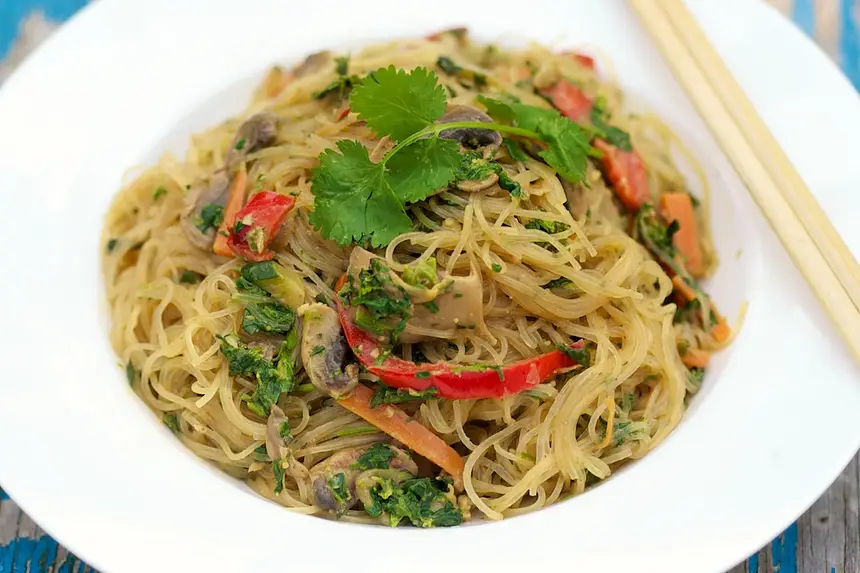
Asian Noodle Stir-Fry


Made this dish for supper today, and it was absolutely delicious. Loved this hot peanut sauce so much, it was creamy, slightly sweet, sour and spicy, which made the dish taste amazingly flavorful and tasty.
Lamb in Cook Pot
Chinese-style lamb hot pot with paper-thin slices cooked tableside in boiling chicken broth, dipped in a soy, sesame, peanut butter, and bean curd sauce. Served with spinach, cabbage, and cellophane noodles.
Marinated Gulf Shrimp with Cellophane Noodles

Marinated Gulf shrimp with cellophane noodles: poached jumbo shrimp soaked in a lime, ginger, cilantro, and Szechuan peppercorn marinade, served cold over glass noodles with red cabbage and carrots.
Stir-Fry Beef & Snow Peas
Soy-marinated sirloin stir-fried with ginger, snow peas, baby corn, and enoki mushrooms, served on a crispy ring of puffed cellophane noodles. A stunning Chinese beef platter with serious crunch.
Vegetable Spring Rolls
Vietnamese vegetable spring rolls (cha gio chay) with cellophane noodles, tofu, shredded potato, tree ear mushrooms, and leeks wrapped in crisp rice paper. Fried shatter-crisp on the outside, tender and fragrant inside.
Chop Chae
Korean japchae (chop chae) with sweet potato cellophane noodles, marinated beef or chicken, mushrooms, snow peas, and egg strip garnish. The classic Korean stir-fried noodle dish.
Shrimp & Pork with Cellophane Noodles
Shrimp and pork stir-fried with cellophane noodles, dried mushrooms, and sherry in a wok. A quick Chinese-style noodle dish that soaks up savory mushroom broth.
Spring Rolls with Chili Dipping
I love Asian food. These spring rolls were so refreshing and just delicious, and I also loved the texture because of all these fresh veggies. The dipping sauce was terrific.
Vietnamese Spring Rolls
Vietnamese spring rolls (cha gio): crisp rice-paper rolls stuffed with ground pork, crab, glass noodles, garlic, and shallots, fried to a deep golden crunch. The crackly fried appetizer everyone fights over.
Cold Cellophane Noodles with Chicken
Cold cellophane noodle salad with soy-ginger marinated chicken, crisp asparagus, and cucumber in a spicy wasabi dressing. A light, refreshing Asian noodle bowl for warm weather.
Buddhist Monk's Soup
Creamy vegan Buddhist soup with pumpkin, sweet potato, mung beans, peanuts, and fried tofu in rich coconut milk broth. A nourishing one-pot meal with 120+ reviews.