What Is Pigs' feet and How Can I Use It?
Here's everything worth knowing about pigs' feet and how to pick it, what it is, how to store it, and what to use instead, plus 9 recipes to cook tonight.
Key Points
- Collagen-rich pig feet (trotters), mostly skin, cartilage, and bone rather than meat.
- Long simmering melts the collagen into gelatin that gives stews and broth a silky body.
- Cook two and a half to four hours; undercooking leaves the skin tough and rubbery.
- Blanch first to clear scum, then simmer for a cleaner-tasting pot.
- Ham or pork hocks and pork skin are the closest swaps for added gelatin and body.
What is pigs' feet?
Pigs' feet, also called pig's trotters, are exactly what the name says: the feet of the pig, sold split or whole, fresh, smoked, or pickled. There is little actual meat here. What you are after is skin, cartilage, tendon, and bone, all of it rich in collagen.
That collagen is the entire point. Simmered long and slow, it dissolves into gelatin and gives a stew or broth a silky, lip-sticking body that no other cut delivers as cheaply. The taste is mild and porky, a clean canvas for whatever you season the pot with.
How to Use Pigs' Feet
Long, moist heat is the only way to go. Cover the feet with water or stock and simmer gently for two and a half to four hours, until the skin is fork-tender and the meat slips from the small bones.
That gelatin-rich liquid is the prize. As it cools it sets into a natural aspic, which is the whole basis of Hog Head Cheese, a sliceable terrine of meat suspended in its own jelly. The same setting power thickens a humble Potato Pig's Foot Stew into something rich and glossy.
Pigs' feet are a staple of soul food and barbecue. Barbecued Pig's Feet simmers them first to tenderize, then finishes them in a tangy sauce, while a batch of Pickled Pigs' Feet cures them in spiced vinegar for a sharp, snacky bite.
They earn their keep in slow-cooked classics around the world. A Spanish Callos a la Madrilena leans on a trotter for body, and the Hungarian bean soup Jokai Bableves uses smoked pork parts, feet among them, for depth.
Add a split foot or two to a pot of beans or greens and you get richness and a touch of smoke for very little money.
Pairing and Common Mistakes
Pigs' feet take well to bold and acidic partners: garlic, onion, bay, vinegar, soy, chili, ginger, and warm spices all cut the richness. Beans, greens, and starchy vegetables soak up the gelatin beautifully.
The biggest mistake is undercooking. Pull the pot too early and the skin and tendon stay tough and rubbery instead of turning silky; this cut needs hours, not minutes.
The second is skipping the blanch. Cover the feet with cold water, bring to a boil for a few minutes, then drain and rinse before the real simmer. That step clears scum and any off odor, leaving a cleaner broth.
A good scrub and a check for stray hairs before cooking is worth the minute it takes.
Substitutes
For the gelatin and body that pigs' feet add to a braise or stock, pork skin and pork or ham hocks are the closest swaps; a hock also brings more actual meat and, if smoked, a deeper flavor. Pork neck bones work for enriching beans and greens.
If you simply need to gel a stock without the pork, a few sheets of plain gelatin or a calf's foot will set the liquid, though you lose the porky taste. For pickling or barbecue specifically, there is no real stand-in; the skin and cartilage are the dish.
Buying and Storing Pigs' Feet
Buy pigs' feet that look clean and pale with firm, intact skin and no sour smell. They are usually sold split lengthwise, which speeds cooking and helps the gelatin escape into the pot.
Store fresh feet in the coldest part of the fridge and cook them within two days, or freeze them well wrapped for up to four months. Smoked feet keep a little longer; pickled feet, sealed in their brine, last for weeks refrigerated.
Cooked trotters and any aspic they set into keep three to four days in the fridge. The jellied broth is worth saving on its own as a base for soups and braises.
Quick facts
- In Chinese
- 猪的脚
- British (UK) term
- Pigs' feet
- en français
- pieds de porc
- en español
- patas de cerdo
Recipes using pigs' feet
There are 9 recipes that contain this ingredient.
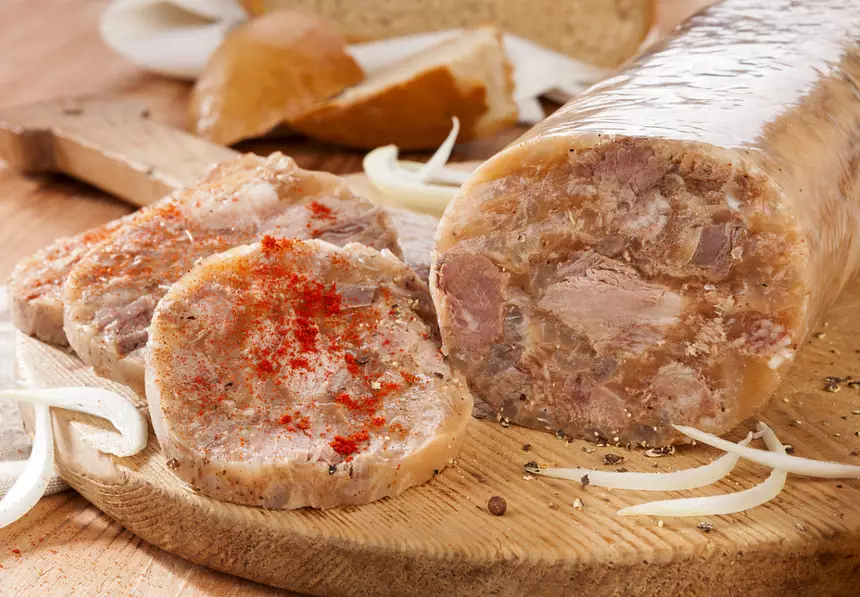
Hog Head Cheese


Southern hog head cheese: pork and pig's foot simmered with onions, green onions, parsley, and red pepper flakes, then set into a sliceable terrine. Spread on crackers.

Kiros Kai Faki
Kiros Kai Faki is a thick split pea soup slow-simmered with pigs feet or pork hocks for 6 hours until the meat falls off the bone. Brined overnight for clean, rich flavor.

Jokai Bableves(Bean Soup a la Jokai)

Jokai bableves is a traditional Hungarian smoked pork and bean soup thickened with a paprika roux and finished with sour cream. Hearty, smoky, and deeply satisfying.

Posole Don Federico
Posole Don Federico: a soul-warming Mexican pork and hominy stew, built on pig's feet and pork shanks for a rich broth, with green chiles, garlic, and beer. Garnished with cilantro and scallions.

Mondongo Elegante - Elegant Tripe
Mondongo elegante simmers tripe and pigs' feet in a tomato-wine sauce with ham, capers, and olives. The dressed-up Caribbean-Spanish take on traditional tripe stew.

Potato Pig's Foot Stew
Hearty potato and pig's foot stew with carrots, lima beans, and a curry-spiced milk gravy. A nose-to-tail comfort stew that's rich, warming, and budget-friendly.

Pickled Pigs' Feet
Old-school pickled pigs' feet simmered in vinegar brine with whole cloves, peppercorns, and bay. Gelatinous, tangy, and served cold in their own aspic, Pennsylvania Dutch style.
Callos a la Madrilena
Callos a la Madrileña is a classic Madrid tripe stew slow-simmered with chorizo, ham, pig's foot, white wine, and smoky paprika. Rustic Spanish comfort food at its finest.

Barbecued Pig's Feet
Barbecued pig's feet, soul-food style: simmered tender with vinegar, onion, and pepper, then baked in barbecue sauce until sticky and falling-apart tender. A Southern classic that rewards a low-and-slow hand.