What Is Pancake syrup and How Can I Use It?
If pancake syrup has turned up in a recipe or caught your eye at the store, here's what you need to use it with confidence and how to choose it, cook it, store it, what to substitute, and 8 recipes to try it in.
Key Points
- Imitation table syrup on a corn-syrup base, coloured and maple-flavored, often with little or no real maple.
- Sweeter, thicker, and more one-note than maple; built for clinging to pancakes and waffles.
- Its sticky body makes a cheap glaze that lacquers ham and ribs without running off.
- Not interchangeable with maple in maple-forward desserts, where its flavor falls flat.
- Keeps almost indefinitely sealed and needs no fridge once opened, unlike real maple.
What is pancake syrup?
Pancake syrup is the everyday table syrup poured over breakfast, and in most cases it is not maple syrup at all. It is a corn-syrup base, usually high-fructose corn syrup, thickened, coloured caramel-brown, and flavored to taste like maple, sometimes with a small percentage of real maple blended in.
The point of it is price and pourability. Real maple syrup is expensive and thin; pancake syrup is cheap and thick, clinging to a stack without running straight off. The flavor is sweeter and more one-note than maple, with a candied edge rather than maple's woodsy depth.
Reading the label tells you what you have. If maple appears low in the ingredient list or not at all, you are holding imitation syrup, which is what most recipes mean by pancake syrup.
Cooking With Pancake Syrup
Its job is finishing, not building flavor. It pours over pancakes and waffles, soaks into French toast, then glazes the sweeter side of breakfast, the way it sweetens a Praline French Toast or sticky Maple Nut Biscuit Ring.
Because it is thick and stable, it also works as a cheap glaze for ham and ribs, where its sticky body and caramel notes lacquer the surface.
It carries the sweet edge of a Coffee Glazed Ham and brushes onto BBQ Short Ribs without thinning out the way real maple does.
The thickness is the real advantage. It clings where you brush it and does not run off a vertical roast, so for glazing it often behaves better than the real thing, even if it tastes simpler.
Pairing and Common Mistakes
It leans into warm, toasty partners: butter, bacon, pecans, cinnamon, and vanilla. Its frank sweetness also cuts salt and fat well, which is why it works on ham and on bacon-studded breakfasts where a subtler syrup would get lost.
The most common mistake is assuming it equals maple in a recipe. In a maple-forward dessert the imitation flavor falls flat and the extra sweetness throws off the balance. For anything where maple is the star, use the real thing.
The second mistake is boiling it down to concentrate it. Reduced hard, the corn-syrup base and added flavorings turn gluey and slightly bitter, so warm it gently instead.
Substitutes
Real maple syrup is the upgrade, not a like-for-like swap: it is thinner and less sweet, so a maple-for-pancake substitution gives you more flavor and a runnier pour. Many cooks prefer it anyway.
For a quick homemade version, simmer brown sugar and water with a splash of maple extract and a pinch of salt until it thickens to a syrup. That gets you the body without buying a bottle.
Honey, agave, or golden syrup all pour over pancakes happily, each sweeter and with its own flavor. Corn syrup alone is close to the base but tastes flat without the maple flavoring to lift it.
Buying and Storing
You will find it in the breakfast aisle near the real maple, usually much cheaper and in a larger bottle. Check whether it is pure imitation or a maple blend; blends carry more genuine maple flavor and a higher price.
Unopened, it keeps almost indefinitely in the cupboard thanks to its high sugar content and low water. Once opened it lasts a year or more, and the bottle does not strictly need refrigeration, though chilling slows any chance of mould.
Pure maple is different and does need the fridge once opened, so do not assume the two store alike.
If pancake syrup crystallises in a cold cupboard, set the bottle in warm water to redissolve the sugar before pouring.
Quick facts
- In Chinese
- 煎饼糖浆
- British (UK) term
- Pancake syrup
- en français
- sirop à crêpes
- en español
- jarabe para panqueques
Recipes using pancake syrup
There are 8 recipes that contain this ingredient.
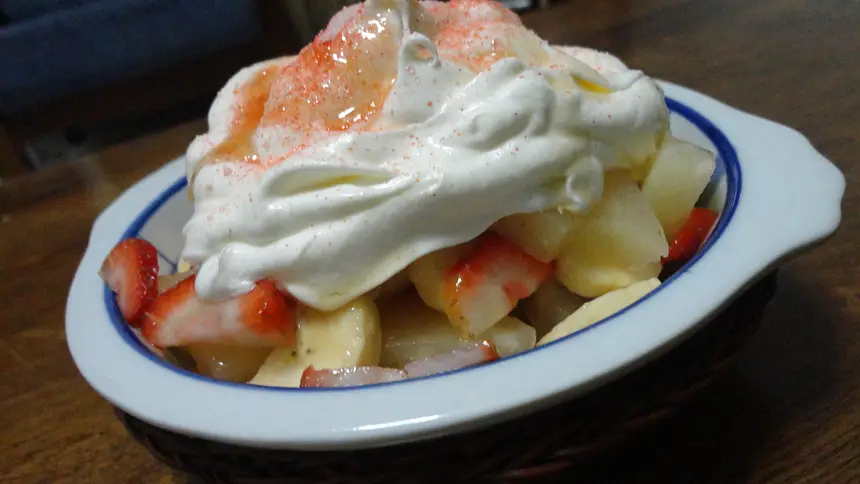
Fruit Salad with Cream


Fruit salad with cream, fresh strawberries, banana, and pineapple tossed with lemon juice and topped with cream, strawberry jelly powder, and a drizzle of syrup. A quick, sweet, chilled fruit dessert.

Praline French Toast- Super B'Fast- Radio

Overnight praline French toast baked on a sticky pecan-brown sugar base. Thick French bread soaked in egg custard, flipped onto a caramel-nut layer, and baked until puffed and golden.
BBQ Short Ribs
Tender beef short ribs simmered until falling apart, then broiled or grilled with a sweet-tangy BBQ sauce of ketchup, syrup, lemon juice, Worcestershire, and mustard. A two-stage method for maximum flavor.
Fresh Fruit Platter
Fresh fruit platter with strawberries, bananas, pineapple, and kiwi served with a cinnamon yogurt dipping sauce. A light, no-cook dessert or brunch spread.
Apple Raisin Crepes
Light apple raisin crepes with an oat bran batter, part-skim ricotta and apple filling, and a warm cinnamon syrup poured over at serving. Just 178 calories per serving.
Maple Walnut Poundcake
Maple walnut poundcake with a cinnamon walnut streusel swirl and pancake syrup sweetening the batter. A dense, tender tube-pan cake that makes its own maple glaze as the streusel melts during baking.
Coffee Glazed Ham
Smoked ham roasted with a sticky coffee glaze made from brown sugar, maple syrup, dry mustard, and Worcestershire sauce. A holiday centerpiece with a deep, savory-sweet crust.
Maple Nut Biscuit Ring
Maple nut biscuit ring made with refrigerated biscuit dough, brown sugar, pecans, and maple syrup. Five ingredients, one bundt pan, and golden pull-apart bread in under an hour.