Herb-Roasted Turkey with Citrus Glaze


Submitted by myblueberry
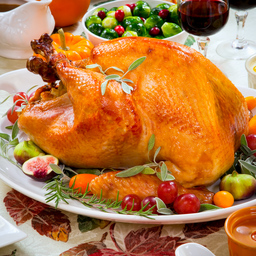
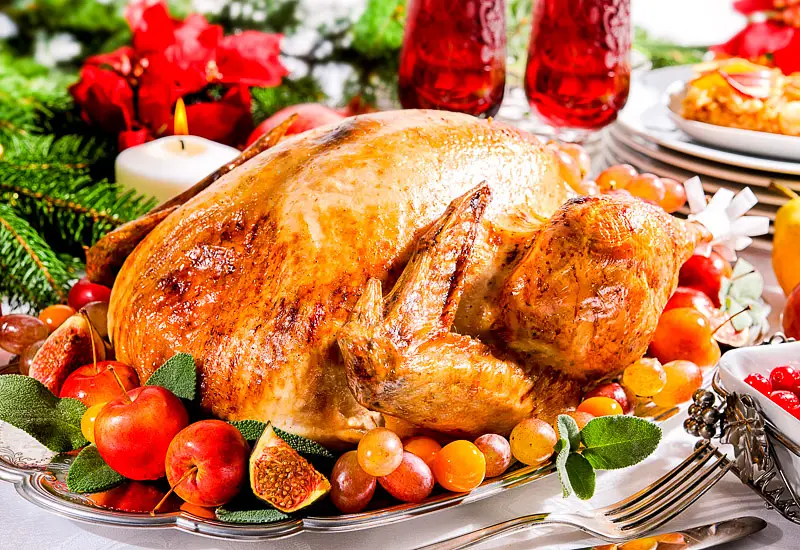
Herb-roasted Thanksgiving turkey with fresh sage, marjoram, and thyme tucked right under the skin and a lemon-lime glaze brushed on at the end for a glossy, citrus-bright finish. The holiday centerpiece, done simply.
YIELD
22 servingsPREP
20 minCOOK
4 hrsREADY
4¼ hrsThe secret to a turkey that tastes of more than just turkey lives under the skin. Here, fresh sage, marjoram, and thyme get tucked directly against the breast meat, so their oils perfume and baste it from within as the bird roasts.
Halved lemons and limes go in the cavity, sending fragrant steam up through the meat, while a glaze of white wine, brown sugar, and citrus juice waits in the wings.
That glaze is the finishing touch, brushed on only during the last half hour so the sugars caramelize into a glossy, golden skin instead of scorching.
Low and steady is the rhythm, with pan drippings basting near the end and a loose foil tent to keep the breast from over-browning. Rest the turkey before carving, and dress the platter with citrus roses.
Chef Tips
- Loosen the skin gently with your fingers without tearing it, then slide the herbs underneath so they sit flat against the breast.
- Pat the bird thoroughly dry before oiling and seasoning. Dry skin browns and crisps; damp skin steams.
- Add the citrus glaze only in the final 30 minutes. Its sugar will burn over a long roast if applied too early.
- Pull the turkey at 180°F (82°C) in the thigh or 170°F (77°C) in the breast, then rest it 15 to 20 minutes so the juices redistribute before carving.
Variations
- Swap in rosemary and orange for a different citrus-herb profile.
- Stir a spoonful of the citrus glaze into your pan gravy for a bright, tangy lift.
Ingredients
Directions
Preheat oven to 325℉ (160℃) F.
Remove giblets and neck from turkey; reserve for gravy. Rinse turkey with cold running water and drain well. Blot dry with paper towels.
Peel skin from lemons and limes to make rose garnishes. Reserve in refrigerator. Squeeze enough juice from the lemons and limes to equal 2 tablespoons each. Cut the remaining lemons and limes in half and place in the turkey cavity. Sprinkle salt in the cavity.
In a small bowl, mix the wine, brown sugar, and citrus juices; reserve for glaze.
Gently loosen skin from the turkey breast without totally detaching the skin and carefully place 1 tablespoon each fresh sage and marjoram under the skin. Replace the skin.
Fold neck skin and fasten to the back with 1 or 2 skewers.
Fold the wings under the back of the turkey. Return legs to tucked position. Place turkey, breast side up, on a rack in a large shallow (about 2½ inches deep) roasting pan.
Rub turkey with salt, pepper, and 2 to 3 tablespoons of salad oil. Insert oven-safe meat thermometer into the thickest part of the thigh, being careful that the pointed end of the thermometer does not touch the bone.
Roast the turkey in a preheated 325 degree F. oven about 3¾ hours.
During the last hour of roasting time, baste with the pan drippings.
During the last 30 minutes, baste with the citrus glaze.
Loosely cover with lightweight foil to prevent excessive browning.
Continue to roast until the thermometer registers 180 degrees F. in the thigh, or 170 degrees F. in the breast.
Remove turkey from the oven and allow it to rest for 15 to 20 minutes before carving.
Place on a warm large platter and garnish the platter with the remaining fresh herbs and lemon and lime roses.
Prepare lemon and lime roses as follows: with a small sharp knife or vegetable peeler, cut a continuous thin 1-inch strip of peel. Avoid cutting into the white pith. Roll tightly, skin inside out, and secure with toothpicks. Reserve in a bowl filled with ice water until time for service. 18. Provides 22 servings at 6 ounces per portion.

Comments