What Are Plantains and How Can I Use Them?
If plantains have turned up in a recipe or caught your eye at the store, here's what you need to use them with confidence and how to choose them, cook them, store them, what to substitute, and 15 recipes to try them in.
Key Points
- Plantains are cooking bananas: starchy, far less sweet than dessert bananas, and always eaten cooked.
- Green and hard means savory tostones; fully black and soft means sweet, caramelized maduros.
- Green peels will not slip off, so score them lengthwise and pry the skin away in sections.
- Cook ripe plantains over moderate heat so the sugar caramelizes instead of scorching.
- They ripen green to black on the counter over a week; a paper bag speeds it up.
What are plantains?
Plantains are cooking bananas, a starchy cousin of the sweet banana that you almost never eat raw. They are bigger and firmer than a banana and far less sweet, a daily staple across the Caribbean, Latin America, and West Africa.
Think of them as a vegetable that happens to look like fruit. Green and unripe they behave like a potato; fully ripe and black they turn soft and sweet. The same plantain can be either dish depending on when you cook it.
What never changes is that they need heat. A raw plantain is chalky and astringent, so every recipe fries, bakes, boils, or roasts them first.
Cooking With Plantains by Ripeness
Ripeness is the whole game, and the peel tells you where you are. Green and hard means starchy and savory. Yellow with black spots means a balance of starch and sugar. Fully black and soft means sweet and almost caramel-like.
Green plantains go savory. Sliced thick and twice-fried, they become tostones, the crisp smashed discs you salt and eat like chips.
They also mash and hold up in stews, as in Sancocho with Plantains & Yuca, and stand in for bread in a Jamon Jibarito, where flattened fried green plantains replace the sandwich roll.
Ripe black plantains go sweet. Cut on the diagonal and fried slowly in a little oil, they caramelize into maduros, soft on the inside with browned edges.
Caramelized Ripe Plantains and Oven Baked Sweet Plantains both lean on that sugar, and a Plantain Casserole bakes ripe slices into something close to a sweet side dish.
In between, a spotty yellow plantain is the all-rounder. Emeril's Fried Plantains and a simple plate of Sauteed Plantains work best at this stage, sweet enough to taste of fruit but firm enough to hold their shape.
Pairing and Common Mistakes
Plantains love salt and acid against their richness, plus garlic, pork, beans, rice, and coconut milk. Green ones pair with savory dips and stews; ripe ones balance spicy or smoky dishes the way a sweet side does.
The most common mistake is fighting an unripe peel. A green plantain will not slip out of its skin like a banana, so cut off both ends, score the peel lengthwise with a knife, and pry it away in sections.
The second mistake is rushing ripe ones over high heat. Maduros need a moderate flame so their sugar caramelizes instead of scorching; a too-hot pan blackens the outside before the inside goes tender.
Substitutes
There is no exact swap, because the plantain's mix of starch and faint sweetness is unusual. For green, savory uses, a starchy potato or yuca comes closest in texture, with green unripe banana a third option, though none has quite the same flavor.
For ripe, sweet uses, a firm just-ripe regular banana can stand in. It is softer and much sweeter, so cook it gently and expect it to fall apart faster.
Do not reach for a normal dessert banana as a one-for-one substitute in a savory plantain dish. The sweetness and soft texture pull the recipe in the wrong direction, and it cannot crisp into a tostone.
Buying and Storing Plantains
Buy plantains by the stage you need, not by a single ideal of ripe. For tostones, choose hard, fully green fruit; for maduros, pick ones that have turned mostly black and yield to a gentle squeeze. Avoid any with mold at the cut ends or split skins.
Plantains ripen on the counter over a week or more, going from green through yellow to black. To speed it up, keep them in a paper bag; to slow it down, spread them out somewhere cool.
You can refrigerate ripe plantains for a few extra days once they reach the stage you want, even though the skin will blacken further. Cooked plantains keep three to four days in the fridge and reheat well, and fried tostones can be refried straight from frozen.
Quick facts
- In Chinese
- 蕉
- British (UK) term
- Plantains
- en français
- plantains
- en español
- plátanos
Recipes using plantains
There are 15 recipes that contain this ingredient.
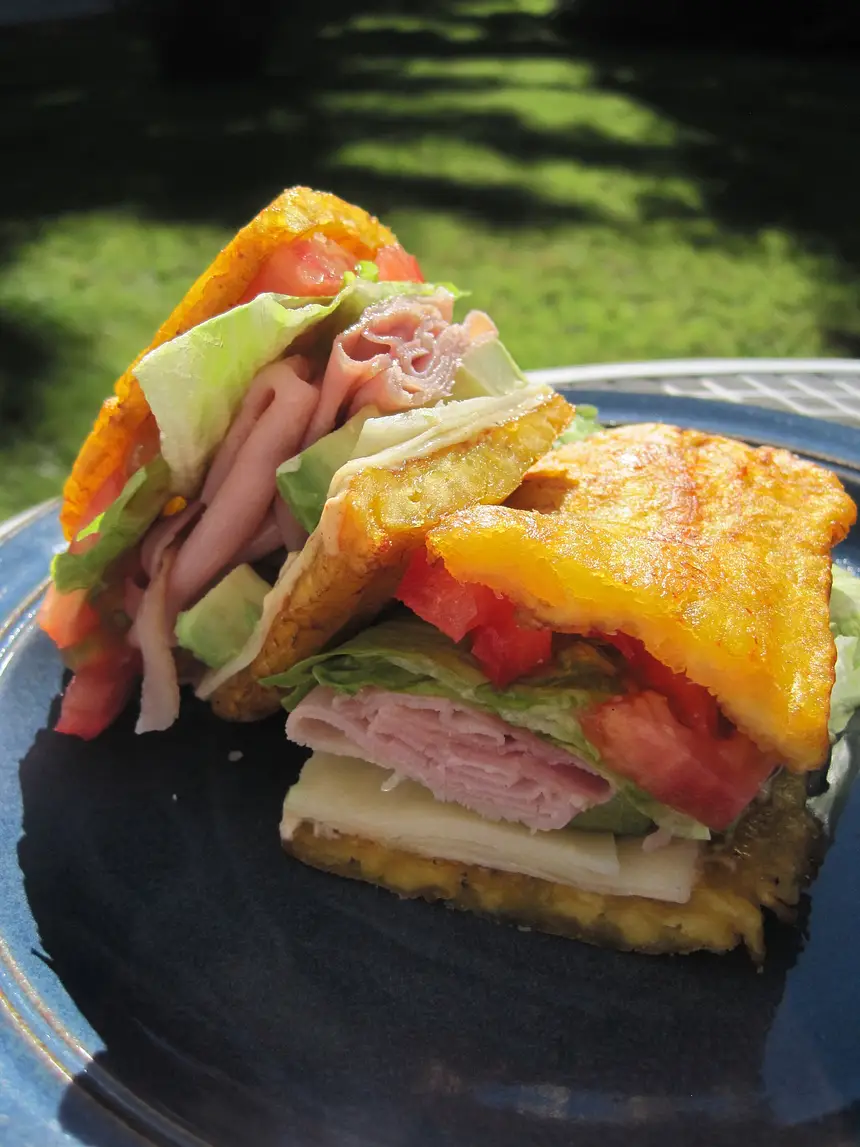
Jamon Jibarito


A Jibarito is a Puerto Rican sandwich popular in Chicago. This is my adaptation of Jeff "Sandwich King" Mauro's recipe.
Sauteed Plantains

Sauteed plantains pan-fry ripe yellow plantains in canola oil until golden and caramelized. Three ingredients, ten minutes, the simplest Caribbean side.
Plantain Casserole
Plantain casserole with green plantains sauteed in peanut oil, tossed with tomato, and slow-baked until tender. A simple Caribbean-style dish with just five ingredients.
Plantain Soup
Plantain soup made from green plantains fried golden, crushed into a paste, and simmered in stock with fresh lime juice. A creamy, starchy Caribbean-style soup with no cream needed.
Sancocho with Plantains & Yuca
This is a feel good soup. When you're sick, or just want soup it's a homemade soup that always is amazing! And I don't usually even like soup!
Emeril's Fried Plantains
Fried plantains sliced thin on the bias and deep-fried until golden brown and crispy. A 3-ingredient Caribbean and Latin American side dish ready in minutes.
Oyster & Plantation Soup
Oyster and plantation soup builds a Caribbean-Creole bisque from ripe plantains, onions, coconut milk, and cream spiked with cayenne, basil, and tarragon, then poaches fresh oysters in their own liquor. A briny-sweet seafood soup with island roots.
Caramelized Ripe Plantains
Caramelized ripe plantains pan-fried in butter with a sprinkle of sugar until golden and sticky. Just 3 ingredients and 20 minutes for a sweet Caribbean-style side or dessert.
Vegetables with Peanut Sauce
West African vegetables with peanut sauce, fried plantains, sautéed carrots, and green beans. Scotch bonnet heat, allspice warmth, and creamy peanut richness in every bite.
Pork Chops & Mashed Plantains
Pork chops in a garlic-citrus mojo with creamy mashed plantains topped with crumbled chicharrones. A Cuban-inspired weeknight dinner with bright citrus, bold garlic, and salty pork-rind crunch.
Baked Plantain Load
Baked plantain loaf from Ivory Coast made with mashed ripe plantains, rice flour, chilli sambal, and turmeric. A gluten-free West African side dish served with salted peanuts.
Spicy Matoke
East African matoke: curried beef stew baked with mashed green plantains, spinach, and coconut. A hearty, spiced casserole rooted in Ugandan home cooking.
Oven Baked Sweet Plantains
Oven baked sweet plantains slice ripe plantains on the bias and roast in a hot oven until golden, caramelized, and candy-sweet. A two-ingredient, no-fry side.
Mole Coloradito Oaxaqueno
Authentic Oaxacan mole coloradito with toasted ancho and guajillo chilies, Mexican chocolate, fried plantain, almonds, and sesame seeds. A rich, layered sauce for chicken.
Plantains in Coconut Milk
Plantains simmered in coconut milk with curry powder, cinnamon, and cloves. A simple African and Indian-inspired side dish where the plantains absorb the spiced coconut sauce as they soften.