What Are White peppercorns and How Can I Use Them?
If white peppercorns have turned up in a recipe or caught your eye at the store, here's what you need to use them with confidence and how to choose them, cook them, store them, what to substitute, and 20 recipes to try them in.
Key Points
- White and black pepper are the same berry; white is the ripe seed with its skin fermented off.
- It's milder and rounder than black pepper, with a clear earthy, faintly funky note.
- Cooks use it to season pale dishes invisibly: cream sauces, mashed potato, light soups.
- A default pepper in French white sauces and across Chinese cooking; add it sparingly.
- Buy whole peppercorns and grind fresh; pre-ground white pepper goes stale and flat fast.
What are white peppercorns?
White peppercorns and black peppercorns come from the same plant, the same berry even. The difference is how they're processed. For white pepper the ripe red berries are soaked in water for a week or more until the dark outer skin rots away, then the pale inner seed is dried.
That extra step does two things. It strips out much of the sharp, aromatic heat that lives in the skin, leaving a milder, rounder bite. It also leaves behind that earthy, faintly funky, almost barnyard note that black pepper never has.
The fermentation is what you're tasting.
So white pepper isn't just black pepper with the color removed. It's a quieter, earthier spice with a flavor of its own.
How to Use White Pepper
The headline reason cooks reach for it is purely visual. In a pale dish, black pepper shows up as unappetizing dark flecks, while white pepper seasons invisibly.
That's why it's standard in cream sauces and mashed potatoes, and in pale soups like Apple-Cheese Soup, where you want the heat without the speckles.
It's a quiet workhorse in two cuisines especially. Classic French cooking leans on it for béchamel and other white sauces, the same logic behind seasoning a delicate Gravlax cure.
In Chinese cooking it's the default pepper, the warm background heat in hot and sour soup and wonton fillings and countless stir-fries.
Add it the way you'd add black pepper, but taste as you go. Its heat builds more slowly and its funk can dominate if you overdo it, so start with less than a recipe of black pepper would call for.
Grind it fresh when you can. Like black pepper, it loses its aromatic punch quickly once ground, and the pre-ground tins are where white pepper earns its dusty, stale reputation.
Pairing and a Common Pitfall
White pepper sits naturally with cream, butter, eggs, potato, and pale fish. It's also a backbone seasoning in cured meats and sausages, where a German Bratwurst Pork Sausage uses it to season the pale forcemeat without dark specks. Its earthiness flatters ginger and garlic in Asian dishes, too.
The pitfall is treating it as a one-for-one swap for black pepper in every dish. In a bright, fresh, lemony preparation that earthy fermented note can read as musty or off.
Save white pepper for warm, rich, or pale dishes, and reach for black pepper when you want its piney, fragrant lift.
The other mistake is buying it pre-ground and expecting much. Ground white pepper fades fast, so if your dish tastes flat, the spice is probably old.
Substitutes
The closest swap is black pepper, used at slightly less than the called-for amount since it's hotter and more aromatic. Accept that you'll see the flecks; in most dishes that's purely cosmetic. Freshly ground works best.
If it's the earthy funk you're after and color doesn't matter, a small pinch of ground ginger or a touch of ground coriander alongside black pepper nudges the flavor that way.
For Chinese dishes especially, white pepper is hard to truly replace, so it's worth keeping a small jar on hand.
Buying and Storing
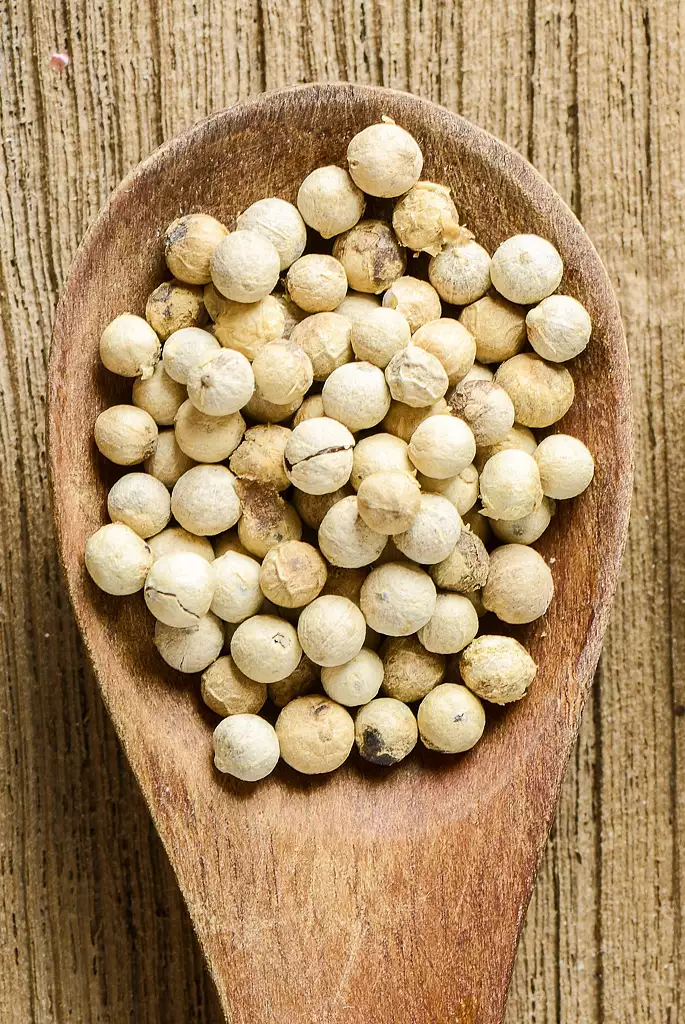
You'll find white pepper as whole peppercorns or pre-ground; buy whole and grind it yourself for far better flavor. Whole white peppercorns look like small, smooth, pale-tan spheres, slightly smaller than black peppercorns since the skin is gone.
Store them like any spice, in an airtight container kept away from heat and light. Whole peppercorns hold their aroma for two to three years, while pre-ground white pepper noticeably weakens within a few months.
A quick test: crush one between your fingers. If it doesn't smell sharp and earthy, it's past its prime.
Quick facts
Where to find white peppercorns: White peppercorns are usually found in the condiments section or aisle of the grocery store or supermarket.
- In Chinese
- 白胡椒
- British (UK) term
- White peppercorns
- en français
- grains de poivre blanc
- en español
- granos de pimienta blanca
Recipes using white peppercorns
There are 20 recipes that contain this ingredient.
Cabrillas with Celery Essense

Poached cabrilla fish medallions served over braised celery bulb with a fragrant court bouillon, pickled ginger and carrot ribbons. A refined seafood main course with clean, elegant flavors.

Tunisian Chili-Crusted Beef
Filet mignon rolled in crushed coriander, white peppercorns, ancho chili, and cumin, then seared hard for a fragrant North African spice crust. Serve sliced with tomato jam and tahini yogurt for a 15-minute showstopper.
Brunswick Stew with Corn Dumplings


An absolutely tasty dumpling stew is perfect in a cold winter day to warm up your entire family.

Eight Spiced Crispy Skinned Snapper in a Thai Hot And
Eight-spice crispy skinned snapper with Szechuan peppercorns, star anise, cinnamon, fennel, cumin, coriander, white pepper, and ginger. Pan-seared then oven-roasted for shatteringly crisp skin.

Pickled Nastutium Seeds
Pickled nasturtium seeds brined in salt water, layered with tarragon and horseradish, then preserved in spiced white wine vinegar. A peppery homemade caper substitute.
Gravlax
Classic Scandinavian gravlax cured with kosher salt, sugar, crushed white peppercorns, and fresh dill. No cooking required. The salmon cures in the fridge for 48 to 72 hours under a weighted press.
Apple-Cheese Soup
Apple-cheese soup blends tart Granny Smith apples, sharp aged cheddar, and a splash of port into a silky strained bowl finished with crisp bacon. A savory-sweet starter with real depth.
Eight Spiced Crispy Skinned Snapper in a Thai Sauce
Crispy skinned red snapper crusted with eight spices including Szechuan peppercorn, star anise, cinnamon, and cumin. Pan-seared then oven-roasted for shatteringly crisp skin.

Veal-And-Crayfish Stew
Veal and crayfish stew in a sherry cream sauce with mushrooms, nutmeg, and lemon. Tender braised veal meets sweet crayfish tails in this elegant French-inspired dish.
Best Steak Au Poivre
Classic French steak au poivre with tri-color peppercorn crust, cognac flambe, and rich cream pan sauce. Restaurant-quality pepper steak in under 30 minutes for an elegant dinner.

Thai Southern Chicken
Southern Thai grilled chicken: chicken rubbed with a fragrant spice paste, even under the skin, marinated, then grilled over low coals until charred and juicy. Big, bold Thai flavor off the grill.
Citrus Crusted Shrimp with Ginger Starfruit A
Seared butterflied shrimp coated in a caramelized lemon-lime zest crust with jalapeno and white pepper, finished with starfruit, ginger, and a rum pan sauce. A show-stopping tropical appetizer.

Citrus Crusted Shrimp with Ginger Starfruit & Rum
Butterflied shrimp pressed with a lemon-lime zest crust, seared with jalapeno and white pepper, then finished with sliced starfruit, fresh ginger, and a splash of rum. Tropical, bold, and ready in 40 minutes.
Figs Poached in White Wine & Fresh Thyme
Try this side dish that adds a unique look and taste to any meal!
Esterhazy Rostbraten (Beef Sirloin a la Esterhazy)
Esterhazy Rostbraten is a classic Austrian beef sirloin dish with julienned root vegetables in a cognac cream sauce. An elegant Viennese main course finished with sour cream.
Gravlax (Salmon Marinated in Dill)
Gravlax, the Scandinavian cured salmon: fresh fillets buried in salt, sugar, dill and white pepper, weighted and cured for days until silky. Sliced thin and served with mustard-dill sauce.

Green Tomato Relish
Green tomato relish turns end-of-season unripe tomatoes into a tangy-sweet preserve spiced with allspice, cloves, mustard, and celery seed. Salted overnight to draw water, then simmered with brown sugar, vinegar, and lemon. Cans up beautifully.
Bak Ku Teh (Pork Rib Tea Soup)
Malaysian pork rib soup simmered with star anise, cinnamon, and white peppercorns in a fragrant dark soy broth. Topped with crispy shallot flakes and served with rice.

Kangaroo Pepper Steak
Kangaroo meat is very low-fat, it is healthy, if you want to try some kangaroo recipe, this one is worthy.