What Is White grape juice and How Can I Use It?
White grape juice is easier to cook with than it looks. Here's how to choose, use, and store it, what to substitute, and 17 recipes to get you started.
Key Points
- Pale, sweet, mild juice of green grapes; light enough to use without staining dishes or drinks.
- The classic non-alcoholic stand-in for white wine, plus punches, fruit poaching, gels, and sorbet.
- Swapping for wine? Add a tablespoon of lemon juice or vinegar per cup to replace the missing acid.
- Higher in sugar than wine, so it scorches fast when reduced; cook it down gently.
- Refrigerate after opening and use within seven to ten days before it ferments.
What is white grape juice?
White grape juice is the pale, pressed juice of green grapes, usually Niagara or a similar light variety. It runs clear to faintly golden and very sweet, much milder than its purple cousin, with a clean fruit flavor and none of the bold musky depth of Concord juice.
Most bottles are pasteurized and sometimes made from concentrate, which pushes them sweeter still. Because the color is so light, it slips into pale dishes and drinks without staining them.
That low color is half of why cooks reach for it. The other half is its job as a stand-in for wine. White grape juice is the go-to non-alcoholic substitute for white wine in cooking and punches, bringing fruit and sweetness where the wine would have brought acidity.
Cooking With White Grape Juice
It does its best work in drinks, where its mild sweetness lets other flavors lead. It is the base of White Grape Swizzle and Peach-Ginger-Grape Fizz, and the body of party bowls like White Sangria Punch (Nonalcoholic), giving a wine-like fruit backbone with no alcohol.
In the kitchen, use it as poaching liquid for pale fruit. Grape & Honey Poached Pears and Almond-Stuffed Pears simmer pears in it so they take on sweetness and a light gloss, without the purple tint that grape juice or red wine would leave.
It also sets up well in gels and terrines. A clear, sweet juice suspends fruit cleanly, which is why California Fruit Terrine and a child-friendly After School Fruit Cup use it where you want to see the fruit through the jelly.
For savory cooking it deglazes and glazes. Apricot Turkey leans on its sweetness against the meat, the same role a splash of white wine plays in a pan sauce, minus the acidity you would add back with a squeeze of lemon.
Pairing and Common Mistakes
White grape juice pairs naturally with other light fruit: pear, peach, apple, apricot, and citrus. A little ginger or sparkling water keeps it from feeling flat.
It is one-dimensionally sweet, so a squeeze of lemon or lime almost always helps.
The most common mistake is treating it as a one-for-one swap for white wine without adjusting. Wine brings acid that the juice does not, so a sauce or marinade made with plain grape juice tastes flabby and oversweet.
The fix is simple: add a tablespoon of lemon juice or white wine vinegar per cup to bring the tang back.
The second mistake is over-reducing it on the stove. It has far more sugar than wine, so it can scorch and turn syrupy fast when you boil it down. Reduce gently and watch the pan.
Substitutes
White wine is the obvious reverse swap when alcohol is fine, used roughly cup for cup, accepting a drier, more acidic result. For a closer non-alcoholic match, white cranberry juice or a light apple juice both work, apple being a touch more aromatic.
Purple grape juice substitutes in flavor but not in color. It will stain a pale punch or poaching syrup dark, so only use it where the tint does not matter.
In a pinch, water with a little sugar and lemon mimics the sweetness and acidity, though you lose the grape character.
For sorbet, white grape juice freezes into a clean, pale ice. A more acidic juice like white cranberry can stand in while keeping that light color.
Buying and Storing
Read the label for "100% juice" if you want real grape flavor, since many products are juice cocktails cut with added sugar or other juices. Sparkling white grape juice is a separate bottling sold for toasts, and it behaves like a soda, going flat once opened.
Unopened shelf-stable bottles keep for months in the pantry, up to their printed date. Frozen concentrate keeps far longer and reconstitutes with water when you need it.
Once opened, refrigerate it and use it within seven to ten days. Like any juice, it ferments slowly as wild yeast goes to work, so a bottle that smells fizzy, sharp, or yeasty has turned and should go.
Pour only what you need and reseal the rest tightly to slow that down.
Quick facts
- In Chinese
- 白葡萄汁
- British (UK) term
- White grape juice
- en français
- jus de raisin blanc
- en español
- jugo de uva blanca
Recipes using white grape juice
There are 17 recipes that contain this ingredient.
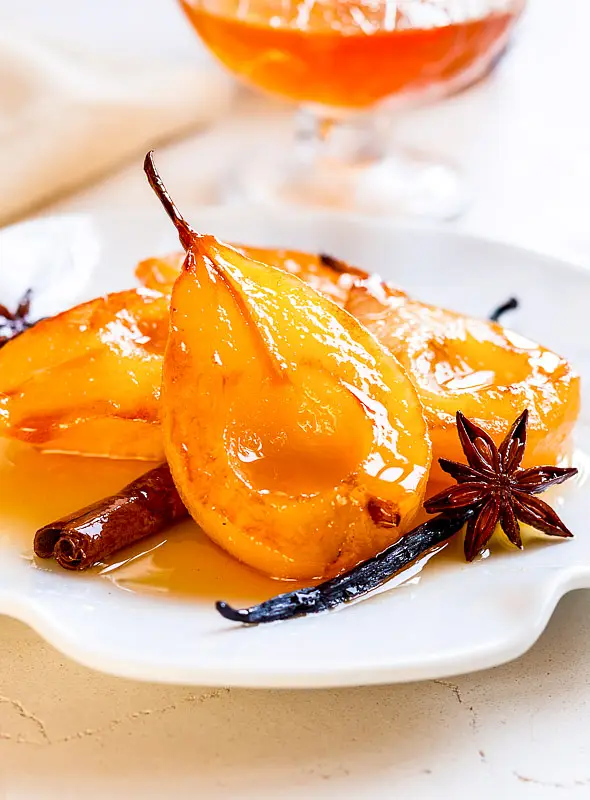
Grape & Honey Poached Pears


A delicious and healthy dessert to make with juicy pears fresh from the orchard!
White Grape Swizzle
Bubbly white grape punch made with frozen grape juice concentrate, pineapple juice, and lemon-lime soda. A 3-ingredient party drink that serves a crowd and takes just 10 minutes to make.

Baked Samosa Logs with Fruit-Sweetened Tomato Ch
Baked vegetarian samosa logs wrapped in whole-wheat chapatis and stuffed with curried cauliflower, peas, coconut, and cilantro. Paired with a ginger-spiked tomato chutney sweetened with grape juice.
Fruity Tofu Cooler
Fruity tofu smoothie blended with white grape juice, silken tofu, and fresh strawberries. A creamy vegan protein boost ready in 10 minutes. Swap in banana, mango, or peach.
Mussel Stew with Pineau Des Charentes
Mussels steamed in saffron-scented white wine, finished with a silky cream sauce and a splash of Pineau des Charentes. An elegant French bistro stew ready in 40 minutes.
Almond-Stuffed Pears
Tender baked pears filled with a sweet almond-brown sugar mixture, poached in white grape juice for a delicate fruit dessert that's naturally refined.
Golden Wardens
Golden Wardens are whole pears poached slowly in honey, white grape juice, and lemon until the syrup turns burnished and the fruit collapses to butter-soft. An English heritage dessert built for the hardest, most stubborn pears.
Vegetable Gumbo
Vegetable gumbo is a lighter, meatless take on the Cajun classic: the holy trinity simmered with okra, corn, tomatoes and paprika, thickened naturally by the okra. No roux, no meat, just hearty vegetable comfort.
Peach-Ginger-Grape Fizz
Peach-ginger-grape fizz: ripe peaches or nectarines blended with white grape juice and fresh ginger, topped with seltzer for a non-alcoholic summer cooler.
Apricot Turkey
Marinated turkey breast cubes browned and baked in a sweet-tangy sauce with dried apricots, ginger, and fresh cilantro.

White Sangria Punch (Nonalcoholic)
Nonalcoholic white sangria punch with white grape juice, pink grapefruit juice, lime juice, and sparkling soda water. A fizzy alcohol-free party punch for baby showers, brunches, and family gatherings.
Rye Yeast Bread
Homemade rye yeast bread made with 100% rye flour and white grape juice for subtle sweetness. A simple loaf with two rises and a crisp, golden crust.

Baked Harvest Vegetables
Sweet potatoes, carrots, parsnips, and onions slow-baked in white grape juice until tender, then thickened into a glossy stew with arrowroot. A hearty vegetarian fall side dish.
California Fruit Terrine
Stunning layered fruit terrine with strawberries, kiwi, mango, and papaya set in white grape juice gelatin. Served with a honey-raspberry cream dressing.
Hot German Bean Salad
Hot German bean salad gives black and kidney beans the sweet-and-sour treatment, with a glossy vinegar dressing and crisp-tender carrots, celery, and onion. Served warm, oil-free, and vegan. A fast, tangy twist on the bean salad.