What Are Tart shells and How Can I Use Them?
Tart shells rewards a little know-how: how to choose them, cook them, store them, and substitute in a pinch. Browse 10 recipes to cook with them.
Key Points
- Small pre-formed pastry cases you fill rather than roll and fit from scratch.
- Fill raw and bake together for custard tarts; blind-bake first for no-cook fillings.
- Block soggy bottoms by sealing the baked shell with chocolate or egg white.
- Sweet shortcrust scorches fast; bake near 375°F (190°C) and check early.
- Crisper and sweeter than deeper, flakier pie shells; reheat softened shells at 350°F (175°C).
What are tart shells?
Tart shells are small, pre-formed pastry cases that you fill rather than build from scratch. They come baked or unbaked, in sizes from bite-size tartlets up to a single-serving round, and they save you the work of rolling and fitting dough.
Most are made from a sweet shortcrust that bakes up crisp and a little crumbly, though savory and flaky versions exist too. They give you a tidy edible container, ready for fruit, custard, jam, or a quiche filling.
The whole point is convenience without the cardboard taste of cheap convenience food. A good shell holds its shape, shatters cleanly under a fork, and tastes like real butter pastry.
Working With Tart Shells
How you treat a shell depends on its filling. For anything baked inside, like the custard in Pumpkin Pecan Tarts or the gooey center of English Butter Tarts, you fill the raw shell and bake the two together.
For a no-cook filling you need a fully baked shell first. A No-Bake Fresh Fruit Tart, for example, wants a crisp golden case that has already cooled before the pastry cream and fruit go in.
Blind-baking is how you get there. Line the unbaked shell with parchment, fill it with dried beans or pie weights, and bake until the edges set, then lift out the weights and bake a few minutes more to dry the base. This stops the bottom puffing or staying raw.
Tartlet shells are made for canapes and party food too. Drop a spoonful of savory mousse or a cube of cheese into each, as the Cheddar-Olive Tart and Leek & Goat Cheese Tart show on a larger scale.
Keeping Them Crisp and Common Mistakes
The enemy of every tart shell is a soggy bottom. A wet filling soaks straight into pastry and turns it limp within an hour.
The fix is a moisture barrier. Brush the warm baked shell with a thin layer of melted chocolate, or paint it with beaten egg white during the last few minutes of baking, and let it set before adding anything wet.
Fill shells as close to serving as you can. Custard and fruit tarts are happiest assembled the same day, while a shell you bake ahead keeps its snap far longer empty than filled.
Watch the oven, too. Sweet shortcrust is high in sugar and butter, so it colors fast and can scorch at the edges while the center is still pale. Bake at a moderate 375°F (190°C) and check early.
Substitutes
If you have no shells, the obvious swap is homemade pastry rolled and pressed into a tart pan or muffin tin. It takes more time but gives you control over flavor and thickness.
Larger pie shells work for the same fillings, just understand the difference. Pie shells are usually deeper and flakier, and less sweet, built for a softer slice rather than the crisp snap of a tart. A tart filling in a pie shell will taste fine but look and eat less neatly.
For a quick base, crushed cookie or graham crumbs pressed into a tin make a no-roll crust. It is softer and sweeter than pastry and suits chilled fillings like the Coffee Liqueur Pie better than a hot bake.
Pre-made phyllo cups are another shortcut for canapes, lighter and shatter-crisp where shortcrust is sturdy.
Buying and Storing Tart Shells
You will find them three ways: frozen unbaked, shelf-stable fully baked in the baking aisle, and refrigerated dough you press in yourself. Frozen unbaked shells give the freshest result; the shelf-stable baked ones trade a little flavor for speed.
Check that frozen shells are not cracked and that baked ones smell of butter, not stale oil. Gluten-free versions exist for recipes like Gluten-Free Maple Bean Tarts, though they tend to be more fragile.
Keep frozen shells in the freezer until you need them and bake from frozen in most cases. Shelf-stable baked shells last for months sealed but go stale and soft once opened, so reseal them tightly.
Baked empty shells you make yourself hold 2 to 3 days at room temperature in an airtight tin, or up to a month frozen. Crisp a softened shell back up with 5 minutes in a 350°F (175°C) oven.
Quick facts
- In Chinese
- 挞壳
- British (UK) term
- Tart shells
- en français
- tartelettes
- en español
- tartaletas
Recipes using tart shells
There are 10 recipes that contain this ingredient.
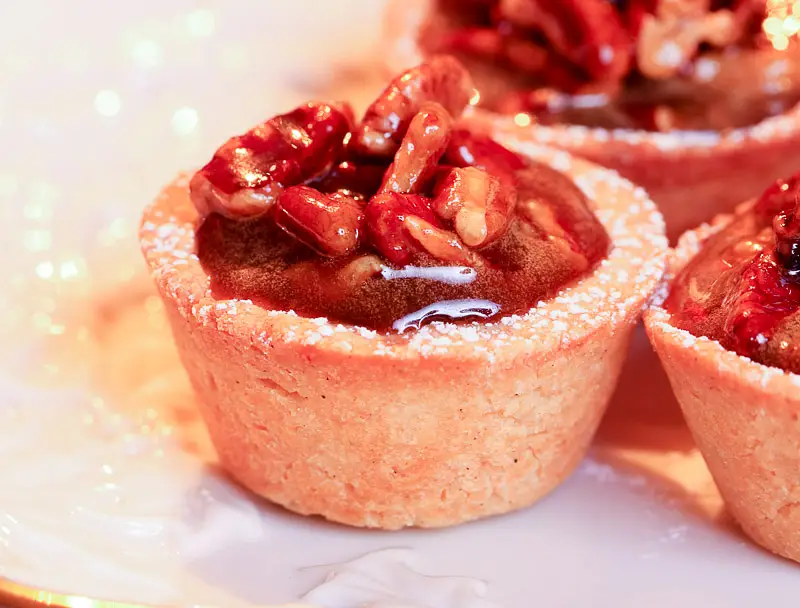
Miniature Pecan Pies

Miniature pecan pies bake up in 17 minutes for a one-bite holiday treat. Dark corn syrup filling, chopped pecans, and an egg-white-sealed tart shell keep the bottoms crisp. Sixteen tarts per batch.
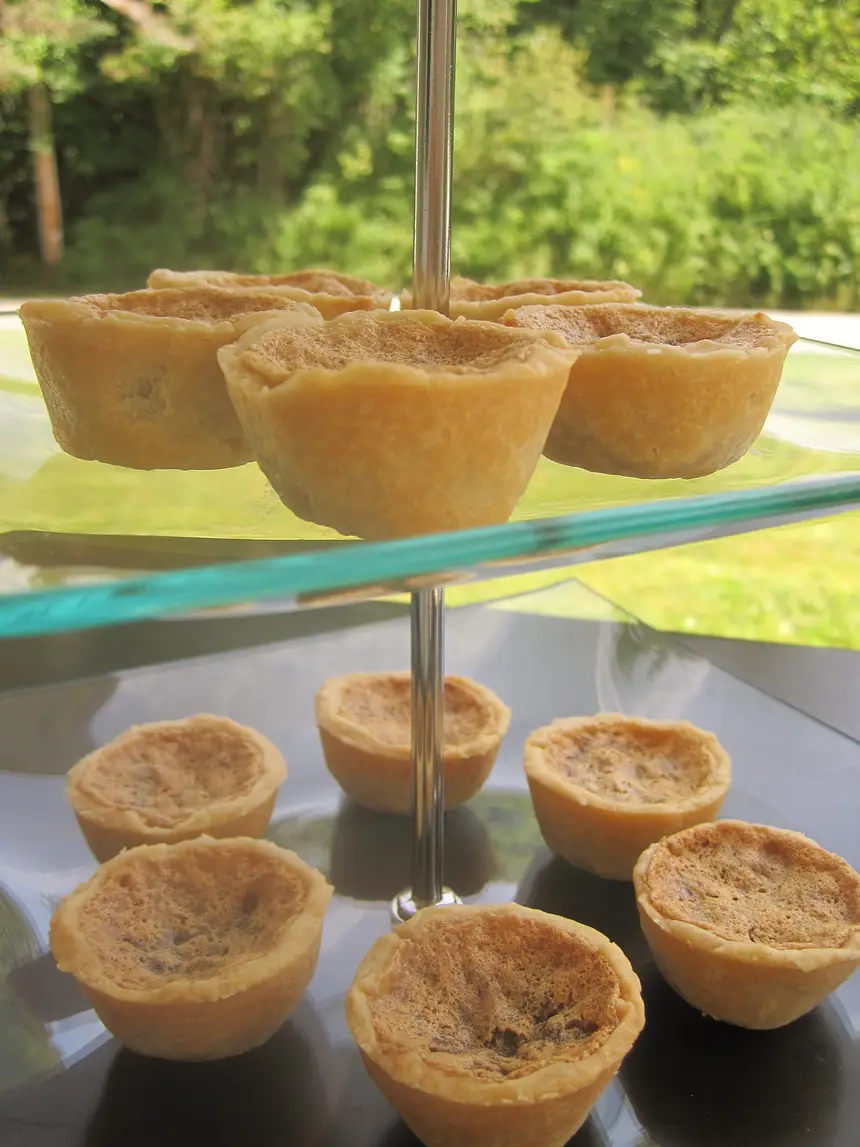
English Butter Tarts


If you like sweet and buttery, you'll love these little gems. Quick and easy if you use store-bought mini tart shells. Or your could make your own shells out of pastry dough and bake them in a mini muffin pan.
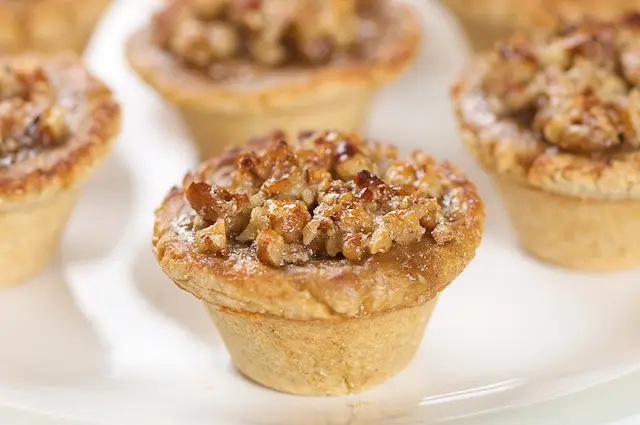
Pumpkin Pecan Tarts
Spiced pumpkin custard fills mini tart shells, then gets topped with a broiled pecan-sugar crust. These two-bite holiday tarts balance creamy filling with crunchy caramelized nut topping.
Cheddar-Olive Tart
Cheddar olive tart: a savory custard of eggs, cream, sharp cheddar, and sliced black olives baked into tart shells. Brunch or appetizer, ready in 40 minutes from a single bowl.
Lemon-Poppy Seed Tarts
No-bake lemon poppy seed tarts with vanilla pudding filling, graham cracker crusts, and lemon whipped topping. A light, low-calorie dessert that sets in the fridge.
Coffee Liqueur Pie
Frozen chocolate marshmallow pie spiked with coffee liqueur and topped with slivered almonds. A fluffy, no-bake dessert that works as individual tarts or one show-stopping pie.
Eggnog Parfait Pies
Eggnog parfait pies with lemon gelatin, vanilla ice cream, nutmeg, rum flavoring, and whipped egg whites in baked tart shells. A fluffy no-bake holiday dessert topped with whipped cream.
Leek & Goat Cheese Tart
Leek and goat cheese tart with balsamic-braised leeks and cream layered over crumbled chevre in a pre-baked shell. An elegant French vegetarian tart with rich, tangy flavor.
No-Bake Fresh Fruit Tart
No-bake fresh fruit tart with an orange-scented cream cheese filling in a crumb crust, topped with seasonal fruit. A cool, creamy summer dessert with zero oven time.
Gluten-Free Maple Bean Tarts
Gluten-free maple bean tarts with white kidney beans blended into a maple syrup and brown sugar filling, poured over raisins in bean-flour tart shells. Lower fat and naturally gluten-free.