What Are Rib eye steaks and How Can I Use Them?
Wondering what to do with rib eye steaks? This guide covers how to pick them, cook them, store them, and swap them, plus 12 recipes to put them to work.
Key Points
- Rib eye is the most marbled steak; that intramuscular fat keeps it rich and juicy.
- Sear thin steaks hard; reverse-sear thick ones in a 250°F (120°C) oven first.
- Pull at 130°F (54°C) for medium-rare, then rest 5 to 10 minutes.
- Cooking past medium renders out the fat and leaves the meat dry and chewy.
- The spinalis cap, fattier and looser than the central eye, is the prize bite.
What are rib eye steaks?
A rib eye steak is cut from the rib primal, the same muscle group that becomes a standing rib roast. It is the most heavily marbled steak on the animal, threaded with fat that melts as it cooks and bastes the meat from the inside.
That marbling is the whole point. It is why a rib eye tastes richer and stays juicier than leaner cuts like sirloin or filet.
Two parts make up the steak. The big central eye is the longissimus dorsi, firm and meaty, while the looser, fattier cap wrapped around one edge is the spinalis. Many cooks rate that cap the best bite on the whole animal.
A bone-in version is sold as a rib steak, or, frenched and trimmed, a cowboy or tomahawk.
Cooking a Rib Eye
Rib eye wants high, dry heat. A cast iron pan or a hot grill gives you the browned crust that makes the cut sing, and the rendered fat handles the heat without drying out the meat.
For a steak under about 1¼ inches thick, a straight sear works. Get the pan smoking, lay the steak down, and leave it alone for 3 to 4 minutes a side. Char-Broiled Rib Eyes and Peppered Rib Eye Steaks both lean on this fast, direct approach.
For thicker steaks, reverse-sear instead. Warm the meat in a low oven, around 250°F (120°C), until it is about 10°F below your target, then sear hard for a minute a side. You get an evenly pink interior with a thin crust rather than a thick gray band under the surface.
Pull the steak at 130°F (54°C) for medium-rare; it climbs about 5°F as it rests.
Resting is not optional. Give it 5 to 10 minutes loosely tented so the juices redistribute instead of flooding the board.
Pairing and Common Mistakes
The fat in a rib eye stands up to bold partners. A blue cheese sauce works beautifully, as in Rib Eye Steak with Stilton Sauce, and a red wine reduction earns its keep in Rib-Eye Steaks with Port & Mushroom Ragout.
Coarse cracked pepper, garlic, thyme, and seared mushrooms are all natural company.
Salt early, or salt right before. Salt applied 5 to 40 minutes ahead sits in a wet brine on the surface and wrecks the crust. Either season at least 45 minutes out, ideally the night before uncovered in the fridge, or salt the moment the steak hits the pan.
The most common mistake is cooking past medium. Push a well-marbled rib eye to well-done and that good fat renders out completely, leaving the meat dry and chewy.
The second mistake is a cold center. A fridge-cold steak sears unevenly, so let it sit out 30 to 45 minutes first.
Swapping in Another Cut
No other steak fully matches the rib eye's marbling, but a few come close. A New York strip is the nearest swap, leaner and a touch firmer with a satisfying chew, and it takes the same high-heat treatment.
A tenderloin or filet is far more tender but far less marbled. You get softness without the deep beefy flavor, so add butter or a pan sauce to compensate.
A flavorful, cheaper stand-in is the chuck eye, cut from the same muscle one rib forward. It is less consistent and benefits from a marinade.
Buying and Storing
Choose a steak with fine, even marbling running through the eye, not just a fat rim around the edge. Look for a generous spinalis cap and a thickness of at least 1 inch, so you can build a crust without overcooking the middle.
USDA Prime grades have the most marbling; Choice is the common, reliable option.
Keep raw rib eye in the coldest part of the fridge and cook it within 3 to 5 days of purchase. If the surface turns tacky or smells sour, it is past its prime.
For longer storage, wrap tightly and freeze up to 6 months, though the fat texture softens after thawing.
Bring the steak to room temperature and pat it bone-dry with paper towels before it goes near heat. Surface moisture is the enemy of a good sear: a dry steak browns, a wet one steams.
Quick facts
- In Chinese
- 肋眼牛排
- British (UK) term
- Rib eye steaks
- en français
- steaks de faux-filet
- en español
- filetes de costilla
Recipes using rib eye steaks
There are 12 recipes that contain this ingredient.
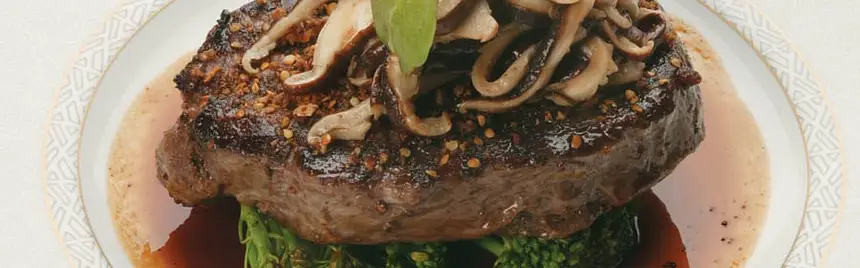
Ribeye Steak with Broccolini, Shitake Mushrooms & Wattleseed Jus


Akudjura (dried bush tomato) crusted Ribeye steak served with broccolini, shitake mushrooms and wattleseed jus.
Honey Mustard Steaks with Grilled Onions
Grilled rib eye steaks brushed with a sweet-and-tangy honey Dijon glaze and charred alongside thick red onion slices. A fast, bold grilled steak dinner with a sticky mustard crust.
Favourite Porter Beef

Porter beef braises chunks of rib eye in Guinness stout with onions, mushrooms, and a pinch of nutmeg. A rich Irish-style stout-braised beef stew that cooks in two hours.
Fiesta Rib Eye Steaks
Grilled rib eye steaks with a quick lime marinade, melty Colby and Monterey Jack, warm flour tortillas, and salsa on the side. Tex-Mex steakhouse vibes from your backyard grill.

Char-Broiled Rib Eyes
Char-broiled rib eye steaks basted with lemon-butter hot sauce, served topped with grilled mushrooms, peppers, onions, and tomatoes. A complete steak dinner cooked entirely on the grill.
Rib-Eye Steaks with Port & Mushroom Ragout
Pan-seared rib-eye steaks topped with a wild mushroom ragout in port wine, beef broth, cream, and fresh tarragon. Steakhouse quality from two skillets in 40 minutes.
Mustard & Thyme Roasted Beef
Make a flavorful roast by using mustard, thyme and black pepper. Simply delicious!
Peppered Rib Eye Steaks
Thick-cut rib eye steaks rubbed with a bold blend of black pepper, paprika, garlic, and red pepper flakes, then grilled over coals to a smoky char. A peppery dry-rub steak built for the grill.
Shabu Shabu Dinner
Japanese shabu shabu hot pot dinner with paper-thin rib eye, scallops, shrimp, tofu, and fresh vegetables cooked tableside in kombu broth. An interactive meal that turns dinner into an event.
Bourbon Street Steak
Thick rib eye steaks crusted in brown sugar, rubbed with garlic, and soaked in bourbon overnight. Simple, bold, and packed with sweet-smoky char on the grill.
Rib Eye Steak with Stilton Sauce
Rib eye steak with Stilton sauce: grilled ribeyes sliced thin and served under a silky blue cheese cream sauce with green peppercorns. A steakhouse-level dinner built for a date night.