What Is Ahi tuna loin and How Can I Use It?
Ahi tuna loin rewards a little know-how: how to choose it, cook it, store it, and substitute in a pinch. Browse 7 recipes to cook with it.
Key Points
- Ahi tuna loin is the boneless yellowfin or bigeye cut for searing rare or eating raw.
- Lean and beef-like; sear 30 to 60 seconds a side and leave the center cool and red.
- Cooking it through dries it out, so treat it like a rare steak.
- Eat raw only tuna sold sushi or sashimi grade and previously frozen for safety.
- Judge freshness by smell and firmness, since color can be fixed with carbon monoxide.
What is ahi tuna loin?
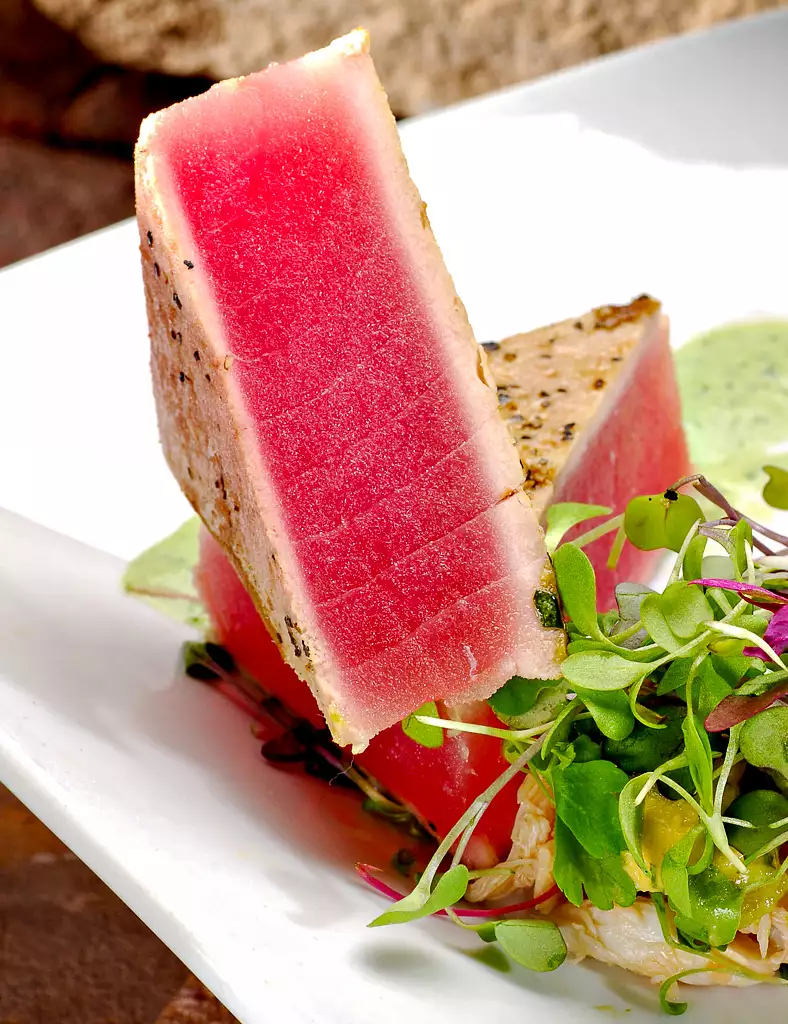
Ahi tuna loin is a long, boneless cut from the side of a yellowfin or bigeye tuna, the prime piece for searing rare and for eating raw.
"Ahi" is the Hawaiian name for both species, and on a fish counter it signals a firm, deep-red, sushi-bound tuna rather than the pale canning kind.
The flesh is dense, meaty, and almost beef-like, ruby to deep pink, with a clean, mild flavor and very little fishiness. Because the loin is one solid muscle with no bones or connective tissue, it slices into clean steaks and blocks.
This is steak-of-the-sea tuna, and the cooking treats it like a steak.
Cooking With Ahi Tuna Loin
The golden rule is sear the outside, leave the center raw. Ahi is lean and has almost no fat to keep it moist, so cooking it through turns it dry and chalky, like canned tuna with a worse texture.
Get a pan or grill screaming hot and oil the loin, then sear each side just 30 to 60 seconds until a crust forms and the center stays cool and red.
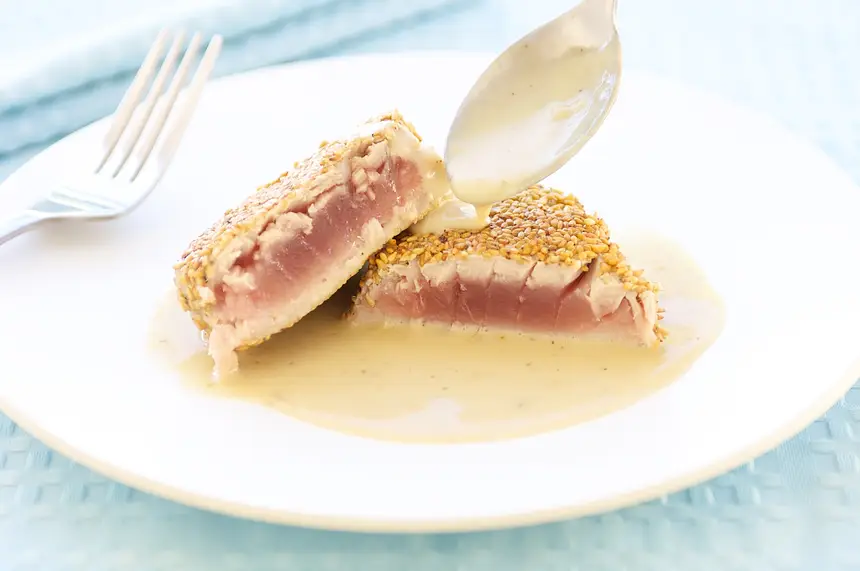
A sesame crust is the classic finish, as in the Sesame Crusted Ahi Tuna & Wasabi Beurre Blanc that home cooks here rate again and again.
Raw, it is the heart of sushi and poke. Cut against the grain into clean slices for Tuna Maki, or dice it for the Hawaiian raw salads Lomi Lomi Tuna and Fresh Tuna(Aku) Portuguese Style.
A sharp knife matters more than any other tool. Slice firmly across the grain in one stroke for clean edges; sawing tears the soft flesh.
Pairing and Common Mistakes
Ahi runs with Asian and Hawaiian flavors: soy, sesame, ginger, wasabi, scallion, lime, chili, and a slick of good sesame oil. A bright ponzu or a citrus marinade cuts its richness, and avocado is a natural partner in poke and rolls.
The cardinal mistake is overcooking. Past a quick sear the lean muscle dries out fast, so pull it while the center is still cool and red. Carryover heat keeps cooking the edges.
The second mistake is eating just any ahi raw. Only fish that has been frozen to the temperatures required to kill parasites, and labeled for raw consumption, is safe for sushi and poke. Buy from a fishmonger you trust and ask directly.
Substitutes
For searing or raw dishes, other sushi-grade tunas are the natural stand-ins: bigeye and bluefin behave the same, with bluefin richer and fattier. Albacore is milder and paler but works seared.
Sushi-grade salmon swaps cleanly into poke and rolls with a softer texture and more fat. For a cooked-through dish, swordfish or mahi-mahi give a similar meaty steak. When raw is off the table entirely, a well-seared piece of any firm tuna covers the same plate.
Buying and Storage
Look for ahi that is firm and glossy, translucent and deep red or pink. Steer clear of brown or dull grey patches and any oily rainbow sheen on the cut surface. It should smell clean and oceanic, never sour or strongly fishy.
Some tuna is treated with carbon monoxide to lock in an unnaturally bright red, so judge by smell and firmness, not color alone.
For raw use, buy only tuna explicitly sold as sushi or sashimi grade and previously frozen to parasite-killing temperatures.
Cook or eat fresh ahi within a day of buying, kept cold on ice or in the coldest part of the fridge. Vacuum-sealed loins freeze well for two to three months, and for raw use that deep freeze is also the safety step.
Thaw frozen tuna in the fridge, and once thawed, do not refreeze it.
Quick facts
- In Chinese
- AHI金枪鱼腰肉
- British (UK) term
- Ahi tuna loin
- en français
- ahi longes de thon
- en español
- ahi lomo de atún
Recipes using ahi tuna loin
There are 7 recipes that contain this ingredient.
Sesame Crusted Ahi Tuna & Wasabi Beurre Blanc


This should be one of the easiest and yummiest way to cook tuna. The beurre blanc was creamy and rich, wasabi added a bit zing. We didn't have cream, so just used milk instead, which was rich enough to our taste, and it worked deliciously with tuna. Sesame seeds added a bit crunch and nice nuttiness. The salmon was cooked to perfection, seared on both sides, and still moist on the inside. A very impressive dish.
Tuna Maki
Fresh ahi tuna maki rolls wrapped in nori with seasoned sushi rice and wasabi, served with pickled ginger, julienned daikon, and carrots. Make sushi-bar quality rolls at home in 25 minutes.

Tvfn Chef Du Jour
Spice-crusted seared ahi tuna with Chimayo chile, cumin, and fennel rolled into a bold crust and flash-seared rare. A 10-minute restaurant-quality appetizer you can slice paper-thin.
Penne & Tuna Sauce
Penne with tuna sauce, an Italian pantry classic. Anchovies, garlic, and plum tomatoes simmered into a savory sauce, finished with flaked canned tuna for a quick weeknight dinner.

Macaroni with Beans & Tuna
Cold pasta salad combines elbow macaroni with flaked tuna, red kidney beans, onion, parsley, and shredded Swiss cheese in a sharp white-vinegar vinaigrette. Italian-inspired protein-packed salad.
Lomi Lomi Tuna
Lomi lomi tuna tosses fresh diced ahi with cucumber, tomato, red onion, lime, and chili sesame oil for a Hawaiian poke-style appetizer served on crisp baked wonton chips. Tobiko optional.

Fresh Tuna(Aku) Portuguese Style
Hawaiian-Portuguese fresh tuna (aku) marinates ahi loin in garlic vinegar, dredges in flour, and pan-fries golden, served with stale sourdough dipped in the boiled marinade. Island family recipe.