What Is Pumpernickel bread and How Can I Use It?
Wondering what to do with pumpernickel bread? This guide covers how to pick it, cook it, store it, and swap it, plus 21 recipes to put it to work.
Key Points
- Dark, dense German rye bread with a malty, faintly sweet flavor and close, fudgy crumb.
- Traditional German loaves bake 16 to 24 hours; American versions get their color from molasses or cocoa.
- The firm crumb makes it the classic hollowed-out bowl for spinach dip and a base for smorrebrod.
- Pair with bold partners like smoked salmon, horseradish, blue cheese, and corned beef, not mild fillings.
- Keeps three to four days at room temperature; freeze sliced for up to three months.
What is pumpernickel bread?
Pumpernickel is a dark, dense German rye bread with a deep brown crumb and a flavor that runs from faintly sweet to tangy and almost chocolatey. It is heavier and moister than a sliced sandwich loaf, with a close, fudgy crumb that holds together under wet toppings.
The name and the color come from how it is made. Traditional German pumpernickel is a whole-grain rye that bakes low and slow for as long as 16 to 24 hours.
The long heat triggers a browning reaction in the grain's own sugars and starches. That turns the loaf nearly black and gives it that signature malty depth.
Most American pumpernickel is a different animal. It is a lighter rye dough tinted dark with molasses or a little cocoa and baked in a few hours, so it is softer and milder than the German original.
Both are worth knowing. Which one a recipe wants usually depends on whether you are slicing it thin or hollowing it out.
How to Use Pumpernickel
Its sturdy crumb is built for bold partners. Thin slices are the classic base for Danish smorrebrod and other open-faced bites, where the bread is a flavor of its own rather than a neutral carrier.
This is not a quiet bread.
That density makes it the obvious bread for a round, hollowed loaf. Spinach Dip in Pumpernickel and Super Creamy Spinach Dip both turn a whole loaf into an edible bowl: you cube the scooped-out center for dipping and the walls hold creamy dip without going slack.
Pumpernickel also loves cured fish and sharp, fatty toppings. It anchors Smoked Salmon-And-Chive Sandwiches and pairs naturally with cream cheese and smoked salmon. Pickled herring suits it, and so does a Reuben pile of corned beef and sauerkraut. The rye tang cuts through the richness instead of disappearing under it.
When the loaf goes stale, put it to work. Pumpernickel Stuffing and Old World Walnut Stuffing both use it cubed and dried, and its assertive flavor stands up to a holiday bird better than plain white bread does.
Pairing and Common Mistakes
The flavor logic is contrast. Pumpernickel's earthy, slightly sour rye plays against fat, salt, and acid: blue cheese, horseradish, mustard, pickles, smoked meats, fresh dill, cured salmon all sharpen it.
Horseradish Beef Sandwiches lean on exactly that clash, and chunks of the bread even melt into Hearty Reuben Soup, where they thicken the broth and echo the deli sandwich it is named for.
The most common mistake is treating it like sandwich bread and piling on something mild. A delicate filling vanishes under pumpernickel's strong flavor, so match it with partners that push back.
The other slip is toasting it too hard. Because it is already dark, you cannot judge doneness by color the way you would with white toast, and it scorches before it looks burnt. Toast it gently and go by smell.
Substitutes
Reach first for a dark rye or a German Schwarzbrot; both bring the same dense crumb and rye tang, just a shade lighter. A seeded or marbled rye works for sandwiches and dips, though the flavor is milder.
For the color and faint sweetness without true rye, a dark molasses brown bread or a Boston-style brown bread comes close in a pinch.
Whole-grain or whole-wheat bread gives you the heft and a nutty edge. You lose the sour rye note that defines the original, so add a little caraway if the recipe leans German.
Buying and Storage
Genuine German-style pumpernickel often comes vacuum-sealed in thin square slices and keeps for weeks unopened; the deli or bakery rounds used for dip bowls are fresher and more perishable. For an edible bowl, choose a firm, round, unsliced loaf.
Stored in a paper bag or loosely wrapped at room temperature, a fresh loaf keeps about three to four days. Pumpernickel's density actually helps it stay moist longer than airy breads. Avoid the refrigerator, which dries and stales bread faster than the counter.
For longer storage, freeze it. Slice first, then wrap tightly and freeze for up to three months so you can pull out a slice or two at a time. Thaw at room temperature, or toast frozen slices straight from the freezer.
Quick facts
- In Chinese
- 裸麦粗面包
- British (UK) term
- Pumpernickel bread
- en français
- pain de seigle noir
- en español
- pan integral de centeno
Recipes using pumpernickel bread
There are 21 recipes that contain this ingredient.
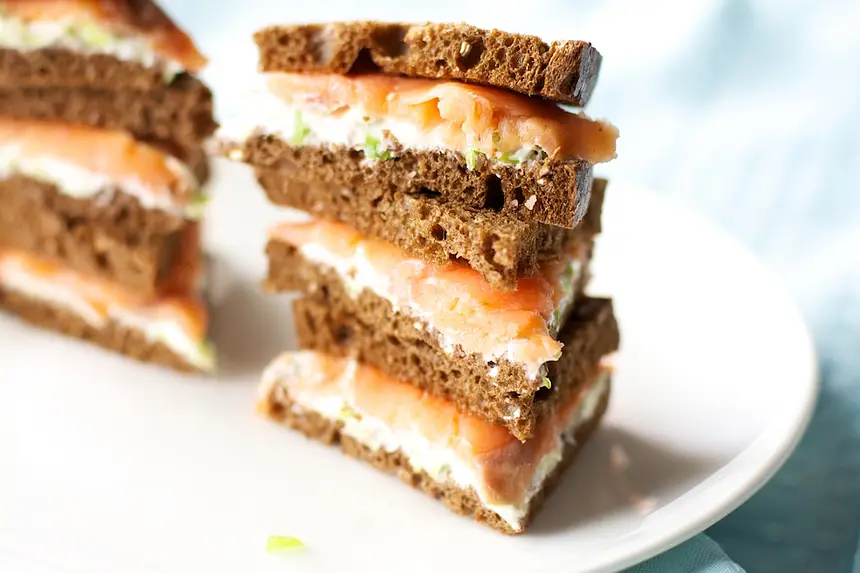
Smoked Salmon-And-Chive Sandwiches


Elegant smoked salmon tea sandwiches with lemon-chive cream cheese on pumpernickel. Sophisticated finger sandwiches ready in 20 minutes, perfect for brunch or afternoon tea.
Horseradish Beef Sandwiches

Roast beef sandwich on pumpernickel with creamy horseradish sauce, pickled beets, lettuce, and mayo. A tangy, savory deli sandwich with an Eastern European twist.
Grilled Salmon Sandwich
Grilled salmon sandwich on pumpernickel with a garlic-lemon-dill sauce, tarragon-seasoned fillets, Boston lettuce, and Roma tomatoes. Light, bright, and low calorie.
Salmon Classic
This classic salmon is always welcomed by party. For sure, but also a good appetizer at any meal.
Pumpernickel Pus Lumps
Pumpernickel pus lumps: a gross-out Halloween appetizer with whipped cream cheese and capers on toasted pumpernickel. Three ingredients, 15 minutes, and guaranteed to make kids squeal.
Chocolate Malted Ice Box Pudding
A no-cook icebox pudding with whipped cream, malted milk powder, grated chocolate, and pumpernickel bread crumbs. Chill overnight and serve this retro gem straight from the fridge.
Pumpernickel Stuffing
Pumpernickel bread stuffing made with duck drippings, sauteed onions, and a mix of pumpernickel and white bread cubes. A hearty, earthy side dish baked alongside roast duckling.
Super Creamy Spinach Dip
Creamy spinach dip with Knorr vegetable mix, sour cream, and mayonnaise, served in a hollowed pumpernickel loaf. A no-cook party classic that hits the table in five minutes flat.
Crab Avocado Melt
Open-faced crab avocado melt on pumpernickel with creamy crab salad, sliced avocado, and melted Colby cheese. A 15-minute lunch that feels way fancier than the effort involved.
Spinach Dip in Pumpernickel
Creamy spinach dip with sour cream, mayo, water chestnuts, and vegetable soup mix served in a hollowed pumpernickel bread bowl. A retro party classic that keeps for a week in the fridge.
German-Style Stuffed Pork
German-style pork tenderloin marinated in beer and cider vinegar, stuffed with pumpernickel and beer-soaked raisins, then rolled and roasted. A Bavarian Sunday roast with sweet-sour depth.
Krestianskiy Zavtrak(Peasant Breakfast)
Russian peasant breakfast skillet with crisp pumpernickel croutons, smoky bacon, kielbasa, sautéed onions, and runny eggs, garnished with fresh dill. A hearty, rustic farmhouse start to the day.
Danish Blue Cheese Pie
Savory no-bake Danish blue cheese pie on a pumpernickel crumb crust, topped with fresh green grapes. A bold, tangy appetizer that doubles as an elegant cheese course.
Green Mountain Potato Chowder
Green Mountain potato chowder simmered in beef broth with carrots, tomatoes, leeks, and celery root, finished with sour cream and topped with pumpernickel-bacon croutons.
Trump's Chocolate Pumpernickel Pudding
A rich chocolate bread pudding made with pumpernickel, currants, and a custard of egg yolks, cream, and two kinds of chocolate. Baked in a water bath until silky and set.
Pike Sandwiches with Cambridge Sauce
Fried pike sandwich with Cambridge sauce: cornmeal-crusted pike fillets on pumpernickel, slathered with a classic English herb sauce of hard-boiled egg, anchovies, capers, and tarragon.

Krestianskiy Zavtrak (Peasant Breakfast)
Krestianskiy zavtrak is a hearty Russian peasant breakfast: pumpernickel croutons crisped in butter, layered with bacon, kielbasa, and onions, then topped with eggs cooked until the yolks stay just runny.
Reuben Soup #1
Reuben sandwich in soup form with corned beef, sauerkraut, potatoes, caraway seeds, and dry mustard. Topped with buttery pumpernickel croutons and grated Swiss cheese.
Old World Walnut Stuffing
European-style turkey stuffing made with rye and pumpernickel bread, toasted walnuts, and fresh thyme. A bold, earthy alternative to classic white bread stuffing.
Hearty Reuben Soup
Hearty reuben soup with corned beef brisket, sauerkraut, red cabbage, and dark beer, finished with melty swiss cheese and pumpernickel croutons. Every bite of a classic deli reuben in a bowl.