What Are Pork bones and How Can I Use Them?
Pork bones is easier to cook with than it looks. Here's how to choose, use, and store them, what to substitute, and 8 recipes to get you started.
Key Points
- Cheap butcher bones (neck, back, ribs, trotters) prized for rich, gelatin-heavy pork stock.
- Simmer two to four hours below a boil; hard boiling turns the broth greasy and cloudy.
- Roast at 400°F (200°C) first for a deeper, browner stock with more flavor.
- Asian broths blanch raw bones five to ten minutes, then rinse, for a clear result.
- Collagen sets the cooled stock to jelly; skim foam early and salt only at the end.
What are pork bones?
Pork bones are the neck bones, backbones, rib tips, and joint bones like trotters and knuckles left after a pig is butchered. They are sold cheaply for one job above all: building rich, savory stock.
They are the backbone of pork broth in kitchens from the American South to East Asia.
What makes them worth simmering is collagen. The connective tissue and cartilage around the joints break down into gelatin over a long, slow cook, giving the broth body and a mouth-coating richness that lean meat alone never delivers.
Marrow bones add fat and depth; meatier neck and rib bones add savory flavor. Most cooks use a mix.
Cooking With Pork Bones
The standard move is a long simmer. Cover the bones with cold water, bring it slowly up to a bare simmer, and hold it there for two to four hours while the collagen converts.
A rolling boil emulsifies the fat and turns the broth cloudy, so keep the surface at a lazy bubble.
For a deeper, browner stock, roast the bones at 400°F (200°C) for 30 to 45 minutes first. Roasting builds Maillard flavor and color, the difference between a pale, mild broth and a deep-flavored one.
Many Asian broths take an extra step: a hard blanch. Cover the raw bones with water and boil five to ten minutes, then dump that scummy water and rinse the bones before the real simmer. This is the cleanest path to a clear, off-flavor-free broth.
That stock then carries soups and braises. Best Asparagus Crab Soup and Arpagyongy Kremleves, a Hungarian cream of pearl barley soup, both lean on pork bones for their base, while Pork Ribs in Sour Cabbage simmers meaty bones right in the pot to enrich the cabbage.
Pairing and Common Mistakes
Pork-bone broth is a savory blank slate. It takes aromatics well: onion, garlic, ginger, scallion, star anise, peppercorns, and a splash of rice wine or vinegar to draw minerals from the bone.
The most common mistake is boiling instead of simmering. Hard boiling churns rendered fat into the liquid and leaves you with a greasy, murky stock instead of a clean one. Keep it just below a boil the whole way.
The second mistake is skipping the skim. As the pot first heats, gray foam rises; spoon it off in the first 20 minutes or it breaks up and clouds the broth. Salt only at the end, once the stock has reduced and you can judge it.
Substitutes
For a similar gelatin-rich broth, ham bones or a smoked ham hock work, though they bring salt and smoke that change the flavor, so cut back on added salt.
Pork trotters (pig's feet) on their own give the most gelatin of any cut and set a stock that turns to jelly when chilled. Use them when you want body above all.
If pork is off the table, beef marrow and knuckle bones or chicken backs and feet build a comparable collagen-rich stock. Each shifts the flavor toward its own animal, so match the bone to the dish.
Buying and Storing
Buy pork bones from a butcher counter or the meat case, often labeled neck bones or soup bones and among the cheapest things in the case. Look for bones with some meat and cartilage still attached, which means more flavor and more gelatin.
Raw pork bones keep in the coldest part of the fridge for one to two days; use them quickly, as bones with clinging meat spoil as fast as ground pork. Freeze them airtight for up to three to four months, and you can simmer them straight from frozen.
Finished broth keeps three to four days refrigerated and freezes for up to six months. Chill it first and the fat sets in a solid cap on top, which you can lift off and discard or save for cooking.
A good pork stock will wobble like jelly when cold, the sign your collagen converted.
Quick facts
- In Chinese
- 猪骨
- British (UK) term
- Pork bones
- en français
- os de porc
- en español
- huesos de cerdo
Recipes using pork bones
There are 8 recipes that contain this ingredient.
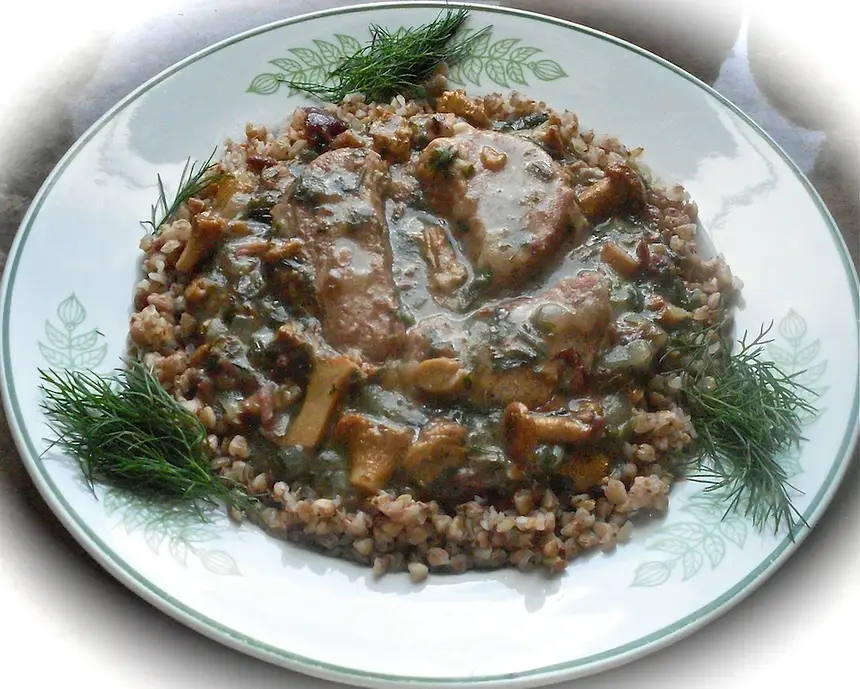
Pork Shoulder in Chanterelle Sauce over Buckwheat


Pork shoulder in chanterelle sauce over buckwheat: tender pressure-cooked pork in a fragrant wild-mushroom sauce with herbs, spooned over nutty buckwheat. A rustic, comforting Eastern European plate.
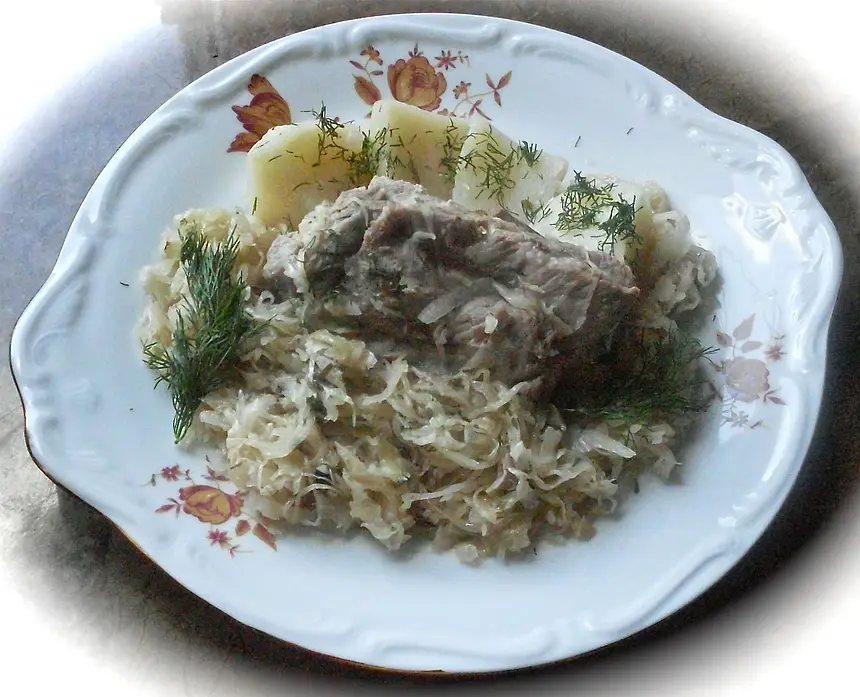
Pork Ribs in Sour Cabbage

Nothing new under the sun, just my rendition of very popular dish in Eastern Europe, inspired by various cuisines of Carpathian Mountains. Cooked quite quick in a pressure cooker.
Best Spicy Green Chili
New Mexico style spicy green chili braises pork shoulder and bones with tomatoes, tomato sauce, green chili strips, and hot peppers. Use to smother enchiladas or eat by the bowlful.

Hominy with Roasted Peppers
Hominy stew with meaty pork bones, roasted bell peppers, hot Italian sausage, and salsa simmered in chicken broth. A hearty, pozole-style bowl with Southwestern heat.

Maverick Chili
Maverick chili stews beef brisket and pork neck bones with beer, strong coffee, chocolate syrup, and a dual-stage cumin hit. A bold Tex-Mex pot built for big crowds and big appetites.
Arpagyongy Kremleves (Cream of Pearl Barley Soup)
Traditional Hungarian cream of pearl barley soup made with pork and veal broth, a light roux, and finished with egg yolk and cream. Velvety and soul-warming.

Best Asparagus Crab Soup (Sup Mang Tay Cua)
The French introduced asparagus to the Vietnamese, who promptly incorporated this classic vegetable into their cuisine. The Vietnamese word for asparagus is "Western bamboo," due to its resemblance to bamboo shoots. asparagus is universally popular throughout Vietnam, this light, tasty dish will delight your family as well.
Oatmeal Scrapple
Pennsylvania Dutch oatmeal scrapple: simmered pork and bone broth thickened with oats, chilled into a loaf, then sliced and fried crisp. Old-school farmhouse breakfast meat.