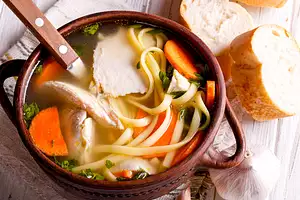
What Is Pork stock and How Can I Use It?
Pork stock rewards a little know-how: how to choose it, cook it, store it, and substitute in a pinch. Browse 14 recipes to cook with it.
Key Points
- Pork stock is round and a little sweet, the base for ramen, beans, and greens.
- Trotters bring gelatin, neck bones bring flavor, and a smoked ham hock brings smoke.
- Simmer gently for a clean stock; tonkotsu ramen is the rare boil-hard exception.
- Chill it so the fat cap sets and lifts off, answering the old greasiness complaint.
- Chicken stock is the closest swap; a ham bone in water is the quick shortcut.
What is pork stock?
Pork stock is the savory liquid you get by simmering pork bones and aromatic vegetables in water until they give up their flavor and body.
It is rounder and a little sweeter than beef stock, with a soft richness that comes from how readily pork fat and collagen melt into the pot.
Old cookbooks dismissed it as too greasy for stock, but that is a fixable problem, and modern cooks lean on pork stock hard. It is the soul of a bowl of ramen and the quiet depth under a pot of beans or braised greens.
For the general rules that apply to every stock, see the parent stock page. This page covers what pork bones do that others do not.
Best Bones and Cuts
Pork is generous with the parts that make great stock. Trotters (pig's feet) are almost pure skin and cartilage, so they load the pot with gelatin and give you a stock that sets like firm jelly.
Neck bones and country-style rib bones are cheap and meaty, adding real pork flavor. Smoked ham hocks are the secret weapon: one hock turns a plain pot of stock into a smoky, savory base that makes beans and collards taste like they simmered all day.
A common, balanced batch is a couple of neck bones for flavor plus one trotter for body. Add a smoked hock when you want that ham-bone backbone.
Lean Toward Clean or Rich
You get to choose how the stock reads.
For a clean, light pork stock in the Japanese style, simmer the bones gently and skim hard, and you get a clear, golden liquid.
For tonkotsu, the famously milky ramen broth, you do the opposite. You boil pork bones hard for many hours so the fat and collagen emulsify into the water and turn it opaque and creamy. That is the one case where a rolling boil is the goal rather than the mistake.
Most home cooking wants the clean version. Bring the pot up slowly, skim the heavy foam that pork throws in the first half hour, and hold a gentle simmer.
Simmer and Skim the Fat
Pork bones give up flavor in three to four hours, and trotters or hocks can go longer for more gelatin. The real work is managing the fat, since pork renders a lot of it.
Skim during the simmer, then chill the strained stock so the fat sets into a firm cap you can lift off cleanly. That step alone answers the old greasiness complaint.
Cajun and Southern cooking put it to work, where a smoky pork base carries a skillet of Dirty Rice or moistens the cornbread stuffing in Cajun Stuffed Pork Chops. It is also the natural braising liquid for beans, lentils, and hearty greens.
Substitutes
Nothing matches pork stock cleanly, since its sweet, fatty character is its own thing. Chicken stock is the most neutral stand-in and will not fight the dish, though it loses the pork depth.
For the smoky ham-hock flavor specifically, a little chicken stock plus a chunk of bacon or a smoked turkey wing gets you most of the way. Beef stock is too assertive and pulls the dish in a different direction.
Buying and Storing
Pork stock is rare on store shelves, so most cooks make it or substitute. The closest shortcut is to simmer a leftover ham bone in water, which gives a quick, smoky pork stock with almost no effort.
Homemade keeps about four days in the fridge once the fat cap has done its sealing work. To hold it longer, freeze it in flat bags or cubes for around three months. Leave headroom, since the liquid expands as it freezes.
Quick facts
- In Chinese
- 猪肉股
- British (UK) term
- Pork stock
- en français
- porc stocks
- en español
- carne de cerdo stock
Recipes using pork stock
There are 14 recipes that contain this ingredient.

Best-Ever Barbecue Sauce

Best-ever barbecue sauce in the Cajun style with crispy bacon, dark caramelized onions, honey, citrus, and toasted pecans. A rich, complex Paul Prudhomme-influenced sauce that earns its name.

Barbecue Sauce # 4
Smoky bacon and pecan barbecue sauce with honey, citrus, and a cayenne kick, blended smooth. This from-scratch BBQ sauce makes 5 cups and transforms any chicken, pork, or rack of ribs it touches.

Tapioca Soup


Thai tapioca soup with ground pork, crab meat, garlic, and fish sauce in a savory pork broth. Silky tapioca pearls thicken this fragrant bowl, served over lettuce with fresh cilantro.
Roast Pork in Cumin Sauce
Roasted pork gets bathed in an exotic cumin-spiced sauce loaded with dates, pine nuts, and aromatic spices, creating a historical Roman-inspired dish that brings ancient flavors to modern tables.

Harold's Pig & Roots
One-pot braised pork shoulder with carrots, potatoes, turnips, and parsnips, served with steamed cabbage and a silky pan gravy. Old-fashioned Sunday supper done right.

Barbecue Sauce 2
Cajun barbecue sauce with bacon, pecans, honey, and citrus blended smooth. A spicy-sweet sauce with three peppers, orange rind, and Tabasco for chicken, pork, or ribs.

Coriander Chops
Coriander pork chops crusted with toasted ground coriander seed and cracked black pepper, braised with white wine, rosemary, and aromatic vegetables. The fragrant Mediterranean-style chop with a velvety pan sauce.

Bacon Cawl with Three Sauces
Traditional Welsh bacon cawl: slow-simmered collar bacon with root vegetables, leeks, and parsley, served with mustard egg sauce, spiced tomato ketchup, and parsley chive sauce.
Bacon Cawl with Three Sauces
Traditional Welsh bacon cawl: slow-simmered collar bacon with root vegetables, leeks, and parsley, served with mustard egg sauce, spiced tomato ketchup, and parsley chive sauce.
Paul's Barbeque Sauce
Paul's Barbeque Sauce: a layered Cajun BBQ sauce with bacon, dark-caramelized onions, pecans, citrus rinds, and honey. Built on a classic seasoning mix and finished with butter.
Cajun Stuffed Pork Chops
We have updated this spicy cajun recipe with more clear directions and adjusted it to be less spicy and use less salt.

Pork Tenderloin with Hawaiian Sauce
Grilled pork tenderloin basted in a Hawaiian-style sauce with brown and yellow mustard, horseradish, honey, brown sugar, and grilled pineapple rings on the side.
Dirty Rice
Cajun dirty rice with ground chicken gizzards, livers, and pork cooked in the holy trinity with Tabasco, cumin, and paprika. Authentic bayou flavor in every forkful.

Barbecue Sauce (Chef Paul Prudhomme)
Chef Paul Prudhomme's Barbecue Sauce: a smoky, sweet-tangy Cajun sauce built on bacon, pecans, honey, and citrus rinds. Pureed silky for chicken, pork, or ribs. Makes 5 cups.