What Are Pickles, sour and How Can I Use Them?
Wondering what to do with pickles, sour? This guide covers how to pick them, cook them, store them, and swap them, plus 7 recipes to put them to work.
Key Points
- Salt-brine fermented cucumbers, sour from lactic bacteria rather than added vinegar, dill-and-garlic forward.
- Full sours are fully fermented and deeply tart; half-sours are pulled early, greener and crisper.
- They cut fat and starch in potato salad, deli sandwiches, and northern European braises.
- Do not swap in sweet pickles for sour ones; the sugar wrecks a savoury dish.
- Buy them refrigerated, keep them submerged in brine, and toss any that turn slimy.
What is pickles, sour?
Sour pickles are cucumbers cured in a salt brine and allowed to ferment, which is what makes them genuinely sour rather than just vinegary.
Wild lactic-acid bacteria turn the cucumber's sugars into acid over days or weeks, giving a tangy, funky, garlicky pickle with a softer bite than a quick vinegar pickle.
This is the deli pickle, the kind that sits in barrels at a Jewish delicatessen. A full sour has fermented all the way through, turning olive-drab and deeply tart; a half-sour is pulled earlier, staying brighter green and crisper, with a milder, fresher tang.
The flavor is dill and garlic and salt, working with the sourness from fermentation, not from added vinegar. That distinction matters when you cook with them.
Cooking With Sour Pickles
They earn their keep anywhere richness or starch needs cutting. Diced into a potato salad they bring sharp relief to the mayonnaise and starch, the move behind an Octoberfest Classic Bavarian Potato Salad with Bacon and many a German-style salad.
Sour pickles are also a backbone of hearty northern European cooking. They go into a traditional Labskaus, the sailor's hash of corned beef and beets, and they sharpen braises and pan dishes like Sauteed Pork Chops where their acid balances the fat.
Chopped raw, they belong in sandwiches and salads. They cut the richness of a Picked Vegetables & Egg Sandwich with Swiss Cheese and add bite to a Root Vegetables Salad. Hold the heat: cooked too long, they turn mushy and lose their snap, so add them near the end.
Pairing and Common Mistakes
Sour pickles love fatty and smoky partners: corned beef, pastrami, sausage, sharp cheese, and fried foods. Their garlic-dill profile is built for rye bread and mustard and cold cuts, which is why the deli sandwich and the pickle spear go together.
The most common mistake is reaching for a sweet pickle when a recipe calls for sour. The sugar throws off a savoury dish entirely, muddying a potato salad or hash that wanted sharp acidity. Read whether your recipe wants sour or sweet before you reach for the jar.
The second mistake is using the soft, fully fermented brine of a full sour as if it were vinegar in a recipe. It is milder and saltier than vinegar, so taste before you pour, and do not expect the same acidic punch.
Substitutes
Dill pickles are the easiest swap, though most jarred ones are vinegar-brined rather than fermented, so they taste sharper and cleaner and less funky. Use them one for one and you will be close.
Half-sour pickles stand in for full sours when you want the same flavor family but crisper texture and less intensity, and vice versa. For the fermented tang specifically, any naturally fermented vegetable, like a forkful of sauerkraut, can echo the sourness in a cooked dish.
In a real pinch, a dill pickle with a splash of its brine and a small crushed garlic clove gets you most of the way to the sour, garlicky character.
Buying and Storing
Truly fermented sour pickles are usually sold refrigerated, often in the deli case rather than the shelf-stable aisle, because live fermentation needs the cold to slow down.
Shelf-stable jars labelled sour are often just vinegar pickles dressed up, so check for refrigeration and a short ingredient list if you want the real thing.
Keep them cold and fully submerged in their brine, which protects them and keeps them crisp. Refrigerated, real sour pickles stay good for many weeks, slowly fermenting further and growing more sour over time.
A half-sour will gradually turn into a full sour in the fridge, so eat them sooner if you like that brighter, crunchier stage. Cloudy brine is normal for a live ferment, but a slimy texture or an off, yeasty smell means the batch has spoiled and should go.
Quick facts
- In Chinese
- 泡菜,酸
- British (UK) term
- Pickles, sour
- en français
- marinades, aigre
- en español
- encurtidos, agrio
Recipes using pickles, sour
There are 7 recipes that contain this ingredient.
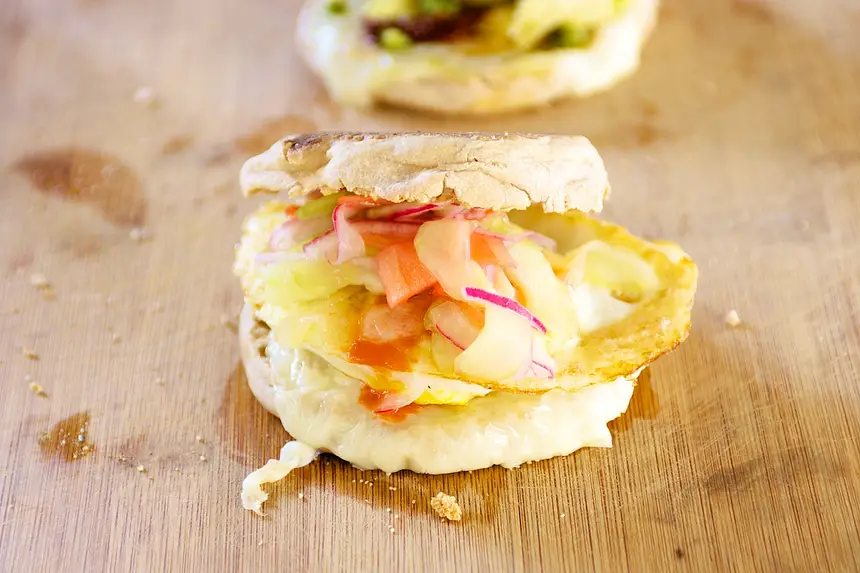
Picked Vegetables & Egg Sandwich with Swiss Cheese


Picked ginger, cucumber and a pan-fried egg are topped over English muffin. An easy and tasty sandwich is ideal for a quick meal.
Sauteed Pork Chops
Sauteed pork chops with a rich pan sauce of shallots, white wine, Dijon mustard, and julienned sour pickles. A French-inspired weeknight dinner for two.
Labskaus
This recipe is from Northern Germany, cooked by fisherman on their boats and served with beer.
Nutty Rice Pate
Vegetarian brown rice and walnut pate with sauteed mushrooms, zucchini, and herbs baked in a loaf pan. Slice and serve chilled on lettuce for an earthy, satisfying appetizer.
Beets Stuffed with Vegetables & Rice
Hollowed-out beets stuffed with sautéed kohlrabi, green olives, sour pickles, and rice, then baked with a lemon slice on top. A unique Jewish-style vegetable side dish.
Octoberfest Classic Bavarian Potato Salad with Bacon
With this simple and delicious German recipe, you can enjoy Oktoberfest easily at home with your favourite German beer.