What Are Peas, canned and How Can I Use Them?
If peas, canned have turned up in a recipe or caught your eye at the store, here's what you need to use them with confidence and how to choose them, cook them, store them, what to substitute, and 11 recipes to try them in.

Key Points
- Green peas cooked and sealed in salted liquid; shelf-stable and ready after a quick warm-through.
- Already cooked, so just heat through; boiling hard turns them to mushy, split skins.
- Drain and rinse to wash off much of the sodium before adding to a dish.
- Best as a supporting player in casseroles, pot pies, and quick weeknight soups.
- Choose frozen peas instead when you want bright color and a sweet, round pop.
What is peas, canned?
Canned peas are green peas that have already been cooked inside the can, then packed in salted liquid and sealed. They sit on the shelf for years and need nothing more than a quick warm-through, which is the whole reason to keep a can around.
Because they are fully cooked, they come out softer and more uniform than fresh or frozen peas, and a touch less sweet.
They even map to their own USDA entry, because the canning process and the packing liquid change the texture and push up the sodium compared to the fresh and frozen forms.
Cooking With Canned Peas
Treat them as cooked, because they are. Drain the can, add the peas near the end of cooking, and heat them just until warmed through. A minute or two in a hot pan, or a few minutes folded into a finished dish, is plenty.
The one thing that ruins them is hard heat. Boil canned peas for ten minutes and they go from soft to mush, splitting their skins and clouding the liquid. They have no cooking left to give.
This is why canned peas work so well in dishes that are fast or already wet and forgiving. They disappear neatly into a chicken pot pie like Mama D's Busy Night, Not Quite Chicken Pot Pie.
They fold just as easily into a Ground Beef & Vegetable Casserole or a bound dish such as Peas 'N' Salmon Loaf, no freezer required.
Pairing and the Sodium Question
Canned peas lean savory and salty, so they sit well with the rich, homey flavors of casseroles and pot pies and creamy chowders. Cream, butter, and a little fresh mint all suit their soft, mellow character.
The thing worth your attention is salt. A standard can carries a meaningful sodium load in both the peas and the liquid.
So always drain it, and give the peas a quick rinse under cold water if you are watching sodium or building a dish that is already well seasoned. Rinsing washes off a good share of the surface sodium and freshens the slightly tinny note of the packing liquid.
The common mistake, beyond overcooking, is salting the rest of the dish as if the peas were unseasoned. Taste before you add more salt, because the peas brought their own.
When to Reach for Fresh or Frozen Instead
Canned peas are genuinely fine when they are a supporting player in a cooked, saucy dish: weeknight soups, casseroles, pot pies, quick skillet suppers. There the soft texture and savory edge are an asset, and the pantry convenience is the point.
Reach for frozen peas when you want bright color and a sweet pop from peas that hold their round shape, the way a side dish or a spring risotto wants them.
Frozen peas are picked and frozen at their peak and stay closer to fresh. Use fresh shelled peas in season for the sweetest result of all.
For a swap in the other direction, replace canned peas in a cooked dish with an equal amount of frozen. Add the frozen ones a couple of minutes earlier so they heat through, and skip the draining step.
Buying and Storing Canned Peas
Pick cans that are clean and sound, never dented or bulging or rusted, since a damaged seam can spoil the contents. Look for low-sodium or no-salt-added versions if you want to season the dish yourself rather than work around the can.
Unopened cans keep for years in a cool, dry cupboard, well past the date stamped on them as long as the can stays sound. That date is about peak quality, not a hard safety cliff.
Once opened, the peas need to leave the can. Move any you are not using into a covered container in the fridge, where they keep for three to four days. Left in the open can, they pick up a metallic taste, so transfer them.
Quick facts
- In Chinese
- 豌豆罐头
- British (UK) term
- Peas, canned
- en français
- petits pois, en conserve
- en español
- guisantes, enlatados
Recipes using peas, canned
There are 11 recipes that contain this ingredient.
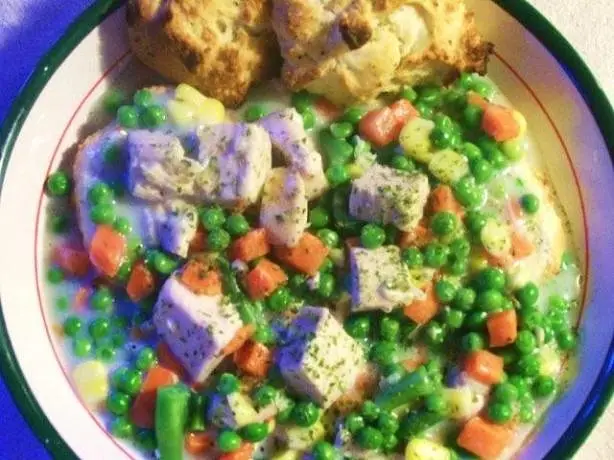
Mama D's Busy Night, Not Quite Chicken Pot Pie


All the essential goodness of chicken pot pie without all the hassle. Perfect for a busy work night when you just don't have a second to spare. Quick and delicious, perfect for the family on the go.
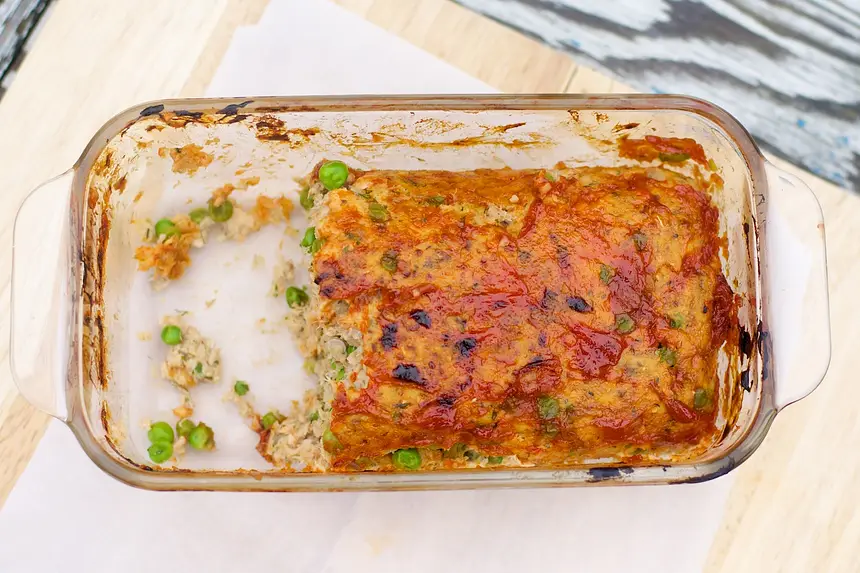
Peas 'N' Salmon Loaf
Salmon loaf with canned salmon, cracker crumbs, eggs, and green peas, baked in a loaf pan with a tangy ketchup glaze. A budget-friendly retro pantry dinner that bakes up in under an hour.
Fish in Wine Casserole

Microwave fish casserole with halibut poached in white wine, covered in a creamy butter sauce with peas, and topped with crispy fried noodles. A retro weeknight dinner ready in 45 minutes.
Gingered Snow Peas (Australia)
Gingered snow peas stir-fried with mushrooms, scallions, sherry and soy sauce. Quick Asian-style vegetable side dish ready in 15 minutes.
Chicken-Peanut Chow Mein
Stir-fried chicken and chow mein noodles with mushrooms, snow peas, carrots, and ginger in a savory soy-oyster sauce, topped with crunchy peanuts. Ready in 25 minutes.

Williamsburg Chicken
Williamsburg chicken is a retro chilled chicken salad mould set with gelatin, blending diced cooked chicken, celery, peas, hard-cooked eggs, pecans and stuffed olives in a lemony mayo-broth base. Served over greens with halved grapes.
Irish Hot Pot
Irish hot pot casserole layered with sliced potatoes, onions, carrots, peas, rice, and smoked sausage baked in tomato soup. A hearty one-dish dinner that feeds a crowd.
Ground Beef & Vegetable Casserole
Slow cooker ground beef and vegetable casserole layered with sliced potatoes, carrots, peas, onions, and celery, all simmered in tomato soup. A set-it-and-forget-it weeknight one-pot main for six.
Canned Rabbit Stew
Home-canned rabbit stew: deboned rabbit meat with potatoes, carrots, celery, onions and peas, preserved in jars for a hearty pantry stew anytime. Old-school homesteader cooking.
Backyard Booyah
Backyard booyah, the giant slow-simmered meat-and-vegetable stew of the Upper Midwest. Beef, soup bones, and chicken cooked until they fall off the bone, then loaded with vegetables in a kettle.