What Is Guinness and How Can I Use It?
Guinness rewards a little know-how: how to choose it, cook it, store it, and substitute in a pinch. Browse 11 recipes to cook with it.
Key Points
- Dry Irish stout brewed with roasted barley; coffee-cocoa bitterness, only about 4.2% alcohol
- Long braising mellows the harsh roast into deep, malty savor; a quick splash stays bitter
- Classic with beef stew and pie; also deepens chocolate cakes and dark bakes
- Over-reducing concentrates the bitterness into something acrid; balance with sugar or tomato
- Bottled Extra Stout cooks fine; for non-alcoholic use 0.0 stout or coffee with molasses
What are guinness?
Guinness is Ireland's famous dry stout, a near-black beer brewed with roasted barley that gives it a coffee-and-cocoa bitterness under a thick, creamy tan head. The roasted grain is what makes a stout a stout, and it is also what makes Guinness such a useful cooking ingredient.
Despite the heavy color, the standard draught is light: only about 4.2% alcohol and surprisingly low in body.
That bitterness is the headline flavor, and it behaves very differently raw than after an hour in the oven. Cook it down and the harsh, almost burnt edge softens into a deep, malty, faintly chocolate backbone.
That transformation is the whole reason it ends up in stews and cakes.
Cooking With Guinness
In savory cooking, Guinness is a braising liquid that doubles as a flavor base.
It is the classic partner for beef, where its bitterness cuts the richness of fatty cuts and the malt builds body in the gravy, as in Beef in Guinness and a proper Irish Beef Stew with Guinness.
Brown the meat hard first, then deglaze with the stout and let it simmer low for a couple of hours. Long, slow heat does the real work.
A quick splash leaves the raw bitterness behind, while a long braise mellows it into savory depth, the kind that fills a Steak & Guinness Pie.
It works as a marinade too, its mild acidity and roast notes seasoning a Grilled Ribeye Steak with Guinness Marinade. And it makes a sturdy batter for frying or for soda bread, the bubbles lightening the crumb.
On the sweet side, the coffee-chocolate character is a natural match for cocoa. A Chocolate-Orange Guinness Cake or a fruit-packed Porter Cake (Irish) uses the stout to deepen the chocolate and keep a dense cake moist.
Pairing and Common Mistakes
Guinness leans into beef, lamb, onions, mushrooms, root vegetables, and aged cheddar on the savory side, and into chocolate, coffee, brown sugar, and dried fruit on the sweet side. It even turns up with oily fish, as in Potted Herrings in Guiness.
The biggest mistake is reducing it too aggressively or adding too much. Boil a stout down to almost nothing and the bitterness concentrates into something acrid; the roast that tastes pleasant in a full braise turns medicinal when over-reduced.
Balance it with a pinch of sugar or a spoon of tomato if a sauce tastes too sharp.
The second mistake is using it where its color matters. Guinness will darken and slightly bitter anything it touches, so it is wrong for a pale cream sauce or a delicate dish. Save it for braises and bakes that are already brown and bold.
Substitutes
The closest swap is any other dry Irish stout or an English porter, which share the roasted-barley bitterness and dark color; use the same amount and you will barely notice. A hearty dark ale works too, though it is sweeter and less roasty.
For a non-alcoholic version, Guinness sells a 0.0 stout that cooks identically. You can also use strong black coffee cut with a little beef stock and a teaspoon of molasses to mimic the roast and malt. It will not foam, but in a braise that does not matter.
Avoid swapping in a pale lager or a hoppy IPA. The lager brings none of the roast, and IPA hops turn aggressively bitter when cooked, throwing the dish off entirely.
Buying and Storing Guinness
A single can or bottle is all most recipes need, so buy the widget can or a bottle rather than committing to draught from a tap.
The nitrogen widget that gives a poured pint its creamy head does nothing for cooking, so plain bottled Guinness Extra Stout is perfectly fine and often cheaper.
Store unopened cans and bottles cool and dark, like any beer; a pantry shelf is fine and the fridge is better for flavor. Sealed, it keeps months past purchase, though stout is best within its printed best-by date.
Once opened, it goes flat within a day. For cooking that flatness is irrelevant, so an opened bottle left in the fridge overnight is still good to braise with the next day. A stale, sour smell is the real warning: that beer has turned and should be poured out.
Quick facts
- In Chinese
- 吉尼斯
- British (UK) term
- Guinness
- en français
- guinness
- en español
- guinness
Recipes using guinness
There are 11 recipes that contain this ingredient.
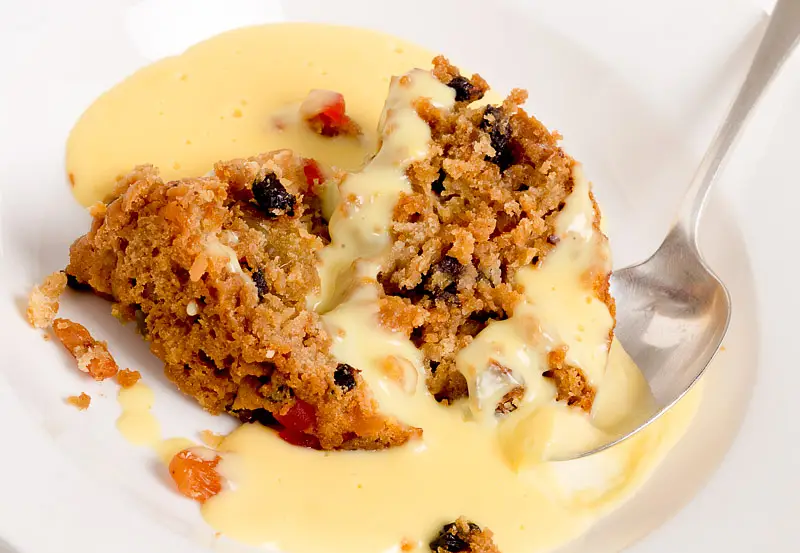
Christmas Pudding With Vanilla-Bean Custard


This Christmas pudding has plenty of delicious fruit and nuts, but it's really simple to make - just plan ahead and then make the warm vanilla-bean custard on the day.
Potted Herrings in Guiness

Potted herrings in Guinness bake rolled herring fillets in a stout-and-vinegar bath with onion, bay, cloves, and peppercorns. Classic Irish preserved fish, served cold.
Favourite Porter Beef
Porter beef braises chunks of rib eye in Guinness stout with onions, mushrooms, and a pinch of nutmeg. A rich Irish-style stout-braised beef stew that cooks in two hours.
Beef in Guinness
Beef in Guinness is a classic Irish pub stew with cubed beef, [carrots](/recipes/carrots), and onions braised in stout. The malty, roasted notes of the beer build a deep mahogany sauce reduced to a glossy pour-over finish.

Steak & Guinness Pie
Rich steak and Guinness pie with beef chunks braised in dark Irish stout under buttery pastry. Classic pub food for St. Patrick's Day or cozy winter dinners.
Irish Beef in Guinness
Irish beef braised in Guinness stout with carrots, onions, and garlic, then finished with a rich reduced pan sauce. A hearty pub-style stew with deep, malty flavor.


Porter Cake (Irish)
Irish Porter Cake is a dense, dark fruit cake made with Guinness, currants, raisins, mixed peel, and warm spices. Bakes for up to 3 hours, then rests a full week before cutting.

Irish Beef Stew with Guinness
Irish beef stew braised with Guinness stout, potatoes, carrots, rosemary, and thyme in a low oven for two hours. A rich, dark, deeply savory pub-style stew with fork-tender beef.
Chocolate-Orange Guinness Cake
A proper Irish chocolate cake made with Guinness stout, cocoa, and dark brown sugar, sandwiched with a bright orange buttercream. Rich, malty, and a wee bit boozy.