What Are Gooseberries and How Can I Use Them?
Gooseberries is easier to cook with than it looks. Here's how to choose, use, and store them, what to substitute, and 8 recipes to get you started.
Key Points
- Tart, translucent berries (Ribes uva-crispa); green ones for cooking, amber dessert types sweet enough to eat raw.
- High pectin and acid make a firm set, so they shine in jam, curd, and pie with little added thickener.
- The sharpness also cuts fat in savory sauces for oily fish like mackerel and for pork.
- Top and tail the berries, then sweeten generously, since green fruit is far more acidic than it looks.
- Rhubarb is the closest substitute for the tart green-cooking style; gooseberries freeze with no blanching.
What are gooseberries?
Gooseberries are small, round, translucent berries that grow on a thorny bush (Ribes uva-crispa), close cousins to the currant. Most are green and veined like a tiny striped grape, though dessert varieties ripen to amber or a deep dusky red.
The defining trait is sharpness. Green cooking gooseberries are bracingly tart, almost sour enough to make you wince, with a firm skin and a few small seeds inside. That acidity is the point: it is what makes gooseberry fool and pie taste so bright.
Riper dessert types soften and sweeten, edging toward a grape-meets-muscat flavor you can eat out of hand. They are a classic of British and northern European gardens and turn up far less often in North American markets.
Cooking With Gooseberries
Most gooseberries are cooked, and the green tart ones are built for it. A gentle simmer with sugar bursts the skins and collapses the fruit into a thick, sharp puree that is the backbone of fools, pies, crumbles, and sauces.
Their high pectin and acid make them a preserving star. Gooseberry Jam and Gooseberry Curd both rely on the natural set, and a classic Gooseberry Pie thickens with barely any help. Strawberry Gooseberry Jam pairs the tartness with sweet berries for balance.
The same sharpness works in savory cooking. Gooseberry Relish and gooseberry sauce are traditional with oily fish like mackerel and with rich pork, the acid cutting fat the way a squeeze of lemon would.
Before cooking, top and tail the berries: pinch or snip off the dry stem and the brown flower remnant at each end. With a big batch many cooks skip it and sieve the puree afterward instead.
Riper dessert gooseberries need almost no cooking. Eat them raw, fold them into a Muscat Ice, or scatter them over cream and cake like any sweet summer berry.
Pairing and Common Mistakes
Gooseberries lean on partners that either soften or echo their tartness. Sweet fruits like strawberry and elderflower are the classic match, the floral note rounding the sour edge. They also pair with cream, custard, almond, and ginger, and on the savory side with oily fish, duck, and pork.
The most common mistake is underestimating the sugar. Green gooseberries are far more acidic than they look, so a dessert that tastes balanced warm can turn harsh once cooled.
Sweeten with a hand, then taste again once it is cold.
Another mistake is overcooking. The berries burst and turn to mush within a few minutes of simmering, and pushing past that point gives a flat, stewed flavor instead of a bright one. Pull them off the heat as soon as the skins split.
Substitutes
No fruit is a true stand-in, but several work by purpose. For the tart green-cooking style in pies and crumbles, rhubarb is the closest match in sourness and texture, though it brings no seeds and a more vegetal note.
Underripe or sour green grapes mimic the look and the muscat hint of dessert gooseberries and work raw or lightly cooked. For jam and sauce, tart cooking apples with a squeeze of lemon give a similar acidic, pectin-rich base.
Sour plums or red currants can cover for the sharp, juicy quality in a relish or sauce. Whatever you choose, taste and adjust the sugar, since few substitutes are quite as aggressively tart as a green gooseberry.
Buying and Storing
Fresh gooseberries have a short early-summer season, roughly late May into July, and show up mostly at farmers markets and pick-your-own farms. For cooking, choose firm, slightly underripe green berries; for eating raw, look for softer, fully colored dessert types that give a little to the touch.
Firm gooseberries are tough and keep well, lasting up to two weeks unwashed in the refrigerator. Wash and top and tail them only just before using, since handling bruises the soft ripe ones.
They freeze beautifully and need no blanching. Top and tail them, freeze loose on a tray, then bag them; they hold for months and go straight into a pot, which is how most people stretch the short season across the year.
Out of season you will mostly find them frozen or as jam and canned fruit, all of which carry the tart flavor into cooking when fresh ones are gone.
Quick facts
- In Chinese
- 醋栗
- British (UK) term
- Gooseberries
- en français
- groseilles
- en español
- grosellas
Recipes using gooseberries
There are 8 recipes that contain this ingredient.
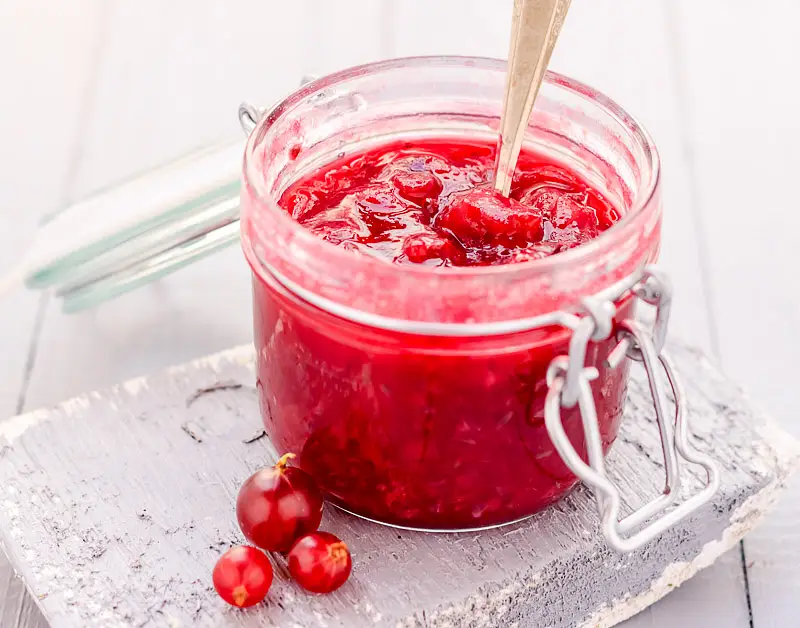
Strawberry Gooseberry Jam


Strawberry gooseberry jam combines tart gooseberries with sweet strawberries and sugar for a perfectly balanced no-pectin jam. Three-ingredient old-fashioned summer preserve.
Basic Rum Pot Fruit Recipe
Traditional German Rumtopf: a layered preserve of summer fruits, sugar, and rum that builds up over the season and matures into a boozy Christmas dessert by winter.

Muscat Ice
Muscat ice is an English frozen dessert of pureed gooseberries infused with elderflower blossoms, sweetened and folded with yogurt. Aromatic, tart, and uncommonly refreshing.
Wiltshire Whitsun Cake
A moist English gooseberry cake scented with elderflower and dark muscovado sugar, served warm as a pudding with cream. A traditional Wiltshire bake for Whitsun celebrations.

Gooseberry Jam
Simple two-ingredient gooseberry jam made with fresh gooseberries and sugar. No pectin needed for this old-fashioned preserve that sets naturally with a bright, tart flavor.

Gooseberry Curd
Gooseberry curd made with fresh gooseberries, eggs, butter, and sugar cooked to a silky custard. A tart, floral fruit curd for filling tarts, tartlets, or spreading on scones.

Gooseberry Pie
Gooseberry pie with a tapioca-thickened filling and a hint of orange zest. Baked in a double crust that starts hot for a flaky bottom and finishes at a moderate temperature.

Gooseberry Relish
Old-fashioned gooseberry relish with raisins, onion, brown sugar, and vinegar, spiced with cayenne, ginger, and turmeric. A tangy-sweet condiment for roasted meats.