What Are Bean threads and How Can I Use Them?
Wondering what to do with bean threads? This guide covers how to pick them, cook them, store them, and swap them, plus 9 recipes to put them to work.
Key Points
- Thin translucent noodles made from mung bean starch, also called glass, cellophane, or fun see noodles.
- Nearly flavorless on their own, so they soak up whatever broth or sauce they cook in.
- Soak dry threads 10 to 15 minutes, then cut them and finish briefly in the pan.
- Overcooking turns them gluey; add them late and use very little heat.
- Closest swap is Korean sweet potato glass noodles; dry packs keep well past a year.
What are bean threads?
Bean threads are thin, dry, translucent noodles made from mung bean starch and water. Dry, they look like stiff white wire and snap like it; soaked or cooked, they turn slippery and clear as glass.
That clarity is why they're also called glass noodles, cellophane noodles, or by their Chinese name, fun see.
They have almost no flavor of their own. That's the point. Bean threads are a sponge for whatever they're cooked in, soaking up broth, soy, sesame, and chili so the seasoning carries the dish.
How to Use Bean Threads
For most salads and soups, soak the dry threads in warm water for about 10 to 15 minutes until pliable, then drain. They're already nearly cooked at that point and need only a minute or two more in the pan or hot broth to finish.
Snip the soaked bundle once or twice with scissors. Left full-length, the noodles are nearly impossible to serve and tangle around everything on the plate.
They behave differently from rice noodles in two ways: they stay clear instead of turning white, and they don't go gummy if they sit, which makes them great for cold dishes.
On Recipeland they carry a Chopstix Glass Noodle Salad, soak up sauce in Fun See Chicken and Bean Threads with Minced Pork, and turn slippery in a Korean Bean Thread Sesame Noodles with Vegetables.
One more trick: dropped straight into hot oil without soaking, bean threads puff instantly into a crisp white nest, the classic bed for crispy chicken or shrimp.
Pairing and Common Mistakes
Because they're flavor-neutral, bean threads want a strongly seasoned sauce or broth. Think soy, garlic, ginger, and sesame oil, with chili for heat and a hit of vinegar or lime to finish. They pair naturally with minced pork, chicken, shrimp, and crunchy vegetables.
The classic mistake is overcooking. These noodles need very little heat, and pushed too far they collapse into a sticky, gluey clump. Soak just until bendable and add them late.
The other slip is not cutting them, which leaves you fighting a single endless tangle at the table.
What to Use Instead
Sweet potato glass noodles (Korean dangmyeon) are the closest swap: thicker and chewier, with the same clear and springy character, and they hold up beautifully in a stir-fry like japchae.
Thin rice vermicelli will stand in for soups and salads, though it turns opaque white and softer, without the signature bounce. Regular thin wheat noodles work only as a last resort, since they cloud the broth and change the texture entirely.
Buying and Storing
Bean threads are sold dry in cellophane packs, usually as a few small tied bundles inside one bag, often labeled mung bean vermicelli or fun see. Buy them by the mung bean starch listing on the label to be sure you're not getting a rice or potato noodle.
Dry, they keep almost indefinitely in a sealed bag in the pantry, well past a year, so long as they stay dry. There's no quality reason to rush them.
Cooked bean threads are best eaten the day they're made; refrigerated, they clump and stiffen within a day or two and never quite loosen back up, so soak only what you'll use.
Quick facts
- In Chinese
- 豆线程
- British (UK) term
- Bean threads
- en français
- fils de haricot
- en español
- hilos de frijol
Recipes using bean threads
There are 9 recipes that contain this ingredient.
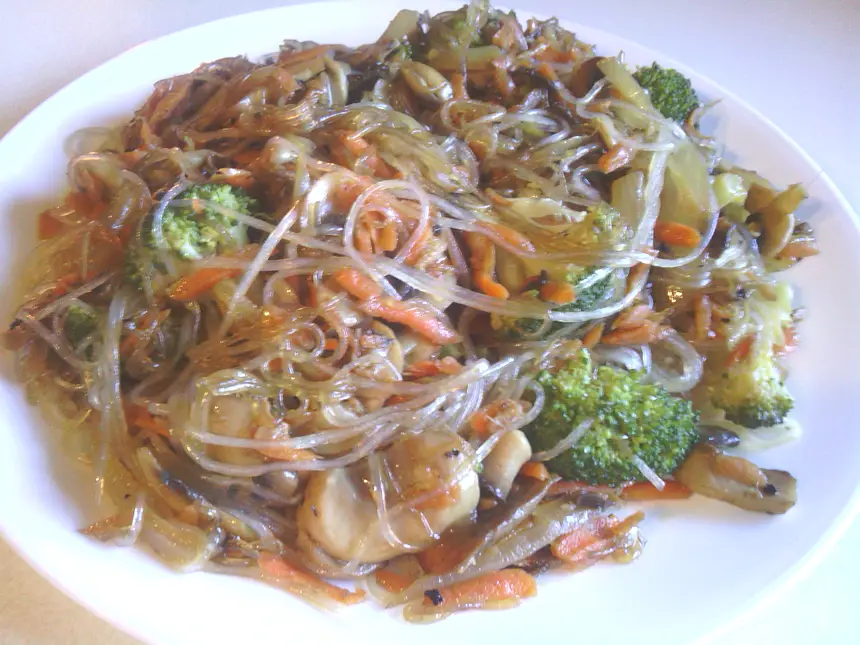
Bean Thread Vegetable Stir-Fry


This Wonderful Tasting Stir-fry Made With Bean Threads Is An Excellent Dish!! .. Bean Thread Is Also Known As Cellophane Noodles!! ..Why??? ...Because Of It's Transparency When Cooked!! ..Great In Spring Rolls. Delicious!!
Hot Bean Thread Noodles
Spicy bean thread noodles stir-fried with ground beef, chili bean sauce, and garlic in a savory chicken broth sauce. A Sichuan-inspired glass noodle dish with serious heat.
Chopstix Glass Noodle Salad
Crunchy, cool, and tossed in a zingy ginger-sesame dressing with orange zest, this glass noodle salad with snow peas, red cabbage, and enoki mushrooms is a no-cook showstopper ready in 30 minutes.

Bean Threads with Minced Pork
Sichuan-style bean thread noodles with minced pork, dried mushrooms, hot bean sauce, and fresh ginger. Spicy, slurpable, and deeply savory with a cilantro finish.
Fun See Chicken
Fun see chicken, a Chinese stir-fry of slippery bean thread noodles tossed with soy-marinated chicken, napa cabbage, bamboo shoots, and snow peas. The glass noodles drink up the savory broth in every bite.
Korean Bean Thread Sesame Noodles with Vegetables
Korean Bean Thread Sesame Noodles with Vegetables recipe
Peking Shrimp Ball Soup
Peking shrimp ball soup with handmade ginger-shrimp dumplings, bean thread noodles, mushrooms, and snow peas in a light chicken broth with sherry.
Ten Tasty Vegetables
Classic Chinese Buddhist vegetable stir-fry with ten ingredients including cloud ear fungus, lily buds, bean thread noodles, and soy-spiced bean curd. A traditional Lunar New Year dish loaded with earthy, umami-rich flavors.

Pon Pon Chicken
Pon pon chicken (bang bang chicken) shreds poached chicken over salted cucumber ribbons with a warm sesame-soy-ginger dressing. Classic Sichuan cold-plate appetizer or main.