26 traditional recipes
by title that are low in cholesterol
 Recipe NOT List™ - disabled
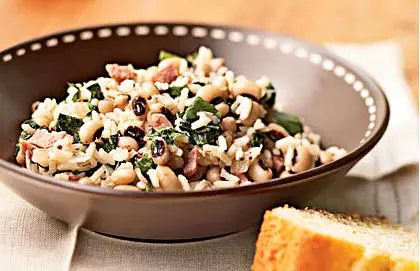
Along the coast of the Southern US eating Hoppin' John on New Year's Day is thought to bring a year filled with luck and prosperity. The beans symbolize coins or pennies. Sometimes a penny is added to the pot or can be left under the bowls of Hoppin' John. Greens such as Collards, chard or kale can be added and symbolize the color of money and are said to add to ones wealth in the new year. The day after New Year's Day the leftovers are called "Skippin' Jenny," and further demonstrates one's frugality. A common tradition in the south US is each person at the meal should leave three peas on their plate to ensure the New Year will be filled with Luck, Fortune and Romance. Another tradition holds that counting the number of peas in a serving predicts the amount of luck (or wealth) that will be collected over the next year.
Slow-roasted leg of lamb rubbed with garlic, rosemary, and paprika, basted in a lemon-chicken broth sauce. A traditional Seder centerpiece that comes out tender as butter.

Mango chutney built the slow way: a two-step simmer with brown sugar, cider vinegar, fresh ginger, garlic, lime, raisins, mustard seeds, and warm spices. Sealed into pint jars for the pantry shelf.
A traditional mincemeat recipe that actually has meat in it!
Traditional Rhode Island johnnycakes from scratch: thin cornmeal griddle cakes scalded with boiling water, then slow-fried until lacy edges form a crackly golden crust.
Traditional fortune cookies made from scratch with 9 ingredients including instant tea for authentic color and flavor. Chill the batter, work with cotton gloves, and fold while hot for bakery-quality results.
Authentic Middle Eastern falafel made from dried chickpeas soaked overnight and deep-fried golden. Crispy exterior with fluffy interior, perfect in pita with tahini sauce.
Over here, and in England, these are just called "muffins", and are the ones in the song about the Muffin Man who lives in Drury Lane. They did actually sell them door-to-door every morning in London until the turn of the century or thereabouts.
Udon noodles tossed with shiitake mushrooms, bok choy, carrots, and grated ginger in toasted sesame oil, simmered in the mushroom soaking liquid. A clean, earthy Japanese noodle bowl.
Classic double-crust apple pie with cinnamon, nutmeg, and fresh lemon juice in a buttery pate brisee shell. Three pounds of Northern Spy or McIntosh apples baked golden and bubbling.
Authentic miso soup made from scratch with homemade dashi, kombu, bonito flakes, wakame, tofu, and barley miso. A nourishing Japanese staple ready in 40 minutes with real umami depth.
Three-ingredient cranberry sauce made the Native American way with maple sugar and birch sap instead of refined sugar and water. A simple, earthy Algonquin-inspired recipe that simmers in one pot.
Traditional Scottish Scotch broth with mutton, pearl barley, split peas, leeks, cabbage, and root vegetables simmered low and slow into a hearty soup.
Traditional English mustard made with just two ingredients: dry mustard powder and cold water mixed into a smooth paste. Cold water is key because heat kills the enzymes that give English mustard its fierce bite.

Indian kachumber salad with cubed tomato, red onion, fresh chili, ginger, and lemon juice. A raw, no-cook side dish that pairs with any curry or grilled meat.
Old-fashioned baked beans made from dried navy beans with salt pork, molasses, brown sugar, and pure maple syrup. Slow-baked for 5-7 hours until the sauce turns thick and the pork rind crisps up.
Showing 1 - 16 of 26 recipes