Perfect Fish & Chips
Submitted by Lisa31
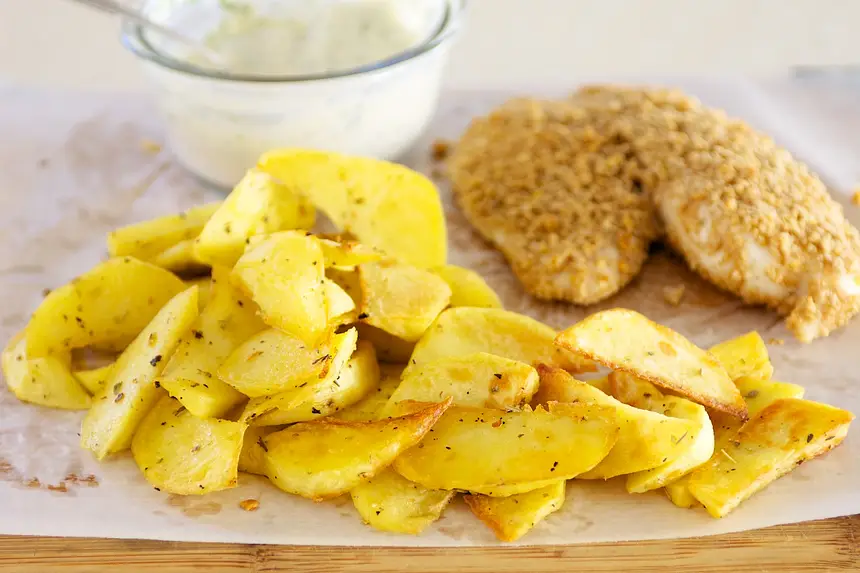
British-style fish and chips with sole fillets in a yeast-and-beer batter, deep-fried to a crisp golden shell. The double-leavening technique produces the lightest crust possible.
YIELD
4 servingsPREP
20 minCOOK
20 minREADY
40 minThis is a serious British-pub-style fish and chips recipe, with a batter that uses both yeast AND beer for double leavening. Most modern beer batters skip the yeast and rely on the carbonation alone, but the traditional British formula uses both for maximum lift, and the difference shows up in the crust: lacy, crisp, almost shattering, and noticeably lighter than a single-leavening batter.
The yeast wakes up first in warm water, then mixes with flour, salt, sugar, oil, and most of the beer. A 30-to-35-minute warm rest lets the yeast bubble up and start fermenting, building both lift and a faint sourdough complexity. Right before frying, a whipped egg white folds in for one final hit of air, and the batter is ready.
The fish prep itself is half the work. Sole fillets get rinsed in lemon water (which firms the flesh and removes any oceanic edge), seasoned, and chilled while the batter rises. Cold fish hitting hot oil gives a better crust because the contrast in temperature shocks the batter into instant crisping.
The two-step coating (seasoned flour first, then batter) is what makes the coating stick and crisp evenly. Without the flour, the batter slides off; with it, the crust adheres tightly to the fish like a proper British chippy version. Fry one or two pieces at a time to keep the oil temperature high; crowding the pot drops the temp and the batter goes soggy.
Pro Tips
- Use sole, cod, haddock, or pollock for the most traditional flavor. Avoid oily fish like salmon or mackerel; they fight the batter.
- Heat the oil to 375°F (190°C) and check with a thermometer. Lower temperatures produce greasy fish; higher temperatures burn the batter before the fish cooks through.
- Use a brown ale, lager, or stout depending on the depth you want. Lager gives the lightest crust; stout produces a deeper, maltier flavor.
- Drain on a wire rack rather than paper towels. Paper towels trap steam and turn the bottom crust soggy; a rack lets steam escape so all sides stay crisp.
Variations
- Use sparkling water instead of beer for an alcohol-free version that still gets fluff from the carbonation.
- Add a tablespoon of malt vinegar to the batter for a tangy British-pub authenticity (and serve with more vinegar at the table, the way it’s done in Britain).
- Serve with mushy peas, tartar sauce, or a homemade aioli for the proper UK chip-shop presentation.
Ingredients
Directions
FISH: 1. Wash fish filets in lemon and water.
- Season with salt and pepper. Chill while you prepare the batter.
BATTER: 1. Sprinkle yeast over warm water. Let stand until dissolved.
Place flour in a bowl with the salt and sugar and make a well in the center. Add the dissolved yeast, oil and ⅔ of the beer and stir with a wooden spoon just to combine. Stir in remaining beer.
Let the batter stand, covered, in a warm place 30 to 35 minutes, until it has thickened and becomes frothy 4. Dry fish with paper towels and cut each fillet diagonally in 2 pieces.
Heat the oven to warm 6. Stir together remaining flour, pepper and sal in a plate. Heat the oil 7. Whip egg white until it forms soft peaks and fold it into the batter.
Coat fish with seasoned flour, patting so they are evenly coated.
Shake off excess flour.
Using a 2 pronged fork dip the fish in the batter. Lift it out and hold it over the bowl 5 seconds to drip off excess batter.
Carefully lower the piece of fish into the hot oil and deep fry, turning once until golden brown and crisp.
Fry 1 or 2 pieces at a time, transferring to paper towels as you go.
Keep warm in the oven until all fish is done, or until you finish frying the potatoes. ( separate recipe)
Serve with lemon wedges and tartar sauce.
Comments