What Is Malt extract and How Can I Use It?
Wondering what to do with malt extract? This guide covers how to pick it, cook it, store it, and swap it, plus 6 recipes to put it to work.
Key Points
- Concentrated malted barley sold as a sticky liquid syrup or a fine dried powder.
- Deeply malty and only about half as sweet as sugar, so use it for flavor, not sweetness.
- A staple of bread, bagels, and homebrewing, where it deepens crust color and feeds yeast.
- Diastatic types carry active enzymes that can slacken dough; non-diastatic is safer for flavor.
- Shelf-stable for months; barley malt syrup is its near-identical close substitute.
What is malt extract?
Malt extract is concentrated malted barley, boiled down from the sugary liquid drawn off mashed sprouted grain. It comes two ways: a thick, sticky syrup (liquid malt extract) and a fine tan powder (dried malt extract). Both carry the same toasty, bread-crust flavor.
It is the close cousin of barley malt syrup, and in baking the two are largely interchangeable. The name malt extract leans brewing and baking, while barley malt syrup leans natural-foods and bagels, but they come from the same process.
It tastes deeply malty and only mildly sweet, somewhere near half the sweetness of sugar. That malt character, not its sweetness, is the reason to keep it on the shelf.
How to Use Malt Extract
Bakers add a spoonful to yeast dough to feed the yeast and deepen both flavor and crust color. It shows up that way in the Basic Bread Machine Recipe and the hearty Potted Five Grain Bread, and it brings a malty backbone to the Banana Fig Bran Bread - ABM.
The dried powder also turns up in cookies and quick breads, where it adds a faint malted-milk note. You can taste that in Vanishing Oatmeal Raisin Cookies.
Its other home is the brew kettle. Liquid and dried malt extract supply the fermentable sugar that yeast turns into alcohol, as in the Double Stout. Brewing extract and baking extract are the same stuff, sold in different aisles.
Pairing and Common Mistakes
Malt extract belongs with whole grains, rye, oats, nuts, and dark chocolate. It is what gives malt loaf and a malted shake their signature taste, and a little goes into granola or a glaze for color and depth.
The biggest mistake is treating it as a sweetener. Because it is only about half as sweet as sugar, swapping it one-for-one into a dessert leaves the result flat. Reach for it when you want malt flavor, not when you just need things sweet.
The liquid form is famously sticky. Cold syrup drips in a slow rope and clings to everything, so warm the jar in hot water and oil the measuring spoon first.
One more thing trips up bread bakers: diastatic versus non-diastatic. Diastatic malt still has active enzymes that break down starch, so a heavy hand makes dough slack and gummy. For flavor and color, the non-diastatic kind is the safe choice.
Substitutes
Barley malt syrup is the closest swap, near enough to use measure for measure, since it is essentially the same product. Brown rice syrup shares the thick body and gentle sweetness but tastes milder and less malty.
Molasses matches the dark color and brings deep flavor of its own, though it is more bitter, so use a little less. Honey or maple syrup will sweeten and brown a bake, but they are sweeter and lack the malt note.
The dried and liquid forms swap too, but not one for one. Dried extract is more concentrated, so you need a bit more liquid syrup to replace a given weight of powder, and a bit less powder to replace the syrup.
For brewing, no pantry substitute is reliable. Use the malt the recipe calls for.
Buying and Storing Malt Extract
Look for liquid malt extract in jars near the honey and molasses or in the baking aisle, and dried malt extract in homebrew shops and online. Read the label so you know whether you have the diastatic or non-diastatic type.
Both forms are shelf-stable and forgiving. An unopened jar of syrup keeps a year or more in a cool, dark cupboard, and an opened one lasts many months at room temperature thanks to its low moisture and high sugar.
Keep the syrup's rim and lid clean so they do not glue shut.
Dried malt extract is the fussier one. It pulls moisture from the air and clumps into a brick, so seal it airtight and keep it dry. If liquid extract ever stiffens or crystallizes, a bowl of hot water loosens it back to a pourable syrup.
Quick facts
- In Chinese
- 麦精
- British (UK) term
- Malt extract
- en français
- extrait de malt
- en español
- extracto de malta
Recipes using malt extract
There are 6 recipes that contain this ingredient.
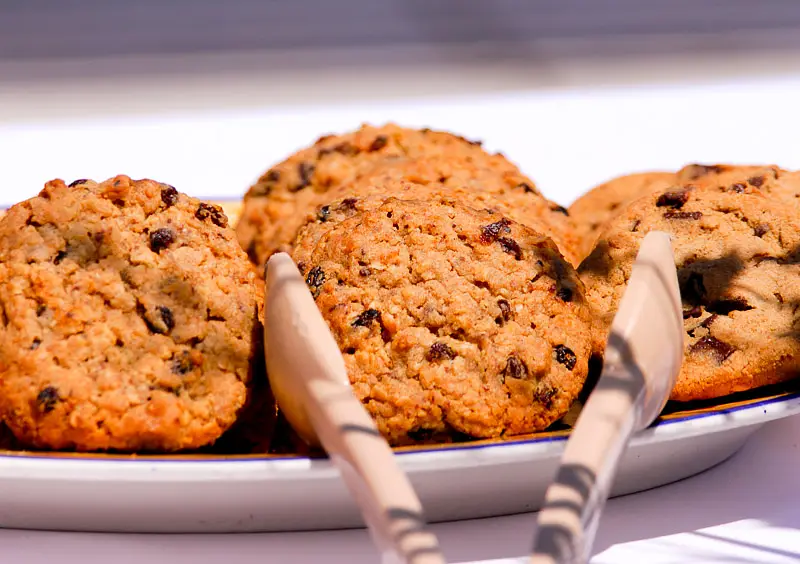
Vanishing Oatmeal Raisin Cookies


Oatmeal raisin cookies with rolled oats, plump raisins, brown sugar, and cinnamon. Chewy in the middle, lightly crisp at the edges, gone in minutes.

Double Stout
Rich, full-bodied homebrew stout made with dark malt extract, roasted barley, and black patent malt for deep chocolate and coffee notes.
Potted Five Grain Bread
Five-grain bread baked in terra cotta flower pots with cracked wheat, rye, whole wheat, oatmeal, and rice. Honey and malt extract add natural sweetness to this rustic multigrain loaf.
Taillaule (Neuchatel)
Taillaule is a rich Swiss celebration bread from Neuchâtel, studded with raisins and lemon zest, brushed with apricot glaze, and finished with water icing and toasted almonds.
Banana Fig Bran Bread - ABM
Filled with fruits and fibers this flavorful two-and-a-half pound loaf provides the RDA for potassium in two half-round slices.
Basic Bread Machine Recipe
Whole wheat bread machine loaf with malt extract and vital wheat gluten for a sturdy, well-risen crumb. A flexible base recipe with endless variations from rye to banana bread.