What Is Corn grits and How Can I Use It?
Corn grits is easier to cook with than it looks. Here's how to choose, use, and store it, what to substitute, and 6 recipes to get you started.
Key Points
- Corn grits are coarsely ground dried corn simmered into a thick, creamy Southern porridge.
- Cook 1 cup grits in 4 cups liquid, low and slow, stirring 20 to 30 minutes.
- Stone-ground grits taste best but go rancid fast; refrigerate or freeze them.
- Polenta and coarse cornmeal both swap in one for one, cooking a touch finer.
- Salt the pot well and resist rushing, or grits turn gluey and bland.
What are corn grits?
Corn grits are dried corn kernels ground into coarse, sandy granules, somewhere between cornmeal and whole hominy in size. Cooked slowly with water or milk, they swell into a thick, creamy porridge that is a backbone of Southern cooking.
Most grits start from dent corn, the starchy field corn left to dry on the stalk. The kernels are cleaned, sometimes treated with lime to make hominy grits, then cracked and sifted into a coarse meal.
Texture is the whole point. A grit is coarser than cornmeal, so it stays distinct and gives a porridge its faint, pleasant grain rather than dissolving into mush.
How to Cook Grits
Patience and a 4 to 1 liquid ratio do the work. Whisk 1 cup of grits into 4 cups of simmering salted water or milk, drop the heat low, then stir often for 20 to 30 minutes until creamy. Stone-ground grits can take 45 minutes or more.
A splash of milk near the end loosens a pot that has gone too stiff.
Finish off the heat. Stir in butter and cheese once the pot is creamy for the classic plate.
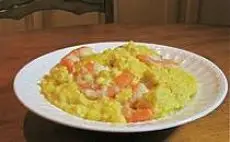
Garlic & Cheese Grits folds sharp cheddar and garlic into the pot, while Crockpot Shrimp & Grits sets a soft, cheesy base under sauteed shrimp for the iconic low-country dish.
Grits also leave the bowl. Cooled firm in a pan, then sliced and fried, they become crisp cakes; Carolina Style Polenta treats grits exactly the way Italians treat polenta, set firm then griddled.
Pairing and Common Mistakes
Grits are a canvas for fat and salt. They pair with cheddar, butter, bacon, shrimp, runny eggs, and anything saucy that needs a soft base, plus bold partners like hot sauce and aged cheese.
The number one mistake is rushing them. Instant grits cook in minutes but turn gluey and flat; real stone-ground grits need low, slow heat and frequent stirring or they scorch on the bottom and clump.
The second mistake is going light on liquid and salt. Grits drink up far more liquid than they look like they will, and an under-salted pot tastes like wet cardboard no matter how much butter you add at the end.
Substitutes
Polenta is the closest swap. Coarse yellow cornmeal cooks almost identically, so use it one for one and expect a slightly finer, more golden result.
Coarse cornmeal works in a pinch but cooks faster and finer, so start checking at 15 minutes and add liquid if it thickens too soon. Fine cornmeal is too powdery and will turn pasty.
Hominy grits and regular corn grits trade freely. The only difference is whether the corn was nixtamalized with lime, which gives hominy grits a rounder, slightly earthier flavor.
Buying and Storing Grits
You will see three grades. Instant grits are precooked and dried for speed, quick grits are finely cracked, and stone-ground grits keep the germ for the fullest corn flavor and the coarsest texture.
Stone-ground is the one worth seeking out, but it comes with a catch. Because the oily germ is left in, stone-ground grits go rancid within a few months at room temperature, so smell for a sharp, off note before cooking.
Store stone-ground grits in an airtight container in the refrigerator for up to 6 months or the freezer for a year.
Degerminated grits are the easy keepers. Instant and quick grits are shelf-stable and last about a year in a sealed pantry container.
Quick facts
- In Chinese
- 玉米糁
- British (UK) term
- Corn grits
- en français
- gruau de maïs
- en español
- sémola de maíz
Recipes using corn grits
There are 6 recipes that contain this ingredient.
Carolina Style Polenta


Carolina-style polenta made from corn grits cooked creamy and slow, enriched with butter and bouillon, then sliced, coated in cracker crumbs, and pan-fried until golden and crispy.

Garlic & Cheese Grits
Baked garlic cheese grits with sharp cheddar, fresh garlic, and a kiss of cayenne. A classic Southern brunch or side dish casserole that bakes up creamy inside with a golden burnished crust on top.

Rice/Corn Patties
Brown rice and corn grits patties bound with chickpea flour and egg, pan-fried or baked until golden. A simple vegetarian patty using leftover cooked grains.
Pan Yeast Rolls
I got this recipe from "TheSouthernLadyCooks.com" Here's a blurb from her website: "These rolls will melt in your mouth. I have made them for years and they are wonderful. My family looks forward to these rolls during the holidays. I think this recipe was on a box of grits years and years ago."

Crunchy Munchy Corn & Millet Bread
Crusty no-knead Dutch oven bread loaded with cornmeal, corn grits, millet, and whole wheat. An overnight rise builds deep flavor and a crackling, golden crust.