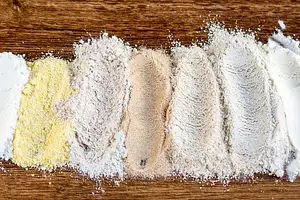
What Is Red miso and How Can I Use It?
Red miso rewards a little know-how: how to choose it, cook it, store it, and substitute in a pinch. Browse 6 recipes to cook with it.
Key Points
- Bold, long-aged miso (aka) that is darker, saltier, and funkier than white
- More soybean and less rice make it meatier and less sweet than pale styles
- Use a little in hearty soups, braises, glazes, and marinades; never boil it
- Cut back hard on other salt, since red miso is saltier than the lighter styles
- Swap in white miso plus a pinch of salt, or doenjang, in a pinch
What is red miso?
Red miso, or aka miso in Japanese, is the bold, long-aged end of the miso family. It is a fermented soybean paste left to mature for many months and sometimes years, which deepens both its color and its punch.
That long ferment gives it a reddish-brown to dark chocolate color, a higher salt content, and a salty, deeply savory flavor with real funk behind it. Where white miso whispers, red miso shouts.
It usually carries more soybeans and less rice than the pale styles, so it tastes meatier and less sweet. This is the miso you reach for when you want a dish to taste long-simmered and serious.
Cooking With Red Miso
Red miso is a powerhouse of umami, so a little goes a long way. It is built for hearty dishes: rich miso soups, braises, stews, glazes for meat, and marinades that need to stand up to strong flavors.
It anchors tofu and vegetable cooking beautifully. The deep glaze on Orange & Miso Roasted Tofu & Asparagus leans on red miso, and it brings savory backbone to Carrot-Tofu Soup with Dill and Chinese Style Bean Sauce with Tofu.
The same cardinal rule applies as with any miso: do not boil it.
Stir it in near the end of cooking, off a hard boil, so the heat does not blow off the aroma and kill the live cultures.
Because it is so concentrated, dissolve it in a ladle of warm broth before adding, and start with less than a recipe suggests; you can always whisk in more.
Pairings and Common Mistakes
Red miso stands up to strong company. It pairs with beef, pork, mushrooms, eggplant, garlic, ginger, and chili, and it makes a powerful marinade or a deep, dark glaze.
The biggest mistake is over-salting the dish. Red miso is saltier than the lighter styles, so cut back hard on added salt and soy sauce before you taste.
The second mistake is using it where the recipe wants subtlety. In a delicate dressing or a sweet glaze it can taste harsh and overpowering; for those, the white style is the better tool.
Substitutes
White or yellow miso is the closest swap when red is what you have run out of, but they are milder and sweeter, so you may want a bit more plus a pinch of salt to reach the same depth. The dish will taste cleaner and less funky.
A spoonful of dark soy sauce or tamari covers the salty, savory note in a pinch, though it lacks the body and thickness. Doenjang, the Korean fermented soybean paste, is an excellent stand-in, similarly deep and pungent.
For a glaze or braise, red miso is hard to fully replace; reach for the most strongly flavored fermented paste you have.
Buying & Storing Red Miso
Find red miso in the refrigerated aisle near tofu, usually in a tub. The darker the paste, generally the longer it was aged and the stronger it will taste, so check the color through the container if you can.
Red miso keeps even better than the pale styles because its higher salt acts as a preservative. Sealed and refrigerated, an opened tub stays good for a year or more, slowly darkening over time.
Smooth the surface, press plastic wrap directly onto it to keep out air, and keep the lid on. A little pooled liquid or a darker top layer is normal; stir it back in. Discard only if you find fuzzy, colored mold.
Quick facts
- In Chinese
- 红味噌
- British (UK) term
- Red miso
- en français
- miso rouge
- en español
- miso rojo
Recipes using red miso
There are 6 recipes that contain this ingredient.
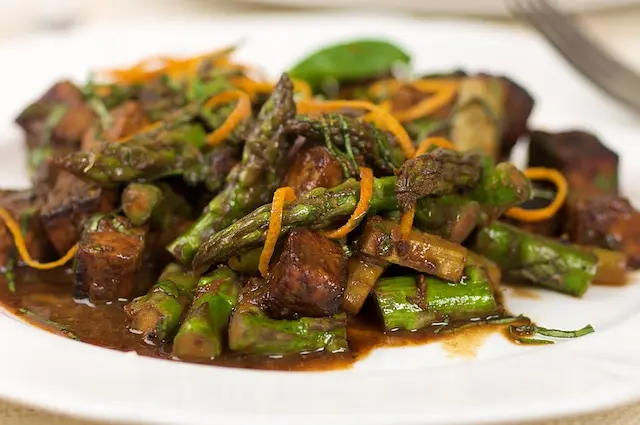
Orange-Roasted Tofu & Asparagus


Roasting tofu in the oven is a great way to create a very meaty texture. No mushy tofu here and combined with a very flavorful sauce the cubes are almost like cubes of beef.
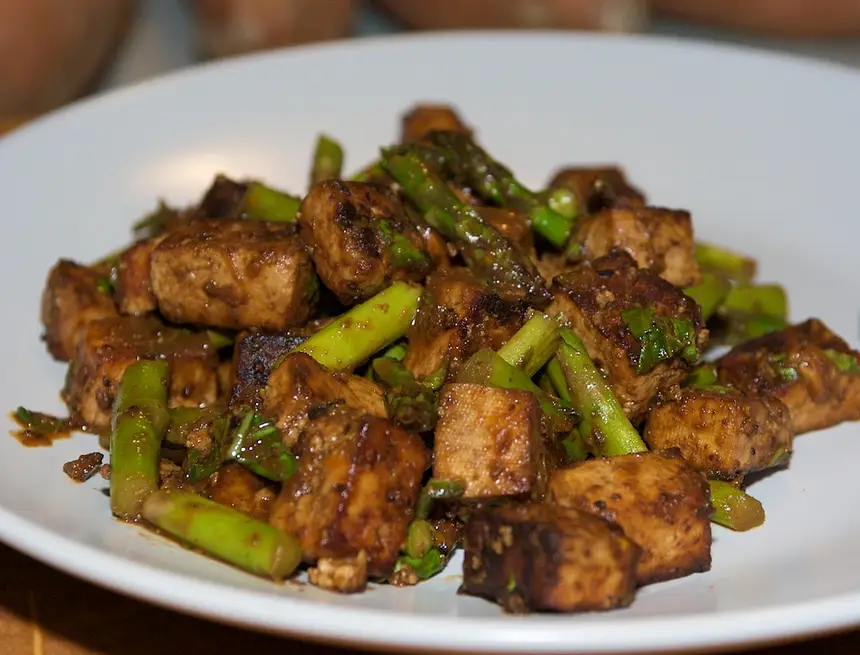
Orange & Miso Roasted Tofu & Asparagus
Tofu can be super tasty, this recipe has proved it. I made this roasted tofu and asparagus recipe yesterday for dinner, and it was absolutely delicious.
Miso Potato Salad
Miso potato salad with baby potatoes simmered in a sauce of white and red miso, sake, ginger, and honey. A Japanese-inspired side served hot or cold, no mayo needed.

Chinese Style Bean Sauce with Tofu
Chinese-style tofu stir-fry in a savory miso, tahini, soy sauce, and honey bean sauce with mushrooms, red peppers, and ginger. A quick vegetarian wok dinner served over rice.

Savory Orange Roasted Tofu & Asparagus
Savory orange roasted tofu and asparagus pairs crispy-edged cubes of miso-glazed tofu with spring asparagus, tossed in a bright orange-basil-miso sauce. A vegan, gluten-free spring dinner.

Carrot-Tofu Soup with Dill
Creamy vegan carrot soup with silken tofu, fresh dill, and red miso blended until velvety smooth. Just 30 minutes, 8 ingredients, and zero dairy. Warm, nourishing, and full of umami.