What Is Octopus and How Can I Use It?
Here's everything worth knowing about octopus and how to pick it, what it are, how to store it, and what to use instead, plus 14 recipes to cook tonight.
Key Points
- An eight-armed cephalopod with dense collagen muscle that is sweet and tender when cooked patiently.
- Cook in two stages: simmer or pressure-cook until knife-tender, then char on high heat.
- Rushing raw octopus over high heat makes it rubbery; the slow tenderizing stage is mandatory.
- Frozen-then-thawed octopus often cooks up more tender than fresh, so the freezer is fine.
- Cooked meat keeps three to four days and improves overnight for salads as it soaks in dressing.
What are octopus?
Octopus is a cephalopod, the eight-armed cousin of squid and cuttlefish, eaten around the Mediterranean and across East Asia for its sweet, mineral, faintly briny meat. Cooked right, it is tender with a gentle chew. Cooked wrong, it is the texture of a rubber band.
That single fact governs everything about working with it. The muscle is dense collagen, and it has only two states a cook cares about. It is properly tender after long and slow cooking, or it seizes up rubbery when rushed from raw over high heat.
Get past the texture problem and octopus is one of the great ingredients, the centerpiece of Greek tavernas and Portuguese rice pots and Japanese sushi counters alike.
How to Cook Octopus
The reliable method is two stages: tenderize first, then finish. Simmer the octopus gently in barely-bubbling water for 45 minutes to an hour and a half depending on size, until a knife slides into the thickest part of an arm with no resistance.
A pressure cooker does the same job in 15 to 20 minutes if you want to save time. Either way, let it cool in its own liquid so it doesn't tighten back up.
Only then do you reach for high heat. The tender, pre-cooked arms hit a screaming-hot grill or fryer just long enough to char and crisp the outside, two to three minutes. That sequence is exactly what Char-Grilled Baby Octopus and Polvo Frito (Fried Octopus) rely on.
From there it goes anywhere. Sliced into the bright Octopus & Celery Salad, braised in tomato as Polpo Con Salsa (Octopus with Tomato Sauce), simmered with fennel in Oktapodi Maratho Krasato (Octopus & Fennel in Wine), or stirred through rice in the Portuguese Arroz De Polvo.
Pairing and Common Mistakes
Octopus loves the bold Mediterranean pantry: olive oil, garlic, lemon, red wine, paprika, oregano, and tomato. In Asian dishes it meets soy, sesame, and rice vinegar instead. A finishing drizzle of good olive oil and a squeeze of lemon is the classic Greek treatment, and it is hard to beat.
The defining mistake is impatience. Throwing raw octopus straight onto a hot grill, the way you would a shrimp, guarantees a tough, rubbery result. It needs the slow tenderizing stage first, every time.
The opposite error is overshooting the simmer. Cook it for hours past tender and the meat goes the other way, falling apart and turning mushy. Test with a knife and stop the moment it yields.
Substitutes
There is no clean swap, because nothing else has octopus's particular dense-then-tender bite. The closest in spirit is squid (calamari), its near relative, though squid wants the opposite cooking: either flash-cooked in seconds or braised long, never the middle ground that turns it to rubber.
Cuttlefish behaves much like squid and works in the same braises and stews. For a salad or stew where you just need firm, mild seafood, large shrimp or monkfish can stand in, accepting that the texture and flavor will shift.
In a tentacle-forward dish where octopus is the whole point, no substitute really delivers. Better to wait until you can get it.
Buying and Storing Octopus
Most octopus is sold frozen or previously frozen, and that is genuinely a good thing. Freezing ruptures the muscle fibers and acts as a natural tenderizer, so a frozen-then-thawed octopus often cooks up more tender than a fresh-killed one. Don't pay extra to avoid the freezer.
Look for firm, glossy flesh with the skin intact and a clean sea smell, never anything sour or ammonia-like. Cleaned, ready-to-cook octopus saves you removing the beak and ink sac, though it costs more.
Thaw frozen octopus overnight in the refrigerator. Keep fresh octopus very cold and cook it within a day or two, since like all seafood it doesn't keep.
Cooked octopus holds three to four days in the refrigerator, and it actually improves for salads after a night in the fridge, where it firms up and soaks in its dressing. You can also freeze the cooked, cooled meat for a couple of months.
Quick facts
- In Chinese
- 章鱼
- British (UK) term
- Octopus
- en français
- poulpe
- en español
- pulpo
Recipes using octopus
There are 14 recipes that contain this ingredient.
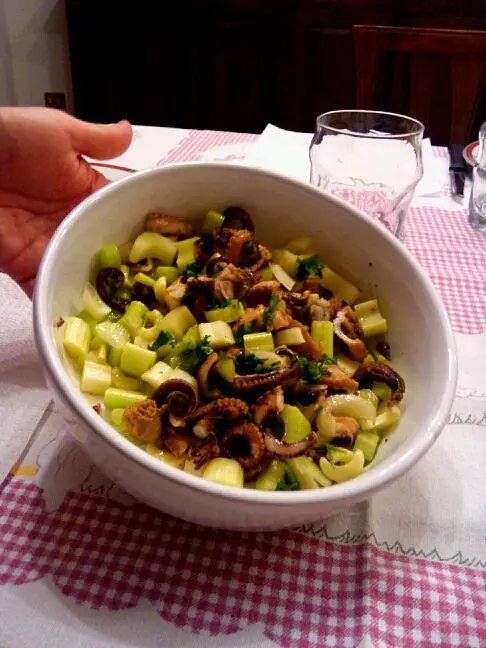
Octopus & Celery Salad


Octopus and celery salad, a light Venetian classic of tender boiled octopus tossed with crisp raw celery, fruity olive oil, and bright lemon. A clean, low-fat seafood salad to serve with fresh bread.

Polvo Frito - Fried Octopus

Polvo frito is a classic Portuguese dish of tender precooked octopus dipped in a parsley-flecked egg batter and shallow-fried in olive oil until golden. Simple, briny, and crisp at the edges.

Mexican Octopus Salad
Mexican octopus salad with kidney beans, corn, and red bell pepper in a spicy chile-cumin-oregano dressing. Tender octopus tossed cold with bold Southwestern flavors.
Oktapodi Maratho Krasato (Octopus & Fennel
Oktapodi Maratho Krasato is a Greek braised octopus with fennel and tomatoes simmered in red wine until fork-tender. Served warm or cold as a main dish or meze.

Japanese Sushi
Japanese sushi is one of the healthiest food, in Japan it is very popular and welcomed!

Oktapodi Maratho Krasato (Octopus & Fennel in Wine)
Oktapodi maratho krasato is Greek braised octopus with fennel and tomatoes in red wine. Pounded tender, then slow-simmered until fork-soft. Served warm or cold.

Octopus Pilaf
Greek octopus pilaf simmered in tomato, white wine, and oregano for an hour until tender, served over rice cooked in the braising sauce. A traditional taverna dish.

Octopus with Garlic - Polipi Veraci All'Aglio
Polipi Veraci all'Aglio is Italian braised octopus with crushed garlic, cumin, bay leaf, and olive oil, slow-cooked in a sealed earthenware dish until tender. Finished with rosemary, parsley, and green pepper.

Adriatic Spaghetti - Spaghetti dell'adriatico
A tasty and scrumptious seafood pasta dish that will have you hooked from the first bite to the last!
Polpo Con Salsa - Octopus with Tomato Sauce
Polpo con salsa, Italian octopus braised in tomato sauce with garlic, dry sherry, and optional ink for deep, rich flavor. Tender after one hour of gentle simmering.

Aegean Sea Chowder (Psarosoupa Kakavia)
A hearty and delicious seafood chowder that will please anyone who loves food from the sea!

Nigiri Sushi (Finger Sushi)
Nigiri sushi, the hand-formed Japanese rice fingers topped with raw or cooked seafood and a touch of mustard or wasabi. Make sushi at home with just rice, fish, and a few simple ingredients.