What Are Green spanish style olives and How Can I Use Them?
Green spanish style olives is easier to cook with than it looks. Here's how to choose, use, and store them, what to substitute, and 6 recipes to get you started.
Key Points
- Unripe olives lye-cured to remove bitterness, then brine-fermented for a tangy, salty bite.
- The Manzanilla, often pimiento-stuffed, is the standard Spanish cocktail and tapas olive.
- Stir plain pitted ones into braises, chilis, and pasta for a briny, savory lift.
- They are very salty, so taste before adding salt and rinse them when using a lot.
- Keep opened olives submerged in brine in the fridge; they hold for weeks to a couple of months.
What are green spanish style olives?
Spanish-style green olives are unripe olives, picked while still firm and green, then cured to strip out their natural bitterness and packed in a salty brine. They are the familiar firm, meaty olives sold in jars, often pitted and stuffed with a sliver of red pimiento.
What makes them "Spanish style" is the cure. The raw olives are first soaked in a lye solution that breaks down the bitter compound oleuropein, then rinsed and left to ferment in brine for weeks or months. That lactic fermentation gives them their tangy, slightly sour, savory bite.
The most common variety is the Manzanilla, a small to medium oval olive with a clean, salty flavor and crisp flesh. It is the standard cocktail and tapas olive across Spain and well beyond.
How to Use It
Green Spanish olives bring salt and a tangy, meaty chew, so they work anywhere a dish needs a briny lift. Eat them straight as a tapa with a glass of sherry, or chop them into salads, dressings, and a quick relish.
They earn their place in long-cooked savory dishes, where the brine melts into the sauce. Stir them into Chili Con Pavo, fold them through Beef Empanadas, or scatter them over a braise like Spanish Beef Roast, where they add a salty counterpoint to the rich meat.
They also play beautifully with pasta. Spaghetti with Chicken & Spanish Green Olives leans on them for a briny backbone that ties the chicken and tomato together.
Timing changes the result. Add them late to keep their texture firm, or early in a braise so their salt dissolves into the whole pot.
Either way, rinse a spoonful first if the dish is already well seasoned.
Pairing and Common Mistakes
These olives love bold, rich, Mediterranean company. They cut through fatty meats and oily fish and sharpen a tomato sauce, and on a tapas board they sit happily next to cheese, citrus, garlic, and almonds.
The most common mistake is forgetting how salty they are. The brine is concentrated, so olives can quietly oversalt a sauce; taste before you add any extra salt, and rinse them if you are using a lot.
The other slip is leaving the pits in by accident. Buy pitted for cooking, or warn diners when whole olives go into a braise, since a cracked tooth on a stray pit is a real risk.
Do not bother cooking stuffed olives in a long braise for their pimiento; the soft filling falls apart and muddies the sauce. Save stuffed olives for snacking and martinis, and use plain pitted ones for the pot.
Substitutes
For another briny green olive, Castelvetrano olives are buttery and mild, while Picholine olives are firmer and more tart. Both stand in well, though Castelvetrano is sweeter and far less sharp.
Green olives from a Greek or Italian jar work too, adjusting for their own salt level. If you only have black or kalamata olives, expect a softer texture and a deeper, less tangy flavor, which suits a braise more than a crisp salad.
In a real pinch, capers give you the same salty, briny pop in a much smaller package, though they bring more sourness and no meaty chew. Match the swap to the job: a firm green olive for texture, capers only when you just want the brine.
Buying and Storage
Spanish green olives come whole, pitted, sliced, and stuffed, sold in jars and cans or loose from the deli olive bar. Manzanilla stuffed with pimiento is the supermarket default; buy plain pitted ones when you plan to cook with them.
Look for firm, unbroken olives in clear brine. Cloudy brine or mushy, wrinkled olives are a sign of age or a slipped seal.
An unopened jar keeps in the pantry for a year or more. Once opened, refrigerate the olives in their brine with the lid tight, and they hold for several weeks to a couple of months. Always keep them submerged, since olives exposed to air dry out and grow mold.
If the brine runs low, top the jar up with a simple salt solution, roughly 1 tablespoon of salt per cup of water, to keep them covered. Use a clean spoon rather than fingers to fish them out, which keeps the brine from spoiling early.
Quick facts
- In Chinese
- 绿色的西班牙风格橄榄
- British (UK) term
- Green spanish style olives
- en français
- olives vertes de style espagnol
- en español
- aceitunas verdes estilo español
Recipes using green spanish style olives
There are 7 recipes using and its varieties.
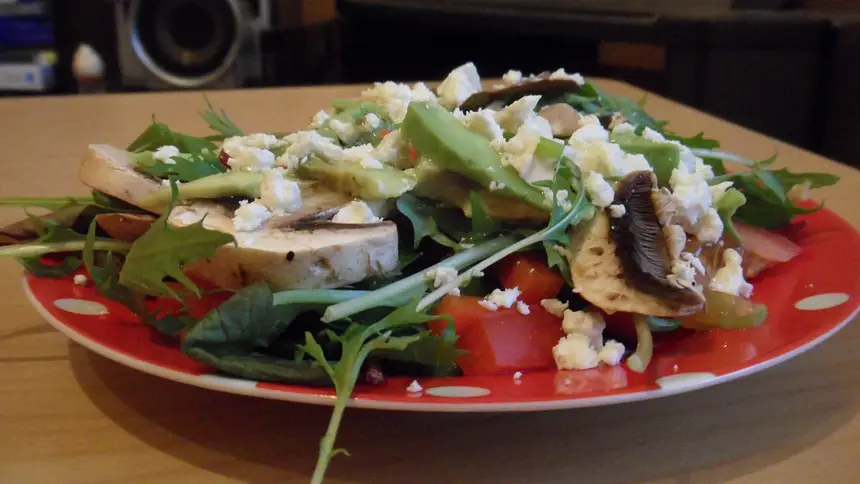
Yummy Healthy Salad

Crisp mixed greens tossed with creamy avocado, tangy feta, briny Spanish olives, and sweet bell peppers—a refreshing single-serve lunch.
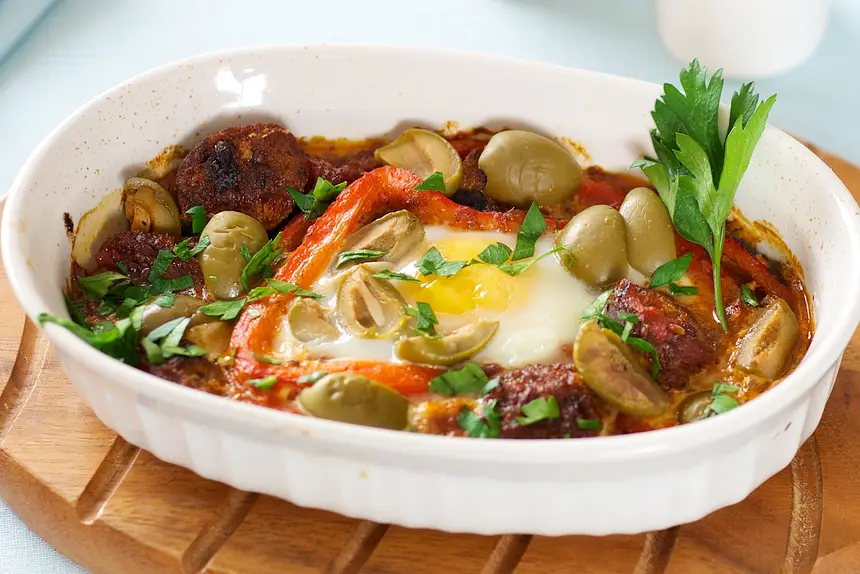
Spanish Baked Eggs


Spanish style eggs flavored with Chorizo and harissa, tomatoes, roasted red peppers and green olives. Bursts of flavor in every bite.
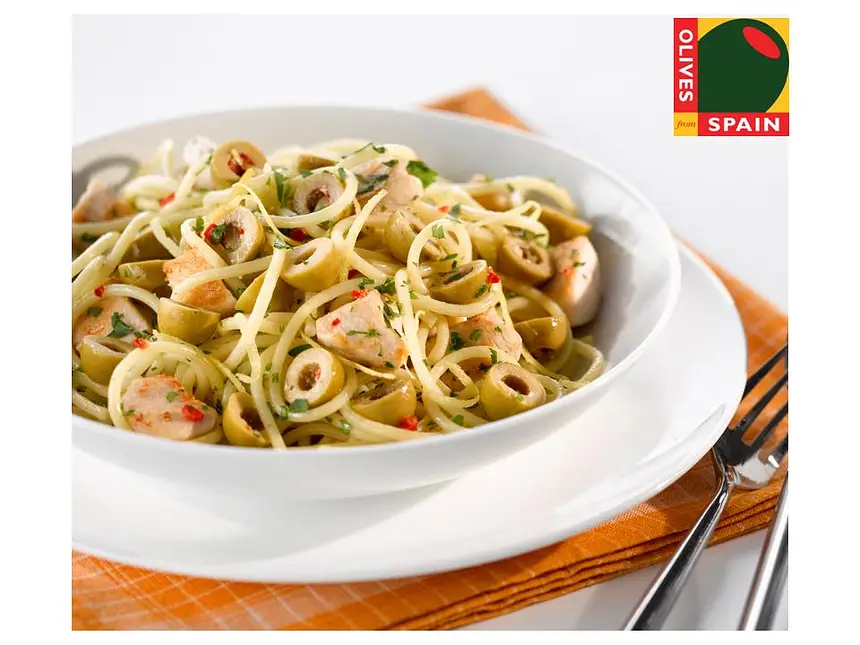
Spaghetti with Chicken & Spanish Green Olives
Recipe made by the ambassador for Olives from Spain José Pizarro. The four main varieties of Spanish table olive available from major supermarkets in the UK are: Manzanilla, Gordal, Hojiblanca and Cacereña. Spanish table olives can be served in a different number of ways including: whole, pitted, stuffed with one or more ingredients such as pimento, onion, tuna, anchovy, salmon, almond, etc. It is a healthy seasonal ingredient, with the Spanish olive harvest running from September-March.

Chili Con Pavo
Ground turkey chili with jalapeño, kidney beans, green chilis, and a surprise hit of briny Spanish olives and warm cloves. Leaner than beef chili but just as bold. Top with cheddar, cilantro, and a squeeze of lime.

Yummy Salad
Fresh mixed greens layered with buttery avocado, salty feta, Spanish olives, and crisp vegetables for a fast Mediterranean-style bowl.
Spanish Beef Roast
Fork-tender beef roast braised low and slow with canned tomatoes and briny Spanish green olives. Just 4 ingredients for a rich, flavorful pot roast dinner.