What Are Black currants and How Can I Use Them?
Black currants rewards a little know-how: how to choose them, cook them, store them, and substitute in a pinch. Browse 8 recipes to cook with them.
Key Points
- Intensely tart, musky, near-black berries (Ribes nigrum); the aromatic base of cassis liqueur and European jams.
- Almost always cooked with sugar into a glossy compote, since raw fruit is mouth-puckeringly sour.
- High pectin and acid mean they set firmly into jam with little added pectin.
- Blackberries are the easiest substitute; add lemon and cut sugar to mimic the sharpness.
- Buy firm, uniformly black berries in July; refrigerate a week or freeze loose for months.
What are black currants?
Black currants are small, glossy, near-black berries that grow in trailing clusters on a bush (Ribes nigrum). They are intensely tart, with a musky, almost resinous aroma that sets them apart from any other berry.
The flavor is bold and complex: deep, winey, slightly tannic, and far more aromatic than blackberry or blueberry. That perfume is exactly what makes them the basis of cassis liqueur and a hundred European jams and cordials.
They are a staple across Britain and northern Europe, but uncommon in much of North America, where growing them was once banned because the bush can host white pine blister rust. Most American cooks meet them first as jam or cordial.
Cooking With Black Currants
Black currants are almost always sweetened and cooked, because raw they are mouth-puckeringly sour. A short simmer with sugar softens the skins and turns them into a thick, glossy compote or coulis that holds its shape and color beautifully.
That tart-sweet compote is the workhorse. It folds into batter for Blackcurrant Muffins, fills pastry in Black Currant & Red Currant Tarts, and spoons over a Light Lemon Mousse Terrine, where the sourness cuts rich dairy.
Black currants carry pectin and acid in spades, so they set firmly into jam and jelly with little added pectin. Apple & Black Currant Scones leans on that, the fruit's sharpness playing against soft apple and butter.
The flavor crosses into savory cooking too. Cassis and currant sauces are classic with game and duck, as in a Grilled Venison Chop, where the fruit's acidity balances dark, fatty meat.
Pairing and Common Mistakes
Black currant pairs naturally with apple, pear, lemon, dark chocolate, and vanilla. Its acidity also makes it a partner for rich meats like venison and duck. In drinks it becomes cassis, the backbone of kir and a flavoring for things like Black Currant Tea & Cassis Brownies.
The biggest mistake is undersweetening. These berries are far more acidic than they look, and a compote that seems balanced hot can taste sharp once cold, so sweeten generously and taste after it cools.
A second mistake is skipping the topping and tailing on fresh fruit. Each berry carries a tiny dry stem and a brown blossom end, and while you can cook them in and strain later, picking them off keeps a compote clean.
Do not boil the fruit hard for long. A few minutes bursts the skins; overcooking dulls the bright, perfumed flavor and pushes it toward stewed and flat.
Substitutes
Nothing matches black currant's musky perfume exactly, but several fruits stand in by use. For jam and compote, blackberries are the easiest swap, sweeter and less aromatic, so add lemon juice to restore the tartness and cut the sugar back.
Blueberries work for color and soft texture in baking, though they are mild and round where currants are sharp and tannic. A handful of cranberries blended in pushes them toward currant's acidity.
For a sauce or drink, cassis liqueur or bottled black currant syrup delivers the true flavor; just reduce other sugar to compensate.
Red currants are tarter and brighter and substitute in tarts, but they lack the dark color and deep aroma.
Buying and Storing
Fresh black currants have a short summer season, roughly July, and turn up at farm stands and pick-your-own farms more than supermarkets. Choose berries that are firm and uniformly black; soft or split fruit spoils fast and any green ones are underripe.
Keep fresh currants unwashed in the refrigerator and use within about a week. Wash only just before cooking, since wet berries mold quickly. Strip them off their stalk strings, where a fork run down the cluster works well, right before you use them.
They freeze exceptionally well, which is how most people store a glut. Spread the cleaned berries on a tray to freeze loose, then bag them; they keep their shape and tartness for months and go straight from freezer to pot.
Out of season, look for them as frozen fruit, jam, dried currants, or cassis, all of which carry the musky, winey flavor into year-round cooking.
Quick facts
- In Chinese
- 黑加仑
- British (UK) term
- Black currants
- en français
- cassis
- en español
- grosellas negras
Recipes using black currants
There are 8 recipes that contain this ingredient.
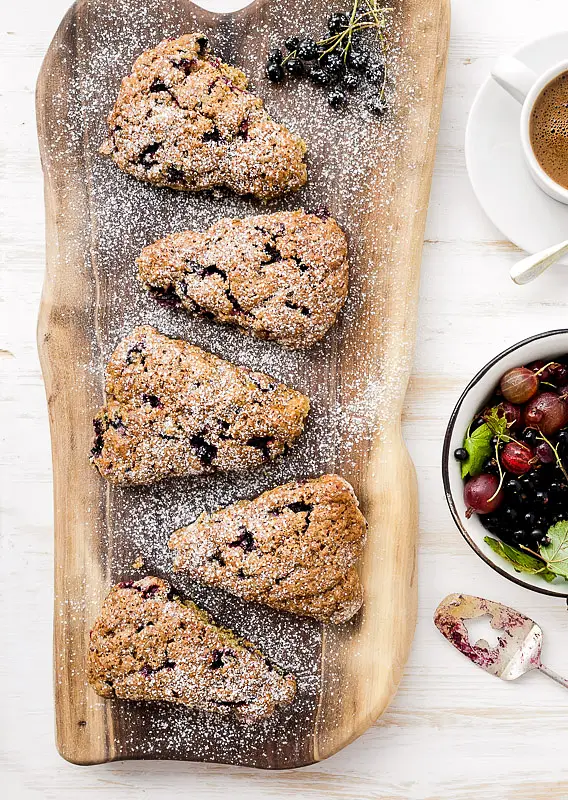
Apple & Black Currant Scones


Apple and black currant scones with dried apple chunks, tart currants, and a hearty whole wheat plus wheat germ base. High-fiber, lower-fat scones with deep flavor and a crisp golden top.

Grilled Venison Chop with Chestnut Twice Baked Potato
Grilled Venison Chop with Chestnut Twice Baked Potato recipe
Basic Rum Pot Fruit Recipe
Traditional German Rumtopf: a layered preserve of summer fruits, sugar, and rum that builds up over the season and matures into a boozy Christmas dessert by winter.
Black Currant Tea & Cassis Brownies
Black currant tea brownies layer cassis-infused fudge squares with a glossy berry preserve and a silky black currant tea ganache. A boozy, perfumed showstopper.

Black Currant & Red Currant Tarts
Individual wholemeal shortcrust tarts bursting with black and red currants sweetened with honey. A proper British bake that's tart, fruity, and rustic, with optional whipped cream and glacé cherry garnish.
Blackcurrant Muffins
Light, tender muffins studded with tart blackcurrants and a touch of wheat germ for nutty depth. Mixed by hand, baked in 20 minutes, and brilliant with a cup of tea or a morning coffee.

Salt-Crusted Currant Pecan Rye Bread
Salt-crusted rye bread studded with pecans, currants, and caraway seeds. Inspired by the Inn at Little Washington, this artisan loaf pairs with cheese and smoked salmon.
Light Lemon Mousse Terrine
Frozen lemon mousse terrine with whipped cream, beaten egg whites, and gelatin, sliced and served with a vibrant black currant sauce. Light, elegant, and make-ahead friendly.