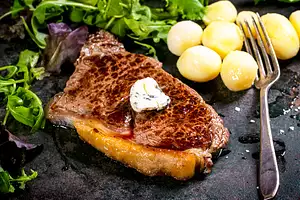
What Is Porterhouse steak and How Can I Use It?
Porterhouse steak is easier to cook with than it looks. Here's how to choose, use, and store it, what to substitute, and 7 recipes to get you started.
Key Points
- A thick short-loin steak whose T-bone separates a tenderloin from a New York strip.
- Larger tenderloin than a T-bone; USDA requires at least 1¼ inches across that lobe.
- Angle the filet side away from the hottest heat so both muscles finish together.
- Whole beef steak is safe at 145°F (63°C); rest a thick cut 8 to 10 minutes.
- Buy it at least 1½ inches thick so the outside is not gray before the center warms.
What is porterhouse steak?
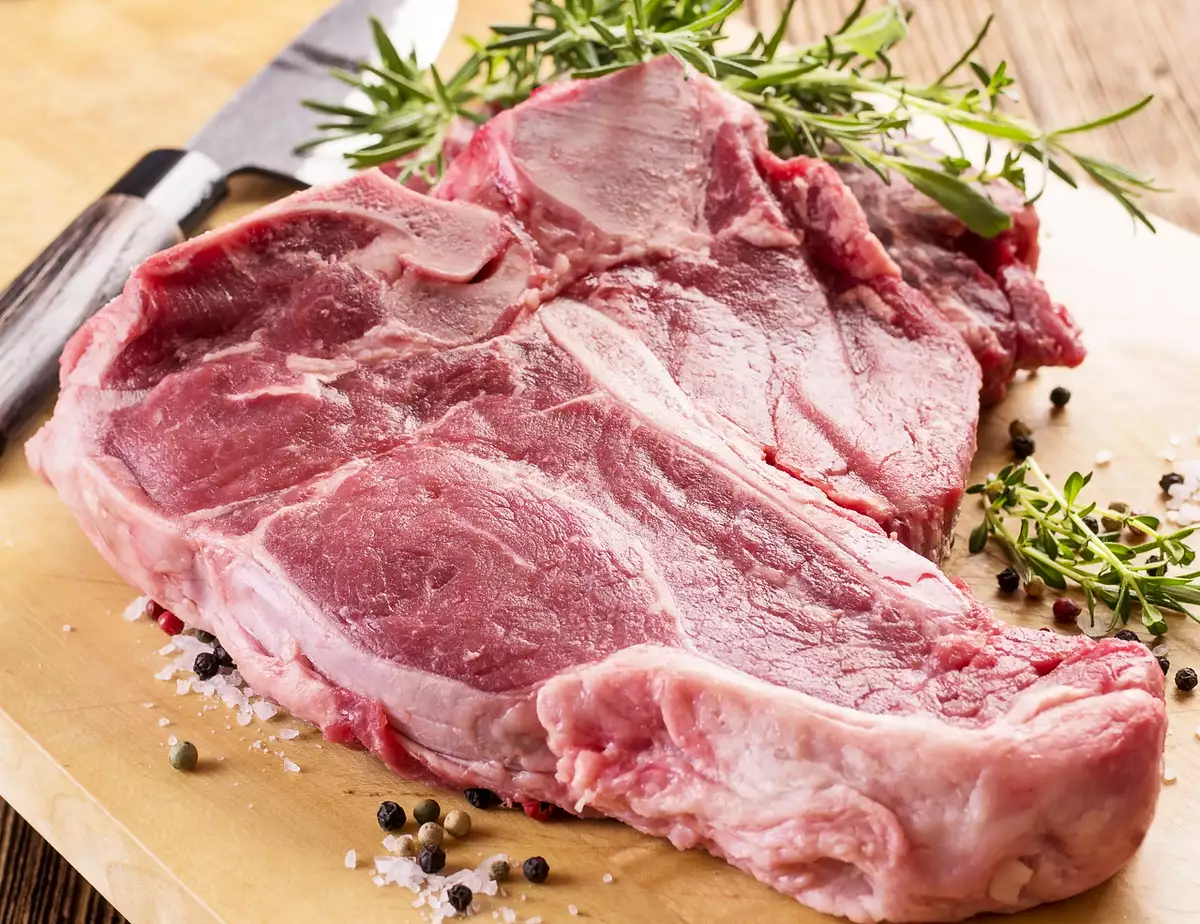
A porterhouse is a thick steak cut from the rear of the short loin, with a T-shaped bone running down the middle. On one side of that bone sits the tenderloin (filet mignon); on the other sits the strip (New York strip). Two premium steaks, one cut.
The porterhouse is the big brother of the T-bone. Both carry the same bone and the same two muscles, but a porterhouse must have a larger tenderloin section, at least 1¼ inches (3.2 cm) across by USDA measure.
Cut nearer the front of the loin, where the tenderloin tapers to nothing, and the same cut is sold as a T-bone instead.
That split personality is the whole appeal and the whole challenge: one muscle cooks faster than the other.
How to Cook a Porterhouse
This is a steak that rewards high, dry heat and a bone you can work around. Broiling, grilling, and a cast-iron sear all suit it, as in Broiled Double Porterhouse Steak, where the thick cut goes close under the flame and is turned once.
The trick is the bone. The tenderloin side cooks faster and overcooks first, so position the steak with the filet farther from the hottest part of the grill or angled away from the broiler element. That evens out the two sides.
Sear hard for color, then pull at an internal 130 to 135°F (54 to 57°C) for medium-rare and rest it. The USDA's safe minimum for whole beef steaks is 145°F (63°C) with a three-minute rest; many cooks pull earlier and accept that, but the official number is 145°F (63°C).
Resting is not optional on a steak this thick. Give it 8 to 10 minutes so the juices redistribute, then slice both muscles off the bone and cut across the grain.
Pairing and Common Mistakes
Big beef flavor wants simple, assertive partners. Coarse salt and cracked pepper, a knob of compound butter, blue cheese as in Beefsteak En Roquefort En Champignons, charred onions in Steak and Onions, or a Marsala and mushroom pan sauce all stand up to it without burying the meat.
The most common mistake is cutting it too thin. A porterhouse under 1¼ inches (3.2 cm) has no thermal buffer, so the outside is gray before the center warms. Buy it at least 1½ inches (3.8 cm) thick and feed two people from one steak.
The second mistake is skipping the rest and slicing immediately, which spills the juices onto the board instead of keeping them in the meat.
Substitutes
A T-bone is the obvious stand-in: same bone, same two muscles, just a smaller tenderloin. Cook it identically.
To approximate a porterhouse without the bone, buy a New York strip and a filet mignon separately and cook them side by side. You lose the bone's flavor and drama but gain control, since you can pull each at its own doneness.
A bone-in ribeye is a richer, fattier alternative if you want one big steak and do not need the tenderloin. It is more marbled and more forgiving, but it is a different eating experience.
Buying and Storing
Look for a thick cut with a generous tenderloin lobe, bright marbling in the strip, and firm, creamy fat. USDA Prime or Choice grades carry the most intramuscular fat and the best flavor. Ask the butcher to cut it at least 1½ inches (3.8 cm) thick.
Fresh porterhouse keeps in the coldest part of the fridge for three to five days. For the best sear, leave it uncovered on a rack over a plate for the last day; the surface dries and browns faster.
To freeze, wrap it tightly in plastic and then foil or a freezer bag with the air pressed out. Use within six to twelve months for best quality.
Thaw in the refrigerator for a full day, since a steak this thick needs time, then pat it dry and let it sit at room temperature for 30 to 45 minutes before cooking so it sears evenly.
Quick facts
Where to find porterhouse steak: Porterhouse steak is usually found in the meats section or aisle of the grocery store or supermarket.
- In Chinese
- 等腰牛排
- British (UK) term
- Porterhouse steak
- en français
- aloyau bifteck
- en español
- bistec de solomillo
Recipes using porterhouse steak
There are 7 recipes that contain this ingredient.
Beefsteak En Roquefort En Champignons


Premium steaks marinated in a Roquefort, sour cream, and red wine marinade, charcoal-grilled and topped with butter-sautéed mushrooms. A show-stopping steakhouse dinner for a crowd.
Carol's Sketti Sauce

A loaded spaghetti sauce simmered uncovered for 6+ hours with ground sirloin, porterhouse steak, leeks, mushrooms, peppers, and a heap of herbs. Thick, meaty, and worth every minute of the wait.

Teriyaki Steak
Teriyaki marinated porterhouse steak with fresh ginger, garlic, orange zest, low-sodium soy sauce, and burgundy wine. A 24-hour marinade that infuses thick-cut steaks with bold Asian-inspired flavor.
Steak & Onions
Broiled porterhouse steak with caramelized Spanish onions and a mushroom-sherry pan sauce. A lighter steakhouse dinner for two with a Weight Watchers-friendly approach.

Beef Siciliana
Pepper-crusted porterhouse steak broiled and brushed with a bright Sicilian mixture of fresh mint, lemon juice, olive oil, and garlic. Dinner for two in just 10 minutes.

Porterhouse Steak with Hoisin Barbecue Sauce
Porterhouse steak grilled with a hoisin barbecue sauce that mashes up Chinese pantry staples with classic BBQ flavors, hoisin, soy, and rice vinegar meet ketchup, ancho chili, and Worcestershire.

Broiled Double Porterhouse Steak
Two thick porterhouse steaks rubbed with crushed garlic and olive oil, scored, brightened with lemon, then broiled to a seared, juicy finish. Steakhouse flavor at home with just 6 ingredients.