What Are Pork blade steaks and How Can I Use Them?
Wondering what to do with pork blade steaks? This guide covers how to pick them, cook them, store them, and swap them, plus 5 recipes to put them to work.
Key Points
- Thick steaks cut through the shoulder and blade bone, marbled and budget-friendly.
- The same meat as pulled pork, richer and harder to dry out than a loin chop.
- Grill or sear hot and fast, or braise low and slow until fork-tender.
- Avoid the chewy middle zone: cook quick and slice, or braise all the way.
- Swap any pork shoulder cut, country-style ribs, or beef chuck steak.
What are pork blade steaks?
Pork blade steaks are thick slices cut crosswise from the pork shoulder, through the blade bone. They are the steak version of the same well-exercised, marbled meat that makes pulled pork.
Look closely and you can usually spot a small section of bone and several distinct muscles separated by ribbons of fat.
That marbling is what sets them apart from a loin chop. Blade steaks are richer and far harder to dry out, which makes them a budget cut that punches above its price.
They go by a couple of other names too, sold as pork steaks or shoulder steaks. In St. Louis they are practically a regional institution on the grill.
How to Cook Pork Blade Steaks
You have two good routes, and they pull in opposite directions. The first is hot and fast: marinate the steaks, then grill or pan-sear them over high heat for a few minutes a side.
The fat keeps them juicy where a lean chop would seize up. Barbecued Pork Steaks 2 and Peachy Pork Steaks both take this approach.
The second route is low and slow. Because they carry collagen, blade steaks also braise beautifully, going fork-tender after an hour or more in liquid.
Pork Steaks with Peppers & Tomato simmers them into a soft, saucy braise. Cooked even longer, the same cut shreds for sandwiches, the way Pulled Pork For Two does it.
If you grill them, pull them around 145°F (63°C) for sliceable steaks. Push past that toward 190°F (88°C) only if you are going low and slow for the pull-apart texture instead.
Pairing and Common Mistakes
Smoke, sweetness, and tang all flatter this cut. A vinegary or tomato barbecue sauce, mustard, brown sugar, paprika, garlic, and stone fruit like peaches or apricots all play well off the rich meat.
The mistake to avoid is treating a blade steak like a tender quick-cooking chop and stopping at medium. There is a middle zone, past juicy but short of tender, where the connective tissue is still tight and the meat eats chewy.
Either cook it quick and slice it, or commit to the long braise. The in-between is where blade steaks disappoint.
The other slip is forgetting the bone and gristle. Carve around them rather than fighting through, and warn anyone expecting a boneless chop.
Substitutes
Any pork shoulder cut is a natural stand-in, since that is where blade steaks come from. A boneless shoulder roast sliced into thick steaks, or country-style ribs, gives you the same marbled, collagen-rich meat.
For a quick grill where you want leaner meat, a bone-in pork chop will do, but watch it closely; with less fat it dries out far faster than a blade steak does.
Beef blade or chuck steak is the cross-species equivalent, cut from the same shoulder region and rewarding the same hot-and-fast or low-and-slow treatment.
Buying and Storing Pork Blade Steaks
Look for steaks about three quarters of an inch to an inch (2 to 2.5 cm) thick with generous marbling and a visible cross-section of muscle and fat. More marbling means more forgiveness on the heat.
They are usually inexpensive, so this is a cut where you can buy well without overspending.
Raw blade steaks keep three to four days in the coldest part of the fridge and freeze well for four to six months, wrapped tightly against freezer burn. They take a marinade readily, so a day-ahead soak in something acidic is rarely wasted.
Cooked steaks keep three to four days refrigerated. Braised ones reheat best in their sauce, which keeps them moist; grilled steaks are better sliced cold into a sandwich than blasted again under heat, where they tighten and dry.
Quick facts
- In Chinese
- 猪肉牛排刀
- British (UK) term
- Pork blade steaks
- en français
- steaks de lame de porc
- en español
- filetes de cerdo blade
Recipes using pork blade steaks
There are 5 recipes that contain this ingredient.

Barbecued Pork Steaks 2


Thick-cut pork blade steaks pounded tender and grilled with a sticky honey-barbecue glaze spiked with Worcestershire, garlic salt, and mustard. A St. Louis-style grilling staple ready in 40 minutes.
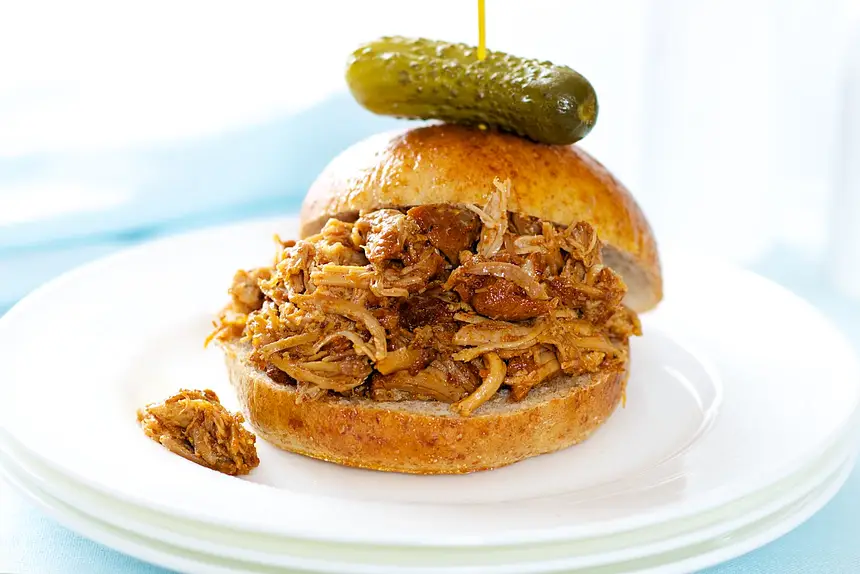
Pulled Pork For Two
Spice rubbed bone-in blade chop replaces the traditional pork butt to deliver a smaller quantity of pulled pork without waiting half a day to cook.

Porkaghetti Platter
Porkaghetti platter with pork steak strips braised in tomato sauce with mushrooms, rosemary, and green olives, served over spaghetti with Romano cheese. A retro Italian-American Sunday dinner.

Peachy Pork Steaks
Skillet pork blade steaks simmered in peach nectar with basil and vinegar, then served over rice with a glossy fruit gravy. A sweet-savory one-pan dinner with Southern charm.

Pork Steaks with Peppers & Tomato
Pork steaks braised with red, green, and yellow bell peppers, fresh tomato, garlic, and onion soup mix into a rustic one-skillet dinner. A weeknight pork supper with a bold tri-pepper sauce.