What Are Pomegranate seeds and How Can I Use Them?
Here's everything worth knowing about pomegranate seeds and how to pick them, what they are, how to store them, and what to use instead, plus 12 recipes to cook tonight.
Key Points
- The jewel-red, juice-filled arils inside a pomegranate, sweet-tart with a crunchy edible seed.
- A garnish prized for contrast: tart juice and a crisp pop against soft, rich, or creamy dishes.
- Seed them underwater so the arils sink and the bitter white pith floats off.
- Scatter on at the very end; stirred in early they bleed pink and lose their snap.
- Whole fruit keeps up to two months chilled; loose arils last five days or freeze for months.
What are pomegranate seeds?
Pomegranate seeds, properly called arils, are the jewel-red, juice-filled sacs packed inside a pomegranate, each one wrapped around a small edible crunchy seed. They taste sweet-tart and bright, somewhere between cranberry and red grape, with a pop of juice and a faint nuttiness from the seed itself.
A single fruit holds hundreds of arils, separated by bitter cream-colored pith you don't eat. They show up most in fall and winter, which is why pomegranate is such a fixture on holiday tables.
How to Use Them
Their best trick is contrast. Scattered over a finished dish, the arils add a burst of sour-sweet juice and a crisp pop against soft or rich textures, along with that jewel-like color.
It's why they crown a Winter Vegetable Salad with Pomegranate & Roasted Squash Vinaigrette and the warm walnut-and-meat filling of a Mexican Chiles En Nogada (Chiles in Walnut Sauce), where red, white, and green make the colors of the flag.
They lift fresh salads, like a Lettuce with Pomegranate & Pine Nuts, and balance creamy desserts such as a Vanilla Bean & Pomegranate Parfaits, where the tart pop cuts the richness.
Muddled or dropped whole into a glass, they sharpen cocktails and a New Year's Eve Pomegranate & Blood Orange Mimosas.
Beyond garnish, they fold into grain bowls and yogurt. They're a signature of Middle Eastern and Persian cooking too, scattered over hummus and rice or sprinkled across grilled meats.
Getting the Seeds Out
The cleanest way to seed a pomegranate is underwater. Score the skin around the equator and pull the halves apart.
Hold a half cut-side down over a bowl of water and whack the skin with a wooden spoon. The arils sink and the bitter white pith floats, so you skim it off and drain.
Add the seeds at the very end. Folded into a hot dish or stirred too early, they bleed pink and lose their snap, so scatter them just before serving.
The juice stains, so work over a bowl, not a white cutting board.
Substitutes
For a similar sweet-tart pop and color, fresh red currants or halved seedless red grapes are the closest stand-ins as a garnish. Dried cranberries or barberries are a chewier option that leans more tart. None gives quite the same juicy burst, but each brings the brightness.
If you only need the flavor, not the texture, pomegranate molasses or a splash of the bottled juice delivers that sour-sweet edge to dressings and glazes. Use the molasses sparingly, since it's concentrated and far more tart than the fresh arils.
Buying and Storing
When buying whole fruit, choose pomegranates that feel heavy for their size with taut, glossy skin, a sign they're full of juice. A little surface scuffing is fine and often marks a riper fruit. Pass on any that feel light or have soft, cracked skin.
A whole pomegranate keeps on the counter for a week or two and in the fridge for up to two months.
Once you've seeded it, store the loose arils in an airtight container in the fridge and use them within about five days.
For longer storage they freeze beautifully. Spread the arils in a single layer on a tray to freeze them solid, then bag them. They keep for several months, ready to drop frozen into smoothies or thaw for a garnish.
Quick facts
- In Chinese
- 石榴籽
- British (UK) term
- Pomegranate seeds
- en français
- graines de grenade
- en español
- semillas de granada
Recipes using pomegranate seeds
There are 12 recipes that contain this ingredient.
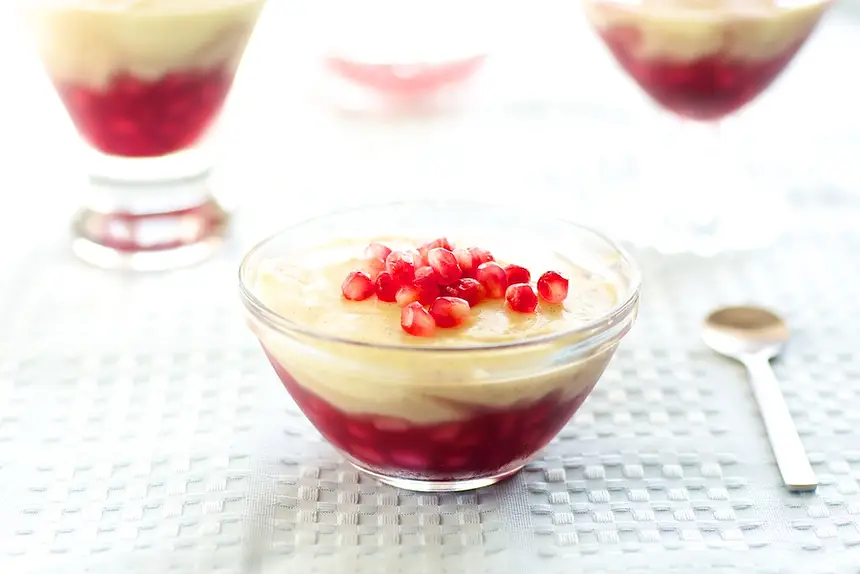
Vanilla Bean & Pomegranate Parfaits


Creamy and rich custard on top. Sweet and sour pomegranate compote at the bottom. One spoonful of this parfait has all the deliciousness with great texture you are looking for.
Vanilla Bean & Pomegranate Parfaits
Creamy and rich custard on top. Sweet and sour pomegranate compote at the bottom. One spoonful of this parfait has all the deliciousness with great texture you are looking for.

Chiles En Nogada (Chiles in Walnut Sauce)
Chiles en Nogada, Mexico's patriotic dish: roasted poblanos stuffed with a sweet-savory pork picadillo, draped in a cool, creamy walnut sauce and scattered with ruby pomegranate seeds. The green, white, and red of the flag on one plate.
New Year's Eve Pomegranate & Blood Orange Mimosas

Pomegranate and blood orange mimosas mix tart blood orange juice with ruby pomegranate, then top each flute with chilled sparkling wine. A jewel-toned New Year's Eve toast that takes minutes to pour.

Curried Garbanzo Beans
North Indian chana masala with whole spices, finished with amchoor (mango powder), dried pomegranate seeds, and a sizzling ghee tadka poured over the top.
Christmas Eve Salad
Ensalada de Nochebuena, a traditional Mexican Christmas Eve salad with oranges, bananas, beets, jicama, pineapple, peanuts, pomegranate seeds, and sugar cane on a lettuce-lined platter.

Masala Brinjals
Punjabi masala brinjals: eggplants scored and stuffed with cumin, pomegranate seeds, garam masala, and turmeric, then braised in a spiced tomato-ginger sauce until tender.
Besan Kofta Curry
Punjabi besan kofta curry with crispy chickpea flour dumplings stuffed with dried plums, simmered in a rich tomato-onion gravy with garam masala and ghee. A show-stopping vegetarian main dish from North Indian kitchens.

Lettuce with Pomegranate & Pine Nuts
Mediterranean salad of torn lettuce and spinach chiffonade, sprinkled with toasted pine nuts, jewel-like pomegranate seeds and a simple olive oil lemon dressing. Ready in 15 minutes.

Sydney Salad
Salad made with cocktail tomatoes, avocado, rocket and proscuitto and drizzled in a strawberry dressing.

Salatet Malfoof (Cabbage Salad)
Substitute that Caesar Salad with these scrumptious dish made with cabbage and pomengranate seeds.

Winter Vegetable Salad with Pomegranate & Roasted Squash Vinaigrette
Roasted butternut squash tossed with bitter greens, pomegranate seeds, and toasted pistachios in a tangy pomegranate molasses vinaigrette. An elegant winter salad for holiday tables.