What Are Mushrooms, morel and How Can I Use Them?
Mushrooms, morel rewards a little know-how: how to choose them, cook them, store them, and substitute in a pinch. Browse 13 recipes to cook with them.
Key Points
- Wild spring mushroom with a hollow honeycomb cap and an intense, meaty, earthy flavor.
- Never eat morels raw; they are toxic and must be thoroughly cooked through first.
- Soak in salted water to flush the grit trapped in their deeply pitted caps.
- Saute in butter, finished with cream or a dry wine like Madeira or Marsala.
- The poisonous false morel has a brain-like cap and is chambered, not fully hollow.
What is mushrooms, morel?
Morels are the wild mushroom cooks chase every spring, with a honeycombed, deeply pitted cap that looks like a small sponge or a pine cone. They show up for only a few short weeks, resist farming, and command high prices because of it.
The flavor is the reason. Morels are intensely earthy and nutty, with a meaty, almost smoky depth that dried and cultivated mushrooms only hint at.
Their hollow, pitted structure is also a built-in sauce trap. Those pits catch butter and pan juices, which is a big part of why a simple morel dish tastes so rich.
Why Morels Must Be Cooked
This rule is not optional. Raw morels are toxic and will make you sick, causing stomach upset and worse, so they must always be thoroughly cooked before eating. There is no raw morel dish, no quick toss in a warm salad.
Cooking breaks down the natural toxins, so give them real heat. Saute or simmer morels for at least several minutes until fully cooked through, never just warmed.
Even cooked, some people are sensitive to morels, especially alongside alcohol. The usual advice is to try a small amount the first time and skip washing them down with wine while you do.
Cleaning and Cooking
Morels are notoriously gritty. The honeycomb pits trap soil and the occasional insect, so a quick rinse won't cut it.
Swish them in a bowl of cool salted water, then lift them out and repeat until the water runs clear. Pat or air dry before they hit the pan.
Halving larger morels lengthwise lets you rinse the hollow interior and check for hidden grit. A little salt in the soak helps coax out anything living inside.
Butter is their best friend. A gentle saute in butter, finished with a splash of cream or a dry wine like Madeira or Marsala, is the classic treatment, exactly the move in Thyme-Roasted Chicken Breast with Morel-Madeira and Beef Tenderloin with Morels & Tarragon-Marsala Sauce.
They belong with spring foods and rich proteins: asparagus, peas, chicken, beef, and game. Fresh Morels with Apples & Butter Noodles plays their earthiness against sweet apple, while Forest Fettucine with Morels & Breast of Pheasant and Asparagus & Morels in Wild Mushroom Vinaigrette lean into the woodland pairing.
A Dangerous Look-Alike
Anyone foraging needs to know the false morel. It's a different, genuinely poisonous mushroom that can resemble a true morel at a glance but has a lobed, brain-like or saddle-shaped cap rather than a regular pitted honeycomb.
A true morel is also completely hollow when sliced top to bottom in one continuous cavity, while a false morel is chambered or stuffed with cottony fiber inside.
If you didn't pick it yourself with confidence, buy from a trusted source.
Substitutes
Dried morels are the best stand-in and often the easiest to find, since they keep for months. Soak them in warm water for twenty to thirty minutes to rehydrate, then save the soaking liquid: strained, it's an intense morel stock for the sauce.
For fresh substitutes, no other mushroom truly matches the flavor, but porcini come closest in earthy depth. Shiitake or a mix of cremini and dried porcini will give you a savory, meaty result in a sauce, just without the honeycomb texture.
Buying and Storing
Choose morels that feel dry and springy, with no sliminess and no sour smell. They are fragile and perishable, so plan to cook fresh ones within a couple of days.
Store them in the refrigerator in a paper bag or a container loosely covered with a paper towel, never sealed in plastic, which traps moisture and turns them to slime.
Dried morels keep for many months in an airtight jar away from light. Fresh morels also freeze if you saute them first, then cool and bag them, which preserves far better than freezing them raw.
Quick facts
- In Chinese
- 蘑菇,羊肚菌
- British (UK) term
- Mushrooms, morel
- en français
- champignons, morilles
- en español
- setas, morel
Recipes using mushrooms, morel
There are 13 recipes that contain this ingredient.
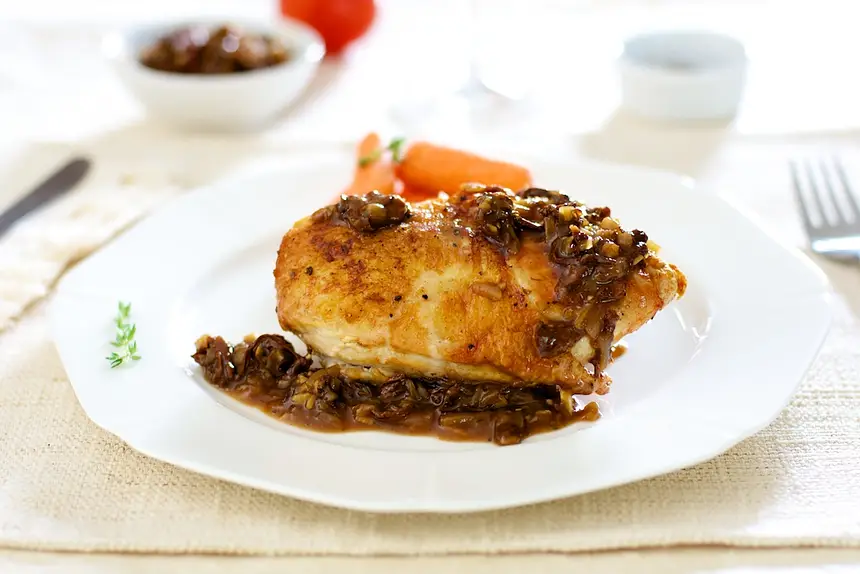
Thyme-Roasted Chicken Breast with Morel-Madeira


A succulent chicken dish is going to win everyone at the dinner table.
Braised Morels

Fresh morels braised in butter with shallots, garlic, sherry, and brandy, finished in heavy cream and tossed with pasta. A luxurious wild mushroom dish that freezes beautifully.
Asparagus & Morels in Wild Mushroom Vinaigrette
Fresh asparagus and earthy morel mushrooms dressed in a wild mushroom vinaigrette celebrating the best of spring. Elegant first course that showcases seasonal ingredients with refined simplicity.
Very Best Monkeyed-Up Lobster Dish
Butter-tossed lobster tails in a bourbon and white wine cream sauce with sauteed shallots and morel mushrooms, plus bonus tomalley croustades with Gruyere.
Fresh Morels with Apples & Butter Noodles
Sauteed fresh morel mushrooms with Granny Smith apples, asparagus tips, and butter noodles flambed with Calvados. A spring-foraged dish with chipotle heat and watercress garnish.
Herbed Chicken with Spring Vegetables
Herbed chicken with spring vegetables: thyme, parsley, and fennel-seed butter stuffed under crispy chicken skin, served with cipollini onions, baby carrots, snap peas, and morels. A restaurant-style one-skillet dinner.
Pan-Seared Bison Tenderloin
Chili-rubbed bison tenderloin pan-seared and served over creamy morel mushroom linguine with charbroiled vegetables. A wild game dinner that feels like fine dining.

Potato Gnocchi with Wild Mushrooms
Potato gnocchi with wild mushrooms: pillowy handmade gnocchi from salt-baked potatoes, tossed with morels, porcini, shiitakes, and oyster mushrooms in a garlic-shallot pan sauce with Parmesan.

Beef Tenderloin with Morels & Tarragon-Marsala Sauce
Beef tenderloin with morels and tarragon-Marsala sauce pan-sears filets and finishes them in a cream sauce built on earthy morels, sweet Marsala, and anise-tinged tarragon. Restaurant-plate dinner without the prix fixe.
Simple Vegetable Ragout with Parsley
Vegetable ragout with carrots, new potatoes, zucchini, peas, dried morels, and fresh mushrooms simmered in vegetable stock. Finished with a full cup of fresh parsley and mint.
Sea Bass Braised in Apple Cider Tarragon
Sea bass fillets braised in apple cider with tarragon, morel mushrooms, and shallots, served over an egg yolk sabayon with roasted tomatoes and apple slices.
Forest Fettucine with Morels & Breast of Pheasant
Forest fettucine with morels and breast of pheasant: handmade morel-powder pasta tossed in a morel cream sauce, topped with seared pheasant breast and buttered fiddlehead ferns. Spring foraging season on a plate, fine-dining style.
Forest Fettucine with Morels & Breast of Pheasant
Forest fettucine with morels and breast of pheasant: handmade morel-powder pasta tossed in a morel cream sauce, topped with seared pheasant breast and buttered fiddlehead ferns. Spring foraging season on a plate, fine-dining style.