What Is Lotus root and How Can I Use It?
Here's everything worth knowing about lotus root and how to pick it, what it is, how to store it, and what to use instead, plus 6 recipes to cook tonight.
Key Points
- Crunchy lotus rhizome (Nelumbo nucifera) prized for its lacy, holed cross-section and clean, mildly sweet flavor.
- Cook it hot and fast to keep it crisp for stir-fries and salads, or long and slow to soften it in soups and curries.
- Cut surfaces brown within minutes, so hold the slices in vinegar water until they hit the pan.
- Wash the hollow channels well, since pond grit lodges inside and ruins the crunch.
- Water chestnut is the easiest substitute for crunch; sold fresh, frozen, vacuum-packed, or canned.
What is lotus root?
Lotus root is the crunchy underwater stem (rhizome) of the lotus plant (Nelumbo nucifera), grown in the muddy ponds of East and South Asia. It comes in long, sausage-link sections of pale, tan-skinned tubes.
The magic shows when you slice it crosswise: a ring of hollow channels that make each piece look like lace or a snowflake.
The flavor is mild and slightly sweet, a little like water chestnut or jicama, with a clean, starchy taste that takes on whatever it is cooked with. Its signature is texture, not flavor.
Raw or briefly cooked it stays crisp and snappy; simmered long and slow it turns tender and almost potato-like while keeping some bite. That range is why it shows up everywhere from quick stir-fries to long-braised soups across China, Japan, Korea, and Sri Lanka.
Cooking With Lotus Root
The first job is always prep. Peel the tan skin and trim the dark joints, then slice crosswise to show the pretty holes.
Lotus root oxidizes and browns fast once cut, so drop the slices into water with a splash of vinegar or lemon juice while you work.
For crisp dishes, cook it hot and fast. Thin slices stir-fry in minutes and stay crunchy, as in Stir Fried Fresh Lotus Root.
They hold that snap even after a quick blanch for cold dishes like Lotus Root & Wood Ear Salad with Soy-Ginger Dressing and Chinese Veggie Salad with Soy Dressing.
For tender dishes, cook it long. Simmered in soup or braised in a curry, the slices soften and soak up the broth, the approach behind Sri Lanka Nelum Ala (Curried Lotus Root) and a bowl of Asian Miso Soup.
Thin slices also fry into crisp, lacy chips. Homemade Sweet Lotus Root Chips deep-fries them until shattering and dusts them with sugar, the holes turning each chip into a little stained-glass round.
A couple of prep notes. Slice it thin for crisp uses and thicker for braises that need to hold up, and always wash the channels well, since pond mud can lodge inside the holes.
Pairing and Common Mistakes
Lotus root sits at home in Asian flavors. Soy, ginger, garlic, sesame, rice vinegar, miso, and chile all suit it, and it loves the coconut and spice of a Sri Lankan curry.
Because it is so mild, give it a bold sauce or broth rather than expecting it to carry a dish alone.
The most common mistake is skipping the acidulated water. Cut lotus root browns within minutes, turning an attractive ivory to a dull grey-pink, so keep it in vinegar water until it hits the pan.
The second is misjudging the cook. Pull it too early from a braise and it stays tough and fibrous; overcook a stir-fry and you lose the crunch that is the whole point. Match the cut and the cooking time to the texture you want.
A third pitfall is poor cleaning. Grit trapped in the hollow channels ruins an otherwise crisp bite, so rinse the cut faces and run water through the holes.
Substitutes
No vegetable copies lotus root's lacy look, but several match its crunch. Water chestnuts are the closest for a crisp, mild, slightly sweet bite in stir-fries and salads, though they are smaller and have no decorative holes.
Jicama works raw or lightly cooked for a similar watery snap and faint sweetness. For a braise or soup where you want something that softens yet holds shape, taro, daikon, or even waxy potato can stand in, each bringing its own starchiness.
None will give you the snowflake cross-section, so when the visual matters, lotus root is worth seeking out.
For pure crunch in a finished dish, water chestnut is the easiest swap.
Buying and Storing
Look for lotus root at Asian grocers. It turns up fresh in linked sections, and also vacuum-packed and frozen, or canned in slices. Choose firm, heavy sections with unbroken, pale tan skin and no soft or slimy spots. Smaller, younger roots are more tender.
Store unwashed, unpeeled fresh lotus root in the refrigerator, ideally wrapped in damp paper, and use within a week or so before it dries and discolors. Once cut, cover the exposed ends, since they brown and dry quickly.
Vacuum-packed and frozen lotus root keeps for months and is genuinely convenient, already peeled and often pre-sliced.
Canned lotus root is the most shelf-stable option and works fine in braises and soups, though it is softer and less crisp than fresh.
Quick facts
- In Chinese
- 莲藕
- British (UK) term
- Lotus root
- en français
- racine de lotus
- en español
- raíz de loto
Recipes using lotus root
There are 6 recipes that contain this ingredient.
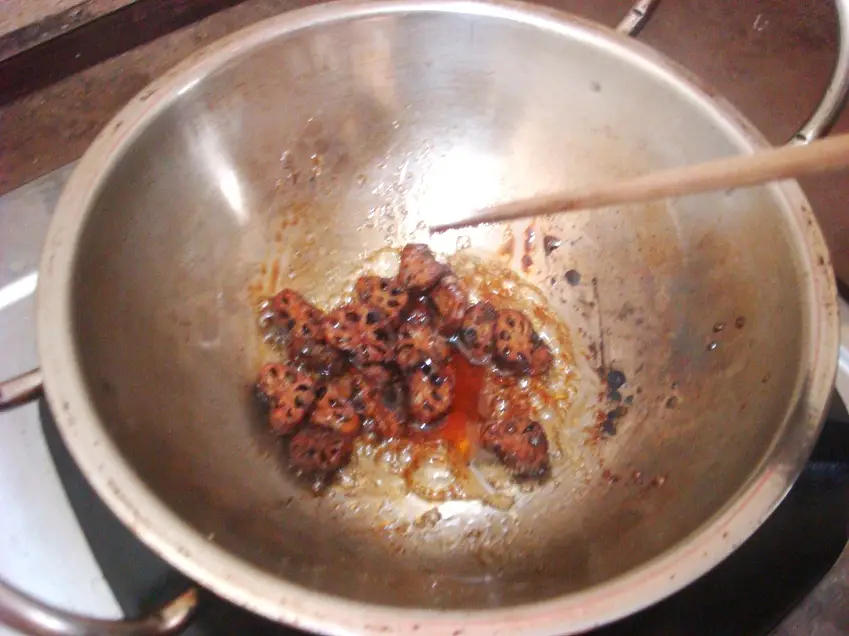
Homemade Sweet Lotus Root Chips


Homemade sweet lotus root chips fry thin, lacy slices of lotus root until crisp, then glaze them in coconut treacle, sugar, and cinnamon. A pretty, sticky-sweet snack with a satisfying crunch.
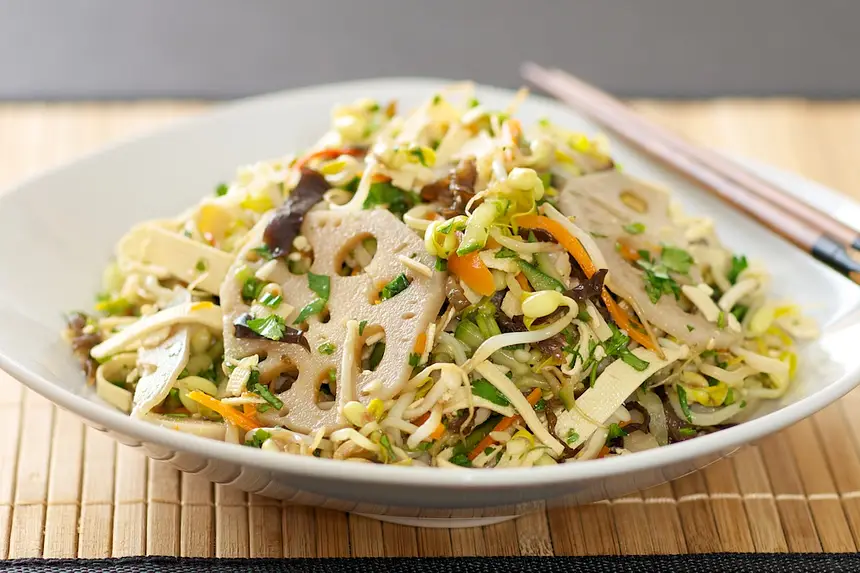
Chinese Veggie Salad with Soy Dressing

This light yet tasty Chinese veggie salad is made with bean sprouts, lotus root, carrot, cucumber, black mushrooms, and tofu sheet, then tossed with a soy-rice vinegar-sesame oil dressing. A refreshing side dish that goes well with most of the main dishes, or just serve it with some steamed rice to complete a delicious meal.
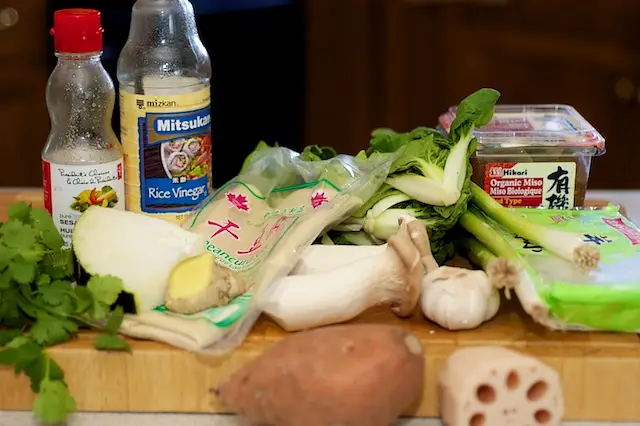
Asian Miso Soup
Love miso, the fermented flavor gives the dish incredibly delicious taste. I developed this recipe, and use miso and water as the base, add fresh Asian vegetables, and let boil for a few minutes. I always have the soup with some Korean Kimichi. Here the recipe is.
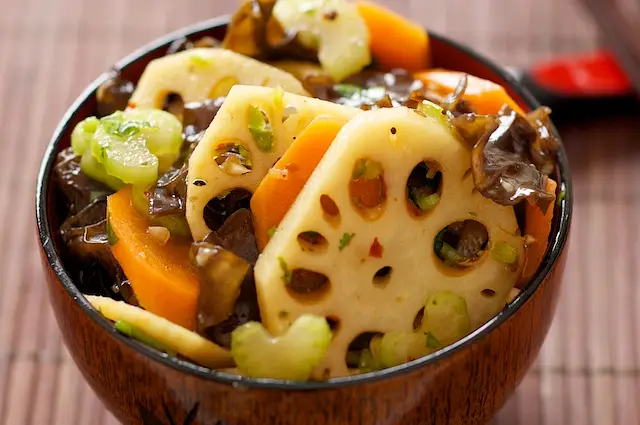
Lotus Root & Wood Ear Salad with Soy-Ginger Dressing
A refreshing, tasty and light salad is made with crunchy lotus roots, carrot, celery and wood ears, tossed with a flavorful soy-ginger dressing. Make it a day ahead, keep in the refrigerator overnight.
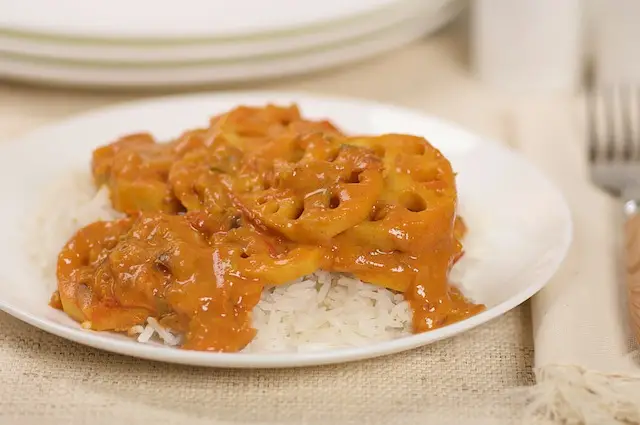
Sri Lanka Nelum Ala (Curried Lotus Root)
Crunchy lotus root in a very flavorful and rich spicy coconut milk curry sauce, perfect over basmati rice. This recipe delivers huge flavor from some very simple ingredients.
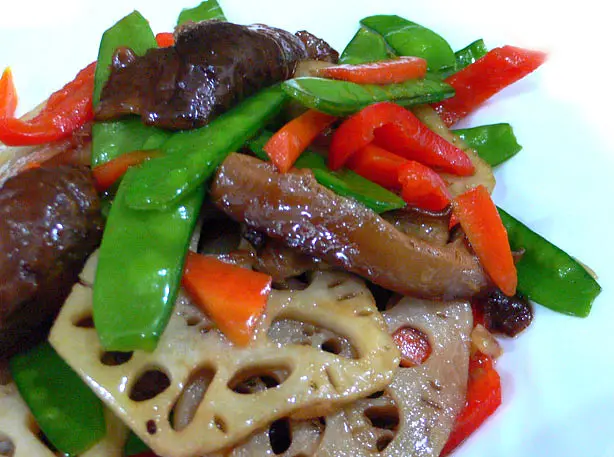
Stir Fried Fresh Lotus Root
Fresh lotus root stir-fried with black mushrooms, tree ears, water chestnuts, and snow peas in a ginger-sesame glaze. A crunchy, earthy vegetarian dish that's as beautiful as it is satisfying.