What Is Laos and How Can I Use It?
If laos has turned up in a recipe or caught your eye at the store, here's what you need to use it with confidence and how to choose it, cook it, store it, what to substitute, and 8 recipes to try it in.
Key Points
- Laos is the Malay name for galangal, a piney, citrusy rhizome sharper than ginger.
- It anchors Thai and Indonesian curry pastes and coconut soups, pounded raw with lemongrass.
- The fresh root is too woody to eat; smash a piece, then remove it.
- Do not swap ginger one for one; ginger is warmer, sweeter, and far less piney.
- Freeze whole and grate from frozen, or keep dried laos powder on the spice shelf.
What are laos?
Laos is the Indonesian and Malay name for galangal, a knobbly rhizome that looks like a paler cousin of ginger. It is a backbone aromatic of Southeast Asian cooking, bringing a sharp, piney heat ginger cannot copy. Thai cooks call it kha; you may also see lengkuas.
Cut into a fresh root and you get a citrusy, peppery smell with a hint of pine. The flesh is dense and woody, far tougher than ginger, so it is handled differently in the kitchen.
Most home cooks meet it as a dried, sandy-colored powder labeled laos, since fresh galangal can be hard to find outside Asian markets.
How to Use It
Galangal is the aromatic spine of curry pastes and spice-paste soups. It gets pounded raw with chilies, shallots, garlic, and lemongrass into the base for dishes like Gulai Merah (Red Short Ribs of Beef) and Ayam Kacang Bukittingga (Peanut Chicken), lifting the coconut richness so the curry never tastes flat.
The fresh root is too woody to eat in chunks. Slice it thin across the grain, or smash a piece into the pot to perfume a broth, then fish it out before serving.
That is how it flavors Bean Curd & Coconut Soup and Chicken & Coconut Milk Soup (Gaeng Com Yam Gai).
Dried laos powder is the easy stand-in. Roughly half a teaspoon of powder replaces a one-inch slice of fresh root, stirred straight into the paste or simmering liquid. Add it early so its sharp edge can mellow into the dish.
Pairing and Common Mistakes
Galangal belongs to a tight circle of Southeast Asian aromatics: lemongrass, kaffir lime leaves, chilies, shallots, garlic, and coconut milk. It also stands up to the sour-salty notes of fish sauce, shrimp paste, and tamarind that define the region's curries, as in Sambal Goreng Telor (Eggs in Red Pepper Sauce).
The biggest mistake is treating it like ginger. Galangal is sharper and far more fibrous, so swapping in an equal amount of ginger gives you a warmer, sweeter dish that misses the point.
The two are relatives, not stand-ins.
The second slip is biting into a leftover chunk. Even after a long simmer the fresh root stays woody and stringy, so smashed pieces are meant to be removed.
Substitutes
There is no clean swap, but you can get close. The nearest is fresh ginger with a little extra lemongrass or a squeeze of lime, which mimics galangal's citrus-pine bite better than ginger alone. Use roughly equal ginger and add the citrus to taste.
Dried galangal powder works when fresh is unavailable, about half a teaspoon per inch of fresh root. If a recipe truly leans on galangal, as most Thai and Indonesian curry pastes do, it is worth tracking down the real thing.
Buying and Storing Laos
Fresh galangal turns up in Asian and Southeast Asian grocers, usually near the ginger. Choose firm, heavy rhizomes with tight, glossy skin and pale pink-tipped shoots; soft or shriveled pieces are old and dry. Dried laos powder lives on the spice shelf.
Wrap fresh galangal loosely and keep it in the crisper drawer, where it lasts a couple of weeks. For longer storage it freezes well: tuck the whole root in a bag and grate or slice it straight from frozen, no thawing needed.
Powdered laos should stay airtight, away from heat and light, and is best within about a year while its aroma is still strong.
Quick facts
- In Chinese
- 老挝
- British (UK) term
- Laos
- en français
- Laos
- en español
- Laos
Recipes using laos
There are 8 recipes that contain this ingredient.
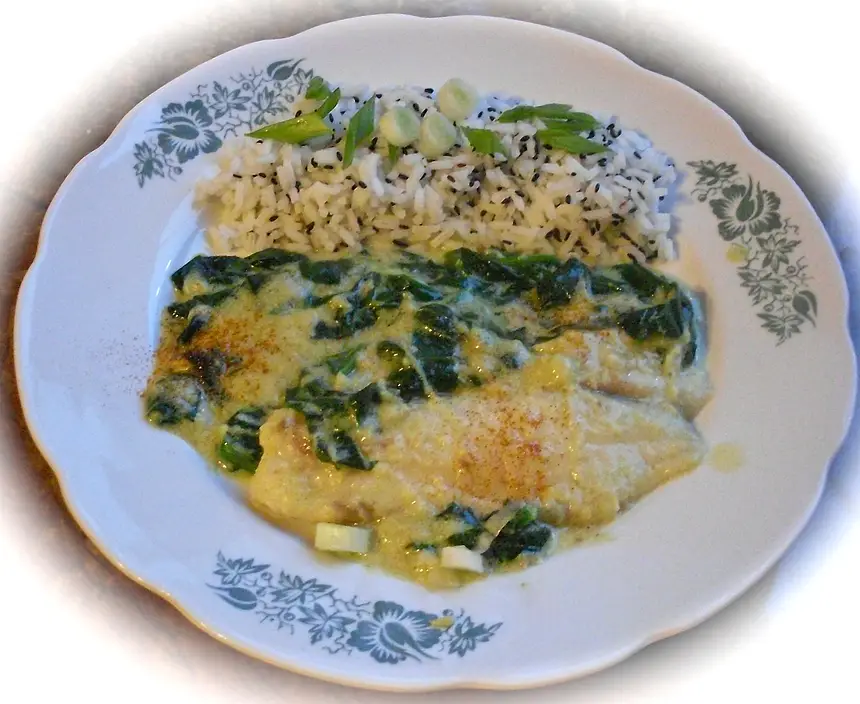
Gulai Daun Singkong Tumbuk(Grilled Fish with Greens)


Indonesian grilled fish simmered in a fragrant coconut milk curry with turmeric, ginger, lemongrass, and fresh greens. A traditional Gulai recipe that brings bold Southeast Asian flavors to your table in 35 minutes.

Chicken & Coconut Milk Soup (Gaeng Com Yam Gai)

Thai chicken coconut soup simmers bone-in chicken in lemongrass and galangal-infused coconut milk, finished with lime, fish sauce, cilantro, and chili. A Tom Kha Gai classic ready in 30 minutes.
Bean Curd & Coconut Soup
Fragrant Thai-style coconut soup with silky tofu, lemongrass, galangal, and white miso. Brightened with lime juice, fresh basil, and chili. Serve over jasmine rice.

Gulai Merah(Red Short Ribs of Beef)
Gulai merah is an Indonesian red beef short rib curry braised in a spice paste of shallot, chile, ginger, and turmeric with salam leaf, galangal, and lemongrass. Serve with rice.
Grilled Fish with Greens
Sumatran grilled snapper finished in a coconut-turmeric curry with galangal, lemongrass, and wilted greens. A fragrant Indonesian fish simmer ready in 35 minutes.
Sambal Goreng Telor (Eggs in Red Pepper Sauce)
Sambal goreng telor, Indonesian hard-boiled eggs simmered in a spicy coconut milk and red pepper sauce with galangal. A quick 20-minute Southeast Asian egg dish.
Ayam Kacang Bukittingga (Peanut Chicken)
Ayam Kacang Bukittingga is a Sumatran peanut chicken braised in coconut milk with a fragrant spice paste of red chiles, ginger, turmeric, and garlic. Rich, nutty, and deeply aromatic.

Gulai Merah (Red Short Ribs of Beef)
Gulai Merah, Sumatran red-braised short ribs marinated in a spice paste of chiles, shallots, ginger, and turmeric with lemongrass and salam leaf. A slow-braised Indonesian beef dish.