What Is Grapefruit peel and How Can I Use It?
If grapefruit peel has turned up in a recipe or caught your eye at the store, here's what you need to use it with confidence and how to choose it, cook it, store it, what to substitute, and 13 recipes to try it in.
Key Points
- Two uses: grated zest for aroma, or the whole peel candied in sugar syrup.
- Zest only the colored surface; the white pith underneath is harshly bitter.
- Rub zest into the recipe's sugar to release its fragrant citrus oil evenly.
- When candying, blanch the strips two or three times to tame the bitterness.
- Swap in orange or lemon zest, or candied orange peel, when grapefruit is unavailable.
What is grapefruit peel?
Grapefruit peel is the skin of the fruit, used two distinct ways in the kitchen. The thin, brightly colored outer layer is the zest, where the fragrant citrus oil lives. The thick white layer beneath it is the pith, which is spongy and bitter.
In recipes, grapefruit peel usually means one of two things: a little grated zest for aroma, or the whole peel simmered in sugar syrup to make candied grapefruit peel.
The two call for opposite handling, because the oil you want and the bitterness you do not are in different layers.
How to Use Grapefruit Peel
For flavor, you want only the zest. Scrape the colored surface with a rasp grater or zester and stop the moment you hit white pith.
That zest perfumes batters and creams. It lifts a Fresh Grapefruit Cottage Bread and a Grapefruit Chiffon Cake with floral citrus you cannot get from juice alone, and it does the same for a grapefruit mousse.
Rub the zest into the sugar with your fingertips before mixing. Crushing it against the sugar crystals releases the oil and spreads it evenly through the batter.
Candying is the other path, and here you keep the whole peel. Cut it into strips, then blanch it in boiling water two or three times, changing the water each time, to pull out most of the bitterness.
After that you simmer the strips slowly in sugar syrup. Candied Grapefruit Peel ends up chewy and sweet-tart, good chopped into cakes or dipped in dark chocolate.
A wide strip of peel, pith trimmed off, also drops into a simmering pot to scent a syrup or a citrus marmalade.
Pairing and Common Mistakes
Grapefruit peel loves partners that balance its edge: sugar, dark chocolate, honey, ginger, and vanilla. The zest perks up seafood too, which is why a little works in a Crab n' Pink Grapefruit Salad alongside the segments.
The number one mistake is grating into the pith. Take any of the white layer and you carry real bitterness into the dish, since grapefruit pith is more bitter than orange or lemon. Grate light, and stop early.
The second mistake is skipping the blanching step when candying. Without those changes of water, the finished peel stays harshly bitter rather than pleasantly sweet-tart.
The last is using waxed or sprayed fruit unwashed. Conventional grapefruit often has a food-grade wax coating, so scrub it under warm water first or buy unwaxed when the peel is the point.
Substitutes
For zest in a recipe, orange or lemon zest is the easiest swap. Both are less bitter and a touch sweeter, so you lose a little of grapefruit's bitter-floral edge but keep the bright citrus oil. Use the same quantity.
For candied grapefruit peel, candied orange peel is the natural stand-in and is far easier to find at the store. Candied lemon peel works too, with a sharper, less floral result.
When you only need the aroma, a few drops of grapefruit extract or a spoonful of marmalade can carry the flavor, though neither gives the chew of real candied peel.
Buying and Storage
The best peel comes from heavy, firm grapefruit with smooth, taut skin and no soft spots. Whole fruit keeps about a week at room temperature or up to three weeks in the refrigerator.
Zest just before you need it; the oil fades fast once the peel is grated.
If you have extra, freeze zest in a small bag or stir it into sugar and keep that citrus sugar sealed.
Candied peel is a keeper. Stored airtight at room temperature it lasts a month or more, and tossing the strips in granulated sugar before storing helps keep them from sticking together.
Quick facts
- In Chinese
- 柚子皮
- British (UK) term
- Grapefruit peel
- en français
- écorce de pamplemousse
- en español
- cáscara de pomelo
Recipes using grapefruit peel
There are 13 recipes that contain this ingredient.
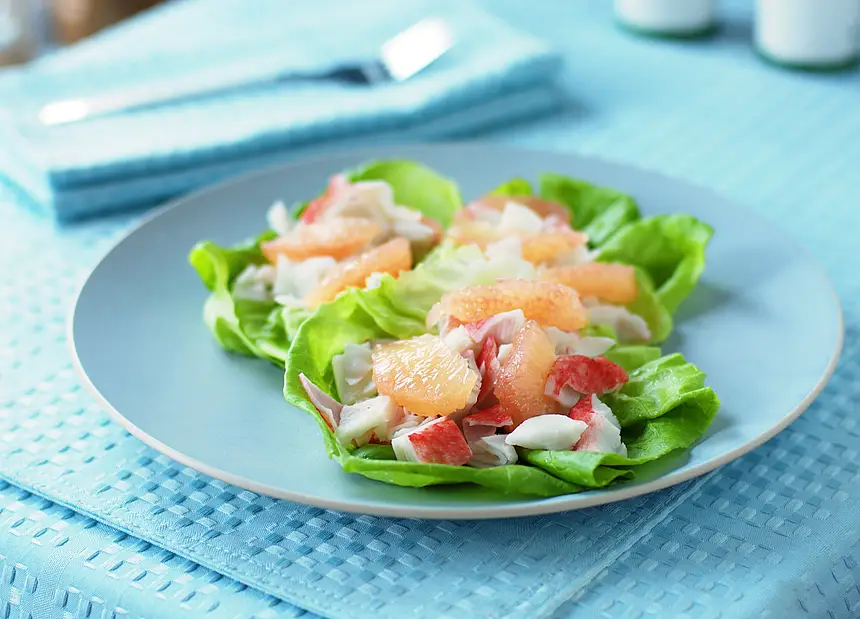
Crab n' Pink Grapefruit Salad


Sweet crab, tangy grapefruit on tender crisp on a bed of Boston lettuce drizzled with a perfectly balanced vinaigrette.

Spiced Grapefruit Upside-Down Cake

Spiced grapefruit upside-down cake with brown sugar, walnuts, cinnamon, and cloves baked on a caramelized grapefruit base. Served with grapefruit-zest whipped cream.
Spiced Grapefruit Upside-Down Cake
Spiced grapefruit upside-down cake with brown sugar, walnuts, cinnamon, and cloves baked on a caramelized grapefruit base. Served with grapefruit-zest whipped cream.

Candied Grapefruit Peel
Candied grapefruit peel slow-simmered in sugar syrup and rolled in granulated sugar. A bittersweet homemade candy that stores for a month.
Sopa De Lima
Classic Yucatecan sopa de lima with chicken simmered in lime-scented broth colored by annatto seeds, with tomatoes, oregano, and a hint of grapefruit. Topped with crispy tortilla strips.
Fresh Grapefruit Cake
Fresh grapefruit cake made chiffon-style with separated eggs, grapefruit juice, grated peel, and cream of tartar. Light, airy, and citrus-bright.

White Mousse Cake with With Zest of Grapefrui
White chocolate mousse cake layered between sheets of genoise with candied citrus peel, pine nuts and shaved white chocolate curls. An elegant layered dessert with bright grapefruit, orange and lemon zest running through every bite.

Fresh Grapefruit Cottage Bread
An easy citrus infused bread for your bread machine enriched with cottage cheese and grapefruit.

Grapefruit Mousse
Grapefruit mousse: light citrus mousse with grapefruit juice, gin-spiked gelatin, and whipped cream. Layered in parfait glasses with fresh strawberries.
Grapefruit Chiffon Cake
Grapefruit chiffon cake made with fresh juice and grated peel, six eggs whipped to stiff peaks, baked in a tube pan and drizzled with a citrus glaze. Light, tall, and bright.
Grapefruit Chiffon Cake
Grapefruit chiffon cake made with fresh juice and grated peel, six eggs whipped to stiff peaks, baked in a tube pan and drizzled with a citrus glaze. Light, tall, and bright.
Fig Preserves (Syko Glyko)
Greek fig preserves (syko glyko) made with whole green figs stuffed with blanched almonds and simmered in lemon-scented syrup. Traditional spoon sweet for coffee service.