What Is Baker's ammonia and How Can I Use It?
If baker's ammonia has turned up in a recipe or caught your eye at the store, here's what you need to use it with confidence and how to choose it, cook it, store it, what to substitute, and 10 recipes to try it in.
Key Points
- Old-world leavener (ammonium carbonate, hartshorn) that bakes exceptionally crisp, shattering cookies and crackers.
- Use only in thin, low-moisture bakes so the ammonia gas can fully vent.
- In thick or moist batters the gas is trapped and the bake smells of ammonia.
- Crush lumps fine and disperse them; the strong baking smell fades on cooling.
- Substitute baking powder measure for measure, accepting a softer, less crisp result.
What is baker's ammonia?
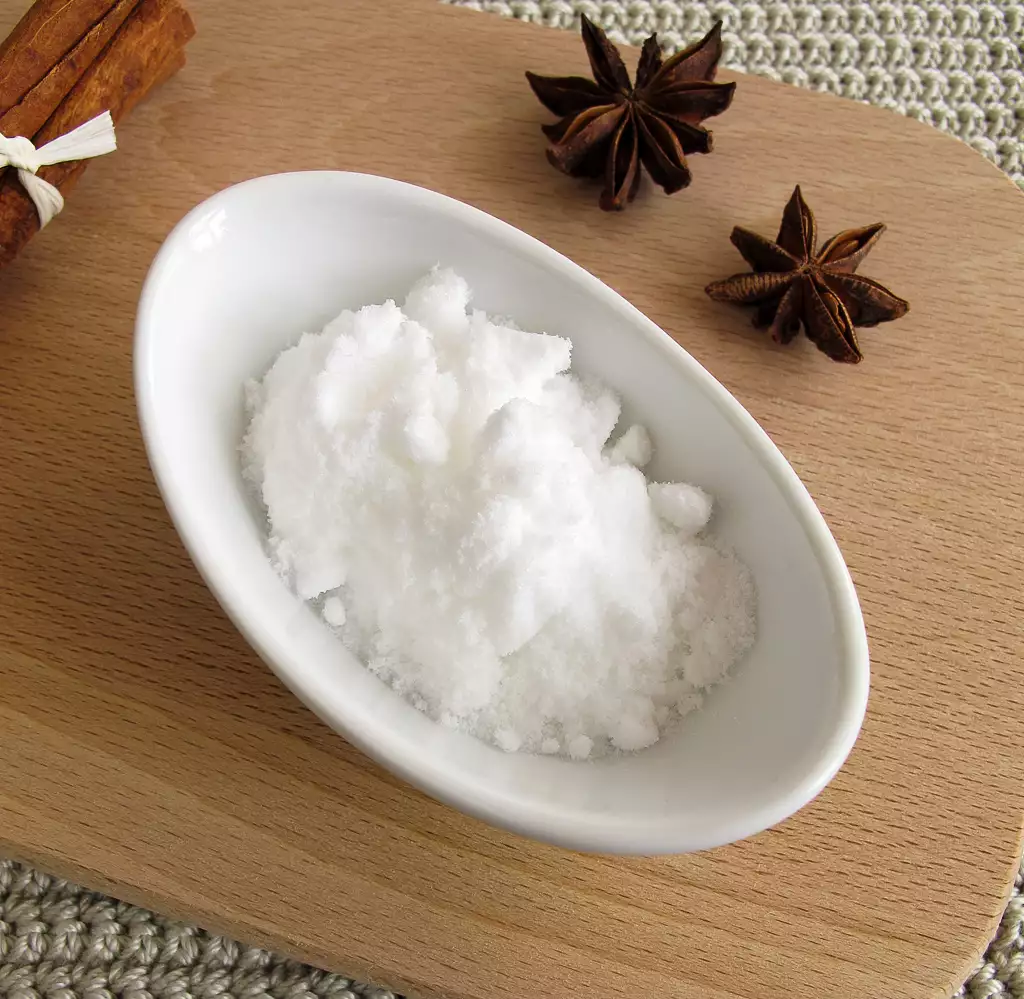
Baker's ammonia is the old-world leavening agent that baked light, crisp cookies and crackers long before baking soda and baking powder existed. Chemically it is ammonium carbonate, and you will see it sold as hartshorn or hirschhornsalz, and listed as simply "ammonia" in old recipes.
It comes as a white powder or small lumps and has a sharp, eye-watering smell straight from the jar. That smell is the point: when it heats up, it breaks down entirely into gas and water, leaving no aftertaste and no chemical residue behind.
Bakers across Scandinavia and Central Europe reached for it, and many traditional cookie recipes still call for it by name. It produces a crispness and shatter that the modern leaveners cannot quite copy.
How to Use Baker's Ammonia
Baker's ammonia works only in thin, dry, low-moisture bakes, and that limit is the most important thing to understand about it. As it heats, it releases ammonia gas, which has to escape the dough completely.
In a thin cookie or cracker, the gas vents out fully and you are left with an exceptionally crisp, almost shattering, texture.
In anything thick or moist the gas gets trapped, and the finished bake then tastes and smells of ammonia.
So reach for it in delicate, crunchy bakes. Swedish Ammonia Cookies are named for it, and it gives the snap to Lemon Crackers and the fine, even rise to embossed Classic Springerle. It also crisps biscotti-style cookies like Favourite Biscotti Napoletani and shapes the texture of Swedish Coconut Balls.
If a heritage recipe calls for hartshorn or ammonium carbonate, that is this ingredient. It is worth tracking down for the texture it gives.
Crush any lumps to a fine powder first and dissolve it in a little of the recipe's cold liquid, or mix it into the dry flour so it spreads evenly.
Expect a strong ammonia smell while the cookies bake. That is normal and it disappears as they cool; open a window and do not panic.
Pairing and Common Mistakes
Baker's ammonia belongs to a specific family of bakes: springerle, speculaas, gingerbread thins, krumkake, and brittle wafer cookies. It rewards spice-forward and citrus doughs, where any faint trace of smell is covered, and it does its best work in anything you want audibly crisp.
The biggest mistake is using it in a moist or thick batter such as a cake or a soft drop cookie. There the ammonia cannot fully escape and the bake ends up smelling acrid. Keep it to thin, crisp items only.
The second mistake is leaving it in big lumps. Undissolved chunks create pockets of concentrated ammonia and uneven leavening, so always grind it fine and disperse it before it meets the wet ingredients.
Substitutes
If you do not have baker's ammonia, baking powder is the most practical swap in a thin cookie, used measure for measure. You will lose some of the signature crispness and the cookie will be a touch softer, but the rise will be close.
For a closer texture, use a mix of baking soda and baking powder. The combination pushes a thin cookie toward extra crispness, though it still will not shatter quite like the original.
None of these reproduce the bone-dry, hollow crunch that baker's ammonia gives, which is exactly why traditional recipes specify it. If crispness is the whole point of the cookie, it is worth sourcing the real thing.
Buying and Storing Baker's Ammonia
Baker's ammonia is a specialty item. Look for it in shops carrying Scandinavian or German baking supplies, at well-stocked spice and cake-decorating stores, and online, often labeled hartshorn or ammonium carbonate.
Store it in a tightly sealed, airtight container, because it slowly sublimes, meaning it turns to gas and weakens over time even sitting on the shelf.
A loose lid lets it lose potency and perfume your whole cupboard with its sharp smell. Kept well sealed in a cool, dark spot, it stays effective for a year or more.
If your supply has lost its strong ammonia odor, it has lost its leavening power and should be replaced. A pungent smell, oddly enough, is the sign that it is still good and ready to do its job.
Quick facts
Where to find baker's ammonia: Baker's ammonia is usually found in the baking supplies section or aisle of the grocery store or supermarket.
- In Chinese
- 贝克的氨
- British (UK) term
- Baker's ammonia
- en français
- l'ammoniac de boulanger
- en español
- amoniaco de panadero
Recipes using baker's ammonia
There are 10 recipes that contain this ingredient.

Classic Springerle

Classic springerle: traditional German anise cookies embossed with intricate designs, dried overnight, and baked pale, then mellowed for a week into crisp, picture-perfect holiday treats.
Gourmet Glazed Nuts
Gourmet glazed nuts with peanuts and pecans, blanched then baked with sugar and butter until golden and crunchy. Sweet, salty, and perfect for holiday gift-giving.

Chocolate Ganache Fudge Sauce


I created my raw food Chocolate Ganache Fudge Sauce for all the chocoholics I know (including me!), but I never miss a chance to introduce people to my rich, nutty Caramel Sauce.

Orzo Parmesean
A buttery lemon-garlic orzo finished with parmesan and fresh herbs. The chicken broth reduces and gets mounted with butter into a silky sauce that coats every grain. A quick, savory side for any meat.
Swedish Coconut Balls
Crisp, crumbly Swedish coconut cookies leavened with baker's ammonia for an ultra-light snap. Rolled into walnut-sized balls and baked until golden. Makes 4 dozen buttery, coconut-flecked treats in under an hour.

Apple Butter Stack Cake
Traditional Appalachian stack cake with tender cookie-thin layers separated by spiced apple butter. Bake crisp golden rounds, then let them soften overnight as the apple butter melts into each bite.
Lemon Crackers
Old-fashioned lemon crackers made with baker's ammonia for an ultra-crisp, snappy texture. A heritage cookie recipe rolled thin and pricked with a fork before baking.
Favourite Biscotti Napoletani
Authentic Neapolitan biscotti with whole and ground almonds, honey, and cinnamon. Twice-baked Italian cookies with a deep nutty crunch and no butter or eggs.
Red Hot Apple Cinnamon Pie
Great apple pie recipe that we have used for years. Perfect with a cup of hot apple cider.

Swedish Ammonia Cookies
Classic Swedish butter cookies leavened with baker's ammonia for an impossibly light, crisp, melt-on-your-tongue texture. Just 5 ingredients, shaped into small balls, and baked low and slow. An old-world Scandinavian recipe.