What Are Zwieback crumbs and How Can I Use Them?
Zwieback crumbs is easier to cook with than it looks. Here's how to choose, use, and store them, what to substitute, and 7 recipes to get you started.
Key Points
- Crumbs from zwieback, a twice-baked sweetened bread, dried crisp and ground to a fine, sandy texture.
- Mainly a pressed crumb crust for cheesecakes; mix roughly 1½ cups crumbs to ⅓ cup melted butter.
- Grind fine and pack the crust tight, or it crumbles when you cut it.
- Faintly sweet, so it pairs with creamy tangy fillings and stands apart from plain breadcrumbs.
- Swap graham cracker, rusk, or melba toast crumbs; keeps for months airtight, up to a year frozen.
What are zwieback crumbs?
Zwieback crumbs are made from zwieback, a lightly sweetened bread that is baked once as a loaf, then sliced and baked again until dry and crisp like a rusk. The name is German for "twice-baked."
Crushed to a fine, sandy texture, the crumbs are used mostly as a crust for cheesecakes and as a binder in baking.
The double baking is what makes them special. It drives off nearly all the moisture, so zwieback keeps for a long time and grinds into a dry, even crumb that toasts to a warm, faintly sweet, almost biscuit-like flavor. That gentle sweetness sets it apart from a plain breadcrumb.
For generations zwieback was also the classic teething biscuit handed to babies, which is why older recipes and home bakers reach for it so readily.
Cooking With Zwieback Crumbs
Their headline job is the pressed crumb crust. Crush the zwieback fine, stir in melted butter and a little sugar, and press the mix firmly into a pan, where it bakes into a crisp, holdable base for a cheesecake or chilled pie.
Java Cheesecake and the old-school Grandma's Cheesecake both build their crust this way, and the Classic New York Cheesecake with Zwieback Crust is named for it.
The standard crust ratio is roughly 1½ cups of crumbs to ⅓ cup of melted butter, enough fat to bind the crumbs without turning the base greasy.
Press it tight with the bottom of a glass. A packed crust slices cleanly instead of crumbling.
Zwieback crumbs also work like fine dry breadcrumbs in the body of a recipe, lightly sweetening a meatloaf binder or thickening a baklava filling, as in Baklava with Cooky Filling. Their fine grind absorbs moisture evenly, which is why they bind so well.
Pairing and Common Mistakes
The mild sweetness of zwieback pairs naturally with creamy, tangy fillings such as cream cheese and sour cream, and with the coffee or chocolate flavors of a Kahlua Cheesecake. It bridges sweet and neutral, so it suits desserts without fighting the filling.
The most common mistake is a coarse crush. Big chunks of zwieback will not pack together, so the crust falls apart when you cut it; grind the crumbs to an even, sandy fineness in a food processor or a sealed bag with a rolling pin.
The other mistake is too little butter. A dry crumb mix looks fine raw but crumbles to dust once baked and cooled. The crumbs should clump when you squeeze a handful; if they do not, add melted butter a spoonful at a time until they do.
Substitutes
Graham cracker crumbs are the closest everyday swap and behave the same in a crust, though they are sweeter and a touch more honeyed. Use the same crumb-to-butter ratio.
Plain dry rusk, melba toast, or a digestive biscuit ground fine all stand in well, since they share the dry, twice-baked character. Vanilla wafer or shortbread crumbs work too but add more sugar and butter of their own, so cut back the added sugar.
For a savory use, ordinary dry breadcrumbs or panko substitute directly. They lack the slight sweetness of zwieback, which rarely matters once the crumbs are in a meatloaf or filling.
Buying and Storing Zwieback Crumbs
Zwieback itself is sold as boxed dry toasts in the baby-food or cracker aisle, and you crush it yourself; pre-made crumbs are less common, so plan to grind your own. A whole box keeps far longer than the crumbs, so crush only what a recipe needs.
Because they are already dried, zwieback crumbs keep extremely well. Stored airtight in a cool, dry cupboard they stay good for months; their enemy is humidity, which makes them go soft and stale rather than spoil.
If your crumbs have lost their crispness, refresh them in a low oven at 300°F (150°C) for a few minutes to drive off the moisture, then cool before using. For long storage, freeze them airtight, where they keep for up to a year with no loss of texture.
Quick facts
- In Chinese
- zwieback屑
- British (UK) term
- Zwieback crumbs
- en français
- miettes de biscottes
- en español
- migas zwieback
Recipes using zwieback crumbs
There are 7 recipes that contain this ingredient.
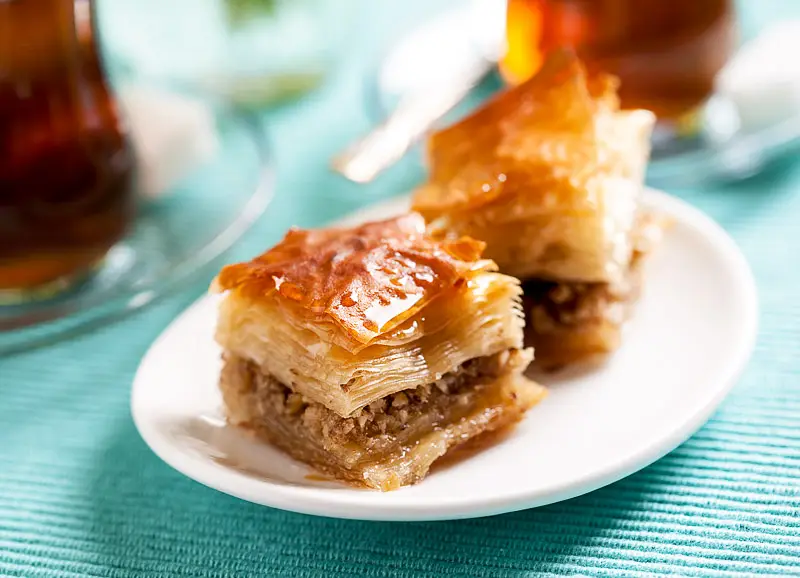
Baklava with Cooky Filling


Greek baklava with buttery cookie dough rolled around spiced nuts and phyllo, soaked in honey-lemon syrup for layers of crisp pastry and rich almond filling.
Java Cheesecake
Light, airy coffee cheesecake with ricotta, instant coffee, and fluffy egg whites on a honey-sweetened zwieback crust. A no-bake style set with gelatin for smooth, mousse-like slices.
Raspberry Cheesecake
Luxurious raspberry cheesecake with fresh berries baked into a creamy filling spiked with raspberry liqueur and orange zest, on a buttery zwieback crust. Served with homemade raspberry sauce.
Grandma's Cheesecake
Old-fashioned Bundt pan cheesecake with ricotta, cream cheese, and sour cream topped with a gorgeous strawberry glaze. Baked low and slow for a dense, creamy, crack-free classic.
Kahlua Cheesecake
Velvety Kahlua cheesecake with coffee liqueur, whipping cream, and a buttery zwieback crust. Baked until barely set, then slow-cooled for a silky, boozy, after-dinner showstopper.
Classic New York Cheesecake with Zwieback Crust
Traditional New York cheesecake with zwieback crust, cream cheese filling enriched with heavy cream and lemon zest. Baked at high heat then low, cooled in the oven for crack-free perfection.
Cheeseless Cheesecake
Creamy cheesecake made without any cheese using condensed milk, eggs, lemon, and a buttery zwieback crust. Light, tangy, and set with a slow cool in the oven for silky texture.